Reviewed · GUIDED
8-Day All About Georgia Tbilisi Guided Tour with Accommodation
Georgia serves up mountains, monasteries, wine, and a feast of history. This 8-day guided tour packs the country’s best-known sights into a practical base-and-day-trip plan from Tbilisi, with airport transfers, seven hotel nights, breakfast each morning, transportation, guides, and entrance fees included. You visit Kakheti wine country, ancient Mtskheta, cave towns, mountain churches, and the spa town of Borjomi.
I especially like the small maximum group of 15, which should make the long drives and walking tours easier to manage, and I like that the trip includes both major sights and everyday Georgian touches such as bread baking, traditional cheese, local wine, and a Georgian feast. The main drawback is the pace: several days run for 9 to 14 hours, so this suits you best if you prefer seeing a great deal rather than lingering in one place.
The $499 price is unusually attractive for eight days, though you should budget separately for lunches and the optional Jeep ride up to Gergeti Trinity Church. The tour is offered in English, and the guide team has included Nino, Beso, Roland, Giorgi, and Diana, with Zurab handling arrangements and airport transfers.
In This Review
- What makes this Georgia tour worth considering
- Seven nights in Tbilisi, with the hard work handled
- Day 2: Sighnaghi, Bodbe, Telavi, and Georgia’s wine country
- Day 3: Mtskheta, Uplistsikhe, and the complicated story of Stalin
- Day 4: Old Tbilisi from Metekhi to the wine cellar
- Day 5: The Georgian Military Road and Gergeti Trinity
- Day 6: A free day that keeps the schedule livable
- Day 7: Borjomi, Rabati Castle, and the cave city of Vardzia
- What $499 includes, and what it does not
- Who should book this Georgia itinerary?
- Should you book the 8-day Tbilisi tour?
- FAQ
- Where does the tour begin and end?
- How long is the tour?
- Is accommodation included?
- Are airport transfers included?
- Is breakfast included?
- Are lunches included?
- How large is the group?
What makes this Georgia tour worth considering
- Seven nights in Tbilisi: You unpack once and return to the same hotel after each excursion, rather than changing rooms every night.
- Gergeti Trinity by Jeep: The mountain church near Stepantsminda is reached by off-road vehicle, adding a bit of adventure to Georgia’s most famous mountain view.
- Kakheti wine country: Sighnaghi, Telavi, Bodbe Monastery, fresh shoti bread, local cheese, and a cellar tasting give you a full day in eastern Georgia.
- A useful mix of faith and archaeology: Jvari, Svetitskhoveli, Uplistsikhe, Vardzia, and Rabati Castle show how Georgia’s religious and political story changed over many centuries.
- Airport transfers included: Pickup on arrival and transport back to Tbilisi Airport remove two common hassles at the beginning and end of a trip.
- Flexible day planning: Day 6 is free in Tbilisi, giving you time to rest or arrange another excursion before the long Borjomi, Rabati, and Vardzia outing.
Seven nights in Tbilisi, with the hard work handled
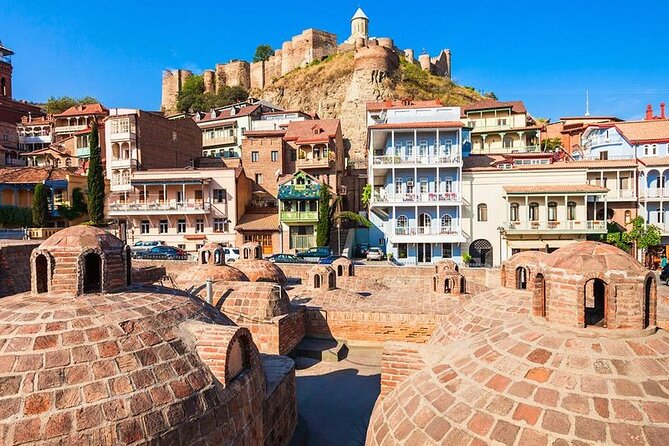
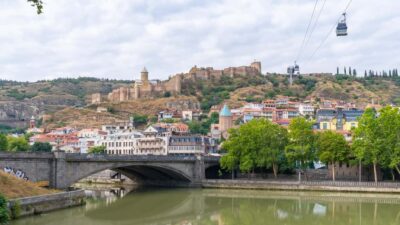
The tour begins with a transfer from Shota Rustaveli Tbilisi International Airport to your hotel. The first day is intentionally light, with a visit around the Tbilisi Aerial Tramway and a free evening. That is a sensible start after a flight, although the exact sightseeing included on arrival day appears limited.
Your base is a three-star hotel in Tbilisi. Accommodation details such as the hotel name and room features are not specified, but the lodging has been described as clean and close to the Old Town. That location matters. You can spend your free evening near the historic center instead of losing time to long taxi rides.
Breakfast is included on seven mornings. Lunch is not, so you should plan for paid midday meals during the day trips. That is not a serious weakness in Georgia, where local restaurants and bakeries can offer filling food at different price levels, but the long excursions mean you should not leave meals to chance.
Transportation is provided in air-conditioned VIP-class cars. The group is limited to 15 people, a useful compromise between private touring and a lower group price. You get the social ease of meeting other people, while the group remains small enough for a guide to answer questions and keep departures organized.
More Tbilisi days to weigh up
- Tbilisi: Day Trip to Kazbegi, Gudauri, Gergeti, and Ananuri
★ 4.9 · 3,203 reviews - Day Trip to Kakheti Wine Region Including 9 Wine Tastings
★ 5.0 · 2,774 reviews - Highlights of Caucasus Mountains-Jinvali,Ananuri,Gudauri,Kazbegi(Group tour)
★ 5.0 · 2,682 reviews
Day 2: Sighnaghi, Bodbe, Telavi, and Georgia’s wine country
The Kakheti day trip is one of the most appealing parts of the program. It lasts about 10 hours and combines churches, royal history, food, views, and wine without requiring a hotel move.
Your first meaningful stop is Badiauri, where you can see Georgian shoti bread made in a traditional style and sample local cheese. This is a small stop, only about 20 minutes, but it gives the day a more local feel than a schedule made up only of monuments.
At Bodbe Monastery, Georgia’s Christian story comes forward. The monastery is associated with St. Nino, the fourth-century saint credited with bringing Christianity to Georgia, and her burial place is traditionally located here. You have about an hour to see the monastery and learn about its religious importance. The healing spring is also part of the visit.
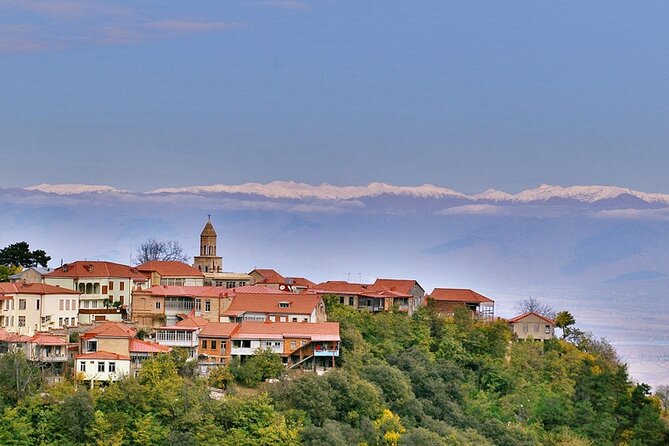
Sighnaghi is the visual star of the day. Set on a slope above the Alazani Valley, the town has narrow streets, tiled roofs, and a romantic nickname, the city of love. You can walk along its old streets, look toward the valley, and see sections of the town’s long defensive wall.
The schedule allows about 90 minutes in Sighnaghi. That is enough for a walk and photos, but probably not enough for a slow, unplanned afternoon. If you like small towns, you may wish the tour gave you more time here.
The day continues to Telavi, the main center of Kakheti. You visit the Telavi History Museum and the palace connected with King Erekle II. The famous 900-year-old plane tree is another brief but memorable stop. At a wine cellar near the Gombori road, you taste several Georgian wines at no extra charge.
The tasting lasts about 90 minutes and may include singing and dancing, depending on the visit. You can also eat at a restaurant chosen during the day, but lunch and the restaurant bill are your responsibility. This is a good place to remember that Georgian wine is often enjoyed as part of a social meal, not as a quick tasting-room transaction.
Day 3: Mtskheta, Uplistsikhe, and the complicated story of Stalin
Day 3 covers around nine hours and moves through some of Georgia’s most important religious and archaeological sites. It also includes the Stalin Museum in Gori, creating a day with both sacred places and difficult modern history.
Jvari Monastery sits high above Mtskheta. From its position, you look down toward the meeting of the Aragvi and Kura rivers and across one of Georgia’s oldest religious centers. The church dates to the sixth century, and the hilltop setting is a major part of its appeal.
In Mtskheta, Svetitskhoveli Cathedral gives you a closer look at Georgian Orthodox tradition. It is one of the country’s most revered churches and is linked with important Christian relic traditions, including the robe of Jesus Christ. The site is active and sacred, so modest clothing and respectful behavior are appropriate.
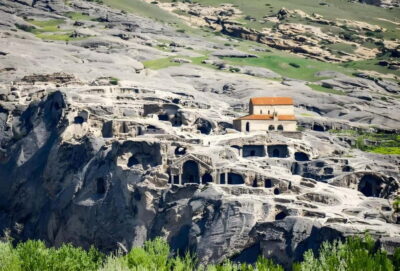
Uplistsikhe changes the mood completely. This cave city was carved into rock over a very long period, with origins reaching back to the end of the second millennium or beginning of the first millennium BC. You walk through chambers, passageways, religious spaces, and living areas while looking out over the Kura Valley.
The visit takes about two hours. Wear sturdy shoes and expect uneven stone surfaces. Uplistsikhe is not a polished museum experience. Its power comes from imagining people using these rooms over many centuries.
The Stalin Museum in Gori is listed as part of the day, though the schedule also describes it as available at the group’s request. The museum contains a preserved statue, personal possessions, furniture, and exhibits about Joseph Stalin, who was born in Gori. This is a worthwhile stop if you want to examine how Georgia presents one of the twentieth century’s most controversial political figures, but it may not suit every interest.
Day 4: Old Tbilisi from Metekhi to the wine cellar
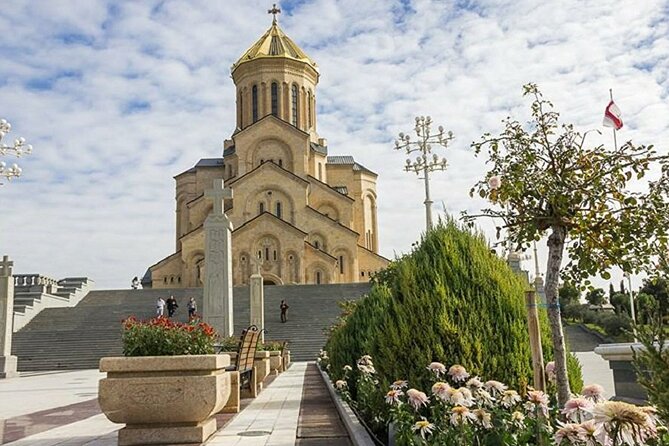
The Tbilisi walking day is shorter in physical distance but full of hills, stairs, alleys, religious sites, and stories. It is the day that helps you understand the capital beyond its postcard views.
The route begins at the Metekhi Plateau, where you look across the Old Town toward Narikala Fortress. The guide explains the early settlement and the story of King Vakhtang Gorgasali, traditionally linked with the city’s foundation.
From there, you head toward Meidan Square and the sulfur baths. Tbilisi grew around its warm springs, and the bath district remains one of the city’s defining areas. You hear the familiar falcon story connected with the city’s name, along with details about the baths that once numbered far more than those remaining today.
A walk through the Inzhira Gorge leads to a waterfall. Along the way, the distinctive wooden balconies of Old Tbilisi become part of the lesson. These courtyards and balconies are not identical museum pieces. They show how homes were adapted to a dense, hilly city where neighbors lived close together.
The route includes Metekhi Church, Sioni Cathedral, Anchiskhati Church, and a juma mosque. That sequence reflects Tbilisi’s mix of Georgian Orthodox, Armenian, Muslim, and other cultural influences. The narrow lanes and spiral staircases add character, but they also make this a day when comfortable shoes matter.
You also cross the modern Bridge of Peace and pass through Rike Park. The contrast is useful: old stone churches and wooden balconies on one side, glass and steel architecture on the other. The guide also covers local customs, the Tbilisoba city festival, Italian-style courtyards, and the Georgian feast tradition.
The wine tasting takes place in a seventeenth-century cellar and lasts about an hour. Wine is included, with commentary from the winemaker. This is a strong finish to the city walk, especially if you want food and drink explained as part of Georgian life rather than treated as separate attractions.
A slower pace, same corner of the Caucasus:
- From Tbilisi: Kakheti Wine Region Tour with 9 Wine Tastings
★ 4.9 · 2,541 reviews - Tbilisi: Mtskheta, Jvari, Gori and Uplistsikhe Day Tour
★ 4.9 · 2,396 reviews - From Tbilisi to Kazbegi, Ananuri, Gudauri & Gergeti
★ 4.9 · 2,278 reviews - Tbilisi: Kakheti Wine Region Tour with 10 Wine Tastings
★ 5.0 · 2,160 reviews
Day 5: The Georgian Military Road and Gergeti Trinity
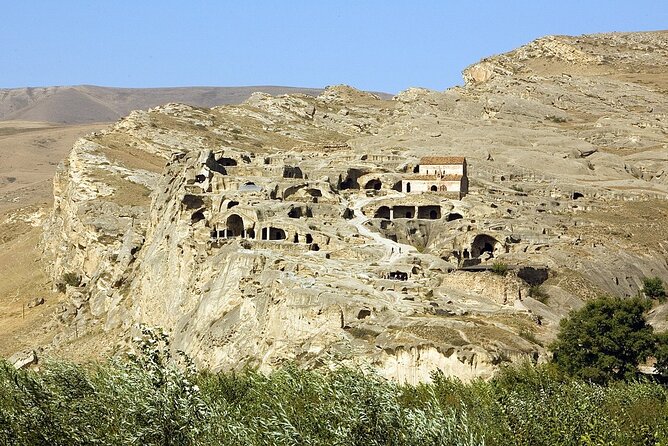
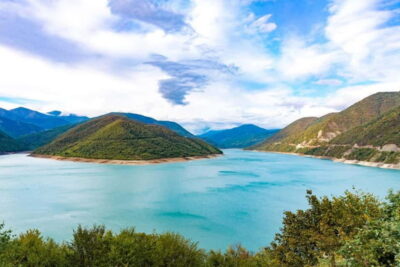
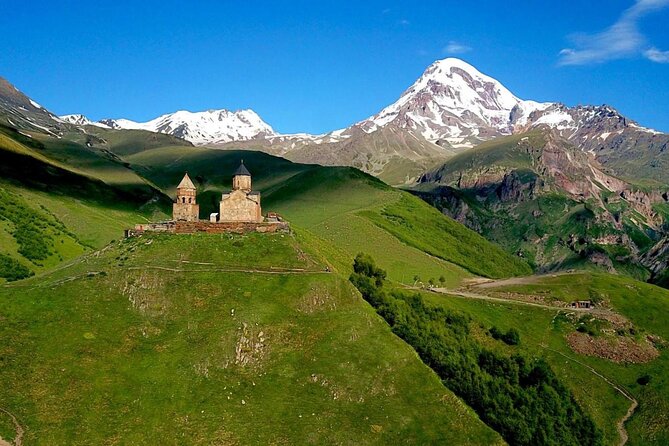
At about 11 hours, the trip to Stepantsminda is one of the longest days. It is also the day most likely to produce the images you associate with Georgia: mountain passes, deep valleys, a reservoir, and a church perched high beneath Mount Kazbek.
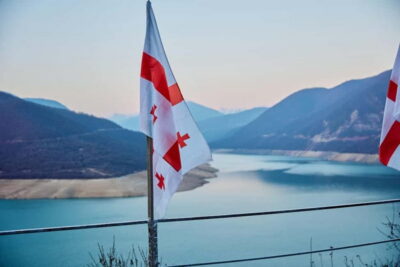
The route begins at Zhinvali Reservoir and continues to Ananuri Fortified Castle Ensemble. Ananuri dates mainly from the sixteenth to eighteenth centuries and includes churches with carved stone decoration. The setting beside the Aragvi River gives the fortress a strong visual presence, while the guide can explain the role of the Aragvi rulers in Georgian history.
At Pasanauri, the White and Black Aragvi rivers meet. The different water colors can create a striking view, and the area is also known for mountain food such as khinkali. Lunch here is not included, but this is a logical place to buy a meal.
Gudauri provides a high mountain stop, followed by the Russia-Georgia Friendship Monument. The arch sits near the top of the pass, with broad views across the surrounding mountains. Weather can change quickly at this altitude, so bring an extra layer even if Tbilisi is warm.
The final major stop is Gergeti Trinity Church near Stepantsminda. The church sits at roughly 2,200 meters and is reached by Jeep from the village of Gergeti. The Jeep ride costs extra, despite the church entrance being included, so confirm the current charge before setting out.
The road, altitude, and 11-hour schedule make this a demanding day. Still, the payoff is considerable. You get a mountain experience without arranging a separate overnight stay in Stepantsminda.
Day 6: A free day that keeps the schedule livable
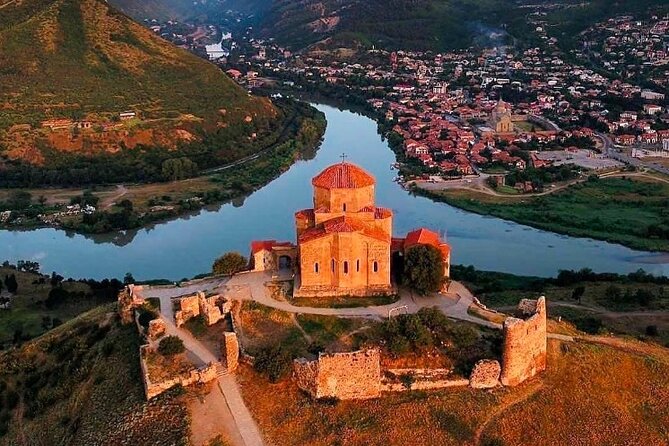
A free day in Tbilisi is a welcome part of this program. After the mountain excursion, you can sleep later, revisit the Old Town, shop at Meidan Bazaar, or simply give your feet a break.
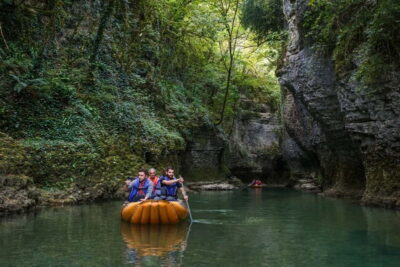
An optional full-day outing may be arranged instead. The listed possibilities include Borjomi, Rabati Castle, and Vardzia, or a route involving Martvili Canyon, Prometheus Cave, and Kutaisi. The schedule does not provide equal detail for every option, so confirm exactly which excursion, transport, and entrance fees apply before paying for it.
Keeping Day 6 open is one of the tour’s better planning choices. An eight-day program with no breathing room can feel like a bus window marathon. Here, you have at least one chance to set your own pace.
Day 7: Borjomi, Rabati Castle, and the cave city of Vardzia
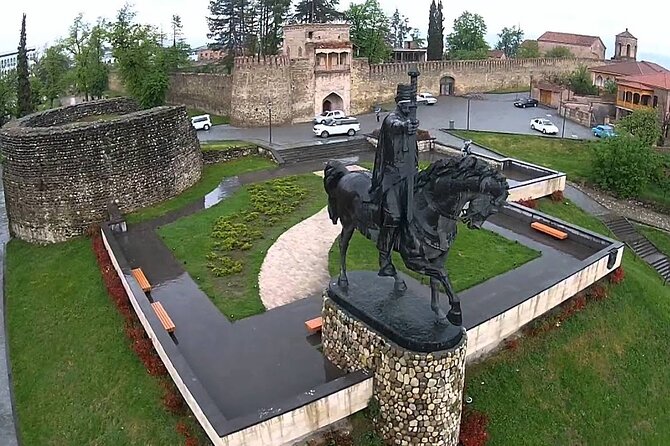
The final full day is listed at about 14 hours, making it the toughest outing of the tour. You travel west through the Borjomi area, continue to Rabati Castle, and reach Vardzia before returning to Tbilisi.
Borjomi is famous for mineral water, and the visit includes the central park and the chance to taste the water directly from a source. You can also see a waterfall, a monument to Prometheus, and take a cable car to a plateau for views over the surrounding area.
The Borjomi stop lasts about an hour, so this is an introduction rather than a full spa-town visit. If you are hoping for a relaxed wellness day, the schedule will feel too tight. If you want a quick look at the town and its famous water, it works.
Rabati Castle in Akhaltsikhe reflects the meeting of Christian and Muslim cultures. The complex includes palace rooms, defensive walls, and decorative details associated with Georgian architecture. Its importance comes from its position between different political and religious worlds, not just from its photogenic towers.
Vardzia is the day’s major sight. This twelfth-century cave monastery was carved into a cliff and once included hundreds of rooms spread across many levels. Churches, chapels, living cells, storage rooms, baths, refectories, libraries, water systems, and connecting passages remain.
You have about three hours at Vardzia, the longest single visit of the day. Expect steps, uneven ground, and plenty of walking through rock-cut spaces. On the way, you also see Khertvisi Fortress, an impressively preserved defensive site.
The 14-hour duration is the clear cost of fitting Vardzia into a Tbilisi-based tour. You should book this day because you value the sight more than comfort and free time. The rewards are unusual and substantial, but you will be tired when you return.
What $499 includes, and what it does not
At $499 per person, the value is strong if you make use of the full program. The price includes:
- Seven nights in a three-star hotel
- Seven breakfasts
- Airport pickup and return transfer
- Air-conditioned VIP-class vehicles
- English-speaking guide service
- Listed entrance fees
- A group limited to 15 people
You pay separately for lunch, and the Jeep transfer to Gergeti Trinity is specifically listed as an extra cost. Wine tastings are included in the stated program, which improves the value of the Kakheti and Tbilisi days.
The cost also covers the convenience of having long day trips arranged for you. If you booked every transfer, hotel night, guide, and entrance separately, the planning burden would be much greater. The tradeoff is control: you cannot easily replace a long day with a slower one.
The strongest service detail is the handling of airport transfers and timing. The tour has been praised for punctual departures, attentive arrangements, and changes to day plans when needed. Zurab is identified as the main contact, while guides including Nino, Beso, Roland, Giorgi, and Diana have led different portions of the program.
The cancellation terms are simple: you can receive a full refund if you cancel at least 24 hours before the local start time. Changes or cancellations inside that window are not accepted for a refund.
Who should book this Georgia itinerary?
I would recommend it to you if this is your first visit to Georgia and you want the major sights explained in English. It is particularly useful if you prefer a fixed hotel base, included transfers, and a guide who can connect churches, royal families, Soviet history, wine, and local customs.
It also suits couples, friends, and solo visitors who enjoy meeting a small group. The group size is large enough to share the experience but smaller than a standard coach tour.
I would hesitate if you dislike early starts, long drives, uneven paths, or tightly timed sightseeing. The Borjomi and Vardzia day is especially demanding, while the Kazbegi excursion can be affected by mountain weather. You should also confirm how the optional Day 6 excursion fits with the Day 7 schedule before booking.
Should you book the 8-day Tbilisi tour?
Book this tour if your priority is breadth and convenience. For $499, you receive a hotel base, breakfast, transfers, guided day trips, entrance fees, wine tastings, and access to major Georgian sights that would take careful planning to connect on your own.
Skip it if you want long, quiet stays in each town or prefer to choose every restaurant and route yourself. The best approach is to treat this as an efficient introduction to Georgia, then return later for slower time in Kakheti, the Caucasus mountains, or the Vardzia region.
FAQ
Where does the tour begin and end?
It begins at Shota Rustaveli Tbilisi International Airport and ends back at the same meeting point after the airport transfer.
How long is the tour?
The experience lasts approximately eight days and includes seven nights of accommodation.
Is accommodation included?
Yes. Seven nights in a three-star hotel are included.
Are airport transfers included?
Yes. Two-way airport transfers are included, with pickup from Tbilisi Airport and transport back to the airport on Day 8.
Is breakfast included?
Yes. Seven breakfasts at the hotel are included.
Are lunches included?
No. Lunch is not included, so you should budget for meals during the day trips.
How large is the group?
The group has a maximum of 15 people. The tour is offered in English.
Just added near Tbilisi
- Wine Tasting feel the Difference of Qvevri or Classical Wine★ 4.4 · 10 reviews
- Walking Tour in Old Tbilisi – Group Tour★ 4.5 · 8 reviews
- From Tbilisi: Kakheti and Kazbegi 2-Day 4X4 Jeep Tour pack★ 5.0 · 6 reviews
- Tbilisi: Vintage Fashion and Secondhand Thrifting Tour★ 5.0 · 11 reviews
- Uforgatable Kakheti Tour with wine tasting – in Georgia★ 4.9 · 5 reviews
- From Tbilisi: Uplistsikhe Caves and Mtskheta Town Day tour★ 5.0 · 2 reviews
- Tbilisi Airport to Gudauri, Bakuriani, Batumi, Tbilisi★ 5.0 · 3 reviews
- Private Adorable City Tour of Tbilisi★ 5.0 · 3 reviews
Guided, compared.
Borjomi, Rabati & Vardzia Adventure Guided Tour
Read our review →