Reviewed · FULL-DAY
All Inclusive Full Day Tour in 6 Neighborhoods in T’bilisi
Tbilisi reveals itself one neighborhood at a time. This seven-hour walking and public transport tour connects grand Rustaveli Avenue, Soviet-era creative spaces, Old Town churches, food markets, and hilltop views in one long day. I especially like the small group size of up to 10 people and the way the route mixes famous sights with everyday places such as Dry Bridge Market and Dezerter Bazaar. The main concern is pace: you cover a lot of ground, and several later stops are optional rather than guaranteed parts of the core route.
The morning coffee at Stamba is a smart beginning. It gives you time to meet your guide and hear the plan before the walking starts. I also like the food break at Puri Guliani, where lunch is included and Georgian bakery traditions share the menu with newer takes on local cooking. Guide George has earned particular praise for clear communication, city knowledge, and an easygoing manner, though your assigned guide may be different.
In This Review
- Key things to know before booking
- Why this Tbilisi tour works for first-time visitors
- Starting with coffee at Stamba
- Rustaveli Avenue and the city’s public face
- Dedaena Park and Dry Bridge Market
- Lunch at Puri Guliani
- A short look at Gabriadze and Anchiskhati
- Cable car views and Narikala Fortress
- Walking through Old Tbilisi to the waterfall
- Abanotubani and Meidan Bazaar
- Vintage style and a drink at Fabrika
- Dezerter Bazaar and everyday Tbilisi
- Optional extensions beyond the core route
- Is $180 a fair price?
- Who should book this experience?
- Should you book the Tbilisi six-neighborhood tour?
- FAQ
- How long does the tour last?
- How many people can join the tour?
- Is hotel pickup available?
- Is lunch included?
- Is public transportation used?
- Is the Tbilisi cable car included?
- Are the Chronicle of Georgia and Mount Mtatsminda included?
Key things to know before booking
- You see six very different sides of Tbilisi: grand central avenues, Old Town, creative districts, markets, residential neighborhoods, and hilltop viewpoints all appear in the day.
- Three public transport rides break up the walking: this matters because the route is ambitious and includes hills, markets, parks, and historic lanes.
- Coffee and lunch are built into the day: Stamba includes a coffee stop, while Puri Guliani provides a one-hour meal break.
- The core route is more dependable than the optional extensions: Chronicle of Georgia, Mtatsminda, Vake Park, the Ethnography Museum, and Turtle Lake are marked optional.
- You get local texture, not only monuments: vintage clothing, Soviet memorabilia, Georgian produce, wine shops, bars, street art, and creative spaces are part of the appeal.
- The price is $180 per person: that can make sense if you value a private-feeling small group, food, transport, and a guide who handles a complicated day.
Why this Tbilisi tour works for first-time visitors

Tbilisi can feel scattered at first. Its churches, sulfur baths, hillside fortifications, modern bars, markets, and parks do not sit in one tidy sightseeing zone. This tour tackles that problem by linking six areas through walking and public transport.
The result is less a checklist of isolated monuments and more a broad introduction to how the city fits together. You move from the restored Stamba building to Rustaveli Avenue, cross into riverside parks and markets, continue through Old Town, then reach Fabrika and the Dezerter Bazaar. Optional additions can take you farther afield.
That variety is the chief reason to consider the tour. You are not spending seven hours inside Old Tbilisi alone. You get a taste of the Georgian capital’s religious life, food culture, creative scene, Soviet past, and green spaces.
The tradeoff is time. A five-minute visit to a church or theater is enough for orientation and photographs, but not for a long look. If you prefer slow museum visits or extended meals, this route may feel hurried. If you want a strong first look at Tbilisi and plan to explore favorite areas later, the pace is more useful.
More Tbilisi days to weigh up
- Tbilisi: Day Trip to Kazbegi, Gudauri, Gergeti, and Ananuri
★ 4.9 · 3,203 reviews - Day Trip to Kakheti Wine Region Including 9 Wine Tastings
★ 5.0 · 2,774 reviews - Highlights of Caucasus Mountains-Jinvali,Ananuri,Gudauri,Kazbegi(Group tour)
★ 5.0 · 2,682 reviews
Starting with coffee at Stamba
The day begins at Café Stamba, in a former 20th-century publishing house that has been reworked into a stylish food and cultural space. The building itself sets the tone: old industrial bones, modern design, and a strong connection to Georgian food.
At Stamba Chocolaterie and Roastery, coffee beans are roasted on site. You have about 25 minutes for a cup and an introduction to the day. This is more useful than it sounds. A long city tour needs a calm opening, and a coffee gives you time to meet the guide before the group starts moving.
One guide named George received especially warm praise for showing the café, communicating well before and after the tour, and sharing his personal connection to Tbilisi. That detail matters. A guide who can explain why a place matters to local life is often more helpful than one who simply recites dates.
Rustaveli Avenue and the city’s public face
Rustaveli Avenue is Tbilisi’s central ceremonial road, named after the medieval Georgian poet Shota Rustaveli. Government buildings, cultural institutions, businesses, and public buildings line or sit near the avenue.
The approximately 40-minute visit gives you a useful introduction to modern Tbilisi’s public center. You can expect a guided walk with stops for photographs and explanations of important buildings along the way.
This part may feel more formal than the markets and creative courtyards later in the day. That is intentional. Rustaveli helps you understand the capital as a political and cultural center before the route turns toward parks, old lanes, and neighborhood life.
Dedaena Park and Dry Bridge Market
Dedaena Park sits beside the Mtkvari River near Dry Bridge. The park includes green space, recreation areas, and a skate park. The listed visit is short, about 10 minutes, so think of it as a quick pause rather than a park outing.
Dry Bridge Market is nearby and offers a sharper look at Tbilisi’s recent past. The open-air market grew after the collapse of communism, when local people sold or exchanged possessions to earn money. Today, it is a place to search through household goods, artwork, Soviet memorabilia, and unusual souvenirs.
Ten minutes is not much time for serious shopping. You will need to choose between browsing and listening to the guide. Still, even a brief walk through the market adds something that polished historic sights cannot: objects from ordinary homes and decades of Georgian life.
A slower pace, same corner of the Caucasus:
- From Tbilisi: Kakheti Wine Region Tour with 9 Wine Tastings
★ 4.9 · 2,541 reviews - Tbilisi: Mtskheta, Jvari, Gori and Uplistsikhe Day Tour
★ 4.9 · 2,396 reviews - From Tbilisi to Kazbegi, Ananuri, Gudauri & Gergeti
★ 4.9 · 2,278 reviews - Tbilisi: Kakheti Wine Region Tour with 10 Wine Tastings
★ 5.0 · 2,160 reviews
Lunch at Puri Guliani
The one-hour stop at Puri Guliani is one of the day’s practical strengths. This bakery and kitchen presents Georgian dishes, artisan bread, pastries, desserts, regional products, and newer versions of familiar food.
Lunch is included, which helps explain part of the $180 price. It also keeps the tour from becoming a seven-hour march with only a coffee at the start. You get a proper break, a chance to sit down, and time to talk with the guide or other members of the group.
The restaurant’s concept is broad, with options for breakfast, lunch, and dinner. The information provided does not specify a fixed menu, so do not book expecting one particular dish. Instead, treat this as a planned Georgian food stop in a modern bakery setting.
A short look at Gabriadze and Anchiskhati
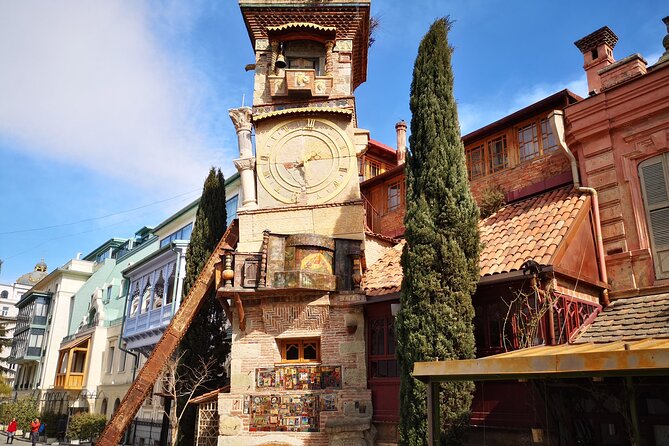
The Rezo Gabriadze Marionette Theater is modest in size but highly regarded for serious puppet performances. The tour allows about five minutes here, so you will see the exterior and receive an introduction rather than attend a show.
That brief stop still earns its place. Gabriadze is part of Tbilisi’s modern cultural identity, and its location fits naturally with the historic center.
Anchiskhati Basilica follows. Dating from the sixth century, it is the oldest surviving church in Tbilisi. Wars and repeated rebuilding changed the structure over the centuries, but its age and Georgian Orthodox role make it an important stop.
If timing allows, you might hear the Anchiskhati Choir, known for Georgian polyphonic choral music. This is not guaranteed, so consider any singing an unexpected bonus rather than part of the promise.
Cable car views and Narikala Fortress

The cable car from Rike Park to Narikala Fortress is one of the day’s clearest highlights. The ride takes about 15 minutes and provides broad views over Tbilisi and Sololaki Hill. It also saves your legs before the walk down through the old city.
Narikala’s ruins reach back to the fourth century. Georgians, Turks, Arabs, and Persians all added to or changed the fortress over time. From the hill, the site gives you both a historic point of reference and a strong view over the Mtkvari River and the city below.
The fortress visit is listed at about 10 minutes. That is enough to look around and take photographs, but not enough for a detailed exploration of every wall and corner. Wear shoes you are comfortable walking in, since the route continues downhill through Old Tbilisi.
Walking through Old Tbilisi to the waterfall

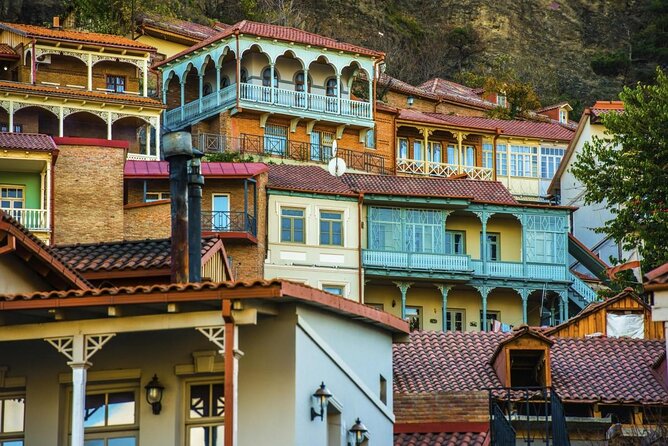
The walk from Narikala into Old Tbilisi is where the city’s layers come together. You pass traditional wooden balconies, old churches, mosques, sulfur bath buildings, Art Nouveau details, small shops, galleries, and local eateries.
The Old Town visit itself is listed at about 15 minutes, but the route includes several additional stops. The guide’s value here comes from connecting the sights. Tbilisi’s old lanes can look like a jumble of buildings unless someone explains how religious communities, trade, baths, and homes fit into the same district.
Leghvtakhevi Waterfall is a pleasant change from stone streets. It sits in a canyon in the heart of the old city and takes about 10 minutes to visit. Local stories connect the waterfall with Queen Tamar’s private bathing place, while other tales associate it with poets and writers.
The waterfall is photogenic, but it can also be a busy stop. Keep expectations practical: this is a short urban nature break, not a remote hike.
Abanotubani and Meidan Bazaar
Abanotubani is Tbilisi’s sulfur-bath district. A local legend says King Vakhtang Gorgasali’s falcon fell near the hot springs, helping lead to the founding of the city. By the 13th century, the bath district had reached a reported 65 baths.
Today, the domed bathhouses and Persian-influenced architecture make this one of the city’s most recognizable areas. The tour provides about 10 minutes here, enough for an explanation and photographs. A bath visit is not included, so you would need to return separately if you want to use one.
Meidan Bazaar is an optional five-minute stop below the tourist center. It offers Georgian wine, socks, postcards, jams, sauces, spices, tea, and other handmade goods. It is a convenient place to see the type of souvenirs sold in central Tbilisi, though prices and shopping time will be limited on a group route.
Sioni Cathedral may also be visited briefly. The church was first built in the sixth and seventh centuries and rebuilt after attacks by foreign forces. Inside, the grapevine cross linked with Saint Nino is the key detail to watch for. Admission is free, but the visit is optional.
Vintage style and a drink at Fabrika
Vintylator Vintage Shop brings the tour into present-day Tbilisi’s fashion scene. Its collection covers clothing from the 1960s through the 1990s, including dresses, jackets, jeans, and coats.
The stop is only about five minutes, so it is better for a quick look than for a serious fitting session. If you like vintage clothing, note the location and return later when you can browse without watching the clock.
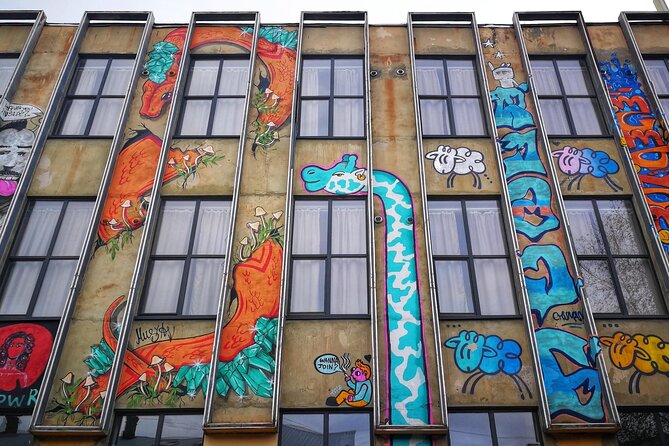
Fabrika is one of the day’s strongest modern stops. A former Soviet sewing factory now houses bars, restaurants, concept stores, and creative businesses around an expansive courtyard. Its appeal comes from the mix of industrial remnants and newer local enterprises.
A drink is included here, and the stop lasts about 25 minutes. That makes Fabrika more than a photograph. You can sit down, take a breather, and get a feel for the social side of current Tbilisi. The space can be popular, so do not expect a quiet historic site.
Dezerter Bazaar and everyday Tbilisi
The Dezerter Bazaar offers a more direct look at local shopping. Inside, you find fruit, vegetables, spices, candles, Georgian cheeses, village meats, and wine.
The market can feel chaotic, which is part of its value. It is not arranged for sightseeing comfort, and the aisles may demand attention. The listed visit lasts about 30 minutes and is optional, so the guide can adjust according to the group and the day’s timing.
This is one of the places where the tour earns its keep for people who want more than monuments. You see what food looks like before it reaches a restaurant and encounter the practical side of Georgian city life.
Optional extensions beyond the core route
Several additional stops are listed for the latter part of the day. Their optional status is important because a seven-hour tour cannot guarantee deep visits to all of them.
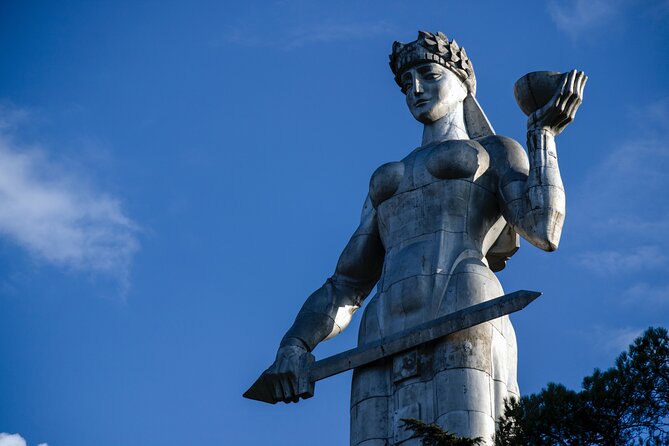
The Chronicle of Georgia is a striking monument near Tbilisi Sea. Its 16 pillars rise about 30 to 35 meters, with Georgian rulers and heroes shown on the upper sections and scenes from the life of Christ below. It was created by Zurab Tsereteli in 1985 to mark 3,000 years of Georgian sovereignty and 2,000 years of Christianity, but it was never completed. Admission is not included.
Mount Mtatsminda offers city views, the Funicular Restaurant Complex, an amusement park, a Ferris wheel, and the television tower. The funicular railway is an attraction in its own right, but admission and rides are not included.
Vake Park, opened in 1946, includes a World War II memorial, children’s areas, an open-air cinema, cafés, and restaurants. Nearby transport links toward Turtle Lake, where you find trees, cafés, benches, and space for a break.
The Open Air Museum of Ethnography displays folk buildings and crafts from across Georgia in ten sections. Turtle Lake and the museum are listed at about 30 minutes each, with museum admission included. Ask your guide early if these extensions matter to you, since they may compete with time at the central stops.
Is $180 a fair price?
At $180 per person, this is not a cheap walking tour. The value depends on how much planning and transport help you want.
You receive a small group capped at 10, a guide for roughly seven to seven and a half hours, coffee at Stamba, lunch at Puri Guliani, a drink at Fabrika, three public transport rides, and cable car admission. Several central sights are free, while some optional attractions have separate costs.
For a visitor with only one or two days in Tbilisi, the price can be reasonable because the route covers areas that are awkward to connect alone. You also avoid spending time working out transport between Rustaveli, Old Town, Fabrika, the bazaar, and the hill areas.
The price is harder to justify if you enjoy making your own route, dislike moving quickly, or plan to eat and shop independently. In that case, a shorter walking tour plus self-guided visits may offer better value.
Who should book this experience?
I would choose this tour for a first visit, especially if you want a broad orientation before exploring favorite districts on your own. It suits people who enjoy walking but appreciate public transport breaks, planned meals, and a guide who can explain the city’s many contrasts.
It also fits couples, families with older children, and small groups who want one organized day. Most people can participate, and the tour operates near public transport.
I would think twice if you need extensive time inside churches, markets, shops, or museums. The schedule is built around variety, not long stays. Also remember that the final hill, park, and museum stops are optional, so confirm the day’s actual plan with the guide at the beginning.
Free cancellation is available if you cancel at least 24 hours before the start time. Changes or cancellations inside that window are not refunded.
Should you book the Tbilisi six-neighborhood tour?
Book it if you want breadth, local food, and easy city orientation in one day. The mix of Stamba, Rustaveli Avenue, Dry Bridge, Old Tbilisi, Fabrika, Dezerter Bazaar, and the hill viewpoints gives you a useful sense of Tbilisi’s past and present.
Skip it if your ideal day means lingering over every church, shopping slowly, or choosing each meal yourself. The route is ambitious, but that is also its purpose. Go in expecting short visits, steady walking, and a few optional decisions, and the $180 price can buy a very efficient first look at Georgia’s capital.
FAQ
How long does the tour last?
The experience lasts approximately seven to seven and a half hours.
How many people can join the tour?
The maximum group size is 10 travelers.
Is hotel pickup available?
Pickup is offered, and the guide then meets the group at Café Stamba.
Is lunch included?
Yes. The tour includes a one-hour lunch break at Puri Guliani.
Is public transportation used?
Yes. Public transportation is used three times during the tour, providing breaks between sections explored on foot.
Is the Tbilisi cable car included?
Yes. The cable car ride from Rike Park to Narikala Fortress is included.
Are the Chronicle of Georgia and Mount Mtatsminda included?
Both are listed as optional stops, and admission is not included for either one.
Just added near Tbilisi
- Wine Tasting feel the Difference of Qvevri or Classical Wine★ 4.4 · 10 reviews
- Walking Tour in Old Tbilisi – Group Tour★ 4.5 · 8 reviews
- From Tbilisi: Kakheti and Kazbegi 2-Day 4X4 Jeep Tour pack★ 5.0 · 6 reviews
- Tbilisi: Vintage Fashion and Secondhand Thrifting Tour★ 5.0 · 11 reviews
- Uforgatable Kakheti Tour with wine tasting – in Georgia★ 4.9 · 5 reviews
- From Tbilisi: Uplistsikhe Caves and Mtskheta Town Day tour★ 5.0 · 2 reviews
- Tbilisi Airport to Gudauri, Bakuriani, Batumi, Tbilisi★ 5.0 · 3 reviews
- Private Adorable City Tour of Tbilisi★ 5.0 · 3 reviews
Full-Day, compared.

Kutaisi Canyons and Caves from Tbilisi Full Day Tour
Read our review →
Kazbegi and Gudauri Full Day Private Tour from Tbilisi
Read our review →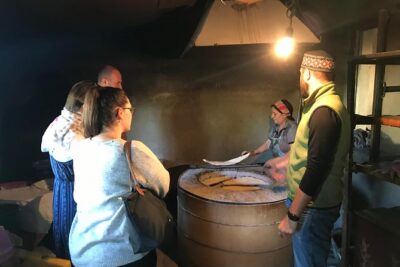
Full Day Private Wine Tour in Kakheti Region with Lunch and 3 Wine Tastings
Read our review →
Kazbegi Full-Day Private Tour with Scenic Stops from Tbilisi
Read our review →

Gudauri and Ananuri full day tour including hotel pick up
Read our review →