Reviewed · TBILISI TOURS
Brutal Tbilisi: Urban exploration and untold stories
Concrete tells stories here. Brutal Tbilisi takes you beyond the old town to Soviet-era buildings, refugee housing, monumental art, and strange structures most people miss. I like the mix of architecture and social history, and I especially like the chance to see everyday Tbilisi rather than another round of pretty balconies. The possible drawback is that some stops are rough, abandoned, or physically demanding, so this is not a polished sightseeing trip.
I also like the way the tour connects buildings to real lives. You may meet the lift operator at Nutsubidze Skybridge, see former student housing now used by displaced families, and hear about the people and politics behind the concrete. The tour costs $75 per person and lasts about four hours, which is fair value if you want context, transport, and access to places you would not easily find alone.
In This Review
- Key points about Brutal Tbilisi
- Why Tbilisi’s concrete deserves four hours
- The Ministry of Highways and the beauty of heavy concrete
- Chronicles of Georgia, history carved on a hill
- The Former Archaeology Museum, an atmospheric change of pace
- Former dormitories and the human side of Soviet planning
- Nutsubidze Skybridge and Tbilisi from above
- What the driving format adds
- Is $75 a fair price?
- Who will enjoy this unusual Tbilisi outing?
- A few practical points before you book
- Should you book Brutal Tbilisi?
- FAQ
- How long does Brutal Tbilisi last?
- What language is the tour offered in?
- Where does the tour begin?
- Where does the tour end?
- Is hotel pickup included?
- Is lunch included?
- What level of fitness is required?
Key points about Brutal Tbilisi
- The Ministry of Highways building: See one of Tbilisi’s most famous Brutalist structures, with giant concrete forms and bold geometric design.
- Chronicles of Georgia: Walk among enormous carved pillars on a hill above the city, where Georgian history and mythology are told in stone.
- Former Archaeology Museum: Enter an abandoned building with a powerful atmosphere and an uncertain, eerie sense of time.
- Refugee housing and Soviet student blocks: Learn how former dormitories changed from university accommodation into homes for people displaced from Abkhazia.
- Nutsubidze Skybridge: Cross elevated walkways roughly 70 meters above the ground and possibly meet the local lift operator.
- Four hours beyond the old town: Travel between distant sites by vehicle, with a guide who adds political, architectural, and personal context.
Why Tbilisi’s concrete deserves four hours
Tbilisi is often introduced through its old town, sulfur baths, churches, courtyards, and leaning balconies. Those sights matter, but they tell only one part of the city’s story. Brutal Tbilisi shifts your attention to the 20th century, when Soviet planners and Georgian architects experimented with concrete, height, transport, public monuments, and large-scale housing.
The result is not always pretty. Some buildings are weathered. Some are still in daily use. Others feel forgotten. That is exactly the point. You see how Tbilisi changed under Soviet rule and how people adapted those structures after independence.
I like this tour most when it treats architecture as evidence of social change. A dormitory is not just a dormitory. A lift is not just a lift. An abandoned museum is not merely a spooky photo stop. Each place opens a conversation about power, education, displacement, modernity, and the stubborn survival of old systems.
The tour is offered in English, and the guides have received especially strong praise for explaining both architecture and Georgian history. Alex, Aleksi, Alexi, Khatuna, Khatua, Khato, and Iona are among the guides named by people who found the experience clear, warm, and engaging. Communication has not been perfect for everyone, so if you have a question, ask it plainly and ask again if needed.
More Tbilisi days to weigh up
- Tbilisi: Day Trip to Kazbegi, Gudauri, Gergeti, and Ananuri
★ 4.9 · 3,203 reviews - Day Trip to Kakheti Wine Region Including 9 Wine Tastings
★ 5.0 · 2,774 reviews - Highlights of Caucasus Mountains-Jinvali,Ananuri,Gudauri,Kazbegi(Group tour)
★ 5.0 · 2,682 reviews
The Ministry of Highways and the beauty of heavy concrete
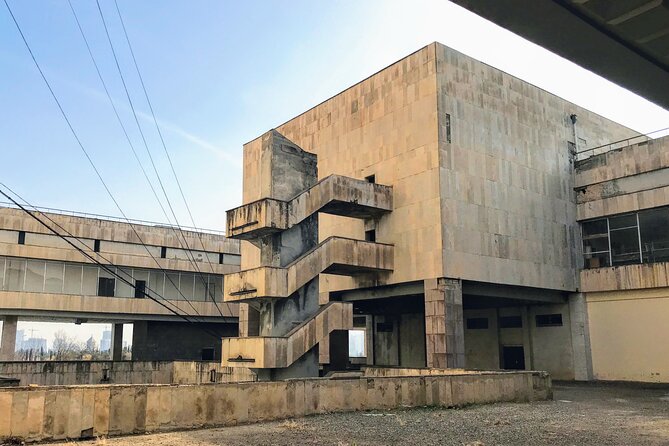
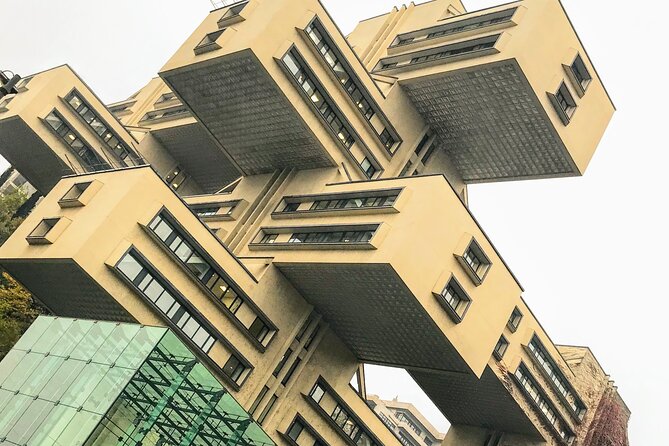
The first major stop is the former Ministry of Highways of the Georgian SSR, now associated with the Bank of Georgia building. Allow about 30 minutes here.
This is the sort of building that makes Brutalism easy to understand. Its massive concrete blocks appear stacked or suspended in a daring arrangement, creating a strong sense of weight while allowing surprising openings and shadows. The sharp forms look severe from one angle and almost playful from another.
Your guide explains how the structure works and why it matters. You are not simply told that it is unusual. You learn how Soviet-era public buildings could serve practical needs while also projecting confidence, authority, and progress.
It is also a good introduction to the tour’s photographic appeal. The building offers hard lines, repeating shapes, and changing views as you move around it. Bring a phone or camera if that interests you, but listen closely too. The value is in understanding the decisions behind the shape.
The stop is free, as are the other listed stops. That does not mean the experience costs nothing to arrange. Much of the price pays for the guide’s research, vehicle time, planning, and ability to connect far-flung places into one sensible outing.
Chronicles of Georgia, history carved on a hill
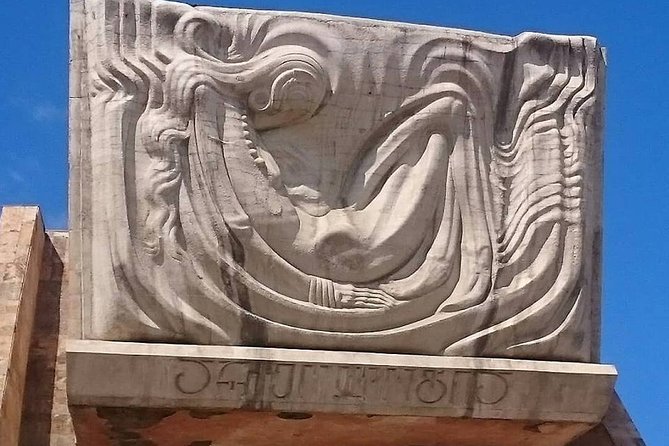
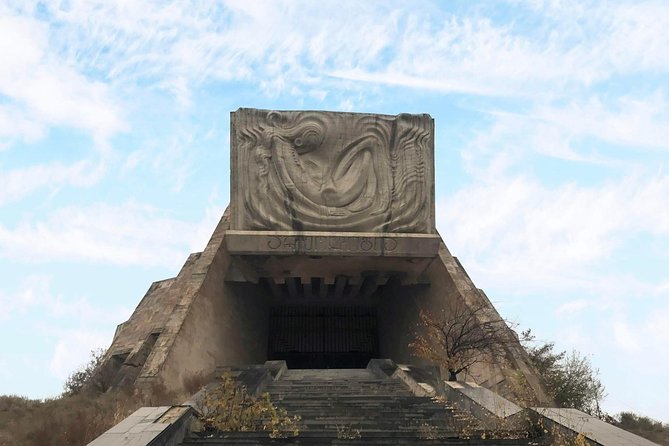
Next comes the Chronicles of Georgia, also called the Memorial History of Georgia. Plan on roughly 45 minutes.
The monument sits on a hill overlooking Tbilisi. Huge stone pillars carry carved scenes connected with Georgian rulers, Christianity, mythology, and national identity. The scale is imposing, and the setting gives the monument room to breathe.
This stop shifts the tone from Soviet architecture to Georgian memory. The carved reliefs invite questions about how a country presents its past, especially after centuries of foreign pressure and political change.
I appreciate the contrast. The Ministry of Highways building speaks through abstract concrete and engineering. Chronicles of Georgia speaks through figurative stone and historical symbols. Seeing both in one morning helps you understand that Tbilisi is not divided neatly into old and new. Different eras sit beside one another, often in uneasy conversation.
The hilltop position also gives you a different view of the city. The tour description promises an outlook over Tbilisi, but conditions can affect what you see. Wear shoes that work on uneven ground, and check the weather before leaving. There is no admission fee listed for this stop.
The Former Archaeology Museum, an atmospheric change of pace
The Former Archaeology Museum receives about 30 minutes, though the exact experience may depend on access and site conditions.
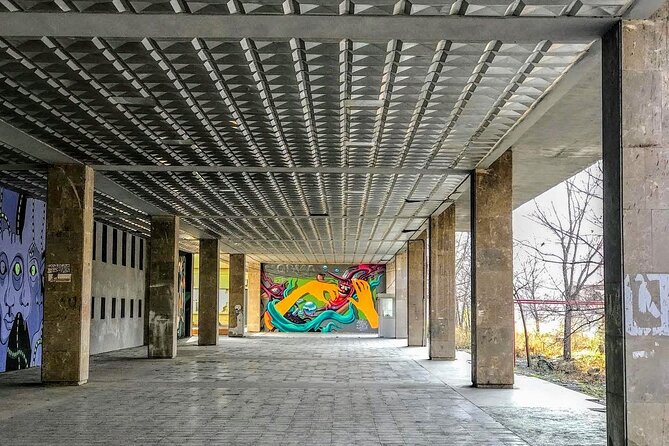
Once a grand museum, the building is now abandoned. Its faded rooms and neglected architecture create a mood very different from the monumental confidence of the earlier stops. You may find the place more atmospheric than orderly, with traces of its former purpose competing with decay.
This was a favorite stop for several people who enjoyed the sense of surprise. That makes sense. A formal museum is designed to organize the past. An abandoned museum leaves the past scattered around you, with the building itself becoming part of the exhibit.
You should not expect a conventional museum visit. There are no listed displays, admission arrangements, or restored interiors. The attraction is the structure, the atmosphere, and the stories attached to it.
This is also one reason the tour asks for moderate physical fitness. The route includes getting in and out of a vehicle, walking at several sites, and potentially navigating old or uneven spaces. The building may not suit anyone who wants a carefully maintained, fully accessible attraction.
A slower pace, same corner of the Caucasus:
- From Tbilisi: Kakheti Wine Region Tour with 9 Wine Tastings
★ 4.9 · 2,541 reviews - Tbilisi: Mtskheta, Jvari, Gori and Uplistsikhe Day Tour
★ 4.9 · 2,396 reviews - From Tbilisi to Kazbegi, Ananuri, Gudauri & Gergeti
★ 4.9 · 2,278 reviews - Tbilisi: Kakheti Wine Region Tour with 10 Wine Tastings
★ 5.0 · 2,160 reviews
Former dormitories and the human side of Soviet planning
At Maglivi Bridge and the university district, the tour looks at former dormitories that now house refugees displaced from Abkhazia. Allow about 30 minutes.
This is where the tour becomes especially human. Soviet student accommodation was built for one purpose, but history changed the meaning of those rooms. Families forced from their homes now live in buildings once linked with education and student life.
Your guide can help you look beyond the concrete. You learn how a building’s function changes when political events reshape a country. The blocks are not presented as abstract architecture alone. They are part of present-day Tbilisi, with people living inside the story.
Approach this stop with sensitivity. You are seeing a residential setting connected to displacement, not a theme park or staged ruin. Photography and access should follow the guide’s instructions. The most valuable thing you can take away is an understanding of how Soviet-era structures continue to serve people in post-Soviet Georgia.
The nearby old cable car in the university district adds another layer. Once a sign of progress and modern transport, it now recalls a different vision of the city. Together, the dormitories and cable car show how infrastructure can outlive the political system that built it.
Nutsubidze Skybridge and Tbilisi from above
The final listed stop is Nutsubidze Skybridge, with around 45 minutes set aside for it.
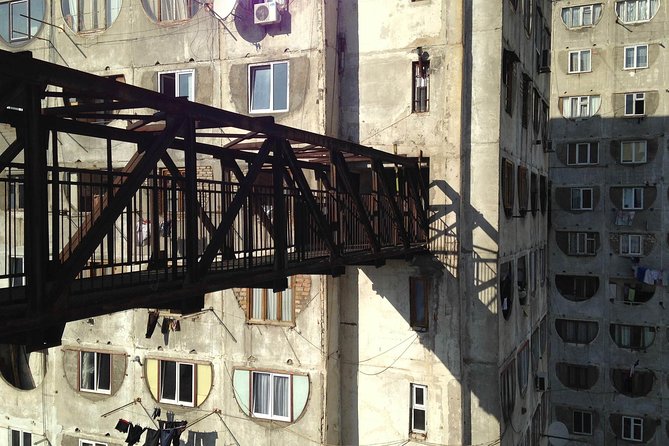
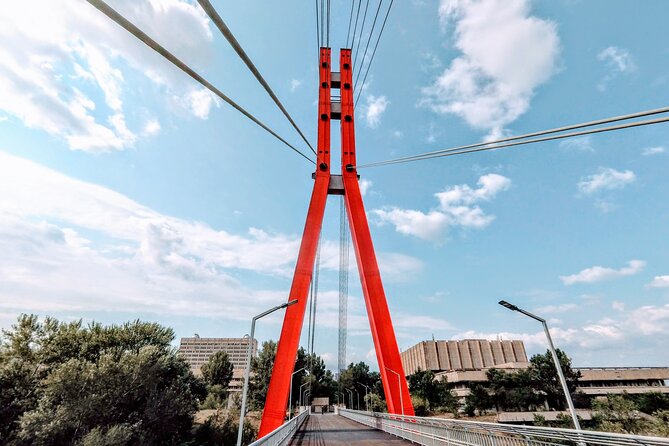
The complex consists of twin residential towers connected by elevated bridges. The walkways sit about 70 meters above the ground, giving you a striking view across the city and a memorable lesson in Soviet residential design.
The skybridges were built to connect towers in an inventive way. Instead of treating housing as a stack of identical apartments, the design creates movement through the air and gives the complex a strong visual identity. It is practical, theatrical, and a little unnerving.
The lift operator is part of the experience for some departures. Several people singled out meeting the lift lady as a favorite moment. That detail captures what makes this tour different from an architecture lecture. You encounter the people who keep these unusual places functioning.
The bridges may not be comfortable for anyone uneasy with height. The tour information also calls for moderate physical fitness, and you should expect walking and possible stairs. If you want to take your time with photographs, tell your guide. Guides such as Khato and Aleksi have been praised for allowing extra time at stops and adjusting the pace.
What the driving format adds
This is described as a driving and walking tour, and that matters. The stops are spread across Tbilisi, including the university district and hilltop monuments. You could try to link some of them independently, but public transport, walking time, and unfamiliar neighborhoods would make the day less efficient.
The vehicle also gives you breathing space between sites. You can ask questions, watch the city change outside the window, and move from monumental public architecture to ordinary residential areas without wasting much of your day.
Private tours include hotel pickup. For the regular shared experience, the meeting point is the Giant Bicycle monument at Rose Revolution Square, and the tour ends back there. Airport drop-off has been arranged for some private outings, but do not assume it is part of the standard booking. Confirm any special transport request before you pay.
The advertised highlights describe a maximum group of six, which is ideal for conversation and photography. The additional booking information gives a maximum of 14 people, so group size may depend on the departure type. If a small group is important to you, confirm the number before booking.
Is $75 a fair price?
At $75 per person, this is not the cheapest way to spend four hours in Tbilisi. You are paying more than the admission cost, since the listed sites are free. The price makes sense if you value a local guide, vehicle transport, bottled water, English commentary, and a route that joins distant sites into one outing.
The strongest value comes from access and interpretation. You might pass the Ministry of Highways building on your own, but you would miss much of the design story. You could find Nutsubidze Skybridge with effort, but the lift operator and the social context would be harder to arrange. The Former Archaeology Museum is especially difficult to place in context without someone who understands the city.
The tour is less good value if you only want a quick photo collection of Soviet buildings. You can find plenty of architecture online. Here, the aim is to understand why these structures exist and what they mean now.
Group discounts are available. Bottled water is included, but lunch is not, so eat beforehand or plan a meal after returning to Rose Revolution Square.
Who will enjoy this unusual Tbilisi outing?
I would choose this tour if you have already seen the old town and want a second view of Tbilisi. It suits architecture fans, photographers, urban explorers, history students, and curious adults who enjoy places with a little roughness around the edges.
It also works well for people who normally avoid guided tours. The vehicle keeps the route practical, while the guide supplies access and context you would have trouble finding alone. The best guides are not just reciting dates. They explain design, politics, daily life, and the city’s changes in a conversational way.
Families with young children may want a different outing. The activity is designed mainly for adults, and the company recommends family-friendly tours for younger children.
Older adults can still enjoy it if they have moderate mobility. One group with retired parents found that the pace could be adjusted and that someone could sit out the Former Archaeology Museum. Discuss your needs with the provider before departure rather than assuming every stop will be easy.
Wear clothing suited to the current weather and sturdy shoes. You will be moving between outdoor monuments, residential structures, and older interiors. Tbilisi weather can change the feel of the day quickly, especially at exposed hilltop sites.
A few practical points before you book
The tour is generally booked about 14 days ahead, so reserve early if your dates are fixed. Confirmation arrives at booking, and the ticket applies only to the stated date and time.
Free cancellation is available up to 24 hours before the start time. Changes or cancellations inside that window are not accepted, with no stated exceptions.
The tour is offered in English. If precise historical or architectural questions matter to you, ask them during the outing and request clarification when necessary. One communication complaint appears among otherwise very positive feedback, so it is sensible to make sure you and your guide understand each other from the start.
The experience is rated five out of five from 59 reviews, with 100 percent recommending it. The most consistent praise goes to the guides’ warmth, historical explanations, flexible pace, and ability to show parts of Tbilisi outside the usual route. That is the heart of the tour.
Should you book Brutal Tbilisi?
Book it if you want to understand modern Tbilisi through concrete, monuments, transport, housing, and personal stories. The Ministry of Highways building and Nutsubidze Skybridge provide the visual drama, while the refugee dormitories and Former Archaeology Museum give the day emotional weight.
Skip it if you want a gentle old-town stroll, a polished museum visit, or a family attraction built around easy access. This is a rough-edged, adult-oriented outing with some walking and uncertain conditions at abandoned sites.
For the right person, $75 buys more than five unusual stops. It gives you a guide to the city’s Soviet and post-Soviet chapters, plus a chance to see how Tbilisi’s grand plans and ordinary lives still overlap.
FAQ
How long does Brutal Tbilisi last?
The experience lasts approximately four hours.
What language is the tour offered in?
The tour is offered in English.
Where does the tour begin?
The meeting point is the Giant Bicycle monument at Rose Revolution Square in Tbilisi.
Where does the tour end?
The activity ends back at the meeting point.
Is hotel pickup included?
Hotel pickup is available only for private tours.
Is lunch included?
No. Bottled water and a local guide are included, but lunch is not.
What level of fitness is required?
You should have a moderate level of physical fitness. The route includes walking and may involve older or uneven sites, elevated walkways, and other conditions that are not suited to everyone.
Just added near Tbilisi
- Wine Tasting feel the Difference of Qvevri or Classical Wine★ 4.4 · 10 reviews
- Walking Tour in Old Tbilisi – Group Tour★ 4.5 · 8 reviews
- From Tbilisi: Kakheti and Kazbegi 2-Day 4X4 Jeep Tour pack★ 5.0 · 6 reviews
- Tbilisi: Vintage Fashion and Secondhand Thrifting Tour★ 5.0 · 11 reviews
- Uforgatable Kakheti Tour with wine tasting – in Georgia★ 4.9 · 5 reviews
- From Tbilisi: Uplistsikhe Caves and Mtskheta Town Day tour★ 5.0 · 2 reviews
- Tbilisi Airport to Gudauri, Bakuriani, Batumi, Tbilisi★ 5.0 · 3 reviews
- Private Adorable City Tour of Tbilisi★ 5.0 · 3 reviews
Tbilisi Tours, compared.
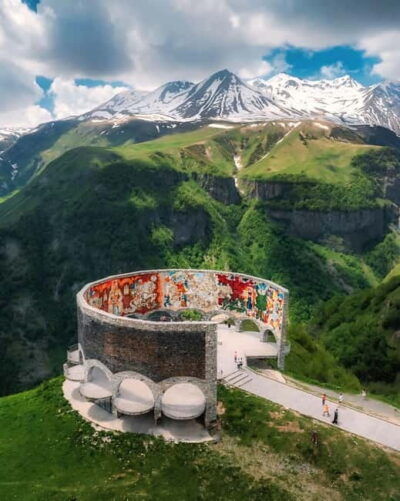
Day Trip to Kazbegi, Gudauri, Gergeti, and Ananuri
Read our review →
Day Trip to Kakheti Wine Region Including 9 Wine Tastings
Read our review →
Highlights of Caucasus Mountains-Jinvali,Ananuri,Gudauri,Kazbegi(Group tour)
Read our review →
Kakheti Wine Region Tour with 9 Wine Tastings
Read our review →
Mtskheta, Jvari, Gori and Uplistsikhe Day Tour
Read our review →
From Tbilisi to Kazbegi, Ananuri, Gudauri & Gergeti
Read our review →
Kakheti Wine Region Tour with 10 Wine Tastings
Read our review →