
Reviewed · CAVE CITIES AND UPLISTSIKHE TOURS
From Tbilisi:Mtskheta, and Uplistsikhe Day Trip-wine tasting
Ancient Georgia fits into one long day. This $16 trip from Tbilisi links Mtskheta’s sacred churches with Uplistsikhe’s remarkable caves, while guide Mikho has earned praise for turning the drive into part of the experience. I especially like the hilltop view from Jvari Monastery and the chance to walk through an Iron Age cave city. The main drawback is the pace: four major stops in nine hours leave limited time to linger.
I also like that the tour includes transport and a professional English or Russian-speaking guide, keeping the day simple for you. Budget extra for entrance fees, however, since Uplistsikhe and the Stalin Museum cost more than the advertised tour price, and the optional wine tasting is separate.
In This Review
- Five things to know before booking
- The day at a glance: nine hours from central Tbilisi
- Mtskheta: Georgia’s old capital and spiritual center
- Jvari Monastery: the best panorama of the route
- Gori and the Stalin Museum: a difficult piece of history
- Uplistsikhe: walking through a city carved into rock
- The guide can make the long drive worthwhile
- What the $16 price really includes
- Who should book this Georgia day trip?
- Practical tips for a better day
- Should you book it?
- FAQ
- Where does the tour start?
- How long does the tour last?
- Which languages are available?
- Are transport and guiding included?
- How much are the entrance fees?
- Is the wine tasting included?
- What should I bring?
Five things to know before booking
- Uplistsikhe is the day’s main event: Expect carved halls, tunnels, wine cellars, temples, granaries, and broad views over the valley.
- Mtskheta brings Georgia’s spiritual center into focus: Svetitskhoveli Cathedral and Jvari Monastery show two different sides of the country’s early Christian tradition.
- Jvari is a hilltop stop: The views are excellent, but the visit involves walking and weather exposure.
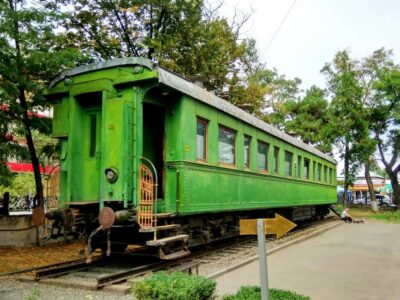
- Gori adds a complicated modern chapter: The Stalin Museum presents personal objects, photographs, and his bulletproof train carriage.
- The advertised price is only the starting point: Add 15 GEL for Uplistsikhe, 15 GEL for the Stalin Museum, and another 5 GEL if you choose the wine tasting.
- Mikho may be your guide: He is praised for lively storytelling, local traditions, and even getting the group singing Georgian songs on the return drive.
The day at a glance: nine hours from central Tbilisi
The tour starts in front of the Magti Office, beside the Max Weber Stiftung Georgia Branch Office. You return to the same place after about nine hours, making this a useful choice if you want a full day outside Tbilisi without arranging a car, driver, and separate admissions yourself.
The route combines three very different experiences. Mtskheta gives you Georgia’s religious core, Gori brings in Soviet-era politics and the story of Joseph Stalin, and Uplistsikhe takes you much further back, to a settlement cut into rock long before modern Georgia existed.
Transport is included both ways. That matters here because the stops are spread across the countryside, and the day would be awkward to piece together with local transport. You should still expect a long day in a vehicle, with several walking stops and a fairly full schedule.
The tour is offered in English or Russian. A guide can add real value on this route because the churches, cave chambers, and Stalin exhibits are not always self-explanatory. A plain stone wall at Uplistsikhe can be a home, storage room, altar, or wine space depending on its shape and period. The right explanation helps you see more.
More cave cities you can walk through:
- Tbilisi: Mtskheta, Jvari, Gori and Uplistsikhe Day Tour
★ 4.9 · 2,396 reviews - Day Trip to Mtskheta Gori and Uplistsikhe
★ 5.0 · 1,801 reviews - Tbilisi: Borjomi, Rabati & Vardzia Adventure Guided Tour
★ 4.9 · 817 reviews
Mtskheta: Georgia’s old capital and spiritual center
Mtskheta is one of the oldest continuously inhabited cities in the world and was once Georgia’s ancient capital. Today, its importance is mainly religious. This is where the tour shifts from a drive through Georgian countryside to a close look at the country’s Christian traditions.
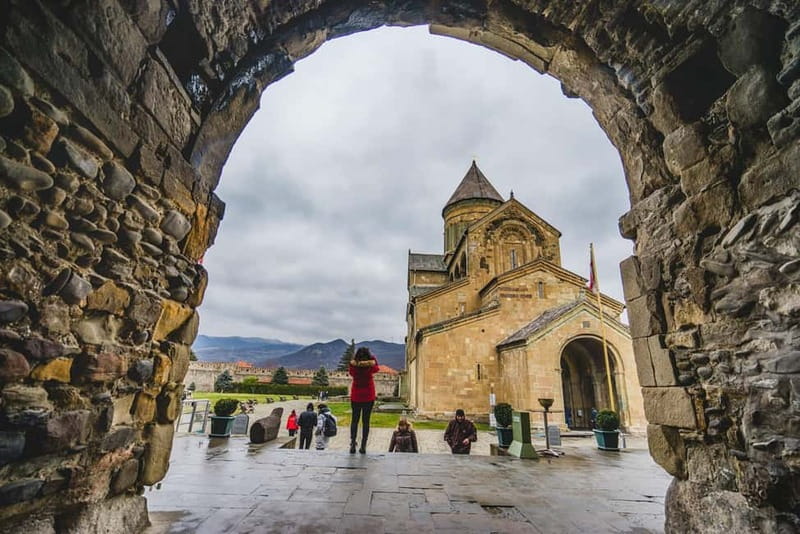
Your main stop is Svetitskhoveli Cathedral, one of Georgia’s most important churches. Its name is associated with the life-giving pillar, and local religious tradition holds that Christ’s robe is buried here. You do not need to accept the legend literally to understand why the cathedral carries such weight for Georgian visitors.
Inside, keep your attention on the architecture and atmosphere rather than rushing for photographs. The building is a fine example of Georgian church design, with a strong, almost fortress-like exterior and a solemn interior. Photography is allowed, but no flash is permitted inside churches, so set your camera before entering.
The visit is listed as both a photo stop and a guided visit. That usually means you will have enough time to see the major features, hear the key stories, and take pictures, but not necessarily enough time for a slow architectural study. If you want a quiet moment, step slightly away from the main flow after the guide finishes speaking.
Mtskheta is a good early stop because it gives you context for Jvari, the next visit. You are not just seeing two old buildings. You are seeing a former capital and the hilltop monastery that watches over it.
Jvari Monastery: the best panorama of the route
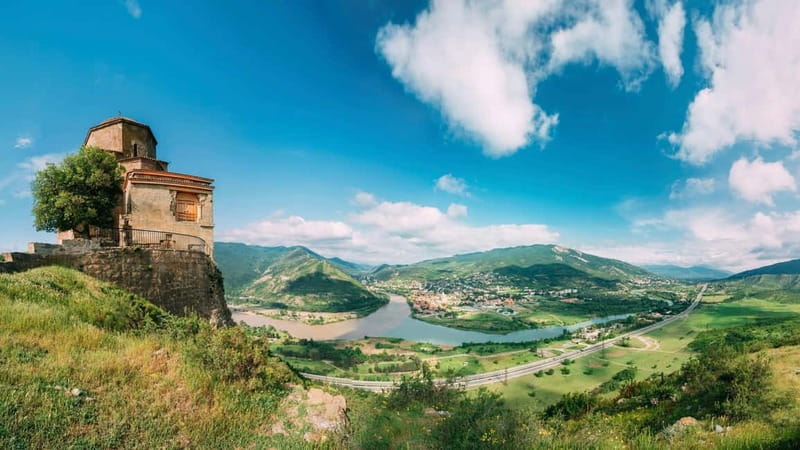
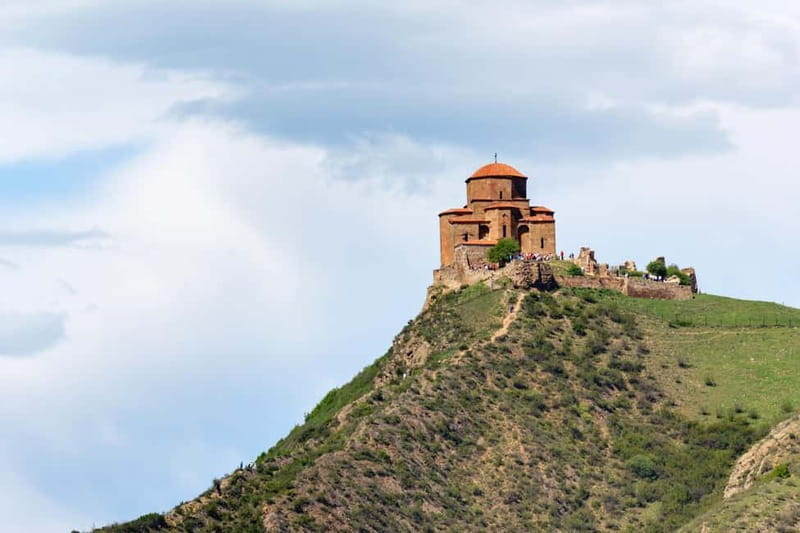
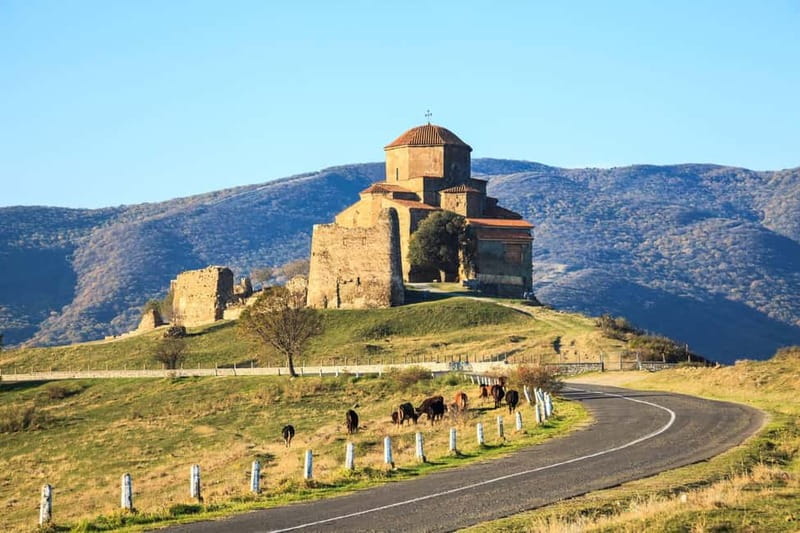
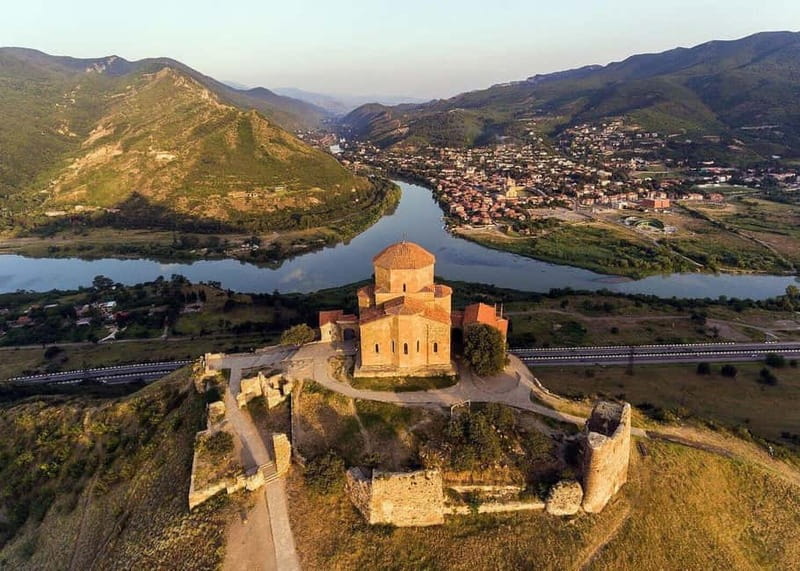
Jvari Monastery sits on a hill above the meeting point of the Aragvi and Mtkvari rivers. From here, you get one of the clearest wide views of Mtskheta and the surrounding countryside.
The setting is the reason to pay attention. Jvari is not simply another church added to a checklist. Its high position explains its power as a religious site and gives you a strong sense of how rivers, roads, settlements, and hills shape this part of Georgia.
The monastery itself is important, too. It is one of the country’s major early Christian landmarks and forms part of Mtskheta’s UNESCO-listed heritage. The visit gives you a useful contrast with Svetitskhoveli. Svetitskhoveli feels tied to the old city below, while Jvari looks outward across the whole region.
Bring a camera, but do not spend the entire stop looking through it. The view is best understood in person, especially where the two rivers come together. Weather can change the experience quickly, so take a light layer and check the forecast before leaving Tbilisi.
You should also wear shoes with a good grip. The tour information calls for a moderate amount of walking, and a hilltop church is not the place for thin-soled sandals if the ground is uneven or damp.
Gori and the Stalin Museum: a difficult piece of history
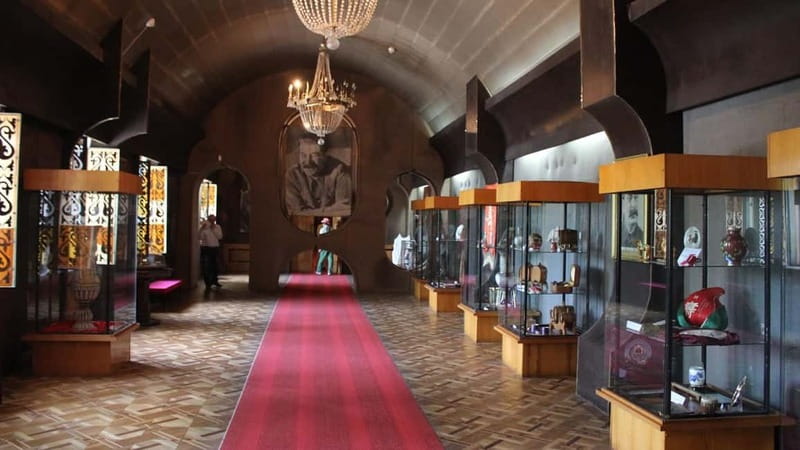
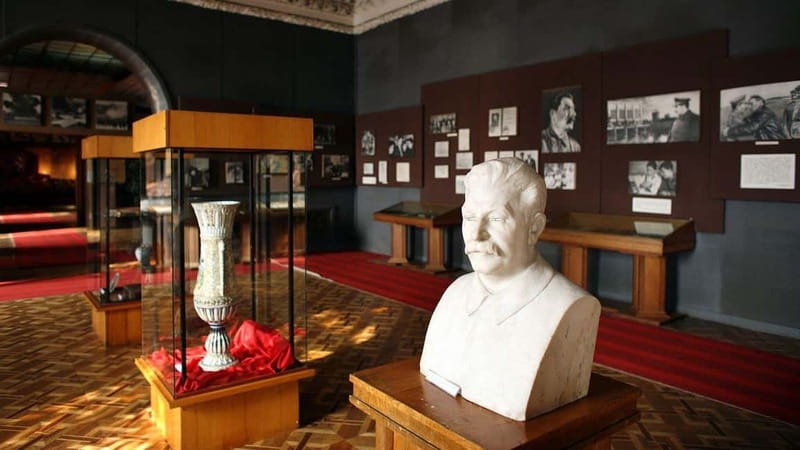
Gori is best known as the birthplace of Joseph Stalin, the Soviet leader. The Stalin Museum is included as a guided stop, with an entrance fee of 15 GEL paid separately.
The museum presents Stalin through personal belongings, photographs, and displays connected to his life. You can also see his bulletproof train carriage, an unusual object that makes the scale and security of his rule more tangible than a portrait alone.
This stop adds a modern political layer to a day otherwise focused on ancient churches and archaeological remains. It is also the most complicated stop emotionally and historically. A museum about Stalin can easily become a collection of personal objects unless the broader story of Soviet power, repression, and propaganda receives equal attention.
Your guide matters here. Ask questions if you want more context, especially about how Stalin is presented and how his legacy is viewed in Georgia. The tour promises a guided visit, so use that time to connect the exhibits with the wider history rather than simply passing from room to room.
The museum may not suit every visitor. If your main interest is medieval architecture or archaeology, this can feel like a sharp change of subject. If you want a fuller picture of Georgia, however, Gori helps show that the country’s past is not confined to monasteries and ancient ruins.
The 15 GEL admission is not part of the $16 tour price, so keep cash available for this stop. The same applies to Uplistsikhe.
More half-days at Mtskheta and Jvari:
- Tbilisi: Mtskheta Jvari Bazaar, Chronicles of Georgia & Wine
★ 5.0 · 1,088 reviews - Tbilisi:Mtskheta,Jvari,Bazaar,wine tasting,Chronicles of Georgia
★ 5.0 · 730 reviews - From Tbilisi : Mtskheta, Jvari, Gori & Uplistsikhe Day Trip
★ 4.8 · 432 reviews - From Tbilisi: Mtskheta, Jvari, Gori, Uplistsikhe Guided Tour
★ 4.7 · 354 reviews
Uplistsikhe: walking through a city carved into rock
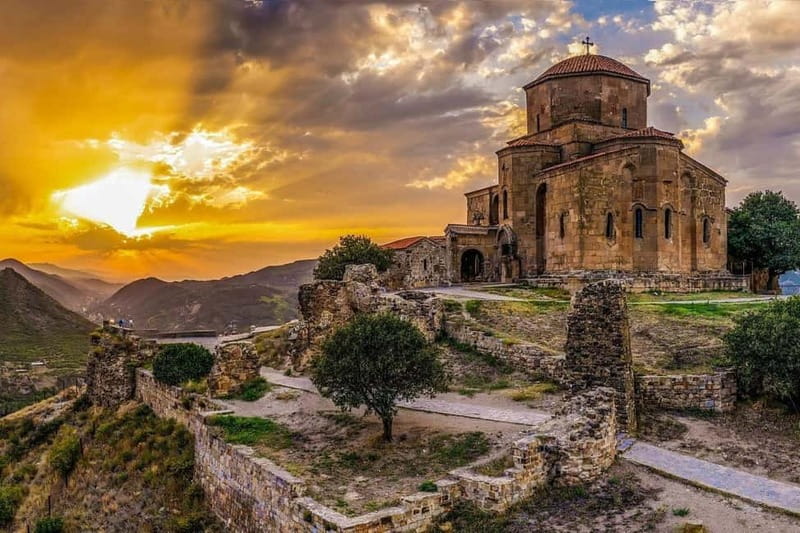
Uplistsikhe is the highlight for many people on this route, and it is easy to see why. The site began in the early Iron Age, during the first millennium BC, and later served as a major political and religious center.
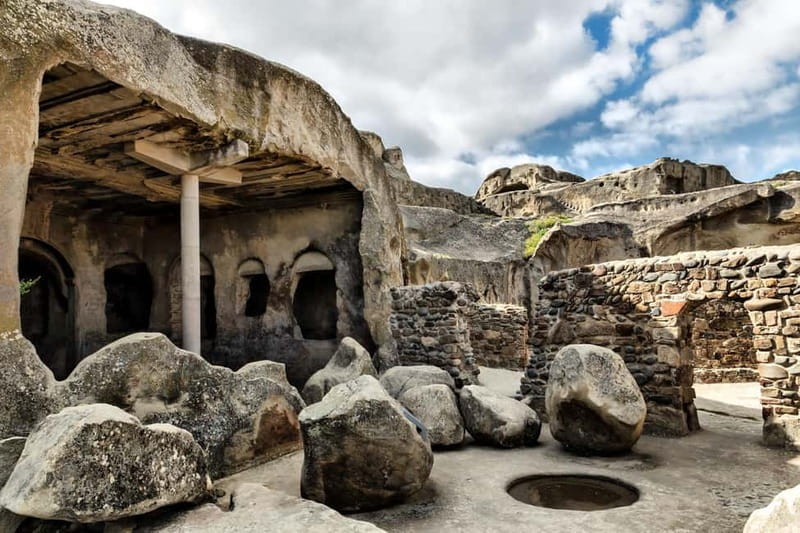
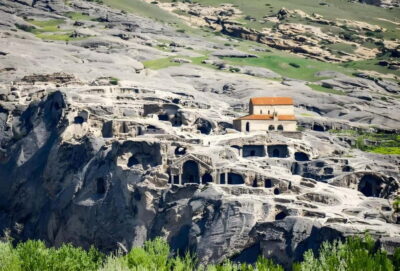
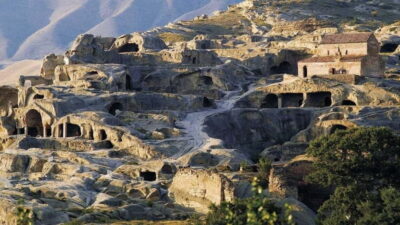
Rather than entering a single monument, you walk through an open-air archaeological site cut into soft rock. The remains include cave dwellings, halls, pagan temples, Christian churches, ancient wine cellars called marani, tunnels, and granaries.
The variety is what makes Uplistsikhe work so well. You are not looking at one ruined building with a short explanation. You are moving through a settlement that once had different functions and beliefs. Pagan spaces sit close to Christian remains, showing how the site changed as Georgia’s religious life changed.
Look closely at the practical details. Rock-cut rooms can feel plain at first, but their size, position, and connections reveal how people stored food, made wine, gathered, worshipped, and moved through the settlement. The tunnels are especially useful for understanding how the site was connected and protected.
The footing is uneven, and the site has little shelter from the weather. Comfortable shoes, water, and clothing suited to the forecast are essential. If the day is hot, the exposed rock can make the walk feel harder than the distance suggests. If it rains, surfaces may be slippery.
Admission costs 15 GEL, with an optional 5 GEL wine tasting. The tasting is not included, so decide based on your interest and remaining time. Wine is central to Georgian culture, and a small tasting can add a local touch, but the archaeological site itself is the reason to come.
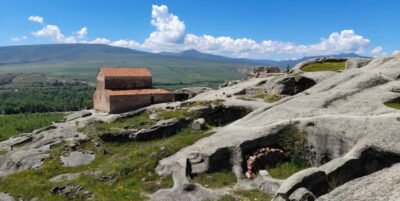
The views from Uplistsikhe also reward you. From the rock city, you look across the surrounding valley and river, gaining a better sense of why this site had political value. Its position was not chosen at random.
The guide can make the long drive worthwhile
A route this full depends heavily on the guide. The stops are valuable on their own, but the transitions between them are where a good guide can connect the pieces.
Mikho is praised for explaining Georgian history, culture, and traditions in a way that kept the day fun. One especially memorable detail is that the group ended up singing a Georgian song on the way back to Tbilisi. That is the sort of unplanned moment that can turn a standard sightseeing day into a warmer cultural experience.
You should not assume every departure will have the same guide or the same mood. Still, the tour’s English and Russian guide service is important because the sites cover complicated subjects, from early Christianity to Soviet rule. A guide who tells stories clearly can keep the day from becoming a sequence of names and dates.
This is also a good tour for asking focused questions. At Mtskheta, ask about the cathedral’s religious role. At Jvari, ask why the hilltop location mattered. At Uplistsikhe, ask how pagan and Christian features fit together. At the Stalin Museum, ask for historical context beyond the personal memorabilia.
What the $16 price really includes
At $16 per person, the tour is inexpensive for a nine-hour day with round-trip transport and a professional guide. The value is strongest if you are staying in Tbilisi and want to cover several important sites without paying for a private driver.
You need to budget beyond the headline price:
- Uplistsikhe entrance: 15 GEL
- Stalin Museum entrance: 15 GEL
- Optional wine tasting: 5 GEL
- Meals, drinks, and personal expenses: not included
That means the required site admissions add 30 GEL per person, while the wine tasting brings the total extras to 35 GEL. The tour price remains attractive, but you should not treat $16 as the full cost of the day.
Meals are not included, and no meal stop is specified. Bring water and consider carrying a simple meal for outside the vehicle, while remembering that food is not allowed in the vehicle itself. Alcoholic drinks are also prohibited in the vehicle.
The no-smoking rule applies inside the vehicle as well. These restrictions are basic, but they matter on a full-day outing.
Who should book this Georgia day trip?
I would choose this trip if you want a broad introduction to Georgian history in one day. It suits first-time visitors based in Tbilisi, people without a rental car, and anyone who prefers a guide to explain religious and archaeological sites.
It is especially good for you if you enjoy variety. In a single day, you see a former capital, two major churches, a Soviet museum, a cave settlement, river views, and the option of a wine tasting.
You may want a slower private tour instead if you prefer long lunches, extended photography, or detailed time at every site. Four major stops create a full schedule, and Uplistsikhe alone could easily absorb more time for anyone interested in archaeology.
Families and older visitors should consider the walking involved. The information provided describes a moderate amount of walking, with uneven outdoor ground at Uplistsikhe and a hilltop setting at Jvari. Comfortable shoes are not optional advice here.
The tour can also suit solo visitors who want company and structure. With a meeting point in Tbilisi, included transport, and free cancellation up to 24 hours ahead, the plan is relatively easy to fit into a flexible itinerary. You can also reserve now and pay later, which helps if your schedule is still moving.
Practical tips for a better day
Wear shoes that can handle uneven ground. You will be walking through churches, up to a hilltop monastery, and across a rock-cut archaeological site.
Bring water, a camera, and weather-appropriate clothing. The churches are more sheltered, but Jvari and Uplistsikhe expose you to the conditions.
Respect the no-flash rule inside churches. Photography is allowed, but the religious setting deserves a quiet approach.
Keep some Georgian lari for admissions and the optional tasting. The two required entrance fees total 30 GEL, and the wine tasting adds 5 GEL.
Do not plan a heavy evening after the tour. Nine hours, a long drive, and several walking stops make this a full day, even though the sites are close enough to visit from Tbilisi.
Should you book it?
Book this tour if you want strong value, a packed route, and a clear introduction to Georgia’s ancient, religious, and Soviet past. Jvari’s panorama and Uplistsikhe’s rock-cut rooms are the biggest reasons to go, while Gori gives the day a more challenging modern edge.
Skip it if you want a slow, highly specialized visit or dislike paying entrance fees separately. For most visitors with one free day in Tbilisi, though, the combination is hard to match at this price. If Mikho is guiding your departure, his storytelling and good humor may even turn the ride home into part of the memory.
FAQ
Where does the tour start?
The meeting point is in front of the Magti Office, by the Max Weber Stiftung Georgia Branch Office in Tbilisi.
How long does the tour last?
The full experience lasts about nine hours, including the return to the starting point.
Which languages are available?
The live guide service is available in English and Russian.
Are transport and guiding included?
Yes. Round-trip transport from Tbilisi and a professional guide are included.
How much are the entrance fees?
Uplistsikhe costs 15 GEL, and the Stalin Museum costs 15 GEL. These fees are separate from the tour price.
Is the wine tasting included?
No. The optional wine tasting at Uplistsikhe costs an additional 5 GEL.
What should I bring?
Bring comfortable walking shoes, water, a camera, and clothing suited to the weather. Flash photography is not allowed inside the churches.
More Food Tours in Georgia
- 3 Hour It’s 5 o’clock on the Riverwalk Walking Food Tour-Augusta
★ 5.0 · 5 reviews - Old Tbilisi Tour: Private Walking Tour With Wine Tasting
★ 5.0 · 273 reviews - Private Tbilisi Food Tour: 9 Tastings Walk in Bohemian District
★ 5.0 · 227 reviews - Tbilisi Food Tour in a Local Family
★ 5.0 · 113 reviews
More Georgian Wine Tasting near Georgia
- Georgia Horseback Ride with Wine Tasting
★ 3.0 · 7 reviews - Day Trip to Kakheti Wine Region Including 9 Wine Tastings
★ 5.0 · 2,774 reviews - From Tbilisi: Kakheti Wine Region Tour with 9 Wine Tastings
★ 4.9 · 2,541 reviews - Tbilisi: Kakheti Wine Region Tour with 10 Wine Tastings
★ 5.0 · 2,160 reviews
Just added near Georgia
- Fugitives, Fighters, and Fudge: St. Marys Walking Tour★ 5.0 · 10 reviews
- 1,5 Hours Tea House and Tea Garden Trip in Ozurgeti Georgia★ 5.0 · 8 reviews
- Marietta Ghosts of Christmas Past Walking Tour★ 5.0 · 10 reviews
- Ocmulgee Mounds Smartphone (GPS/APP) Guided History Walking Tour★ 5.0 · 2 reviews
- Full-Day Private Wilderness Tour in Vashlovani National Park★ 5.0 · 10 reviews
- St. Marys Murder, Mayhem, and Martinis Walking Tour★ 5.0 · 13 reviews
- 3000′ Discover Hang Gliding Tandem Flight with a Instructor★ 5.0 · 5 reviews
- Full Day Self Guided Tour in Bell Mountain via Slingshot★ 5.0 · 3 reviews
Cave Cities and Uplistsikhe Tours, compared.
Mtskheta, Jvari, Gori and Uplistsikhe Day Tour
Read our review →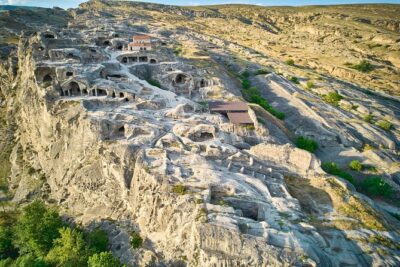
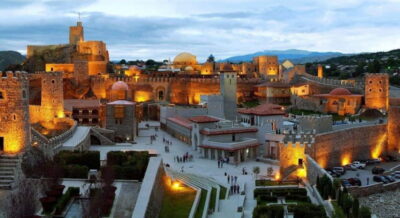
Borjomi, Rabati & Vardzia Adventure Guided Tour
Read our review →
Browse the lists this tour appears in