Reviewed · TBILISI TOURS
Hidden Tbilisi: A Journey Through Modernism & Brutalism
Concrete can tell surprising stories. Hidden Tbilisi takes you beyond the old town to Soviet-era buildings, unusual public spaces, and architectural works that many visitors never see. I like the focus on Georgia’s overlooked architects and the way guides connect buildings to ordinary life, politics, and personal memories. I also like the private format, with hotel pickup and transport included.
The main drawback is that access can change. You cannot enter the Wedding Palace on this tour, and some other locations may be closed or replaced. The six-hour route also suits curious adults more than families with young children or anyone who struggles with walking on uneven ground.
In This Review
- Key points to know before booking
- Why this Tbilisi tour feels different
- A six-hour route through concrete and memory
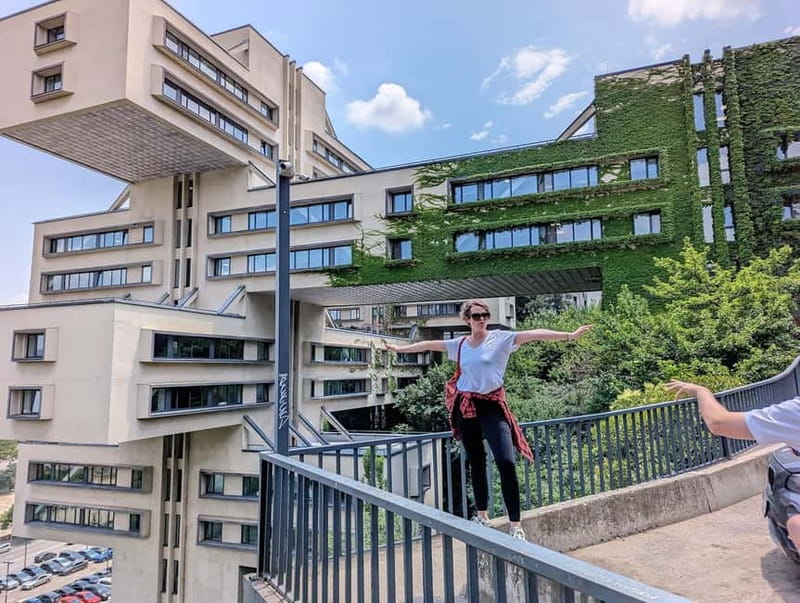
- Skybridge and the idea of connection
- The Wedding Palace, viewed from outside
- Georgia’s own bold architectural voices
- The crematorium and a quieter side of Soviet design
- The Ministry of Roads and futuristic ambition
- The archaeological museum and its darker layers
- A bakery break with khachapuri
- What the $176 price really buys
- Who should book, and who should skip it
- Should you book Hidden Tbilisi?
- FAQ
- How long does the Hidden Tbilisi tour last?
- How much does the tour cost?
- Is hotel pickup included?
- Is the tour private?
- What language is the tour conducted in?
- Can I enter the Wedding Palace?
- What happens if a location cannot be visited?
- What should I bring?
- Is the tour suitable for wheelchair users or young children?
Key points to know before booking
- Skybridge and the Wedding Palace: See two of Tbilisi’s boldest modernist creations and learn why their forms were so unusual for their time.
- A tour led by local guides: Alex, Khato, and Khatuna have been praised for combining architectural facts with stories about daily life in Georgia.
- Private transport for up to two people: The $176 price covers one private group of up to two, with pickup and drop-off at your Tbilisi address.
- The crematorium near the cemetery: This unusual stop adds a darker, more reflective side to the tour’s study of Soviet design.
- A break for khachapuri: A local bakery stop has added a welcome food moment to the architecture-focused day.
- Bring clothes that can get dirty: Some locations may feel more like an urban expedition than a polished museum visit.
Why this Tbilisi tour feels different
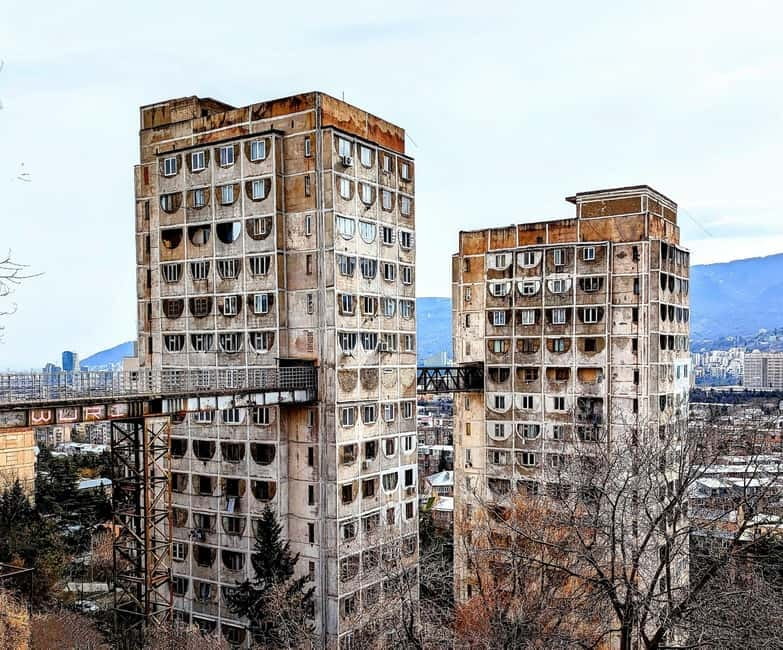
Tbilisi is often introduced through its old town, hillside churches, sulfur baths, balconies, and winding lanes. Those sights matter, but they show only one part of the city. This tour turns your attention to the twentieth century, when Georgia was part of the Soviet Union and architects were given ambitious public projects.
The result is a city full of unusual concrete forms, dramatic angles, bridges, ceremonial buildings, and structures that seem to question the usual rules of design. Here, a building is not only something you enter. It can express political ambition, social ideals, technical confidence, or the taste of a particular architect.
I like this approach because it asks you to read the city rather than simply photograph it. You look at how a building meets the street, how people were meant to move through it, and how its original purpose fits, or fails to fit, modern Tbilisi.
The tour is run by Brutal Georgia and lasts six hours. It is a private experience for up to two people, conducted in English. That small format matters. You can ask why a building was placed in a certain part of the city, how it was used, or what has happened to it since the Soviet period without trying to squeeze your question into a crowded group outing.
More Tbilisi days to weigh up
- Tbilisi: Day Trip to Kazbegi, Gudauri, Gergeti, and Ananuri
★ 4.9 · 3,203 reviews - Day Trip to Kakheti Wine Region Including 9 Wine Tastings
★ 5.0 · 2,774 reviews - Highlights of Caucasus Mountains-Jinvali,Ananuri,Gudauri,Kazbegi(Group tour)
★ 5.0 · 2,682 reviews
A six-hour route through concrete and memory
The exact order of stops may vary, and some sites may not be accessible on a particular day. If that happens, an alternative site of similar interest is included. That flexibility is useful in Tbilisi, where buildings can have changing access rules, active uses, or uncertain conditions.
Your guide collects you from your address in Tbilisi, then drives between the stops. Transport is included, so you are not left trying to connect distant sites by bus or taxi. That is one of the strongest practical reasons to book a guided route rather than attempt it independently.
You should expect a day built around explanation and observation, not a series of formal indoor museum visits. Some places are viewed from outside. Some may involve rougher ground or neglected surroundings. The request to bring comfortable clothes, sturdy shoes, weather-appropriate clothing, and items that can get dirty is worth taking seriously.
Skybridge and the idea of connection
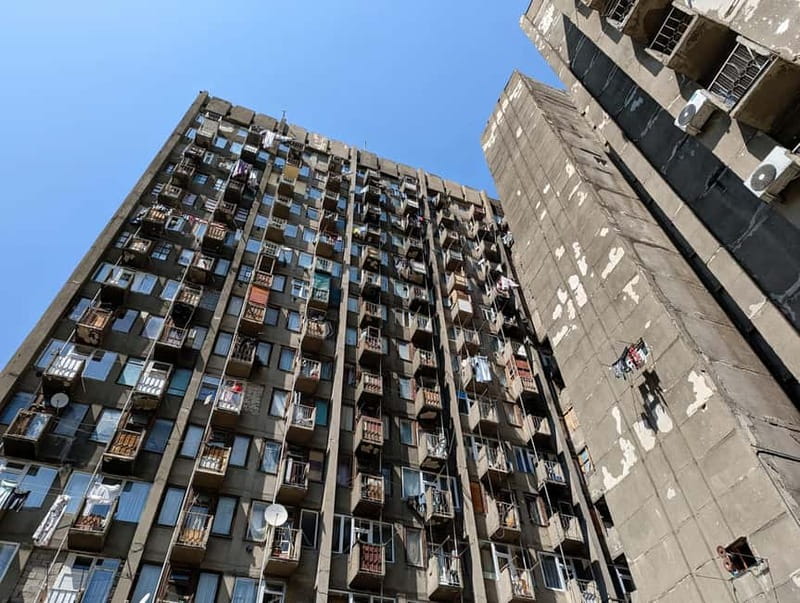
Skybridge is one of the tour’s central architectural subjects. Even its name suggests a building or structure designed to link separate spaces, but the important part is the idea behind it. Soviet public architecture often aimed to make daily movement feel grand, collective, and future-facing.
At Skybridge, your guide can help you notice more than the overall shape. Look at the relationship between the structure and its setting. Consider how people were expected to approach it, cross it, and experience it. The design is a useful starting point for understanding how architecture can turn a basic act, such as moving from one place to another, into a public statement.
This is also a good stop for photography, though the best image may not be the obvious one. Try to frame the bridge with its surrounding concrete forms and look for the contrast between its original ambition and its present condition.
The Wedding Palace, viewed from outside
The Wedding Palace is one of the most discussed buildings on the route. Its shape challenges the usual idea of a ceremonial building. Instead of relying on familiar historical decoration, it uses bold modernist forms to create a sense of occasion.
You cannot enter the grounds or interior during this tour, so you should book with the expectation of an exterior visit. That limitation is important. If you want to see the inside, this experience will not provide it. Still, an exterior explanation can be worthwhile because the building’s design is visible in its silhouette, structure, and relationship with the surrounding area.
Your guide will explain the architectural importance of the Wedding Palace and the thinking behind its design. The stop is especially useful if you enjoy buildings that make you pause and ask what they are meant to represent. A wedding palace is a place tied to emotion and ceremony, yet this one communicates through hard surfaces and striking geometry rather than traditional ornament.
A slower pace, same corner of the Caucasus:
- From Tbilisi: Kakheti Wine Region Tour with 9 Wine Tastings
★ 4.9 · 2,541 reviews - Tbilisi: Mtskheta, Jvari, Gori and Uplistsikhe Day Tour
★ 4.9 · 2,396 reviews - From Tbilisi to Kazbegi, Ananuri, Gudauri & Gergeti
★ 4.9 · 2,278 reviews - Tbilisi: Kakheti Wine Region Tour with 10 Wine Tastings
★ 5.0 · 2,160 reviews
Georgia’s own bold architectural voices
The tour presents local architects as serious designers with ideas of their own, rather than treating Soviet architecture as an anonymous mass of concrete. That is an important distinction.
You will hear about Georgian architects whose work was shaped by the Soviet system but was not simply a copy of architecture from Moscow or elsewhere. Their buildings responded to local conditions, state demands, public rituals, and their own creative instincts.
The description of Georgia’s architect as a local Le Corbusier points toward the ambition of the crematorium and Wedding Palace. You do not need to be an architecture student to follow the discussion. A good guide can explain how shapes, materials, light, circulation, and purpose work together in plain terms.
Alex has been praised for his passion for the subject and the city. Khato has been described as friendly, humorous, and strong at connecting design with local and personal stories. Khatuna has also been noted for sharing her own experiences and giving a sense of everyday life in Georgia. Since guides can vary, the tone may differ, but the strongest part of the experience is clearly the human explanation around the buildings.
The crematorium and a quieter side of Soviet design
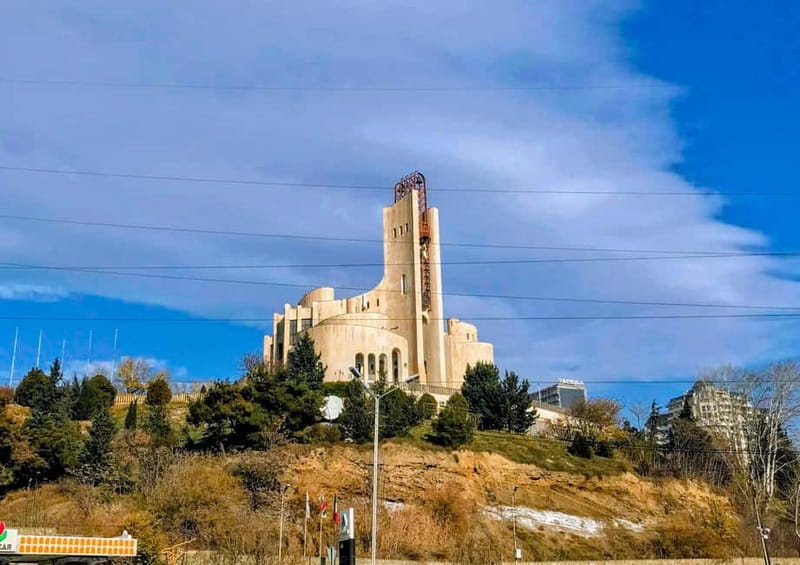
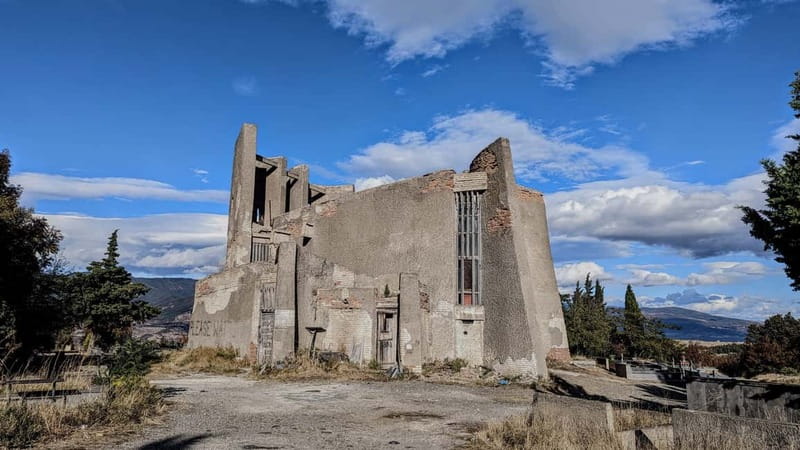
The crematorium is located near a cemetery, making it a more reflective stop than the grander public buildings. Its unusual design shows how Soviet architects applied modernist ideas even to places connected with death and mourning.
This is not a light sightseeing stop, and its setting may not suit everyone. Yet it adds depth to the route. You see how architecture can shape a serious ritual, guide emotion, and give a public form to private grief.
The building also shows why this tour is not simply a collection of photogenic structures. The point is not only that the crematorium looks unusual. The point is to consider why it was designed this way, what it says about the period, and how changing attitudes and political eras affect buildings over time.
If you prefer a cheerful day of standard attractions, this stop may feel heavy. If you want to understand the range of Soviet public architecture, it is one of the more memorable parts of the route.
The Ministry of Roads and futuristic ambition
The Ministry of Roads is another major example of ambitious Soviet design. Its futuristic appearance reflects a period when public buildings were expected to suggest progress, order, and confidence in the future.
The building’s importance comes from the gap between its original message and the way you encounter it today. Your guide can help you consider the difference between a building’s official purpose and its architectural image. What did the designers want people to feel? How does the structure work now? What remains of its original public meaning?
This is where a guide adds real value. Without context, you may simply see a strange concrete building and take a few photographs. With an explanation, you can begin to understand the planning ideas, political climate, and design choices behind it.
The Ministry of Roads also helps balance the route. The Wedding Palace is ceremonial. The crematorium is solemn. The Ministry of Roads brings in the language of government, transport, progress, and state power.
The archaeological museum and its darker layers
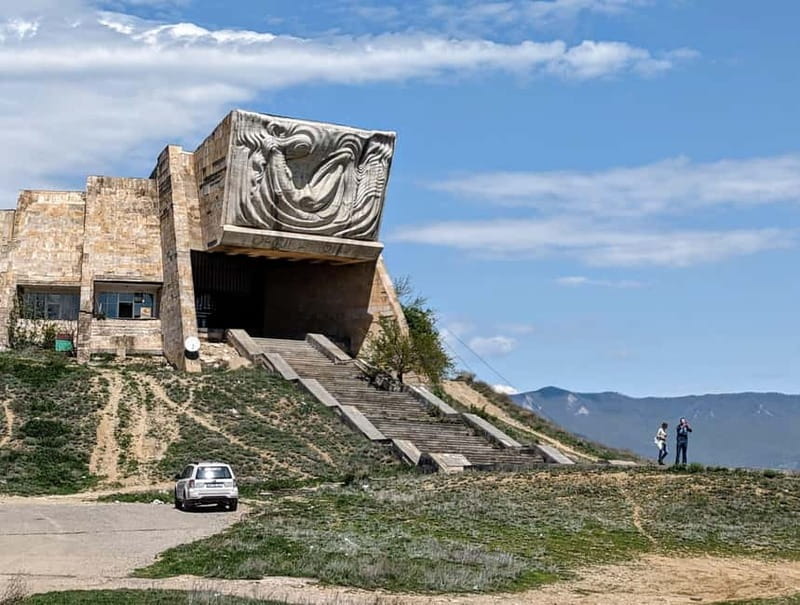
The archaeological museum gives the tour another point of contrast. It connects the study of modern architecture with older traces of human activity and with the way institutions present the past.
The museum’s enigmatic dungeon adds a more mysterious element. The information provided does not promise a full museum visit or guarantee access to every interior area, so you should treat this as a site where conditions may affect what you see. Still, the combination of archaeology, institutional architecture, and a dungeon makes it one of the route’s more unusual pairings.
I appreciate that the tour does not treat modernism and brutalism as isolated art styles. Buildings exist in cities with older layers beneath them. The archaeological museum lets you think about how Tbilisi carries several periods at once, from ancient remains to Soviet public works and present-day redevelopment.
A bakery break with khachapuri
A six-hour architecture tour needs a pause. One memorable addition has been a stop at a local bakery for khachapuri, Georgia’s famous cheese-filled bread.
This is more than a snack break. Food gives you a simple way to connect the grand themes of architecture with ordinary life. After discussing state projects, public ceremonies, and urban planning, you get a taste of something familiar and local.
Do not expect a full restaurant meal unless your guide confirms otherwise. The useful point is that the route includes a chance to stop, eat, and reset before continuing. If you have dietary restrictions, ask about the food before booking because no special meal information is provided.
What the $176 price really buys
The price is $176 per private group of up to two people. For a solo visitor, that is a substantial amount. For two people sharing the booking, it works out to $88 each, with a six-hour private tour, English-speaking guide, hotel pickup, drop-off, and transportation included.
The value depends on what you would otherwise do. If you only want to see Tbilisi’s famous sights, you can spend less by walking around the old town on your own. If you want to reach scattered Soviet-era sites and understand what you are seeing, the private vehicle and guide change the calculation.
You are paying for access to places that are difficult to connect independently, plus the interpretation that turns unusual buildings into readable parts of the city. You are not paying for a long list of ticketed indoor attractions. The tour’s value is strongest for people who care about architecture, urban planning, recent Georgian history, and local stories.
The price is also easier to justify if you are traveling as a pair. Solo visitors should think carefully about whether six hours of specialist guiding fits their budget.
Who should book, and who should skip it
I would choose this tour if you have already seen the old town and want a different view of Tbilisi. It is a particularly good match for:
- People interested in modernism, brutalism, or city planning
- Photographers looking for unusual buildings and strong geometric forms
- Visitors who want local context rather than a basic sightseeing circuit
- Adults who enjoy discussing how politics and design shape public places
- Couples or friends who value a private guide and door-to-door transport
The tour is not suitable for children under 12, people with mobility impairments, wheelchair users, or people without experience who may find the conditions demanding. The request for clothes that can get dirty suggests that some stops are not polished, conventional attractions.
You should also avoid booking if you need guaranteed interior access. The Wedding Palace cannot be entered on this tour, and other locations may be changed because of circumstances beyond the operator’s control.
Comfortable shoes are essential. Bring a camera, dress for the weather, and avoid large bags or luggage. Pets, smoking in the vehicle, alcohol, drugs, and party groups are not allowed.
Should you book Hidden Tbilisi?
I would book this tour if you want to understand Tbilisi beyond its postcard center. The strongest reasons are the private transport, the rare selection of Soviet-era sites, and guides such as Alex, Khato, and Khatuna, who bring humor, local experience, and clear architectural explanation to the day.
I would skip it if your interests stop at churches, food, and the old town, or if rough conditions and exterior viewing sound frustrating. For the right person, though, this is a smart use of six hours. It shows a less familiar side of Georgia and gives you a better way to read the city’s concrete past before it changes or disappears.
FAQ
How long does the Hidden Tbilisi tour last?
The tour lasts six hours, including pickup, transportation between locations, and drop-off in Tbilisi.
How much does the tour cost?
The price is $176 per private group of up to two people.
Is hotel pickup included?
Yes. Pickup and drop-off are included from your address in Tbilisi.
Is the tour private?
Yes. It is offered as a private group experience for up to two people.
What language is the tour conducted in?
The live tour guide speaks English.
Can I enter the Wedding Palace?
No. Entry to the Wedding Palace grounds and interior is not possible during this tour. The building is viewed and discussed from outside.
What happens if a location cannot be visited?
If circumstances prevent access to a planned location, an alternative site of equal interest is included.
What should I bring?
Bring comfortable shoes, comfortable clothes, weather-appropriate clothing, and a camera. Clothes that can get dirty are recommended.
Is the tour suitable for wheelchair users or young children?
No. It is not suitable for wheelchair users, people with mobility impairments, or children under 12.
Just added near Tbilisi
- Wine Tasting feel the Difference of Qvevri or Classical Wine★ 4.4 · 10 reviews
- Walking Tour in Old Tbilisi – Group Tour★ 4.5 · 8 reviews
- From Tbilisi: Kakheti and Kazbegi 2-Day 4X4 Jeep Tour pack★ 5.0 · 6 reviews
- Tbilisi: Vintage Fashion and Secondhand Thrifting Tour★ 5.0 · 11 reviews
- Uforgatable Kakheti Tour with wine tasting – in Georgia★ 4.9 · 5 reviews
- From Tbilisi: Uplistsikhe Caves and Mtskheta Town Day tour★ 5.0 · 2 reviews
- Tbilisi Airport to Gudauri, Bakuriani, Batumi, Tbilisi★ 5.0 · 3 reviews
- Private Adorable City Tour of Tbilisi★ 5.0 · 3 reviews
Tbilisi Tours, compared.
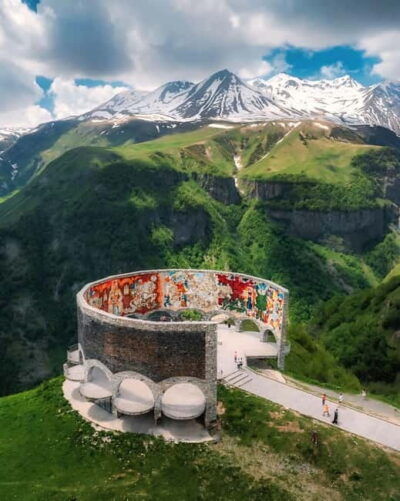
Day Trip to Kazbegi, Gudauri, Gergeti, and Ananuri
Read our review →
Day Trip to Kakheti Wine Region Including 9 Wine Tastings
Read our review →
Highlights of Caucasus Mountains-Jinvali,Ananuri,Gudauri,Kazbegi(Group tour)
Read our review →
Kakheti Wine Region Tour with 9 Wine Tastings
Read our review →
Mtskheta, Jvari, Gori and Uplistsikhe Day Tour
Read our review →
From Tbilisi to Kazbegi, Ananuri, Gudauri & Gergeti
Read our review →
Kakheti Wine Region Tour with 10 Wine Tastings
Read our review →