
Reviewed · GORI AND STALIN MUSEUM TOURS
Mtskheta-Jvari + Gori-Uflistsikhe Private tour
Georgia’s past is carved into stone. This eight-hour private trip links Jvari Monastery and Mtskheta with the cave city of Uplistsikhe and Gori’s Stalin Museum, giving you several major sights in one day. I like the high mountain views at Jvari and the chance to see Uplistsikhe’s unusual rock-cut rooms, tunnels, and ancient places of worship. The main drawback is that the day includes steep, uneven walking, and one booking found the car too small for four adults.
The guide can make or break a road trip like this. Mr. Gori earned special praise for being punctual, pleasant, and well informed, while George was also singled out for his strong guiding. I would confirm the vehicle size if you are a group of four, and remember that the two principal entrance fees cost an extra $10 per person.
In This Review
- Key points at a glance
- Why this route works so well from Tbilisi
- Jvari Monastery and the view over two rivers
- Mtskheta and Svetitskhoveli Cathedral
- Uplistsikhe, a city cut into rock
- Gori and the Stalin Museum
- What the private car and guide add
- Timing, walking, and the overall pace
- Who should book this experience?
- Should you book the Mtskheta, Gori, and Uplistsikhe tour?
- FAQ
- How long does the tour last?
- What sites are included?
- Is hotel pickup included?
- Is the tour private?
- What language does the guide speak?
- Are the entrance tickets included?
- Is the tour suitable for people with mobility impairments?
Key points at a glance
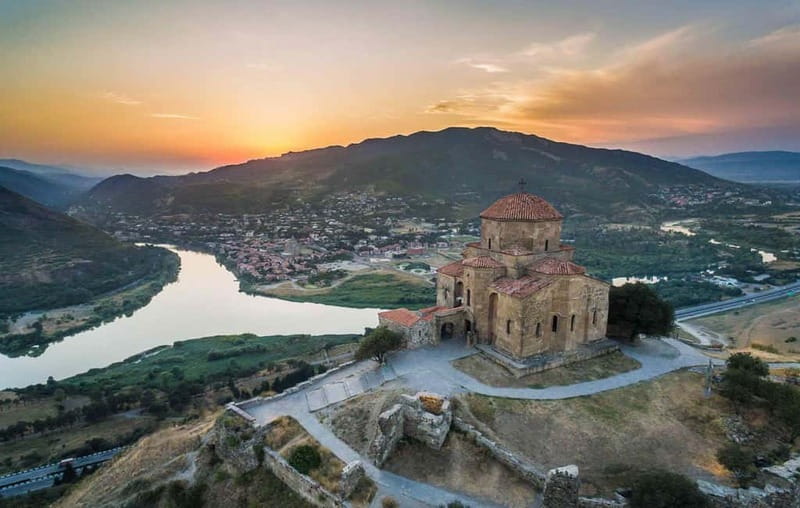
- Jvari’s mountaintop setting: Look down on the meeting point of the Aragvi and Kura rivers from one of Georgia’s most memorable viewpoints.
- Mtskheta’s cathedral: Visit Svetitskhoveli Cathedral in Georgia’s ancient capital and see why the area carries UNESCO recognition.
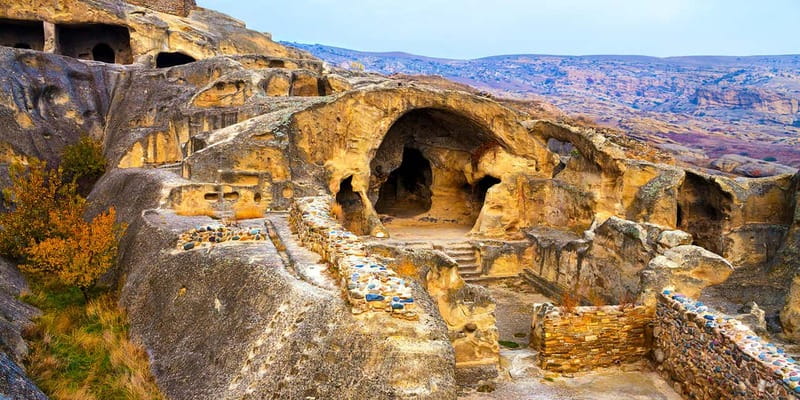
- Uplistsikhe’s 150 surviving caves: Walk through rooms, a tunnel, a winery, a pharmacy, a library, royal chambers, and a sixth-century church.
- Gori’s personal Soviet history: The Stalin Museum includes his office, personal items, and the house where he was born.
- A genuinely private outing: Hotel pickup, private transport, onboard WiFi, and an English-speaking guide keep the day simple.
- A good value with two add-on fees: The tour costs $56 per person, with $5 entry tickets for Uplistsikhe and the Stalin Museum.
Why this route works so well from Tbilisi
This tour covers a compact but varied slice of Shida Kartli. In one day, you move from early Christian Georgia to an ancient rock settlement, then into the personal and political world of Joseph Stalin. That range gives the trip more substance than a day spent visiting only one monument.
I also like the private format. You are not tied to a large group’s pace, and hotel or address pickup in Tbilisi removes the need to find a meeting point. The guide drives, explains the sites, and gives you a local view of Georgian life along the way.
The advertised price is $56 per person. Add $5 for Uplistsikhe and $5 for the Stalin Museum, making the known cost $66 per person before any other personal spending. For a private eight-hour outing with transportation, hotel pickup and drop-off, an English-speaking guide, and WiFi in the vehicle, that is a fair price.
The value is strongest for two or more people sharing the private experience. Solo visitors may find the per-person cost less attractive, but the convenience is still useful if you want several distant sights without arranging separate transport.
More Gori and Stalin Museum runs:
- Tbilisi: Mtskheta, Jvari, Gori and Uplistsikhe Day Tour
★ 4.9 · 2,396 reviews - Day Trip to Mtskheta Gori and Uplistsikhe
★ 5.0 · 1,801 reviews - From Tbilisi : Mtskheta, Jvari, Gori & Uplistsikhe Day Trip
★ 4.8 · 432 reviews
Jvari Monastery and the view over two rivers
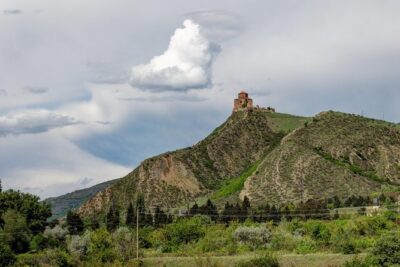
Jvari Monastery is the first major stop, an ancient church dating from the sixth century. Its setting is the star here. The monastery sits high on a mountain above the area where the Aragvi and Kura rivers meet, so you get a broad view before heading down toward Mtskheta.
This is a place where the setting helps explain the importance of the site. From above, you can see why the old capital was positioned here, at a meeting point of waterways and routes. The view also gives you a quick sense of the region before the tour moves into churches and archaeological remains.
The monastery itself is historic and compact, but the climb and approach matter. The tour is specifically not suitable for people with mobility impairments, and you should expect uneven ground and some walking at elevated sites. Wear shoes with a good grip, especially if the surface is wet.
Jvari can be a quiet, reflective opening to the day, but it is not a long museum visit. You come for the sixth-century church, the mountain position, and the view over Mtskheta. If you prefer a slow, detailed visit at every stop, ask the guide at the start how much time is planned at each location.
Mtskheta and Svetitskhoveli Cathedral
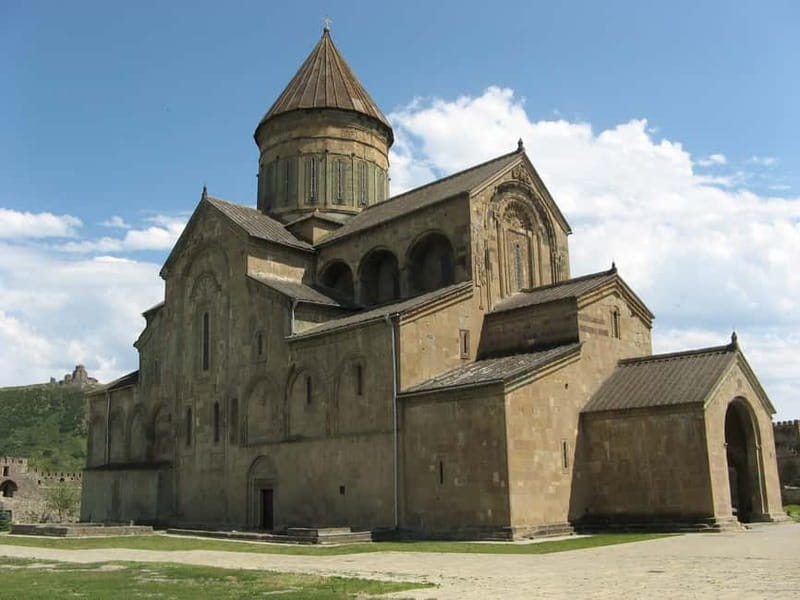
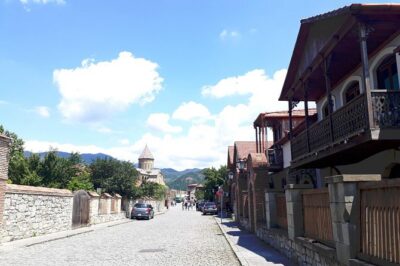
The route continues to Mtskheta, Georgia’s ancient capital. The town is best known for its major religious buildings and its place in Georgian history. Along with Jvari, the historic monuments of Mtskheta carry UNESCO recognition, which gives this part of the tour special weight.
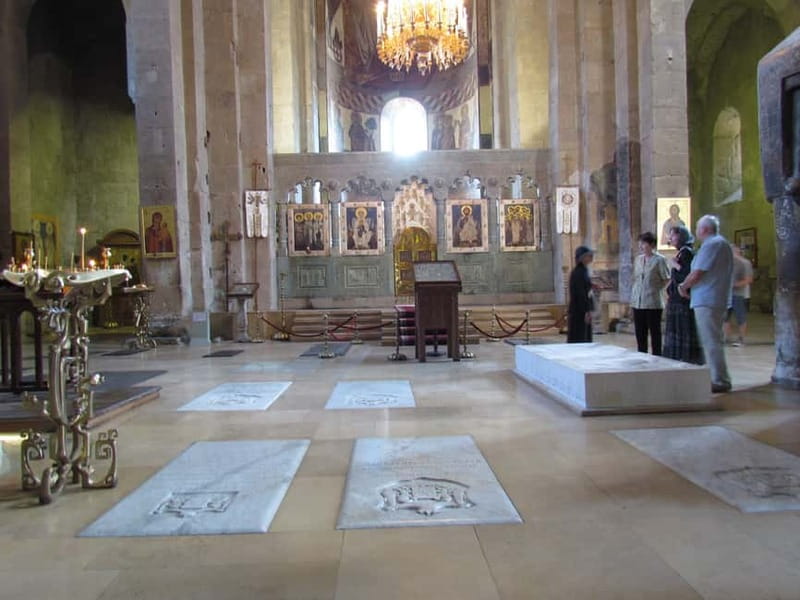
Svetitskhoveli Cathedral is the key stop. It is much larger than Jvari and offers a different experience: Jvari feels like a high, austere hilltop church, while Svetitskhoveli gives you a grander religious setting in the old capital.
Your guide is important here because the value is not only in looking at stone walls. The tour description places the cathedral within Georgia’s long Christian story, and a good English-speaking guide can help connect the building to the city around it. Mr. Gori was praised for explaining Georgian life and history during the drive, which is exactly the kind of added context that improves this stop.
Keep your clothing and behavior respectful at both religious sites. The supplied information does not specify a dress code, so your guide is the best person to ask about current expectations. Plan on walking between the vehicle and the monuments rather than treating this as a drive-up sightseeing day.
Uplistsikhe, a city cut into rock
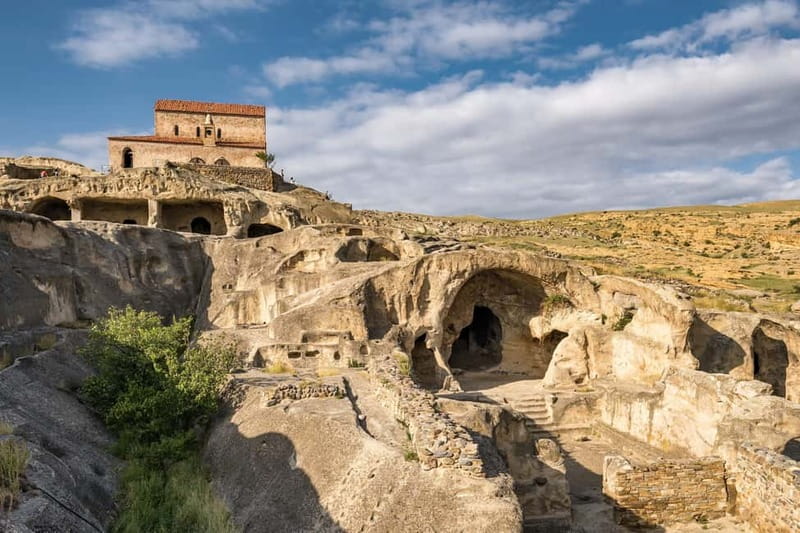
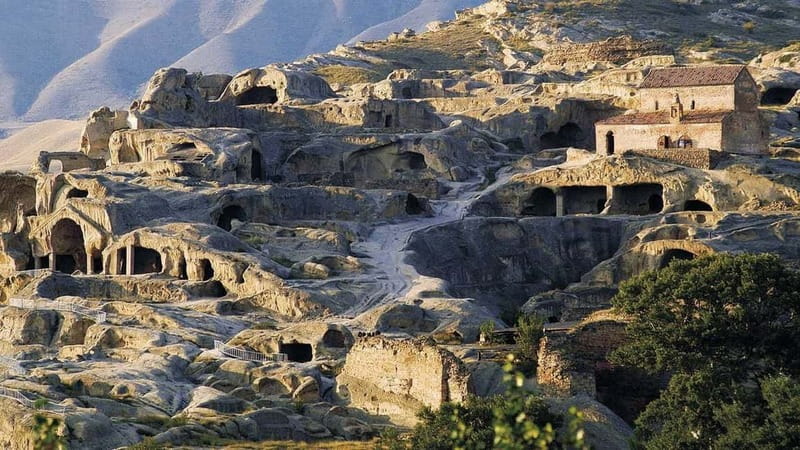
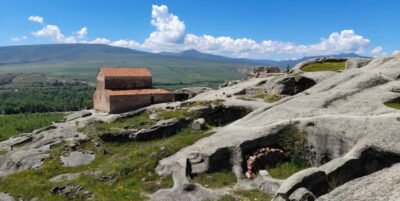
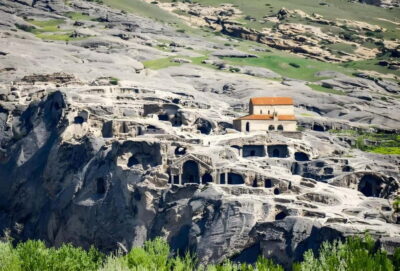
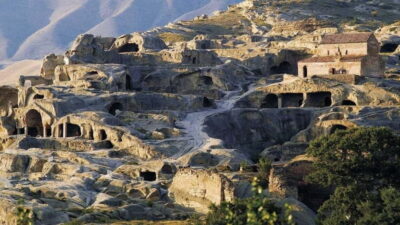
Uplistsikhe is the most unusual stop on the route. Its name is translated as Fortress of God, and the site is described as a roughly 3,000-year-old cave city carved into rock. It is not a polished palace or a single temple. It is a large, open archaeological site where the rooms and passages are part of the living rock.
About 150 caves have survived. That number gives you a sense of the site’s scale, but the variety matters more than the count. You may see:
- A cave tunnel
- An ancient sun temple
- The royal cave linked with King Tamara
- A winery
- A sixth-century church
- A Bibliotheca
- An ancient pharmacy
Some structures date back to the Iron Age, while others belong to later periods. That mixture makes Uplistsikhe valuable for anyone who wants to see how a settlement changed over time rather than viewing one isolated monument.
The rock-cut design also creates the main physical challenge. You will be walking across uneven surfaces and through passages, with changes in height around the site. The tour is not suitable for people with mobility impairments, and this is the stop where that warning is most important.
Bring water and protect yourself from the sun if the weather is warm. Those practical details are not included as formal tour features, but an exposed rock site can feel demanding during a long day. Since the tour lasts eight hours and includes several major stops, comfortable footwear will make a real difference.
Uplistsikhe is also the part of the day most likely to reward curiosity. Look at how ordinary functions were fitted into the rock. A winery and pharmacy tell you about daily life, while the royal cave and religious buildings show the settlement’s political and spiritual roles. Your guide can help you sort out what each space was used for, instead of leaving you to see only a series of holes in a cliff.
The entrance ticket costs $5 per person and is not included. That is a small extra charge, but budget for it in advance so the price does not catch you by surprise.
More half-days at Mtskheta and Jvari:
- Tbilisi: Mtskheta Jvari Bazaar, Chronicles of Georgia & Wine
★ 5.0 · 1,088 reviews - Tbilisi:Mtskheta,Jvari,Bazaar,wine tasting,Chronicles of Georgia
★ 5.0 · 730 reviews - From Tbilisi: Mtskheta, Jvari, Gori, Uplistsikhe Guided Tour
★ 4.7 · 354 reviews - Tbilisi: The Chronicles of Georgia, Jvari & Mtskheta Tour
★ 5.0 · 307 reviews
Gori and the Stalin Museum
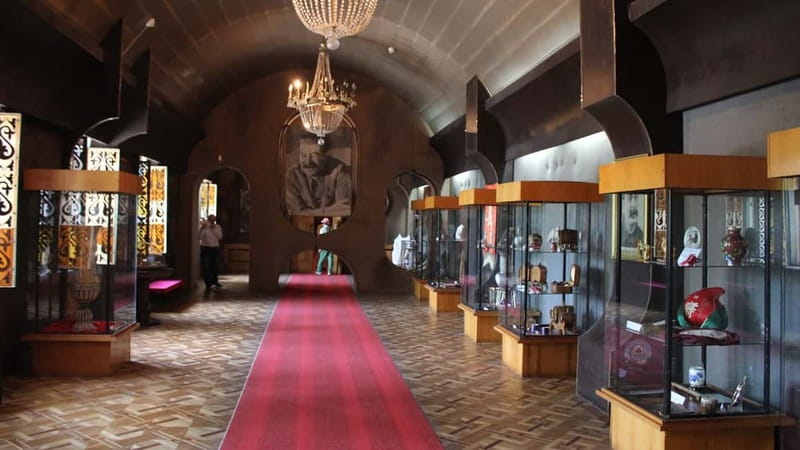
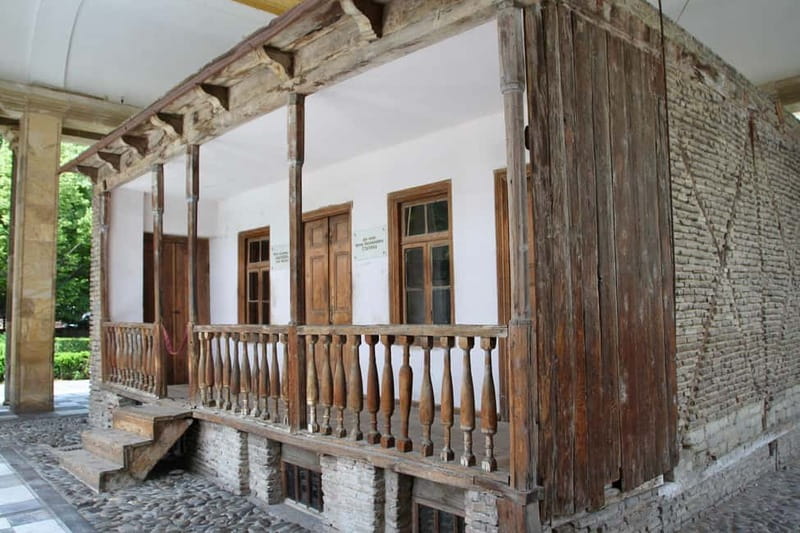
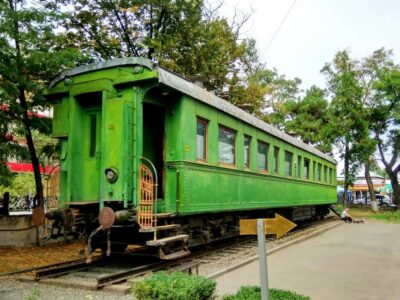
The final major stop is Gori, the hometown of Joseph Stalin. The Stalin Museum focuses on his life and includes Soviet-era features, his office, personal items, and the house where he was born. You can also see objects such as his pipe, cigars, and telephone.
This stop has a different tone from the churches and cave city. It is personal, political, and tied to one of the most controversial leaders of the twentieth century. The museum can help you understand how Stalin was presented in his hometown, but you should approach it with a critical eye. A display about a powerful historical figure is never the same thing as a complete account of that person’s actions and legacy.
I appreciate that the tour includes the house where Stalin was born. It gives the museum a physical connection to his early life, rather than presenting only documents and objects behind glass. His office and personal belongings also make the visit more concrete, though a pipe or telephone tells only part of the story.
The Stalin Museum entrance fee is another $5 per person. The tour provides the visit, but not the ticket, so your total known admission cost for both paid sights is $10. If modern political history interests you, this is a worthwhile addition. If you would rather spend more time on Georgia’s ancient monuments, ask how the schedule is divided before you set out.
What the private car and guide add
Private transport is the practical backbone of this outing. The route covers Jvari, Mtskheta, Uplistsikhe, and Gori, so arranging each leg on your own would take more effort and would leave you managing transport between sites. Hotel pickup and drop-off at any hotel or address in Tbilisi make the day easier from the beginning.
Onboard WiFi is included. That is a useful extra for checking maps, messages, or travel plans during the drives, although it should not be the main reason to book.
The guide quality appears to be one of the tour’s strongest points. Mr. Gori was praised for punctuality, a pleasant manner, and clear explanations. One especially useful detail is that conversation during the drives offered a glimpse into Georgian life as well as history. That kind of informal local perspective can be more memorable than a string of dates.
George was also praised as the best part of another booking. Since more than one guide may operate the tour, you may not receive the same person, but the available feedback gives you a reason to expect a strong guide. I would still ask your guide to explain how much time is planned for each stop, especially if you have a strong preference between ancient sites and the Stalin Museum.
The vehicle deserves attention. One group of four adults found the car small and wished for a larger one. If you are four adults, contact the provider, Georgia Tour Factory, before booking and request a larger vehicle if available. That is a simple question that could greatly improve eight hours on the road.
Timing, walking, and the overall pace
The tour lasts eight hours, but the exact starting time depends on availability. Because the day includes four named destinations and several separate sights, the pace is likely to be active. You will not simply sit in the car and admire views.
Jvari requires a mountain visit, Uplistsikhe requires walking through a rocky site, and the cathedral and museum add more time on your feet. People with mobility impairments should choose another outing. Everyone else should wear firm, comfortable shoes and be ready for a full day.
The private format gives you some flexibility, but it does not turn the tour into a leisurely stay at every stop. If you want extended time inside the Stalin Museum, a long visit in Mtskheta, or a careful exploration of every cave at Uplistsikhe, tell the guide early. The more time you spend at one location, the less time remains for another.
Free cancellation up to 24 hours before departure and the option to reserve now and pay later make the booking less rigid. These policies are useful if your Tbilisi plans are still shifting, but the core decision should be based on the route and walking demands.
Who should book this experience?
I would recommend this tour to you if you want a broad introduction to the history around Tbilisi without arranging several transport connections. It suits first-time visitors, couples, families with older children who can manage uneven ground, and anyone who likes mixing religious sites, archaeology, mountain views, and modern political history.
It is especially good for people who value conversation with a guide. The strongest praise went to the guides’ punctuality, friendly manner, and ability to discuss Georgian life along with historic facts. That personal element can turn a long drive into part of the experience.
I would hesitate if you have difficulty walking, dislike exposed rocky sites, or prefer spending an entire day at one location. I would also hesitate before booking without checking the vehicle if four adults are sharing the car.
Should you book the Mtskheta, Gori, and Uplistsikhe tour?
Book it if you want four major stops in one private day, with pickup from your Tbilisi address and an English-speaking guide to connect the pieces. Jvari’s view, Mtskheta’s cathedral, Uplistsikhe’s rock-cut rooms, and Gori’s Stalin Museum make a varied route, and $56 per person is reasonable once you account for private transport and guide service.
Before paying, add the two $5 entrance tickets to your budget and ask about the car size for your group. If you can handle uneven walking and prefer a full historical day over a slow schedule, this is one of the more useful ways to see Shida Kartli from Tbilisi.
FAQ
How long does the tour last?
The tour lasts eight hours.
What sites are included?
The route includes Jvari Monastery, Svetitskhoveli Cathedral in Mtskheta, the cave city of Uplistsikhe, and the Stalin Museum in Gori.
Is hotel pickup included?
Yes. Pickup and drop-off are included from any hotel or address in Tbilisi.
Is the tour private?
Yes. The experience is operated for a private group.
What language does the guide speak?
The live tour guide speaks English.
Are the entrance tickets included?
No. Uplistsikhe costs $5 per person, and the Stalin Museum costs $5 per person.
Is the tour suitable for people with mobility impairments?
No. The tour is listed as unsuitable for people with mobility impairments because the route includes mountain and cave-site walking.
Just added near Tbilisi
- Wine Tasting feel the Difference of Qvevri or Classical Wine★ 4.4 · 10 reviews
- Walking Tour in Old Tbilisi – Group Tour★ 4.5 · 8 reviews
- From Tbilisi: Kakheti and Kazbegi 2-Day 4X4 Jeep Tour pack★ 5.0 · 6 reviews
- Tbilisi: Vintage Fashion and Secondhand Thrifting Tour★ 5.0 · 11 reviews
- Uforgatable Kakheti Tour with wine tasting – in Georgia★ 4.9 · 5 reviews
- From Tbilisi: Uplistsikhe Caves and Mtskheta Town Day tour★ 5.0 · 2 reviews
- Tbilisi Airport to Gudauri, Bakuriani, Batumi, Tbilisi★ 5.0 · 3 reviews
- Private Adorable City Tour of Tbilisi★ 5.0 · 3 reviews
Gori and Stalin Museum Tours, compared.
Mtskheta, Jvari, Gori and Uplistsikhe Day Tour
Read our review →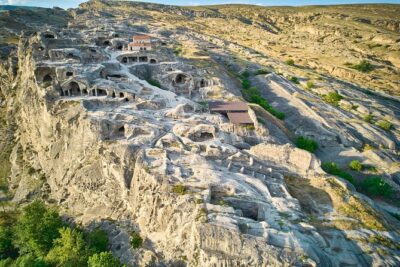
Mtskheta, Jvari, gori, uflistsikhe, history and panorama (group tours)
Read our review →Browse the lists this tour appears in