Reviewed · PRIVATE
Private Tour in Imereti Region
Legends give this day a pulse. This private trip links Kutaisi and the Golden Fleece with Sataplia Cave, where limestone formations and ancient dinosaur footprints add a real-world twist to old stories. I especially like the privacy of traveling with only your own group, and the chance to see Bagrati Cathedral alongside the forested Sataplia reserve.
The main drawback is the length. At 12 to 15 hours from Tbilisi, this is a serious day out, not a quick excursion. Entrance fees and food are extra, so the final cost will be higher than the advertised $265 per person. Guide names connected with the experience include Teimuraz, also called Temuri, and the driver David, who have been praised for their history knowledge, helpful manner, and comfortable transport.
In This Review
- Key points to know before booking
- Why this private trip is worth the long day
- Kutaisi and the story of Kolkhida
- Sataplia Cave and the place of honey
- Bagrati Cathedral above Kutaisi
- What the 12 to 15 hours really mean
- The guide can shape the whole experience
- Who will enjoy this day most
- How to decide if the $265 price is fair
- Should you book this private Imereti tour?
- FAQ
- Is pickup from Tbilisi included?
- How long does the tour take?
- Is this a private tour?
- What is included in the price?
- Are entrance fees and meals included?
- What happens if bad weather cancels the tour?
Key points to know before booking
- Kutaisi connects myth with Georgian history: The city is tied to ancient Kolkhida, Jason, Medea, and the search for the Golden Fleece.
- Sataplia combines nature and prehistory: You can see dinosaur footprints, enter an illuminated cave, walk through woodland, and look toward Kutaisi.
- Bagrati Cathedral is a major medieval monument: Its hilltop setting gives you a useful view of Kutaisi as well as an important piece of Georgian history.
- The private format keeps the day flexible: Only your group joins, with private transportation, pickup, drop-off, a guide, and bottled water included.
- The schedule is long but worthwhile for a one-day visit: You get western Georgia in one outing, though much of the day is spent on the road.
- Budget for admission and meals: Food, drinks, and entrance tickets are not included in the $265 price.
Why this private trip is worth the long day
I see this as a good choice for anyone based in Tbilisi who wants to reach western Georgia without arranging separate transport, local guides, and sightseeing stops. The trip gives you three different experiences in one day: a city connected to Greek legend, a protected cave and nature area, and a major cathedral overlooking Kutaisi.
The private setup matters. You are not joining a large bus group, so the day belongs to your party. That can make a long excursion more pleasant, especially if you want to ask questions about Georgian legends, spend more time at one stop, or keep the pace comfortable for your group.
At $265 per person, the value depends heavily on group size. For one or two people, it is a costly day, but the price covers private transportation, pickup, drop-off, bottled water, and a professional guide. With several people sharing the vehicle, the cost becomes easier to justify. You are paying for convenience as much as for the sights.
I would also treat the price as a starting point rather than the complete bill. Admission fees are not included, and neither are meals or drinks beyond the supplied bottled water. Ask about the expected ticket costs before departure so the day does not produce a budget surprise.
More Tbilisi days to weigh up
- Tbilisi: Day Trip to Kazbegi, Gudauri, Gergeti, and Ananuri
★ 4.9 · 3,203 reviews - Day Trip to Kakheti Wine Region Including 9 Wine Tastings
★ 5.0 · 2,774 reviews - Highlights of Caucasus Mountains-Jinvali,Ananuri,Gudauri,Kazbegi(Group tour)
★ 5.0 · 2,682 reviews
Kutaisi and the story of Kolkhida
The first main stop is Kutaisi, with about two hours set aside for the city. That is enough time for an introduction to its central sights and for your guide to explain why this part of Georgia has such a powerful place in ancient storytelling.
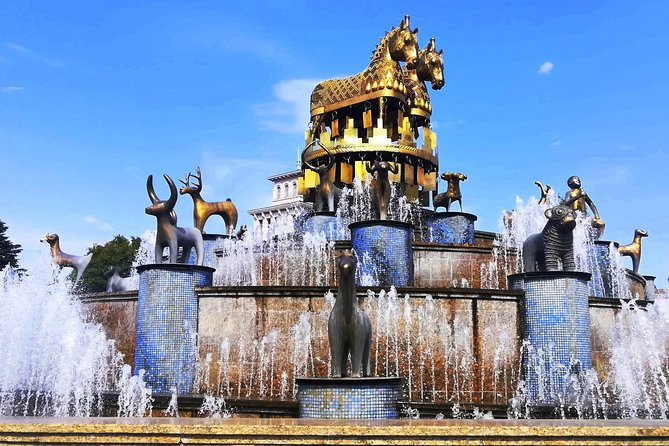
Kutaisi is linked with Kolkhida, the kingdom connected to the story of Jason and the Argonauts. In the legend, Jason sailed to these shores in search of the Golden Fleece and became connected with Medea. The attraction here is not simply finding a single object or monument. It is seeing how a real Georgian region became part of one of the best-known stories from the ancient Greek world.
This is where the tour’s storytelling can make a difference. A good guide can help you separate the physical setting from the later layers of myth. The legends give the place character, but Kutaisi is not presented only as a backdrop for a Greek tale. It is also described as the famous capital of the ancient kingdom of Kolkhida, giving the city a clear role in the history of western Georgia.
I would use this stop to ask questions. What parts of the Jason story are linked to local tradition? How does Georgian history describe Kolkhida? What remains of the ancient kingdom today? Guides such as Teimuraz, or Temuri, have received strong praise for making Georgian history engaging and for turning the legends into part of the day rather than a short speech.
The two-hour visit is useful, but do not expect a full exploration of Kutaisi. This is one section of a much bigger outing, and the cave and cathedral receive their own stops. If you want museums, a slow meal, or extended city wandering, you will need more time in Kutaisi on another day.
Sataplia Cave and the place of honey
Sataplia Nature Reserve is the most varied stop. The area takes its name from Sataplia Mountain and a local tradition of collecting honey from bees living on the mountain’s southern slope. Sataplia means place of honey, a small detail that gives the reserve a memorable name before you even enter the cave.
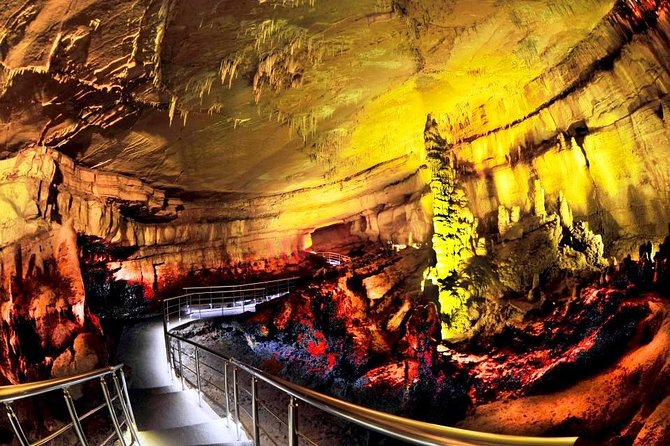
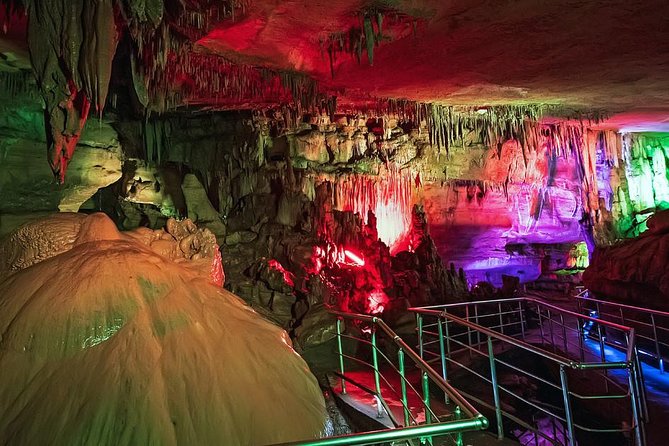
The cave itself reaches about 900 meters, but only 300 meters are open to visitors. That distinction matters. You will not walk through the entire underground system. Instead, you see a prepared visitor section with stalactites and stalagmites highlighted by colored lighting.
The lighting gives the cave a theatrical mood. It can make the formations look mysterious and attractive, though people who prefer caves in a more natural state may find the colored lamps a little artificial. I would still consider the accessible section worthwhile, especially because the cave is only one part of the reserve experience.
Inside, the central feature is a large stalagmite shaped like a heart. Local belief says that touching it and making a wish will bring good luck. You can treat that as a playful tradition or simply enjoy the unusual shape. Either way, it gives the cave a focal point and a bit of Georgian folklore to match the legends heard in Kutaisi.
Sataplia also includes woodland walks, views toward Kutaisi, and preserved dinosaur footprints. The footprints are one of the most valuable parts of the stop because they connect the reserve to a time far older than the stories of Jason and Medea. In a single hour, you move from ancient myth to actual traces of prehistoric life.
The time allocation is about one hour. That is enough for a focused visit, but it may feel short if you want to examine the footprints, enjoy the forest, take photographs, and spend time underground without rushing. The reserve entry fee is extra, and the tour price does not include it. Bring suitable shoes for walking in a cave and woodland area, though the supplied information does not specify the exact trail conditions.
Bagrati Cathedral above Kutaisi
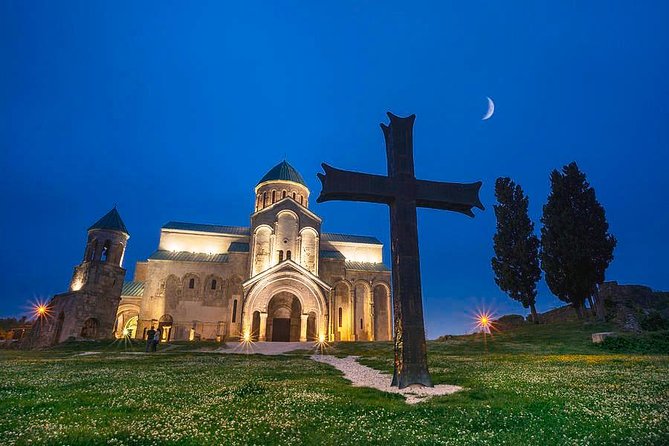
Bagrati Cathedral receives about an hour, and it is a fitting final sightseeing stop. The cathedral is named after Bagrat III, the first king of a united Georgia. Construction began at the end of the 10th century and finished in the early 11th century, placing the building in a key period of Georgian state formation.
That political context makes the cathedral more than a pretty church. Bagrat III is connected with the unification of Georgia, so Bagrati gives you a physical reminder of a time when separate Georgian territories were being brought together under one crown.
The building was once decorated with murals and mosaics and was regarded as a major work of medieval Georgian architecture. In 1692, Ottoman forces captured and destroyed the cathedral. That history explains why the site carries both beauty and loss. You are looking at an important religious and cultural monument, but also at a building shaped by war, destruction, and later restoration.
Bagrati is also known for archaeological finds. Gold earrings, rings, and other accessories were discovered on the cathedral grounds. These objects add a human touch to the site. They suggest that the cathedral was not an isolated stone building, but part of a living religious and social setting.
The cathedral’s position gives you views over Kutaisi. After hearing about Kolkhida and visiting Sataplia, this is a good place to pause and connect the city below with the wider story of western Georgia. I would save a few minutes simply for the view, even if your guide is explaining the architecture.
One important detail needs clarification before you book. Bagrati Cathedral is described as being on the UNESCO World Heritage List since 1994, but its UNESCO status has been affected by later restoration decisions. The supplied tour information presents it as a UNESCO site, so ask your guide for the current explanation if that designation matters to you. The cathedral itself remains an important Georgian monument regardless of the technical listing status.
A slower pace, same corner of the Caucasus:
- From Tbilisi: Kakheti Wine Region Tour with 9 Wine Tastings
★ 4.9 · 2,541 reviews - Tbilisi: Mtskheta, Jvari, Gori and Uplistsikhe Day Tour
★ 4.9 · 2,396 reviews - From Tbilisi to Kazbegi, Ananuri, Gudauri & Gergeti
★ 4.9 · 2,278 reviews - Tbilisi: Kakheti Wine Region Tour with 10 Wine Tastings
★ 5.0 · 2,160 reviews
What the 12 to 15 hours really mean
The stated duration is approximately 12 to 15 hours, including pickup and drop-off from Tbilisi. Since the sightseeing time listed for the three main stops totals about four hours, a large portion of the day will be spent traveling between eastern and western Georgia.
That is not a criticism. It is simply the tradeoff for reaching Kutaisi and Sataplia from Tbilisi in one day. If you have only one free day and want to see a different part of the country, the trip saves you from planning a separate transfer or overnight stay.
Still, I would not book this casually after a late arrival in Georgia or before an important evening commitment. A 12-hour day can feel demanding, and a 15-hour day leaves little room for tiredness. The private vehicle helps, since you can travel with your own group rather than adjusting to strangers, but it does not shorten the road distance.
Pickup and drop-off are included, as is private transportation. That is particularly useful for a long regional trip. Bottled water is provided, but food and other drinks are not. Plan for meals during the day, and confirm where those breaks fit into the schedule.
The tour requires good weather. If poor conditions force cancellation, you are offered another date or a full refund. A minimum number of participants is also required, despite the fact that only your group takes part once the tour runs. If that minimum is not met, you are offered another date, a different experience, or a full refund.
The guide can shape the whole experience
This tour depends more on the guide than a simple viewpoint visit would. Jason, Medea, the Golden Fleece, Kolkhida, Bagrat III, the cathedral’s destruction, and the cave’s local traditions all need explanation. Without a strong guide, the day could become a string of scenic stops. With one, the sites connect.
Teimuraz, also known as Temuri, has been praised for professional guiding and for bringing western Georgian legends to life. The driver David has also been singled out in favorable comments, particularly for dependable service and comfortable transport. The available feedback repeatedly gives the company and its guides top marks, with an overall rating of 5 from eight published ratings.
That praise is useful, but I would keep expectations sensible. No guide can turn a long road day into a short one, and the supplied information does not promise a particular guide for every departure. If having Teimuraz or Temuri matters to you, request the name when booking rather than assuming he will lead your group.
The private format lets you make better use of the guide. Ask for explanations instead of accepting only a prepared speech. You can ask about the difference between legend and recorded history, the meaning of Georgian royal titles, the cathedral’s restoration, and the geological features inside Sataplia.
Who will enjoy this day most
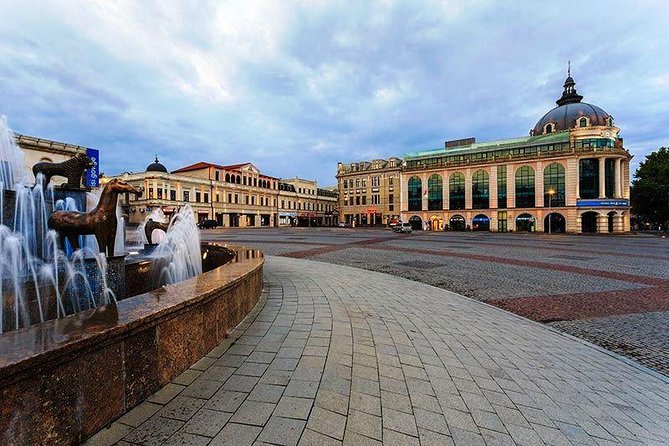
I would recommend the trip to couples, families, and small groups who want a private introduction to western Georgia while staying based in Tbilisi. It also suits first-time visitors who want a strong mix of culture, nature, geology, and local storytelling instead of spending the entire day at one monument.
It is especially good for anyone drawn to legends. The Jason and Medea story is not a side note here. It gives the Kutaisi portion a clear theme, while the honey tradition at Sataplia and the wishing heart-shaped stalagmite add more local folklore.
Families may enjoy the dinosaur footprints and the cave more than a long church visit. History-focused visitors will likely prefer the cathedral and the discussion of Bagrat III. Photographers get city views, forest, cave formations, and a medieval monument in one day.
I would hesitate to recommend it to someone who dislikes long vehicle journeys or wants a slow, unhurried visit. The time at each stop is limited, especially at Sataplia. If you want to explore Kutaisi at a relaxed pace, stay overnight in the city instead.
Most people can participate, according to the supplied information. No special restriction is stated, but remember that the day includes walking in a nature reserve and a cave. Anyone concerned about mobility or physical comfort should ask the provider for current details before paying.
How to decide if the $265 price is fair
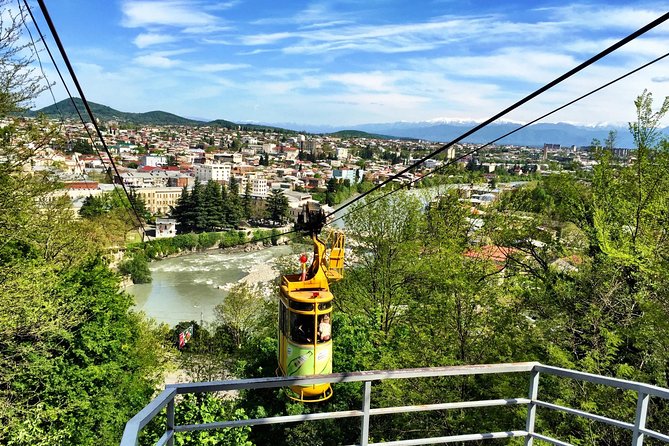
The price is easiest to justify when you value a private car, door-to-door service, and a guide who can explain the places you are seeing. Organizing the same day independently would require transport to and from Kutaisi, local movement between the city, cave, and cathedral, and your own research.
For a larger private group, the cost per person may feel reasonable. For a solo visitor, it is a premium way to see western Georgia in one day. The inclusion of pickup, drop-off, private transport, professional guiding, and bottled water adds practical value, but it does not cover the cave or reserve tickets, meals, or drinks.
I would ask these questions before confirming:
- Which guide will lead the departure?
- What are the current entrance fees?
- Where will the meal break occur?
- How many hours should you expect on the road?
- Is the cathedral’s current UNESCO status explained during the visit?
The experience is non-refundable and cannot be changed for any reason after booking. That makes weather protection important, but it does not remove the need to choose your date carefully. Since the day requires good weather and a minimum number of participants, read the conditions before making payment.
Should you book this private Imereti tour?
Book it if you have one free day from Tbilisi and want a private, story-led route through western Georgia. The combination of Kutaisi, Kolkhida legends, Sataplia’s cave and dinosaur footprints, and Bagrati Cathedral gives the day real variety.
Skip it if you want a relaxed schedule, dislike long drives, or need a fixed return time. Also compare the total cost after entrance fees and food, not just the advertised $265.
For the right person, this is a memorable way to reach Imereti without changing hotels. Go for the legends, stay alert for the prehistoric footprints, and give the cathedral enough attention to understand why it matters.
FAQ
Is pickup from Tbilisi included?
Yes. Pickup and drop-off are included, along with private transportation.
How long does the tour take?
The experience lasts approximately 12 to 15 hours.
Is this a private tour?
Yes. Only your group will participate, and no other travelers will join you.
What is included in the price?
The price includes private transportation, pickup, drop-off, a professional guide, and bottled water.
Are entrance fees and meals included?
No. Entrance fees, food, and drinks are not included.
What happens if bad weather cancels the tour?
If poor weather causes cancellation, you are offered a different date or a full refund. If the minimum number of participants is not met, you are offered a different date or experience, or a full refund.
Just added near Tbilisi
- Wine Tasting feel the Difference of Qvevri or Classical Wine★ 4.4 · 10 reviews
- Walking Tour in Old Tbilisi – Group Tour★ 4.5 · 8 reviews
- From Tbilisi: Kakheti and Kazbegi 2-Day 4X4 Jeep Tour pack★ 5.0 · 6 reviews
- Tbilisi: Vintage Fashion and Secondhand Thrifting Tour★ 5.0 · 11 reviews
- Uforgatable Kakheti Tour with wine tasting – in Georgia★ 4.9 · 5 reviews
- From Tbilisi: Uplistsikhe Caves and Mtskheta Town Day tour★ 5.0 · 2 reviews
- Tbilisi Airport to Gudauri, Bakuriani, Batumi, Tbilisi★ 5.0 · 3 reviews
- Private Adorable City Tour of Tbilisi★ 5.0 · 3 reviews
Private, compared.

Kazbegi and Gudauri Full Day Private Tour from Tbilisi
Read our review →
Old Tbilisi Tour: Private Walking Tour With Wine Tasting
Read our review →
Private Tbilisi Food Tour: 9 Tastings Walk in Bohemian District
Read our review →
Full Day Private Wine Tour in Kakheti Region with Lunch and 3 Wine Tastings
Read our review →
Small wineries and family-cooked lunch • Private tour
Read our review →
Kakheti All Inclusive Private Wine Tour Including Lunch
Read our review →
Kazbegi Full-Day Private Tour with Scenic Stops from Tbilisi
Read our review →