
Reviewed · WALKING TOURS
Revolutionary Tbilisi Walking Tour
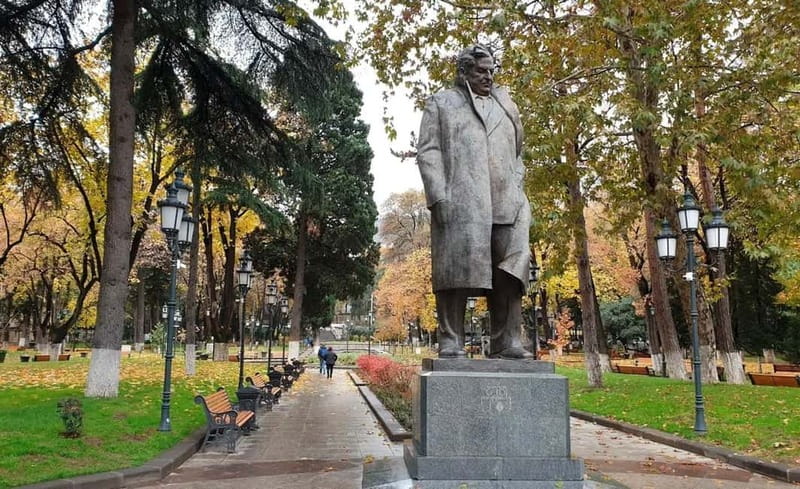
Revolutions hide in ordinary streets. This two-hour English walking tour links Tbilisi’s buildings, parks, schools, and political spaces to the turbulent years from 1900 to 1921, when Georgian social democrats challenged the Russian Empire and later split into Bolshevik and Menshevik camps. I especially like its worker-centered view of Tbilisi and the way it connects old buildings to present-day political questions. The main drawback is that the advertised timing can be confusing, since the walking portion is described as two hours in one place and three hours in another.
I also like that this is not a standard sightseeing walk with a quick date attached to each monument. Guide Giorgi, also called Gio, is praised for clear English, patient answers, and a gift for storytelling. You should expect serious discussion rather than light entertainment, and children under 12 or anyone needing wheelchair access may find this tour unsuitable.
In This Review
- Key points to know before you book
- Why Revolutionary Tbilisi deserves its own walk
- Starting at Pushkin Square
- Tiflis Spiritual Seminary and the education of revolutionaries
- Tbilisi City Hall and the machinery of public power
- The Viceroy’s Palace across three political eras
- Alexander’s Park and the politics of public space
- The stone dedicated to fallen revolutionaries
- From Mensheviks to Bolsheviks, the tour’s main argument
- The optional Underground Printing House Museum
- What the $30 price gets you
- Guide style, language, and pace
- Who will get the most from this experience?
- Practical advice before you go
- Should you book Revolutionary Tbilisi?
- FAQ
- Where does the Revolutionary Tbilisi Walking Tour begin?
- How long does the main tour last?
- Is the tour offered in English?
- Is the Underground Printing House Museum included?
- How do I reach the Underground Printing House Museum?
- Who should not book this tour?
Key points to know before you book

- The Tiflis Spiritual Seminary introduces the school connected with important revolutionary figures and gives the tour an intellectual starting point.
- The State Duma and its repressions show how imperial government and political resistance collided in the Caucasus.
- The Viceroy’s Palace changes meaning as you examine its Tsarist, Menshevik, and Soviet eras.
- Imperial symbols are treated as political clues, not just decoration on old buildings.
- Revolutionary illegal work comes into focus through the optional Underground Printing House Museum.
- Giorgi’s personal strength is explanation, especially when you ask about Georgian politics, Soviet rule, or the split between Bolsheviks and Mensheviks.
Why Revolutionary Tbilisi deserves its own walk
Tbilisi is often presented through balconies, churches, food, wine, and scenic old streets. Those are good reasons to visit, but they do not explain the political pressure that shaped the city at the start of the 20th century.
This tour focuses on a period that can be easy to miss. From 1900 to 1921, Georgia was part of the Russian Empire, and Tbilisi became an important center for organized political activity. Social democracy gained unusual strength here. The movement was not simply a story imported from Moscow or St. Petersburg. Georgian activists developed their own networks, arguments, and methods before the revolutionary divisions between Bolsheviks and Mensheviks became impossible to ignore.
I find that focus useful because it replaces a simple Tsarist-to-Soviet storyline with a more complicated one. You hear about workers, schools, unions, political organizations, public demonstrations, repression, and the difficult choices made by revolutionaries. The tour also considers what happened when political ideals met power.
This is not a tour for someone who wants only a pleasant introduction to Tbilisi. It is better for you if you want to understand why certain buildings mattered, how public space was used, and why Georgian political history cannot be reduced to Soviet history alone.
More Walking Tours in Tbilisi
- Tbilisi Walking Tour Including Cable Car and Traditional Bakery
★ 5.0 · 1,310 reviews - Tbilisi: City Highlights Guided Walking Tour
★ 4.9 · 1,114 reviews - Tbilisi:Evening Walking & Talking Tour with Wine & Boat Ride
★ 5.0 · 572 reviews
Starting at Pushkin Square
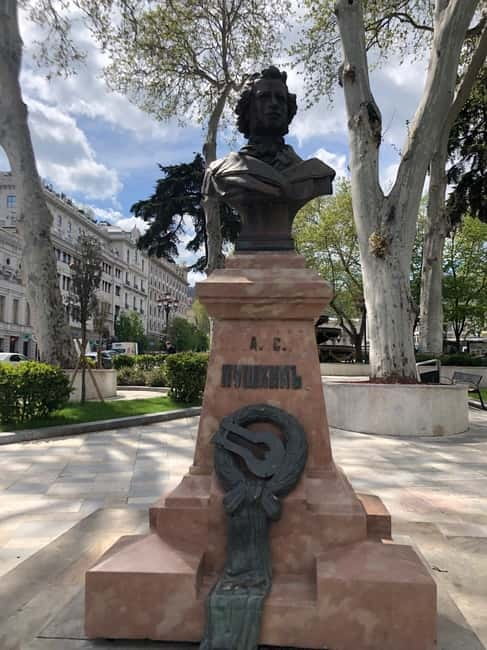
The walk begins at Tbilisi Pushkin Square, a practical central meeting point. From here, the guide sets up the political and social world of the late Tsarist Caucasus before taking you through specific sites.
That opening context matters. Without it, the buildings can seem disconnected: a school here, a government building there, a park somewhere else. Giorgi’s job is to show how the city worked as a network of institutions and public spaces. A school could shape political thought. A city hall could reflect official control. A palace could carry different meanings under three separate governments.
You should expect plenty of explanation at the start. The subject is not instantly simple, and the value of the tour comes from seeing how the pieces fit together over time. If you prefer a fast-moving walk with only a few facts at each stop, the amount of political detail may feel heavy.
Tiflis Spiritual Seminary and the education of revolutionaries
The Tiflis Spiritual Seminary is one of the most interesting early stops because it brings education into the story. The tour discusses the famous revolutionaries who graduated from the school and uses the building to examine how political ideas could develop within institutions that were not created as revolutionary headquarters.
That contrast gives the stop its bite. A seminary suggests religious training and official order, yet its former students became part of a much wider political struggle. You get a sense of how educated Georgians encountered imperial structures, social inequality, and competing ideas about national and economic change.
The school also helps keep the story grounded in people rather than only parties and dates. You are not just hearing that revolutionary groups existed. You are looking at the kind of institution that shaped the people who later challenged authority.
The tour does not promise a simple hero story. Its stated aim is to use sources with opposing viewpoints, which means the discussion can include arguments about motives, tactics, and consequences. That is a strong feature for adults who want more than a polished national legend.
Tbilisi City Hall and the machinery of public power
Tiflis City Hall shifts the focus from education to municipal authority. Here, the guide discusses how local government functioned within the imperial system and how public institutions reflected the political order around them.
This stop is valuable because repression and revolution were not limited to distant battlefields or secret meetings. They affected city administration, public gatherings, workers, and the use of streets and squares. The tour connects official institutions to the people who challenged them.
You may also hear about the way workers and political groups used urban space. The city becomes more than a collection of old facades. Streets, buildings, and open areas become places where arguments were made, crowds gathered, and power was displayed.
Giorgi’s ability to answer questions is especially useful here. Several people who took the tour found that he could move from historical explanation to current political discussion without losing the thread. You can ask about the events being described, or about how those events still shape Georgian political thinking.
A slower pace, same corner of the Caucasus:
- Tbilisi: Day Trip to Kazbegi, Gudauri, Gergeti, and Ananuri
★ 4.9 · 3,203 reviews - Day Trip to Kakheti Wine Region Including 9 Wine Tastings
★ 5.0 · 2,774 reviews - Highlights of Caucasus Mountains-Jinvali,Ananuri,Gudauri,Kazbegi(Group tour)
★ 5.0 · 2,682 reviews - From Tbilisi: Kakheti Wine Region Tour with 9 Wine Tastings
★ 4.9 · 2,541 reviews
The Viceroy’s Palace across three political eras
The Viceroy’s Palace is the tour’s strongest architectural lesson. Its importance changes as you consider the Tsarist, Menshevik, and Soviet periods.
Under Tsarist rule, the palace represented imperial authority in the Caucasus. That symbolism is central to the visit. You are encouraged to look at the building not only as an impressive residence, but also as a statement about who governed Georgia and how that authority was presented.
The Menshevik period adds a sharp change in meaning. Georgia’s social democratic movement followed a different path from the Bolsheviks, and the palace became part of a new political setting. The tour explains how the two factions differed in policy and method, as well as what followed from those differences.
Then comes the Soviet era, which gives the building another layer. A palace can survive a change of government while its political meaning is rewritten. That is one of the most useful ideas in the tour: architecture does not speak for itself. Governments attach their own messages to it.
This stop suits you if you enjoy reading political symbols in buildings. It may be less satisfying if you want to enter every structure or see preserved interiors, since the experience is centered on guided interpretation and the surrounding city.
Alexander’s Park and the politics of public space
Alexander’s Park provides a change of pace from enclosed institutions and government buildings. The guide uses the park to discuss public gatherings, revolutionary activity, and the way ordinary open spaces became part of political life.
Parks can seem harmless on a sightseeing route. Here, the point is that public space was never entirely neutral. Workers could march, groups could organize, authorities could monitor crowds, and political memory could be shaped through monuments and ceremonies.
The tour also examines imperial symbolism. You may start noticing how names, statues, stones, and official markers reinforce one version of history. The guide then places those symbols beside the people and movements they were meant to control or overshadow.
This is one reason the walk feels different from a general city tour. It asks you to look again at places you might otherwise pass without thought. Tbilisi’s built environment becomes evidence, although the evidence needs a guide to interpret it.
The stone dedicated to fallen revolutionaries
A stone dedicated to the heroes who died in the revolutions gives the walk a memorial point. The stop is not just about honoring the dead. It raises questions about who is remembered, who is forgotten, and how later governments use revolutionary symbols.
The memorial can also help you weigh the tour’s political balance. The program is sympathetic to labor history and revolutionary struggle, but it is not presented as simple nostalgia. It considers the costs of political violence, repression, factional conflict, and policies that produced painful results.
That balance is important. You may hear admiration for courage and organization while also examining the failures and consequences of revolutionary movements. A good question to ask here is how the meaning of the memorial changed under different regimes.
If you have already taken a standard old-town walk, this stop adds a useful second reading of central Tbilisi. You see the same city through workers’ lives and political conflict rather than only through architecture and tourism.
From Mensheviks to Bolsheviks, the tour’s main argument
The most demanding part of the experience is the discussion of Georgia’s revolutionary factions. The tour explains how revolutionary groups emerged and later divided into Bolsheviks and Mensheviks.
You will hear about differences in organization, political aims, and methods. These were not minor disagreements between people using different labels. Their policies shaped the course of the region and influenced what happened after the Tsarist order collapsed.
The guide also connects Georgian events to the wider Russian Empire without treating Georgia as a footnote. That is a major strength. You get the broad imperial setting, but the focus stays on local institutions, streets, activists, and workers.
Giorgi’s style appears best suited to people who ask questions. He encourages discussion and can move into current Georgian politics when the subject calls for it. That makes the walk feel like a conversation rather than a speech, though the quality of your experience will partly depend on your interest in political history.
The optional Underground Printing House Museum
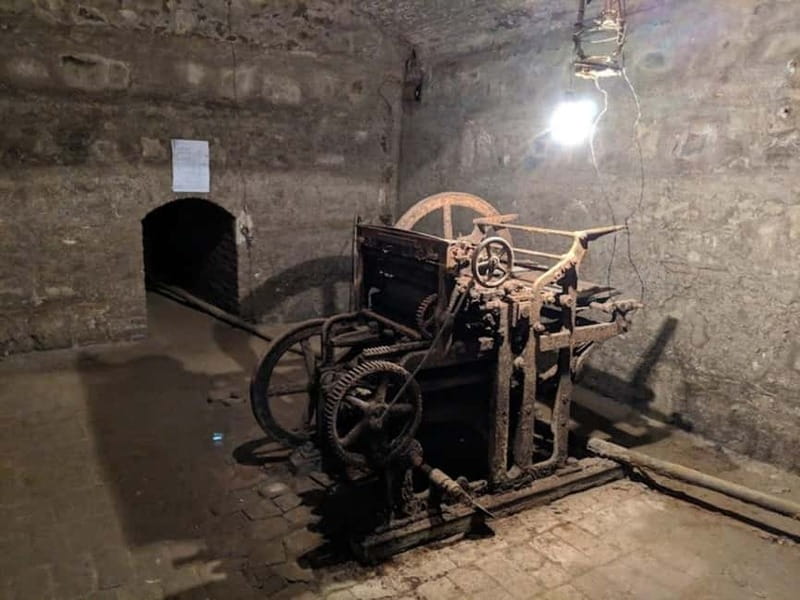
The Underground Printing House Museum requires extra payment and is not included in the main price. It also requires about 15 minutes of metro travel, followed by a guided and self-guided museum visit of roughly one hour.
I would seriously consider adding it. The main walk explains that revolutionary groups relied on illegal activities, including secret publishing and communication. The printing house gives that part of the story a physical setting and shows how political work moved below the level of official institutions.
The museum option also changes the rhythm of the day. Instead of ending after the central walk, you continue by metro and spend more time with the practical side of underground organization. You can expect guided explanation plus free time to look around on your own.
There are two important cautions. First, the extra cost means the total price is higher than the advertised $30. Second, the timing becomes longer than the stated two-hour tour. The schedule supplied for the full experience describes a walking tour, metro ride, and one-hour museum visit, so you should check the exact start and end times before booking.
The extra visit is especially useful if the idea of illegal printing, secret networks, and revolutionary communication interests you. If you have limited time or mainly want the city walk, the core tour still covers the major public sites.
What the $30 price gets you
At $30 per person, the main tour is priced above a basic free walking tour, but it offers a narrower and more specialized subject. You are paying for a live English guide who can explain complicated political changes at the places where they mattered.
The value is strongest if you would otherwise struggle to connect Tbilisi’s buildings to the 1900 to 1921 period. Online research can provide dates and names, but it is harder to see how the seminary, city hall, palace, park, and memorial relate to one another. A focused guide saves you that work.
The price is less convincing if you want a broad introduction to Georgian culture or a general tour of the city’s main sights. This experience leaves out many familiar tourist themes because it stays with revolutionary and labor history.
The Underground Printing House is separate, so budget for the museum and metro if you want the longer version. Since the price is per person, solo visitors may find it easier to justify than a private tour, while couples and small groups should compare the total cost with other history-focused options.
Guide style, language, and pace
The tour is offered in English. Giorgi, also known as Gio, is repeatedly praised for excellent English, strong preparation, friendly conversation, and an ability to answer difficult questions.
That matters with this subject. The difference between Bolshevik and Menshevik policy, or between Tsarist and Soviet authority, can become muddled when a guide rushes. Here, you should expect time for explanation and follow-up questions.
The pace is a city walk, not a long-distance hike. Still, you will be outdoors for the main route and should wear sensible shoes. Bare feet, alcohol, and drugs are not allowed. Children under 12 are not considered suitable, and wheelchair users may face problems with the route and transport arrangements.
The tour information gives both a two-hour duration and a three-hour walking description. Add the metro ride and the optional one-hour museum visit, and the full experience is clearly longer. Treat the short duration as a guide to the main walk, then confirm the precise schedule before you commit to other plans.
Who will get the most from this experience?
I would recommend this tour to you if you:
- Want Georgian political history rather than a broad city introduction
- Enjoy labor history, social democracy, or the Russian Empire
- Like asking questions and discussing competing interpretations
- Have already seen Tbilisi’s main sights and want a different way to read the city
- Are interested in Soviet Georgia and its connection to earlier movements
- Can manage a walking tour followed by possible metro travel
You may want to skip it if you are visiting Tbilisi for only a few hours and want a quick orientation. It is also a poor match for young children, wheelchair users, or anyone who finds long political explanations tiring.
The tour works particularly well early in a stay if you want a framework for later sightseeing. It can also work near the end, when familiar streets begin to raise questions about who built them, who governed them, and who was pushed out of the official story.
Practical advice before you go
Wear comfortable shoes and leave room for questions. The most useful part of the experience is not simply reaching each stop, but asking Giorgi to explain how one political change affected the next.
If you want the Underground Printing House Museum, plan for extra time, extra payment, and metro travel. Do not treat the optional visit as a minor add-on, since it adds about an hour of museum time and extends the experience beyond the central walk.
You can cancel up to 24 hours before the tour for a full refund, and you can reserve without paying immediately. Those policies make it easier to hold a place while you settle your Tbilisi schedule.
Should you book Revolutionary Tbilisi?
Book it if you want the side of Tbilisi that is harder to find through casual sightseeing: workers’ organizations, revolutionary networks, imperial repression, factional politics, and buildings whose meanings changed with each government.
I would choose the main walk for a focused two-hour introduction, then add the Underground Printing House Museum if secret publishing and revolutionary methods interest you. At $30, it is fair value for a specialist tour led by a guide who can handle serious questions. Just confirm the timing, remember that the museum costs extra, and come ready to think rather than simply tick off monuments.
FAQ
Where does the Revolutionary Tbilisi Walking Tour begin?
The tour begins at Tbilisi Pushkin Square.
How long does the main tour last?
The activity is advertised as two hours, while the walking portion is also described as three hours. Check the available starting times and exact schedule when booking.
Is the tour offered in English?
Yes. The live guide and tour language are English.
Is the Underground Printing House Museum included?
No. The Underground Illegal Printing Press is an optional extra and requires an additional payment. Metro transportation is also not included.
How do I reach the Underground Printing House Museum?
The extended experience includes about 15 minutes of metro travel before the museum visit.
Who should not book this tour?
The tour is not suitable for children under 12 or wheelchair users. Alcohol and drugs are not allowed, and participants may not go barefoot.
Just added near Tbilisi
- Wine Tasting feel the Difference of Qvevri or Classical Wine★ 4.4 · 10 reviews
- Walking Tour in Old Tbilisi – Group Tour★ 4.5 · 8 reviews
- From Tbilisi: Kakheti and Kazbegi 2-Day 4X4 Jeep Tour pack★ 5.0 · 6 reviews
- Tbilisi: Vintage Fashion and Secondhand Thrifting Tour★ 5.0 · 11 reviews
- Uforgatable Kakheti Tour with wine tasting – in Georgia★ 4.9 · 5 reviews
- From Tbilisi: Uplistsikhe Caves and Mtskheta Town Day tour★ 5.0 · 2 reviews
- Private Adorable City Tour of Tbilisi★ 5.0 · 3 reviews
- Tbilisi Airport to Gudauri, Bakuriani, Batumi, Tbilisi★ 5.0 · 3 reviews
Walking Tours, compared.

Tbilisi Walking Tour Including Cable Car and Traditional Bakery
Read our review →

Evening Walking & Talking Tour with Wine & Boat Ride
Read our review →
Evening Walking Tour with Wine & Boat Ride Options
Read our review →
Old Tbilisi Highlights walking tour with wine & 10 tastings
Read our review →
Old Tbilisi Tour: Private Walking Tour With Wine Tasting
Read our review →
Private Tbilisi Food Tour: 9 Tastings Walk in Bohemian District
Read our review →
Tbilisi Old Town Walking Tour with a Local Guide
Read our review →Browse the lists this tour appears in