
Reviewed · WALKING TOURS
Taste Tbilisi – a delicious Food & Drink walk of Tbilisi
Come hungry, leave happily overfed. This 3.5-hour walk through Tbilisi’s Sololaki district combines Georgian food, local wine, chacha, and city stories in a way that feels far more personal than a standard sightseeing tour. I especially like the wide range of tastings, from khinkali and cheese pastries to salads, stews, churchkhela, and natural wines. I also like that guides such as Giorgi, Zezva, Luka, Levan, and David bring the food into the story of Tbilisi.
The main consideration is the amount of food and alcohol. The classic route includes meat dishes and drinks, and the tastings can leave you very full. Vegetarian, vegan, and alcohol-free options are possible, but vegan menus limit the number of dishes you can try, and halal or kosher menus are not available.
In This Review
- Key points at a glance
- Why this is a smart introduction to Tbilisi
- Starting with khinkali in an old Tbilisi restaurant
- Sololaki’s faded elegance between food stops
- Vegetable starters with walnuts, beet, and sour plum
- Cheese and bean pastries, salads, and warm Georgian dishes
- Qvevri wine and the serious business of chacha
- Churchkhela and the sweet finish
- The guides make or break the experience
- Is $74 good value for 3.5 hours?
- Who should book this walk?
- Practical details before you reserve
- Should you book Taste Tbilisi?
- FAQ
- How long does the Taste Tbilisi tour last?
- How much does the tour cost?
- What food is included?
- Are wine and chacha included?
- Is the tour available in English?
- Can I request vegetarian or alcohol-free food?
- Are halal or kosher menus available?
- Can I cancel the booking?
Key points at a glance
- At least 10 tastings: Expect Georgian dumplings, vegetable starters, pastries, salads, warm dishes, sweets, wine, and chacha.
- Sololaki beyond the postcard route: Walk through backstreets lined with grand Art Nouveau buildings, faded façades, and everyday Tbilisi life.
- Food with context: Your English-speaking guide explains how to eat local dishes and connects them with Georgian customs and city history.
- Natural Georgian wine: Taste wines made with the ancient qvevri method, along with chacha, Georgia’s powerful grape spirit.
- Small-group or private format: Choose a shared small group or arrange a more personal outing, depending on the option booked.
- Useful first-day activity: The food, neighborhood orientation, and restaurant tips make this a good way to get your bearings early in a Tbilisi stay.
Why this is a smart introduction to Tbilisi
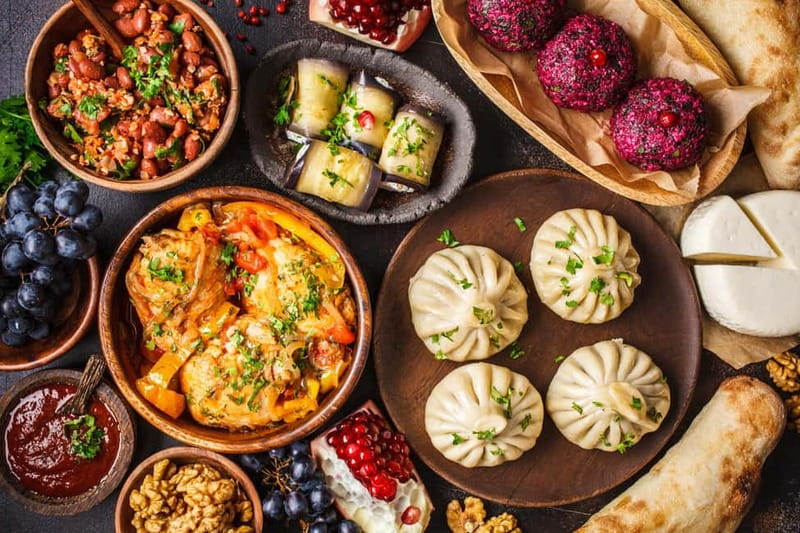
Georgian food is not hard to like, but it is easy to misunderstand if you only order a few familiar dishes. Khinkali may look like oversized dumplings, yet the proper way to eat them matters. Georgian salads often rely on walnuts and sour flavors rather than the usual oil-and-vinegar dressing. Chacha is not a gentle after-dinner sip. It is a strong spirit with enough force to make you pay attention.
This tour gives you a guided way into that food culture. You do not simply sit down for one large meal. You move between several food stops in central Tbilisi, tasting small portions while your guide explains what is on the table and how it fits into Georgian life.
The format is especially useful at the start of a trip. You can ask about dishes you will see elsewhere, learn which flavors suit you, and collect ideas for later meals. Cynthia’s experience with Luca made this point particularly clear: the route works as both a food outing and an introduction to Tbilisi, its politics, and its past.
I also appreciate the balance between eating and walking. Three and a half hours is long enough to build a proper meal from many tastings, but the movement through Sololaki keeps the experience from becoming a restaurant crawl with no sense of place.
More Walking Tours in Tbilisi
- Tbilisi Walking Tour Including Cable Car and Traditional Bakery
★ 5.0 · 1,310 reviews - Tbilisi: City Highlights Guided Walking Tour
★ 4.9 · 1,114 reviews - Tbilisi:Evening Walking & Talking Tour with Wine & Boat Ride
★ 5.0 · 572 reviews
Starting with khinkali in an old Tbilisi restaurant
The tour begins with one of Georgia’s best-known dishes, khinkali, in one of the city’s oldest restaurants. This is a strong opening because the dumplings give your guide an immediate chance to explain Georgian food customs.
Khinkali are savory dumplings, usually filled with meat, though fillings can vary. They are meant to be handled carefully, and your guide offers tips on how to eat them like a local. That practical advice is worth having before you order them on your own.
This first stop also sets the tone for the tour. You get a proper sit-down food experience, then move on to smaller tastings elsewhere. The route is not built around one grand restaurant meal. It is designed to show how several dishes fit together.
A small warning: do not arrive after a large lunch. The dumplings are only the beginning, and the tour continues with pastries, salads, warm dishes, sweets, wine, and spirits. The advice to bring an empty stomach is very sensible.
Sololaki’s faded elegance between food stops
The walking route runs through Sololaki, a central Tbilisi district known for grand older buildings and a slightly worn, atmospheric feel. You can expect backstreets with Art Nouveau architecture, former splendor, and façades that show years of decay.
That setting matters. The food does not appear in isolation. As you walk, the guide talks about the neighborhood, Tbilisi’s past, and modern life in the city. The result is a fuller picture of the capital, one that includes both handsome old buildings and the ordinary streets between the major sights.
You should not expect a polished architectural tour with a long list of monuments. The appeal is more informal. The walk lets you see a part of central Tbilisi where local restaurants and food stops sit alongside old buildings and working city life.
Several people praised the route for taking them to places they would not have found by browsing online. That is one of the strongest reasons to book a guide in Tbilisi. You are paying not only for food, but also for local judgment about where to stop.
The district’s uneven condition may not suit someone looking for a tidy, carefully restored old town. For me, that roughness is part of the point. It gives the walk a sense of place rather than turning it into a polished food show.
Vegetable starters with walnuts, beet, and sour plum
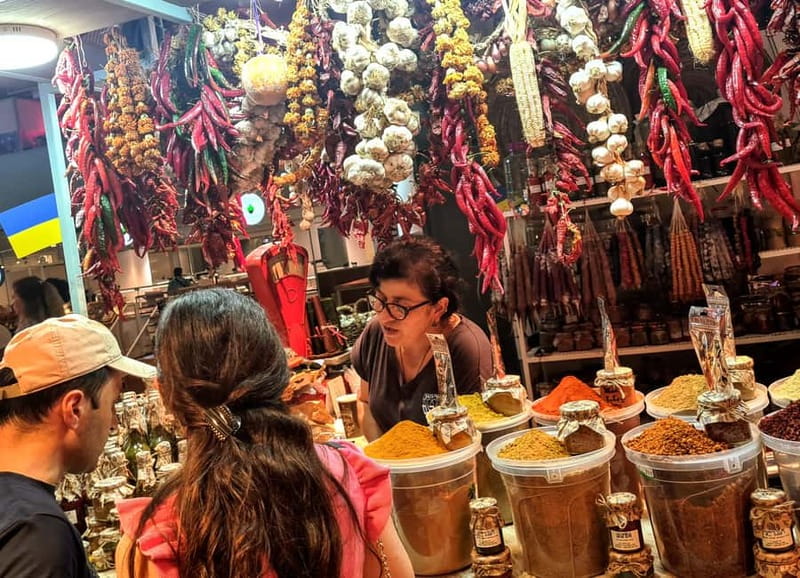
The cold starters are one of the best parts of the tasting. They may include walnut and spinach paste, eggplant, stuffed peppers, and salads made with seasonal local ingredients.
A beet and sour plum salad gives you a good sense of Georgian flavor. It brings together earthy sweetness and sharp fruitiness, a useful contrast to the heavier dishes that follow. Walnut-based preparations are also central to Georgian cooking, adding body and a soft, savory flavor to vegetables.
These plates help vegetarian diners get more than a token side dish. The tour includes traditional vegetarian starters as part of the standard food selection, not simply as an afterthought. Cristi’s vegetarian tour was adjusted to include almost 25 local dishes, which shows how flexible the route can be when arrangements are made in advance.
Still, you need to tell the supplier about dietary needs before the tour. The standard menu includes meat and alcohol. Vegetarian and alcohol-free versions can be provided, but vegan diners will have fewer dishes to taste. Halal and kosher options are not available.
More food tours in Tbilisi:
- Tbilisi:Mtskheta,Jvari,Bazaar,wine tasting,Chronicles of Georgia
★ 5.0 · 730 reviews - Old Tbilisi Tour: Private Walking Tour With Wine Tasting
★ 5.0 · 273 reviews - Private Tbilisi Food Tour: 9 Tastings Walk in Bohemian District
★ 5.0 · 227 reviews - Tbilisi Food Tour in a Local Family
★ 5.0 · 113 reviews
Cheese and bean pastries, salads, and warm Georgian dishes
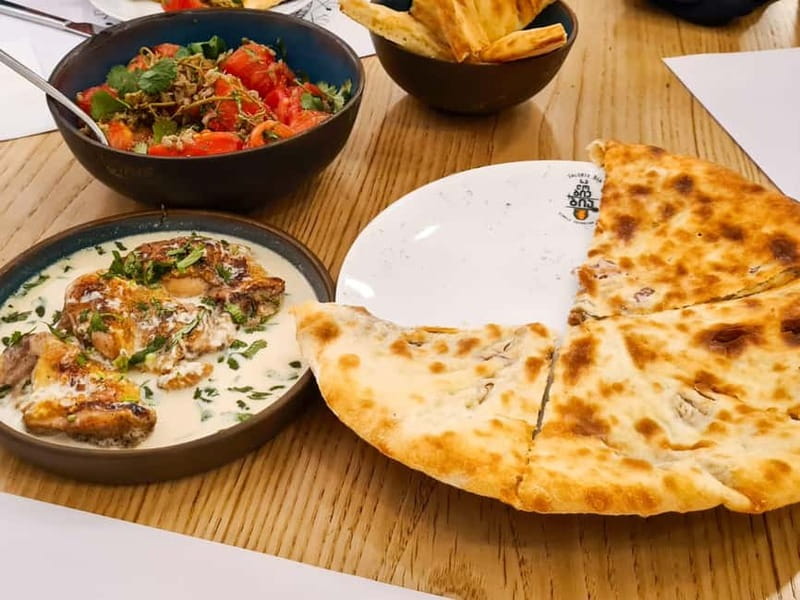
The next part of the meal adds flaky cheese and bean pastries, fresh salads, and warm plates such as stews or baked chicken. This gives you a useful cross-section of Georgian cooking rather than a menu built around only khinkali.
The pastries are hearty and savory. They can be filling even in tasting portions, so pace yourself. The fresh salads provide a break from the pastry and dumplings, while the warm dishes show how Georgian cooking moves from light vegetable plates to richer comfort food.
Chicken in garlic and cream sauce is one example of the sort of warm dish you might try. It is a good reminder that Georgian food is not only about cheese, walnuts, and herbs. The cuisine includes soft, saucy dishes that feel familiar in structure but still carry local flavors.
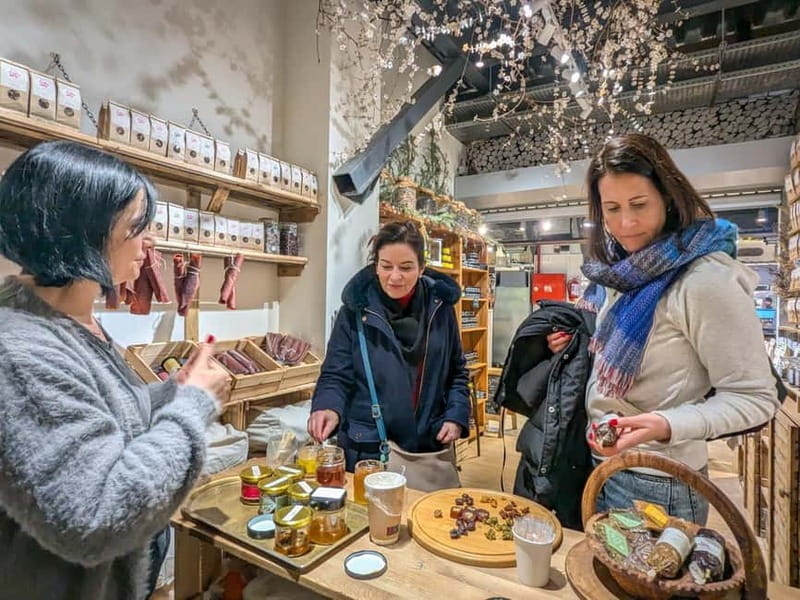
Your guide explains what you are eating and answers questions as you go. The level of conversation appears to depend on the guide and the group, but the repeated strengths of guides such as Zezva, Giorgi, Luka, and Levan are their friendliness, English, and ability to connect food with Tbilisi life.
The small-group setting helps here. You have room to ask about ingredients, cooking methods, and local customs without turning the experience into a formal lecture. A private booking should offer even more flexibility for questions and pacing.
Qvevri wine and the serious business of chacha
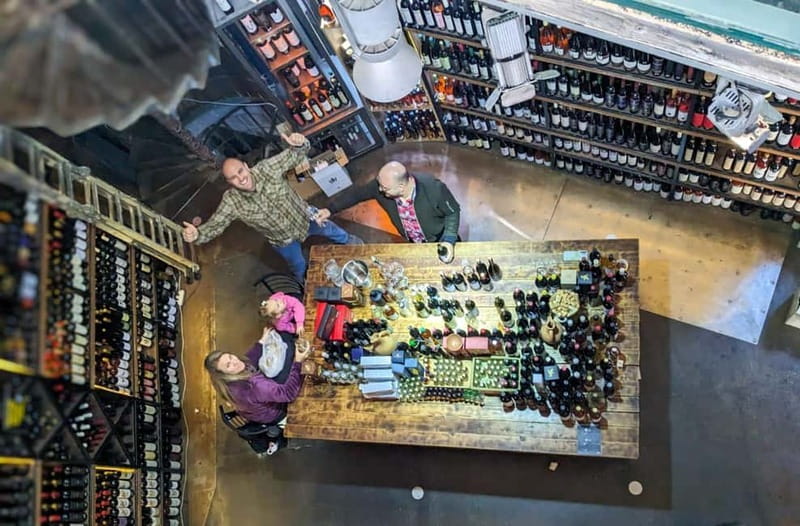
Georgian wine is an important part of the experience, not a decorative extra. You taste selected natural wines made with qvevri technology, an ancient Georgian method that uses large clay vessels.
The tasting gives you a chance to try Georgian grape varieties and flavors that may be unfamiliar. Your guide can explain how the wines relate to the country’s food traditions and why wine belongs at the center of a Georgian table.
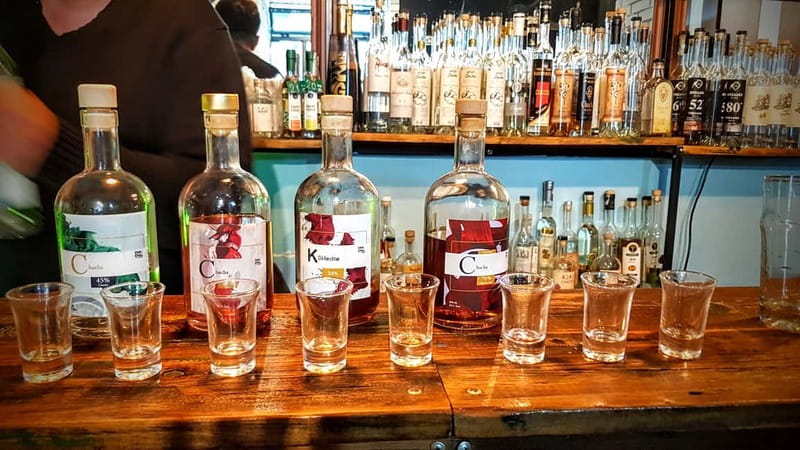
Chacha is the stronger part of the drinks program. Georgians call it liquid happiness, but you should treat it with respect. It is a traditional strong spirit, and the tasting is best approached slowly, especially after several food stops.
One useful tip comes from Louise’s experience: think carefully about wine pairings with khinkali, particularly red wine. The combination may not be the best match, and your guide can steer you toward more suitable choices.
Alcohol-free arrangements are available if requested. That makes the tour workable for people who do not drink, though the standard experience includes both wine and chacha.
Churchkhela and the sweet finish
The final tasting includes spices and churchkhela, a Georgian sweet made with nuts and grape juice. Churchkhela is often called Georgian candle candy because of its long, hanging shape.
It is a fitting finish because it is portable, distinctive, and tied to Georgian food traditions. The texture and appearance are unlike a typical European dessert, and the grape-and-nut combination gives you another way to understand the country’s pantry.
The spice tasting also rounds out the food education. By this point, you have sampled savory dumplings, vegetable spreads, pastries, salads, warm dishes, wine, and spirits. The experience ends with flavors you can recognize later in markets and restaurants.
The guides make or break the experience
The strongest praise goes to the guides. Zezva was described as warm and well informed, with a strong grasp of Georgian food and history. Giorgi received similar praise for his energy, personal attention, and ability to make each stop feel special.
Luka appears several times as a guide who combines food with Tbilisi history and stories about Georgia. Levan was valued for creating a relaxed, friendly atmosphere during the wine and chacha tasting. David was praised for punctuality, clear English, and the way he discussed daily life beyond the food.
That range of names suggests that the company has several guides rather than one fixed host. Your experience will depend partly on who leads your departure, but the common thread is an informal, personal style.
I like that the guide is not limited to restaurant explanations. You can ask about Tbilisi, Georgian customs, politics, and modern life. That turns the walk into a city orientation with food built into it.
If you want a silent tasting with little conversation, this may feel too social. If you enjoy asking questions and learning through stories, it should suit you well.
Is $74 good value for 3.5 hours?
At $74 per person, the tour is not the cheapest way to eat in Tbilisi. You could order individual dishes for less, especially if you avoid wine and chacha.
The value comes from the number of tastings, the guided route, and the access to places you might not identify yourself. You are paying for at least 10 foods and drinks, not one meal. The package includes khinkali, starters, pastries, salads, warm dishes, spices, churchkhela, wine, and chacha.
The amount can be substantial. One vegetarian group tasted nearly 25 local dishes after the route was adjusted. That is an unusually broad introduction for a single afternoon, though it also explains why you should plan a lighter meal beforehand and afterward.
The cost is easier to justify if you are new to Georgian cuisine, staying in Tbilisi for a short time, or want an English-speaking local to guide your first food choices. It is less compelling if you already know Georgian cooking well or prefer to discover restaurants independently.
Who should book this walk?
I would recommend it to first-time visitors who want a friendly introduction to Tbilisi rather than a formal lecture or a simple restaurant reservation. Solo visitors and couples should fit comfortably, and the small-group format can make the afternoon sociable without feeling like a large bus excursion.
It is also a good match for food-focused travelers who want both familiar dishes and less obvious tastes. The walnut-spinach paste, sour plum salad, churchkhela, qvevri wine, and chacha give you a wider picture than khinkali alone.
Vegetarians should contact the supplier before booking. The route can be adapted well, but the standard menu includes meat. Vegans can be accommodated with limits, while halal and kosher diets cannot be served.
Families and anyone avoiding alcohol should also ask about an alcohol-free arrangement. The standard route includes strong drinks, so do not assume you can simply skip them without informing the organizer.
Practical details before you reserve
The tour lasts 3.5 hours, and starting times depend on availability. The meeting point can vary according to the option you book, so confirm the exact location before setting out.
Transportation to and from the meeting point is not included. Plan your route across Tbilisi separately and allow enough time to arrive without rushing.
You can choose a private experience or a shared small-group departure. A private tour is likely the better choice if you have strict dietary needs, want to ask many questions, or prefer to control the pace. A shared group usually offers a more social feel and may suit solo visitors.
Free cancellation is available up to 24 hours in advance for a full refund. You can also reserve now and pay later, which helps if your Tbilisi plans are still changing.
Should you book Taste Tbilisi?
Yes, if you want a generous first taste of Georgian food with the city wrapped around it. The best parts are the number of dishes, the backstreet route through Sololaki, and guides who explain how food connects to Georgian life.
Book it early in your stay if you want restaurant ideas and a quick sense of direction. Arrive hungry, tell the supplier about dietary restrictions, and pace yourself with the wine and chacha.
Skip it if you dislike group conversation, cannot eat a substantial amount, or want a strictly vegetarian, vegan, halal, or kosher menu without compromises. For most curious eaters, though, $74 buys more than lunch. It buys a useful introduction to Tbilisi, served one plate and one story at a time.
FAQ
How long does the Taste Tbilisi tour last?
The tour lasts 3.5 hours.
How much does the tour cost?
The listed price is $74 per person.
What food is included?
The tastings include khinkali, vegetarian starters such as eggplant and stuffed peppers, cheese and bean pastries, fresh salads, warm dishes such as stews or baked chicken, spices, and churchkhela.
Are wine and chacha included?
Yes. The experience includes selected Georgian wines made with qvevri technology and a tasting of chacha, a traditional strong Georgian spirit.
Is the tour available in English?
Yes. The tour has a live English-speaking guide.
Can I request vegetarian or alcohol-free food?
Yes. Vegetarian and alcohol-free menus can be provided if you advise the supplier. Vegan options are available but reduce the number of dishes you can taste.
Are halal or kosher menus available?
No. Halal and kosher options are not available.
Can I cancel the booking?
You can cancel up to 24 hours in advance for a full refund. Reserve now and pay later is also available.
More Food in Tbilisi
- Private 4 days Food & Wine and Sightseeing tour to Kakheti, Kazbegi, Mtskheta.
★ 5.0 · 25 reviews - Tbilisi Street Food Tour (All-inclusive)
★ 5.0 · 20 reviews - Tbilisi: Street Food & Sightseeing Tour with Local Markets
★ 5.0 · 8 reviews - Tbilisi: Walking Tour of Main Highlights With Food & Wine
★ 5.0 · 7 reviews
Just added near Tbilisi
- Wine Tasting feel the Difference of Qvevri or Classical Wine★ 4.4 · 10 reviews
- Walking Tour in Old Tbilisi – Group Tour★ 4.5 · 8 reviews
- From Tbilisi: Kakheti and Kazbegi 2-Day 4X4 Jeep Tour pack★ 5.0 · 6 reviews
- Tbilisi: Vintage Fashion and Secondhand Thrifting Tour★ 5.0 · 11 reviews
- Uforgatable Kakheti Tour with wine tasting – in Georgia★ 4.9 · 5 reviews
- From Tbilisi: Uplistsikhe Caves and Mtskheta Town Day tour★ 5.0 · 2 reviews
- Tbilisi Airport to Gudauri, Bakuriani, Batumi, Tbilisi★ 5.0 · 3 reviews
- Private Adorable City Tour of Tbilisi★ 5.0 · 3 reviews
Walking Tours, compared.

Tbilisi Walking Tour Including Cable Car and Traditional Bakery
Read our review →
Evening Walking & Talking Tour with Wine & Boat Ride
Read our review →
Evening Walking Tour with Wine & Boat Ride Options
Read our review →
Old Tbilisi Highlights walking tour with wine & 10 tastings
Read our review →
Old Tbilisi Tour: Private Walking Tour With Wine Tasting
Read our review →
Private Tbilisi Food Tour: 9 Tastings Walk in Bohemian District
Read our review →
Tbilisi Old Town Walking Tour with a Local Guide
Read our review →Browse the lists this tour appears in