
Reviewed · WALKING TOURS
Tbilisi Guided Walking Tour
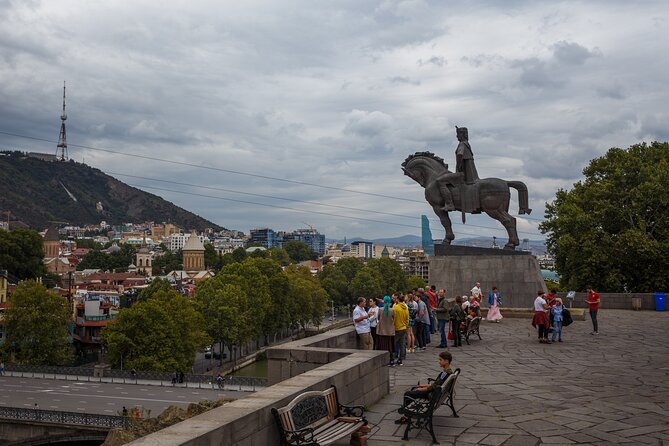
Tbilisi reveals itself one story at a time. This three-hour walk links the city’s main sights, from Metekhi Cathedral and Narikala Fortress to sulphur baths, old churches, a mosque, a synagogue, and the modern Bridge of Peace. It is a useful first look at a city where several faiths and centuries sit close together.
I like the small maximum group of 20 and the clear route through Old Tbilisi. I also like that the tour costs $14.30, includes an English-speaking guide, and takes you inside a sulphur bath area rather than simply pointing at it from the street. One possible drawback is the pace: twelve stops in about three hours means some visits are brief, and the route includes hills and uneven old-city streets.
The tour begins at 3:00 p.m. outside Budget Georgia on Anton Purtseladze Street and finishes at the same meeting point. Guide Mariam receives especially warm praise for being friendly and helpful, including arranging a sulphur bath for one customer and recommending a good place.
In This Review
- Key points before you book
- Why this route works for a first visit
- Metekhi Cathedral and the first view over Old Tbilisi
- Narikala Fortress and the cable-car question
- Abanotubani and the story behind Tbilisi
- Leghvtakhevi Waterfall, a cool pause in the old city
- Sioni Cathedral and Saint Nino’s cross
- Jumah Mosque and the Great Synagogue
- Rike Park and the Bridge of Peace
- The Rezo Gabriadze clock and its hourly puppet show
- Anchiskhati Basilica and Liberty Square
- Timing, meeting point, and walking demands
- What the $14.30 price really buys
- Who should book this Tbilisi walk?
- FAQ
- Where does the Tbilisi Guided Walking Tour begin?
- What time does the tour start?
- How long does the walking tour last?
- Where does the tour finish?
- Is the tour offered in English?
- Is the cable car included in the price?
- What is the maximum group size?
- What happens if poor weather cancels the tour?
- Should you book it?
Key points before you book
- Twelve central sights in about three hours: The route covers churches, fortifications, baths, a waterfall, public squares, and modern architecture.
- A useful introduction to Georgian faith and culture: You visit Sioni Cathedral, Anchiskhati Basilica, Jumah Mosque, and the Great Synagogue of Tbilisi.
- Narikala may involve an extra cable-car cost: The cable car is not included and costs 2.5 GEL each way.
- The tour ends where it starts: This makes it easy to continue exploring or return to your accommodation afterward.
- The Rezo Gabriadze clock is timed carefully: You arrive five minutes before the full-hour marionette performance.
- Weather matters: Poor weather can lead to a new date or a full refund.
Why this route works for a first visit
Tbilisi can feel confusing at first. The Mtkvari River divides the city, Old Tbilisi climbs into steep slopes, and major sights appear in different pockets. This route gives you a basic map in your head while showing how the city’s religious, political, and architectural stories overlap.
The itinerary is also well balanced. You get viewpoints and ruins, but you are not asked to spend three hours looking only at monuments. The waterfall offers a change of mood. The sulphur bath district introduces one of Tbilisi’s most famous traditions. The mosque and synagogue add a wider view of the old city than a church-only walk would provide.
At $14.30, I see this as a strong-value orientation tour. You are paying for guiding rather than admission tickets, since the listed stops are free to enter. The real value depends on the guide’s ability to explain what you are seeing, keep the group moving, and make sense of the city’s legends and religious landmarks.
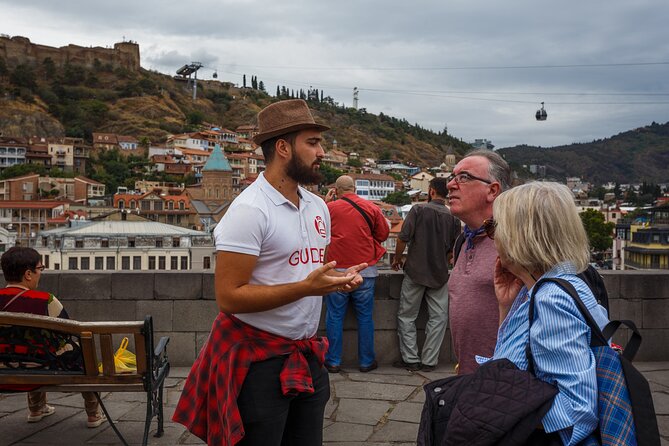
The maximum group size of 20 is worth noting. That is not a private walk, but it is still small enough for a guide to manage without turning the experience into a distant lecture. If you want long photo stops or detailed time inside every church, this route may feel too brisk.
More Walking Tours in Tbilisi
- Tbilisi Walking Tour Including Cable Car and Traditional Bakery
★ 5.0 · 1,310 reviews - Tbilisi: City Highlights Guided Walking Tour
★ 4.9 · 1,114 reviews - Tbilisi:Evening Walking & Talking Tour with Wine & Boat Ride
★ 5.0 · 572 reviews
Metekhi Cathedral and the first view over Old Tbilisi
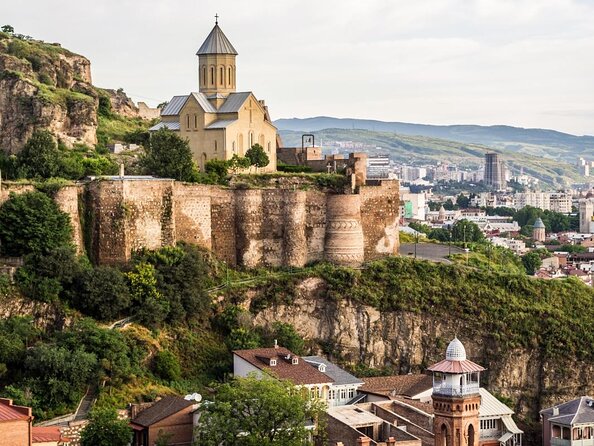
Metekhi Cathedral is the opening stop, with about ten minutes set aside. It is one of the oldest churches in Tbilisi and gives you a fine view over Old Tbilisi.
That opening position matters. You begin with both a landmark and a sense of place. Rather than walking straight into narrow streets without orientation, you first see how the old city sits around the river and slopes.
Ten minutes is enough for a quick explanation and photos, but not a long visit. You should arrive ready to listen while moving. Comfortable shoes will help from the start, since the route later includes uphill sections, old paving, and natural paths near the waterfall.
Narikala Fortress and the cable-car question
Narikala Fortress receives roughly 30 minutes, the longest stop on the route. The medieval castle ruins sit in the center of Old Tbilisi and offer another strong viewpoint.
The fortress is valuable even if you are not a major ruins enthusiast. Its position helps explain why this spot mattered: from above, the old city, river, and surrounding hills come together in one view. The stop also gives the walk a little breathing room after the opening church.
The cable car costs 2.5 GEL per way and is not included. The information provided does not say that every group must use it, so you should treat this as a possible extra rather than an automatic charge. Ask the guide how the route is handling the ascent on your date.
This is one of the tour’s practical choices to clarify before setting out. If you want to keep costs exact, carry Georgian lari and confirm whether you need a cable-car ticket. If you prefer a walk with less climbing, the cable car may be useful, but the fare is separate.
Abanotubani and the story behind Tbilisi
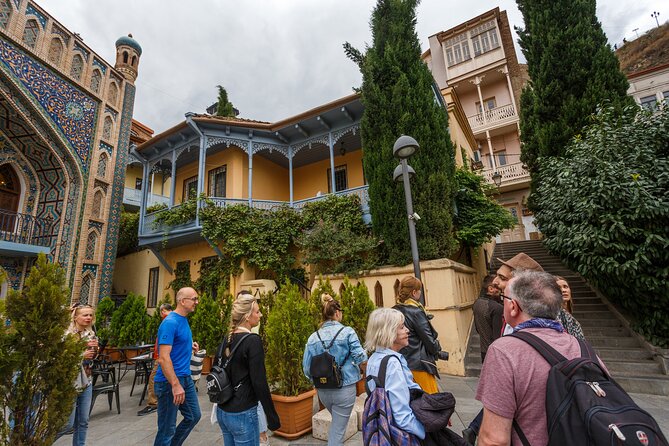
The Abanotubani district is the heart of Tbilisi’s sulphur-bath tradition. The group spends about 20 minutes here, looks inside a bath, and hears the legend connected with the city’s founding.
This is one of the most distinctive parts of the walk. Churches and fortresses appear in many historic cities. A working sulphur-bath district gives Tbilisi a more personal identity, tied to bathing, hot springs, and the daily life of the old city.
The included visit is a look inside the bath, not a bathing session. If you want to use a bath later, the guide may be able to help with arrangements. Mariam is specifically praised for assisting with a sulphur-bath booking and recommending a good place, so it is sensible to ask about options during the walk.
Do not plan your own bath appointment too tightly around the tour unless you have checked the timing. The walk starts at 3:00 p.m., and its finish time is approximate.
A slower pace, same corner of the Caucasus:
- Tbilisi: Day Trip to Kazbegi, Gudauri, Gergeti, and Ananuri
★ 4.9 · 3,203 reviews - Day Trip to Kakheti Wine Region Including 9 Wine Tastings
★ 5.0 · 2,774 reviews - Highlights of Caucasus Mountains-Jinvali,Ananuri,Gudauri,Kazbegi(Group tour)
★ 5.0 · 2,682 reviews - From Tbilisi: Kakheti Wine Region Tour with 9 Wine Tastings
★ 4.9 · 2,541 reviews
Leghvtakhevi Waterfall, a cool pause in the old city
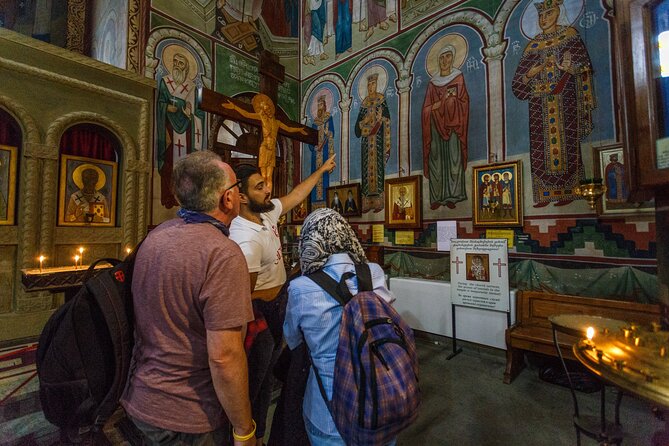
Leghvtakhevi Waterfall takes about 15 minutes. It is a small waterfall in central Tbilisi, reached within the old-city area.
This stop breaks up the architecture. After churches, ruins, and bathhouses, the sound and shade of running water offer a welcome pause, especially during hot summer weather. The stop is short, so you should think of it as a refreshing photo and rest point rather than a long nature walk.
Good shoes matter here. The route is still a city walk, but old sections near the waterfall may not feel as smooth as a modern pavement. The guide can help keep the group together, though you should watch your footing and expect a little standing.
Sioni Cathedral and Saint Nino’s cross
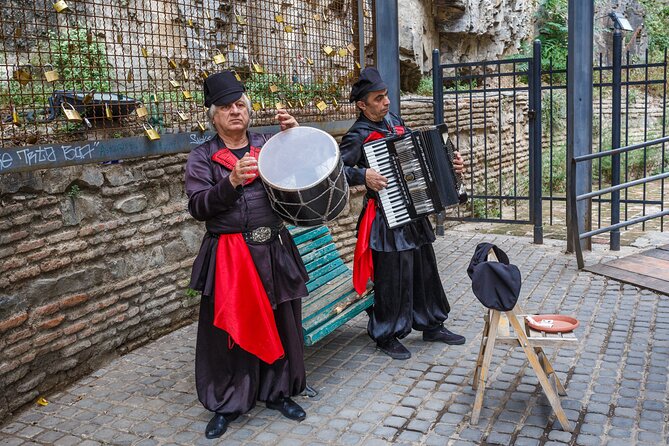
Sioni Cathedral Church is allotted about ten minutes. The cathedral keeps the cross of Saint Nino, the figure associated with converting Georgia to Christianity in the fourth century.
This stop gives the tour important religious context. You are not just entering an old church because it looks attractive. You are seeing a place connected with the story of how Christianity took root in Georgia.
Ten minutes calls for respectful, focused attention. Dress and behavior should suit an active place of worship, and photography may be limited depending on the rules at the time. The guide’s explanation is especially useful here because the significance of Saint Nino’s cross may not be obvious from the building alone.
Jumah Mosque and the Great Synagogue
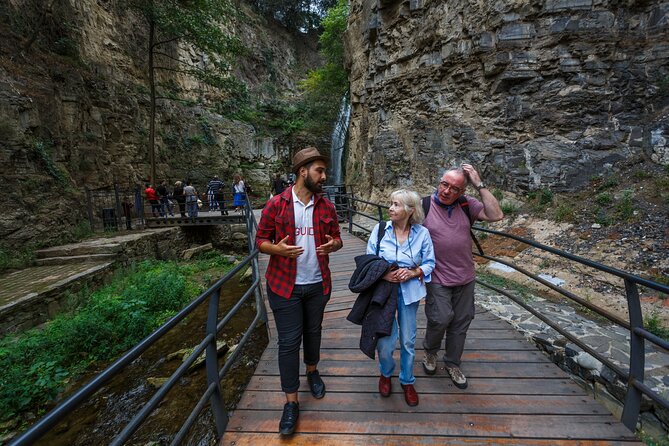
The route then moves through two important religious sites in Old Tbilisi: Jumah Mosque for about ten minutes and the Great Synagogue of Tbilisi for about five.
Together, these stops broaden the picture of the city. The mosque is in the old part of Tbilisi, while the synagogue is described as the biggest in the city. Their inclusion shows that the tour is not limited to the better-known Georgian Orthodox churches.
The synagogue visit is short, so expect a quick introduction rather than a detailed architectural study. The mosque receives more time, but the total schedule remains tight. I like these stops because they encourage you to see Old Tbilisi as a shared urban center, not a single-tradition monument district.
As with the churches, remember that these are places of worship. Follow the guide’s instructions, keep your voice low, and be prepared for access rules to change.
Rike Park and the Bridge of Peace

Rike Park gets about five minutes, followed by ten minutes at the Bridge of Peace. Rike is a large open area with views across Tbilisi, while the bridge is a modern crossing over the Mtkvari River.
This section shows the city’s newer face. The bridge’s contemporary design contrasts sharply with the stone churches, fortress ruins, and old bath district seen earlier. That contrast is part of Tbilisi’s character, and the guide can help connect the old and new sides of the city.
The brief stop in Rike Park is mainly for views and orientation. The Bridge of Peace deserves a little more time because you can appreciate its position over the river and photograph the surrounding city.
If you enjoy modern architecture, this portion will be a highlight. If your main interest is medieval Tbilisi, it may feel less essential, but it still helps you understand how the central areas fit together.
The Rezo Gabriadze clock and its hourly puppet show
The Rezo Gabriadze Marionette Theater is one of the most carefully timed stops. The group arrives five minutes before the full hour to watch the clock’s marionette performance, with about 15 minutes planned here.
That timing is a smart touch. You are not merely passing a theater and hearing its name. You arrive for a small performance built into the clock, which gives the walk a sense of occasion.
Because the show happens on each full hour, the exact rhythm of this stop depends on reaching the theater at the right time. The tour schedule is designed around that moment, but the overall finish remains approximate. If you have a dinner booking immediately afterward, leave some spare time.
This is also a good example of why a guided route can help. A city clock is easy to miss when you are walking alone, especially if you do not know when to look up.
Anchiskhati Basilica and Liberty Square
Anchiskhati Basilica is the final major historic church, with around ten minutes allotted. It is described as the oldest church in Tbilisi and dates to the sixth century.
After seeing Sioni Cathedral, this stop gives you another chance to compare Georgian church traditions and old-city settings. The shorter time keeps the route moving, but the basilica adds weight to the walk’s closing section.
The final stop is Svobody Square, also called Liberty Square, the center of Tbilisi. About ten minutes here brings the tour into the modern city center and provides a natural point for reviewing what you have seen.
Since the activity ends back at the meeting point, the route does not leave you stranded across town. You can return to Budget Georgia’s address after the square, then decide how to spend the evening.
Timing, meeting point, and walking demands
The meeting point is Budget Georgia Tbilisi at 26 Anton Purtseladze Street. The start time is 3:00 p.m., and the walk lasts about three hours.
The afternoon departure has practical advantages. It leaves your morning free for another sight, a slow breakfast, or a visit outside the central route. It also places the waterfall and open viewpoints later in the day, though the exact light and temperature will depend on the season.
You should plan for continuous walking with regular stops. The route includes a fortress, old religious buildings, a waterfall, river views, and central streets. Some people can participate, and service animals are allowed. Public transportation is nearby, which makes reaching the meeting point easier.
The tour is offered in English. If you need a slow pace, extra time for photography, or a detailed visit inside each building, ask yourself if a fixed three-hour group route is the right match. If you want a broad first look, the schedule is efficient.
What the $14.30 price really buys
The $14.30 fee includes English guiding service. It does not include the cable car, which costs 2.5 GEL per way, and no admission fees are listed for the stops.
That makes the cost easy to understand. You are buying structure, local explanation, and a route that connects twelve sights without requiring you to plan the order yourself. The guide also adds practical help, as shown by Mariam’s assistance with a sulphur-bath booking.
The price is especially good for someone arriving in Tbilisi with limited time. A self-guided walk can cost less, but you would need to research the churches, work out the route, time the clock performance, and decide how to handle the fortress. Here, those decisions are made for you.
The trade-off is personal attention. A group of up to 20 is not the same as a private guide. Still, the size is moderate, and the five-star rating from six submitted ratings suggests a very positive early response. I would treat that as encouraging, while remembering that a small rating pool cannot guarantee every guide or departure will feel identical.
Who should book this Tbilisi walk?
I would choose this tour if you are visiting Tbilisi for the first time and want the essential Old Town sights explained in one afternoon. It suits people who enjoy history, religious buildings, city viewpoints, and short local stories more than people who want a slow museum-style experience.
It is also a good fit if you want help with the sulphur baths. Ask about booking assistance during the walk, especially if you want to turn the visit to Abanotubani into a longer evening experience.
Families and active older visitors may find the route manageable, but everyone should be comfortable walking for about three hours. Bring water in warm weather, wear practical shoes, and leave room in your schedule after the tour.
You may want a different option if you dislike group tours, need extensive accessibility support, or want to spend 30 minutes inside every church. The tour gives you breadth rather than long, quiet study.
FAQ
Where does the Tbilisi Guided Walking Tour begin?
It begins at Budget Georgia Tbilisi, located at 26 Anton Purtseladze Street in Tbilisi, Georgia.
What time does the tour start?
The tour starts at 3:00 p.m.
How long does the walking tour last?
The experience lasts approximately three hours.
Where does the tour finish?
The activity ends back at the meeting point.
Is the tour offered in English?
Yes. English guiding service is included.
Is the cable car included in the price?
No. The cable car costs 2.5 GEL per way and is not included.
What is the maximum group size?
The tour can have a maximum of 20 people.
What happens if poor weather cancels the tour?
Because the experience requires good weather, you will be offered a different date or a full refund if it is canceled for that reason.
Should you book it?
Book this walk if you want a friendly, well-priced introduction to Tbilisi’s central sights, with churches, a fortress, sulphur baths, a waterfall, a mosque, a synagogue, the river, and the Rezo Gabriadze clock all in one route.
The strongest reasons to choose it are the broad coverage, the moderate group limit, the English guide, and the practical help with sulphur-bath arrangements. Just allow for a brisk pace, check the cable-car cost, wear good shoes, and keep your post-tour plans flexible. For $14.30, it offers a useful first chapter in Tbilisi, then leaves you better prepared to explore the city on your own.
Just added near Tbilisi
- Wine Tasting feel the Difference of Qvevri or Classical Wine★ 4.4 · 10 reviews
- Walking Tour in Old Tbilisi – Group Tour★ 4.5 · 8 reviews
- From Tbilisi: Kakheti and Kazbegi 2-Day 4X4 Jeep Tour pack★ 5.0 · 6 reviews
- Tbilisi: Vintage Fashion and Secondhand Thrifting Tour★ 5.0 · 11 reviews
- Uforgatable Kakheti Tour with wine tasting – in Georgia★ 4.9 · 5 reviews
- From Tbilisi: Uplistsikhe Caves and Mtskheta Town Day tour★ 5.0 · 2 reviews
- Tbilisi Airport to Gudauri, Bakuriani, Batumi, Tbilisi★ 5.0 · 3 reviews
- Private Adorable City Tour of Tbilisi★ 5.0 · 3 reviews
Walking Tours, compared.

Tbilisi Walking Tour Including Cable Car and Traditional Bakery
Read our review →
Evening Walking & Talking Tour with Wine & Boat Ride
Read our review →
Evening Walking Tour with Wine & Boat Ride Options
Read our review →
Old Tbilisi Highlights walking tour with wine & 10 tastings
Read our review →
Old Tbilisi Tour: Private Walking Tour With Wine Tasting
Read our review →
Private Tbilisi Food Tour: 9 Tastings Walk in Bohemian District
Read our review →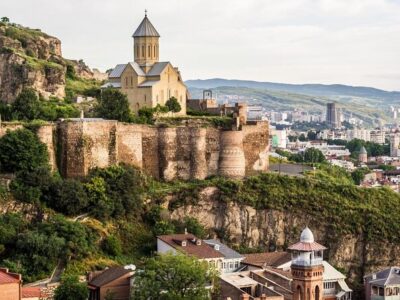
Tbilisi Old Town Walking Tour with a Local Guide
Read our review →Browse the lists this tour appears in