
Reviewed · OLD TBILISI WALKS
Tbilisi: Old Town Walking Tour – Must-See Attractions
Tbilisi reveals itself on foot. I like the way this three-hour tour links medieval churches, hillside views, old neighborhoods, and modern landmarks without turning the city into a dry history lesson. I also like the small-group format, which can make it easier to ask questions, pause for photos, and get practical tips from guides such as Oksana, Gio, Tamar, or Alex.
The main thing to consider is the walking itself. This is a city hike in places, with uneven paving, slopes, steps, and a climb toward Narikala Fortress. The route is not suitable for wheelchair users, people with mobility impairments, or those bringing baby strollers, and you should wear proper walking shoes.
This tour works especially well on your first day in Tbilisi. Guides often explain where to eat, drink, shop, and continue exploring, and several guides have been praised for adjusting the pace or route to suit the group. The cable car is not included, so budget an extra 2.5 GEL for a one-way ride if your guide uses it.
In This Review
- Key points at a glance
- Starting at Freedom Square
- Anchiskhati Basilica and the oldest streets
- Sioni, Metekhi, and the city’s layered past
- Meidan Bazaar and the old commercial quarter
- The clock tower and Tbilisi’s playful side
- The Bath District and its waterfall
- A synagogue, Armenian church, and mosque
- Narikala Fortress and the Mother of Georgia
- Freedom Square and the Peace Bridge
- Why the small group matters
- Is $16 good value?
- Practical advice before you go
- Who should book this Tbilisi walking tour?
- FAQ
- How long is the Tbilisi Old Town walking tour?
- Where does the tour meet?
- What languages are available?
- Is the cable car included?
- What landmarks are included?
- Is the tour suitable for wheelchair users?
- What should I wear and bring?
Key points at a glance
- A strong first-day introduction: You see many central sights while learning how Tbilisi’s old and new quarters fit together.
- Narikala gives you the big picture: The fortress viewpoint offers wide views over the city and makes the uphill effort worthwhile.
- Religious diversity is part of the route: A synagogue, Armenian church, mosque, and Georgian churches show the city’s long mix of communities.
- Small groups improve the experience: Groups of 10 or fewer, plus private options, allow more conversation than a large coach tour.
- Come ready to walk: Uneven streets, slopes, and steps are part of the experience, not a minor footnote.
- Guides add local value: Oksana, Gio, Jonah, Tamar, Alex, Khatuna, and other guides have been praised for clear explanations, humor, photos, and restaurant suggestions.
Starting at Freedom Square
The meeting point is easy to find: the entrance of the Burberry store at Freedom, also called Liberty, Square. This central location makes practical sense because it places you at the edge of the Old Town, close to major streets and public transport.
Arrive early. The guide will not wait more than 10 minutes, so a late arrival can end the tour before it starts. You do not need hotel pickup or drop-off, and large bags and luggage are not allowed.
From Freedom Square, the tour begins with the city’s modern face before moving into older streets. That contrast is one of the best reasons to take the route on foot. Tbilisi is not a single preserved historic quarter. It is a working capital where grand civic spaces, old religious buildings, Soviet-era traces, renovated streets, and newer architecture sit close together.
The guide’s storytelling matters here. A good guide can explain not only what a building is, but why the city looks the way it does. Oksana, Gio, Jonah, Tamar, Alex, Khatuna, and other guides have been praised for making history conversational, adding personal views, and answering questions about daily life in Georgia.
More Walking Tours in Tbilisi
- Tbilisi Walking Tour Including Cable Car and Traditional Bakery
★ 5.0 · 1,310 reviews - Tbilisi: City Highlights Guided Walking Tour
★ 4.9 · 1,114 reviews - Tbilisi:Evening Walking & Talking Tour with Wine & Boat Ride
★ 5.0 · 572 reviews
Anchiskhati Basilica and the oldest streets
Anchiskhati Basilica is one of the tour’s most important early stops. It is known as Tbilisi’s oldest church, and its age gives you a useful starting point for understanding the city before the route moves toward later buildings and newer public spaces.
The church is not presented as an isolated monument. It forms part of the Old Town’s wider story, where narrow streets and older walls reveal how Tbilisi grew over time. The guide can help connect the building to Georgian religious traditions and the city’s changing rulers and influences.
Sioni Church adds another major medieval site. Its architecture and religious importance give the tour more depth than a simple photo walk. You will have the chance to compare Georgian church design with the Byzantine, Oriental, and European neoclassical influences found elsewhere in central Tbilisi.
There is a practical issue at churches and other places of worship. Men and women must cover knees and shoulders, and shorts or sleeveless tops are not suitable for entry. Pack a light layer or dress modestly if you want to enter rather than view the buildings only from outside.
Sioni, Metekhi, and the city’s layered past
The route continues to Metekhi Church, another landmark tied closely to Tbilisi’s history and geography. Its position helps explain the city’s relationship with the river, the hills, and the old defensive areas.
Here, I would pay close attention to the guide rather than rushing from one photo stop to the next. The tour’s strongest feature is not simply the number of buildings. It is the way guides explain how architecture reflects political change, religious life, Soviet rule, and the modern development of Georgia.
That wider context is where guides such as Jonah and Gio have made a particularly strong impression. They have been praised for answering questions about Georgian history, religion, architecture, and the people of Tbilisi. Other guides, including Tamar and Khatuna, have been noted for adding humor and personal perspective, which can make a busy three-hour route feel more like a conversation than a lecture.
The pace is usually flexible, especially on a private tour. A small group may pause longer at a church or viewpoint, while a group tour needs to keep moving. Several guides have adjusted the route or speed when the group needed it, but the exact stops can change because of weather, construction, or other local conditions.
Meidan Bazaar and the old commercial quarter
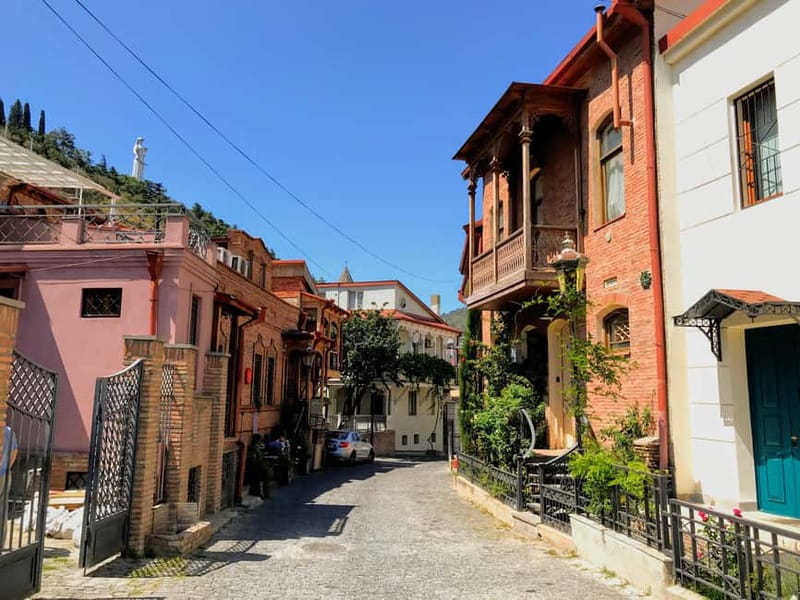
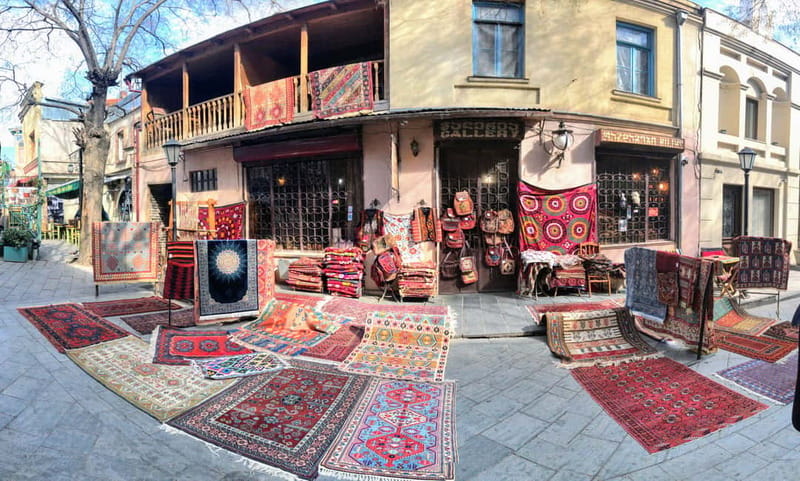
Meidan Bazaar brings a different side of Tbilisi into view. This area helps you picture the Old Town not just as a collection of historic buildings, but as a place shaped by trade, food, craft, and movement between cultures.
The tour also passes through atmospheric Old Town streets where the architecture changes quickly. One moment you may be looking at a religious building; a few minutes later, you are among balconies, shops, courtyards, and narrow lanes. The appeal is in the mixture. It is not polished into a single architectural style.
The guide’s local recommendations can be useful here. Several guides have offered suggestions for restaurants, wine shops, drinks, souvenirs, and places to continue exploring after the tour. That advice adds real value, particularly if you take the tour early in your stay and use it to plan the rest of your time in Tbilisi.
One guide even ended a tour at a wine shop where the group learned about and sampled Georgian wines. That stop is not guaranteed as part of every departure, so treat it as a possible extra rather than a promised feature.
More walks through old Tbilisi:
- Old Tbilisi Highlights walking tour with wine & 10 tastings
★ 5.0 · 276 reviews - Old Tbilisi Tour: Private Walking Tour With Wine Tasting
★ 5.0 · 273 reviews - Tbilisi: Old Town Highlights w/ 5 Tastings & Cable Car Ride
★ 5.0 · 180 reviews - Tbilisi Old Town Walking Tour with a Local Guide
★ 5.0 · 168 reviews
The clock tower and Tbilisi’s playful side
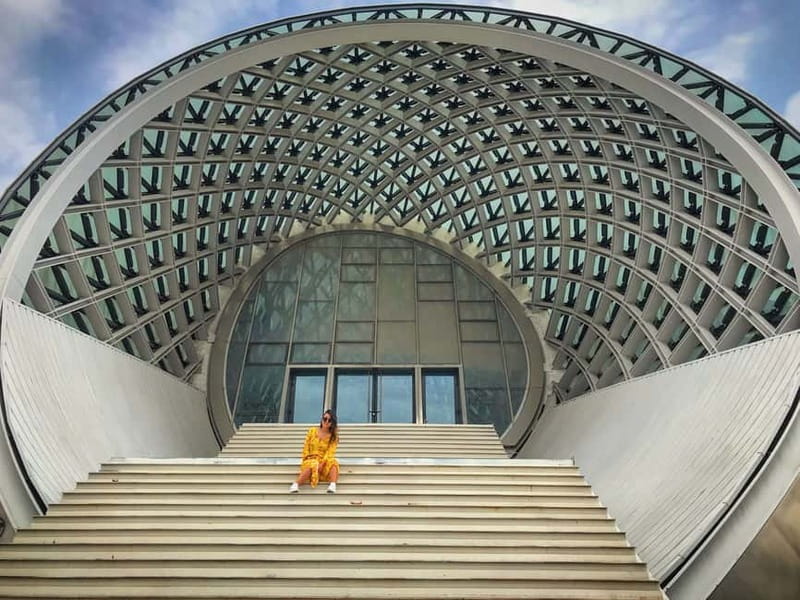
The Puppet Theatre clock tower is one of the route’s most memorable photo stops. Its unusual design gives the tour a lighter moment after the churches and historical explanations.
This is also a good example of why a walking guide helps. You can photograph the clock tower yourself, but a guide can point out its place in modern Tbilisi’s public life and show you a useful angle for pictures. Guides have been repeatedly praised for taking photos, finding good viewpoints, and helping solo visitors or couples leave with more than a handful of rushed snapshots.
The tour does not feel limited to grand monuments. Small details such as the clock tower, old walls, side streets, and changing facades give you a better feel for how the Old Town works as a real neighborhood.
The Bath District and its waterfall
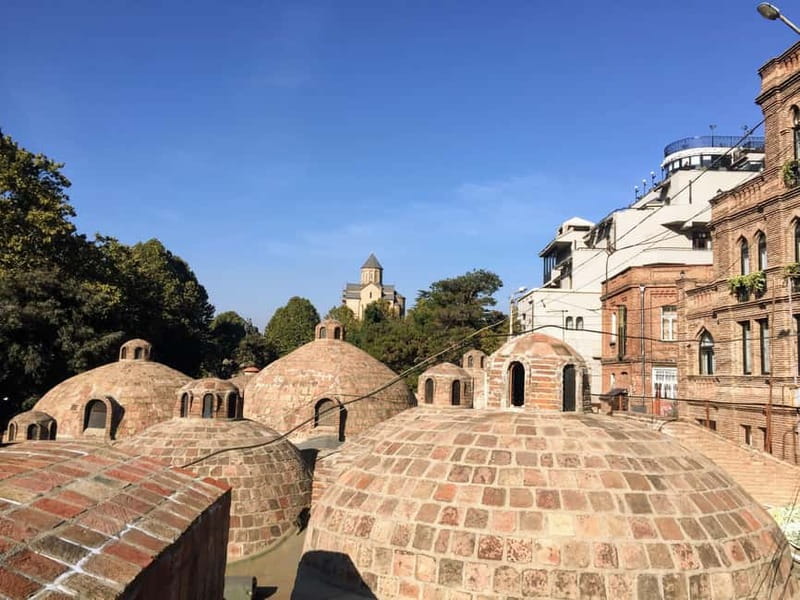
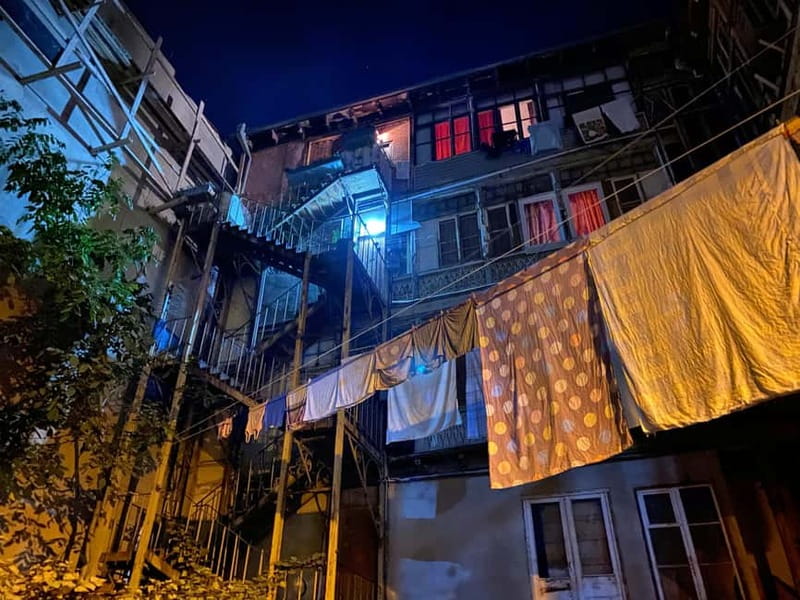
The historic Bath District is one of Tbilisi’s most distinctive areas. The name refers to the city’s famous bath tradition, and the district’s position near the old center makes it an important part of the city’s identity.
The route includes a tranquil waterfall in this historic quarter. It is an easy detail to miss if you only follow the main roads or visit the better-known churches. The waterfall also breaks up the architecture-focused parts of the tour with a small natural feature inside the city.
The streets around this section can be uneven and may involve steps or sloping paths. If you have balance or walking problems, this is one of the places where the physical demands may become clear. The tour operator specifically says the route is not suitable for wheelchair users or people with mobility impairments.
If you have booked a bath afterward, mention it to the guide at the start. One guide adjusted the route for a group with a bath reservation and suggested a nearby restaurant. That kind of flexibility is most likely on a private booking, but it is worth asking.
A synagogue, Armenian church, and mosque
Tbilisi’s religious variety is one of the most valuable parts of this tour. Along with Georgian churches, the route includes a synagogue, an Armenian church, and a mosque.
This does not turn the outing into a formal religious studies course. Instead, it gives you a clear sense that Tbilisi has long been shaped by different communities living near one another. Seeing these places in one compact walking route helps you understand the city’s social and architectural mix.
Respectful clothing is essential. Cover your knees and shoulders when entering places of worship, and follow the guide’s instructions about photography and behavior. The tour includes entrance fees, but access can still depend on local conditions and religious schedules.
For me, this part adds more than another list of landmarks. It helps explain why Tbilisi feels different from a city built around one dominant architectural or cultural tradition.
Narikala Fortress and the Mother of Georgia
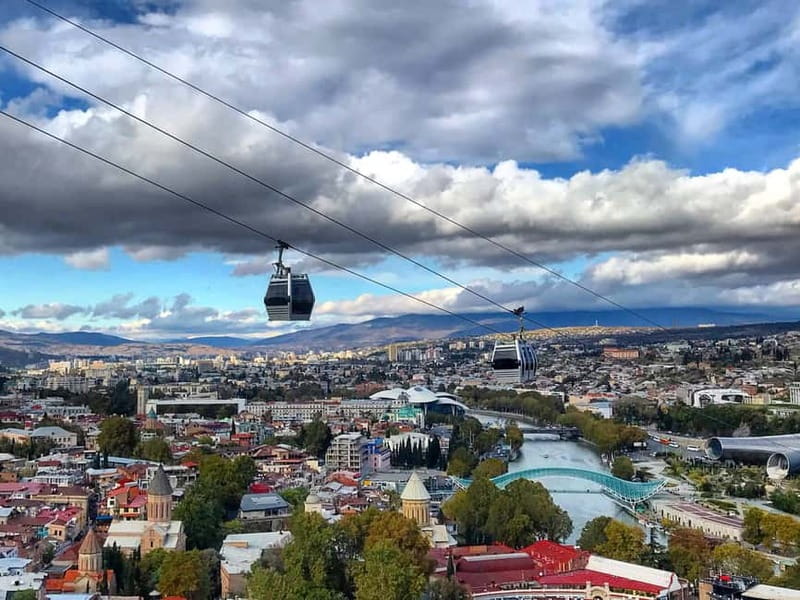
Narikala Fortress is the high point of the route, both literally and visually. Perched above the city, it gives you broad views across Tbilisi and helps you understand the shape of the Old Town, river, bridges, and surrounding hills.
The climb can be tiring. One visitor described the outing as a true city hike, sometimes feeling like a real hike because of Tbilisi’s topography. That is fair advice. If you are comfortable walking uphill for several hours, the views should reward you. If you expected a flat stroll, adjust your expectations before booking.
The tour description presents the walk up to Narikala, but some departures use the cable car for one leg. The one-way fare is not included and costs 2.5 GEL. Ask your guide at the beginning how your group will handle this part so you know what to expect.
Near the fortress, you also see the Mother of Georgia, a major symbol of Tbilisi. The statue represents hospitality and resilience, and the viewpoint gives the guide a natural place to explain how the city sees itself.
This is one of the best photo locations on the tour. Guides have been praised for helping with pictures and for finding angles that show both the statue and the city below. Bring a phone or camera, but keep your hands free for the walk.
Freedom Square and the Peace Bridge
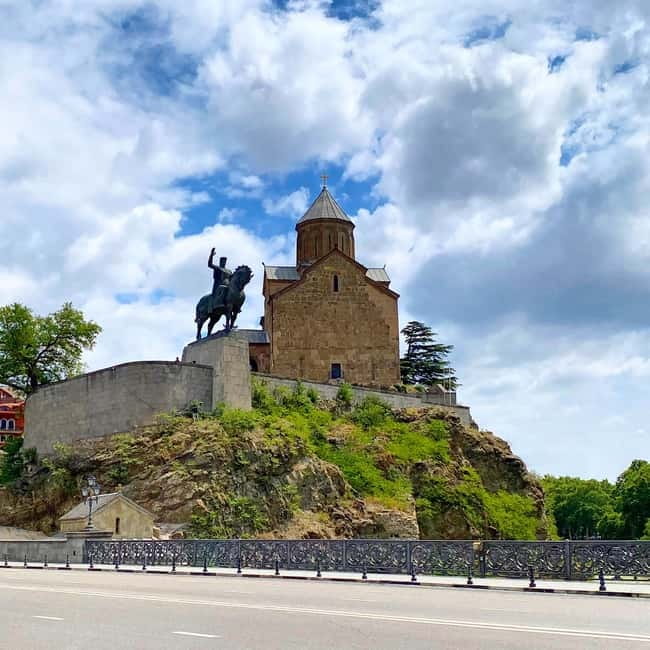
The route includes two places that show modern Tbilisi: Freedom Square and the Peace Bridge.
Freedom Square is a major civic space and a useful reference point for getting around the city. Starting and ending near this part of central Tbilisi also makes the tour convenient if you want to continue sightseeing or find a meal afterward.
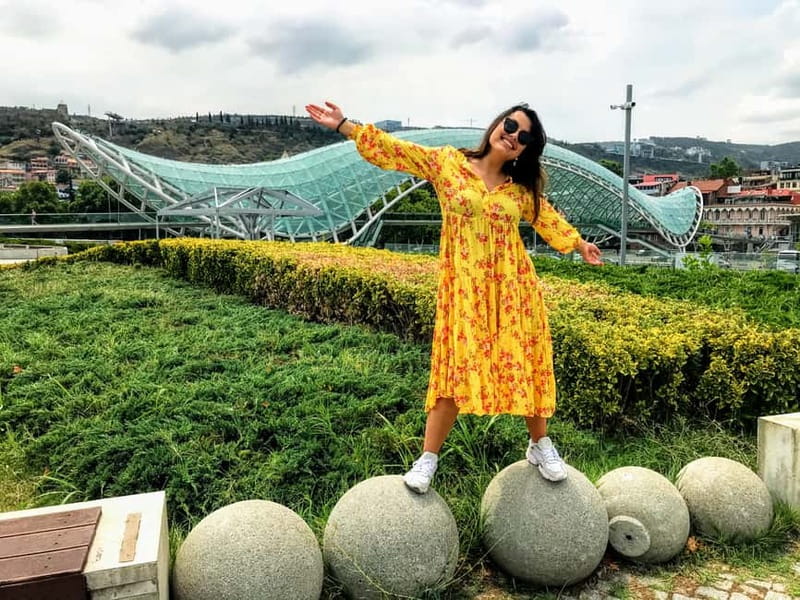
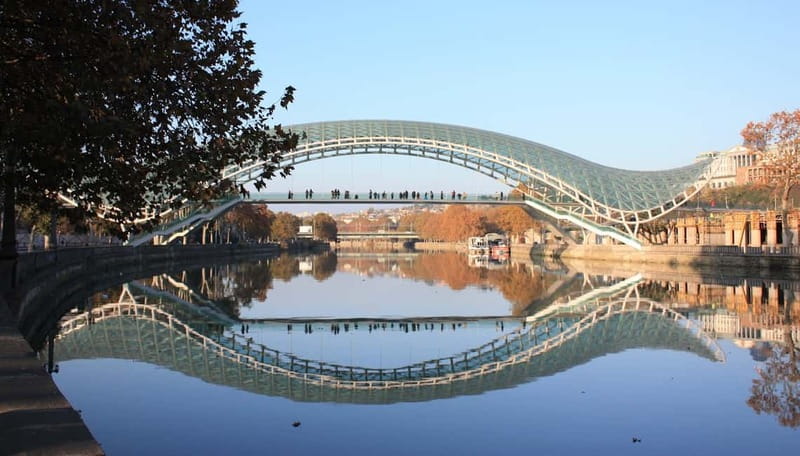
The Peace Bridge provides a strong contrast with the older churches, fortifications, and bath district. Its striking contemporary design represents a newer chapter in Tbilisi’s public architecture. Crossing it on foot lets you see how the city connects its historic center with more modern areas.
This old-and-new contrast is one of the tour’s clearest themes. You do not need to choose between historic Tbilisi and modern Tbilisi. In a few hours, you get both, with a guide explaining how they relate.
Why the small group matters
The standard group size is 10 people or fewer, and private tours are also available. That is a useful middle ground: more social and affordable than a private guide, but more personal than a large group.
A small group gives the guide room to answer questions and watch the pace. This matters on a route with hills and uneven surfaces. One guide took special care of a participant whose daughter had an injured leg, which illustrates the kind of attention a smaller group can allow, though you should not treat the tour as suitable for serious mobility limitations.
Private tours make more sense if you want to spend extra time photographing, ask many questions, or coordinate the walk with a bath booking or restaurant stop. A small-group tour is the better value if you mainly want orientation and a friendly introduction.
The available guide languages are English, Russian, and Ukrainian. English-language guides have been praised for clear speech, humor, historical explanations, and useful advice for the rest of a Georgia trip.
Is $16 good value?
At $16 per person, this is a strong-value way to see central Tbilisi. The price includes a local guide and entrance fees, so you are paying mainly for context, route planning, and personal guidance rather than transportation.
The value is especially good if you are new to the city. In three hours, you cover churches, viewpoints, historic streets, the bath district, religious buildings, Freedom Square, the Peace Bridge, and the area around Narikala. Seeing all of that independently is possible, but you would need to plan the route and research the background yourself.
The displayed price can vary with the day, season, group size, and discounts. Private departures will generally cost more than the lowest advertised rate. Add the cable-car fare if it is used, and remember that hotel transport is not part of the package.
The tour is not the best choice if you want a slow visit inside every church or museum. It covers many places in a limited time, so some stops are introductions rather than extended visits.
Practical advice before you go
Wear shoes with good grip. Tbilisi’s Old Town has uneven surfaces, slopes, steps, and sections that can feel more like a hike than a casual city walk.
Avoid bringing luggage or a large bag. A small day bag is more practical, but the tour specifically prohibits large bags and luggage.
Dress for religious sites. Cover your shoulders and knees for both men and women. If you are visiting in warm weather, carry a light covering rather than arriving in clothing that could prevent entry.
Book early in your stay if possible. The route gives you a useful map of the Old Town, and guides can suggest places to eat, drink, shop, and visit afterward. The tour can also help you decide which areas deserve a second look.
The operator allows free cancellation up to 24 hours before the tour and offers reserve-now, pay-later booking. Starting times vary, so check availability for the date you want.
Who should book this Tbilisi walking tour?
You should book it if you want a compact introduction to Tbilisi, enjoy learning through stories, and can handle several hours on foot. It is a particularly good fit for first-time visitors, history lovers, couples, solo visitors who want help with photos, and anyone who wants local suggestions before exploring independently.
I would choose the private option if you have a specific pace, a bath reservation, or a long list of questions. Choose the small group if price matters and you like meeting other people.
Skip it if uneven streets, uphill walking, or steps will make the outing uncomfortable. The route is not designed for wheelchairs, mobility aids, or strollers.
For most able-bodied visitors, the combination of landmarks, local explanations, city views, and practical advice makes this a sensible first-day purchase. At $16 before any cable-car fare or price adjustment, it offers a lot of Tbilisi in three focused hours.
FAQ
How long is the Tbilisi Old Town walking tour?
The tour lasts three hours. Starting times vary, so you need to check availability for your chosen date.
Where does the tour meet?
Meet at the entrance of the Burberry store at Freedom, also called Liberty, Square. The guide will wait no longer than 10 minutes.
What languages are available?
Live guides are available in English, Russian, and Ukrainian.
Is the cable car included?
No. The cable car costs 2.5 GEL for one way and is paid separately. Some routes may walk to Narikala, while others may use the cable car for one leg.
What landmarks are included?
The route can include Anchiskhati Basilica, Sioni Church, Metekhi Church, Meidan Bazaar, the Puppet Theatre clock tower, the Bath District waterfall, a synagogue, an Armenian church, a mosque, Narikala Fortress, the Mother of Georgia, Freedom Square, and the Peace Bridge.
Is the tour suitable for wheelchair users?
No. Because of uneven surfaces, slopes, and other walking conditions, it is not suitable for wheelchair users or people with mobility impairments. Baby strollers are also not recommended.
What should I wear and bring?
Wear comfortable walking shoes and dress so your knees and shoulders are covered when entering places of worship. Do not bring luggage or large bags.
Just added near Tbilisi
- Wine Tasting feel the Difference of Qvevri or Classical Wine★ 4.4 · 10 reviews
- Walking Tour in Old Tbilisi – Group Tour★ 4.5 · 8 reviews
- From Tbilisi: Kakheti and Kazbegi 2-Day 4X4 Jeep Tour pack★ 5.0 · 6 reviews
- Tbilisi: Vintage Fashion and Secondhand Thrifting Tour★ 5.0 · 11 reviews
- Uforgatable Kakheti Tour with wine tasting – in Georgia★ 4.9 · 5 reviews
- From Tbilisi: Uplistsikhe Caves and Mtskheta Town Day tour★ 5.0 · 2 reviews
- Tbilisi Airport to Gudauri, Bakuriani, Batumi, Tbilisi★ 5.0 · 3 reviews
- Private Adorable City Tour of Tbilisi★ 5.0 · 3 reviews
Old Tbilisi Walks, compared.
Old Tbilisi Highlights walking tour with wine & 10 tastings
Read our review →
Old Tbilisi Tour: Private Walking Tour With Wine Tasting
Read our review →
Old Town Highlights w/ 5 Tastings & Cable Car Ride
Read our review →
Tbilisi Old Town Walking Tour with a Local Guide
Read our review →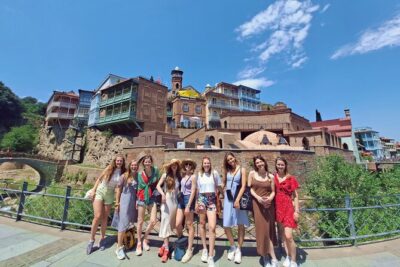
Tbilisi old town & soviet heritage – Private driver-guided Tour
Read our review →Old Tbilisi Highlights Walking Tour with Wine & 10 Tastings
Read our review →
Old Town and Beyond: A Tbilisi Silk Road Feast with Culinary Backstreets
Read our review →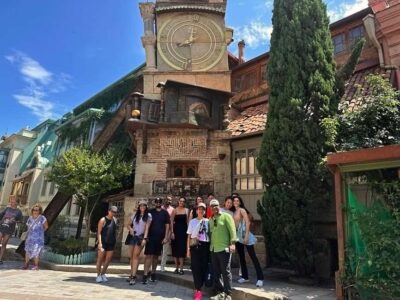
Browse the lists this tour appears in