
Reviewed · SOVIET HERITAGE TOURS
Tbilisi: The Urbex and Soviet Tour of Tbilisi
Concrete tells stories here. This five-hour tour takes you beyond Tbilisi’s old town to Soviet-era buildings, unusual museums, and striking monuments most people would miss. I especially like the mix of Brutalist architecture and personal stories about daily life under Soviet rule. The main consideration is time: traffic can be slow, and some places are viewed only from outside.
The tour costs $54 per person and includes transport, entrance fees, and an English-speaking guide. I also like the small group limit of 10, since guides such as Giorgi, David, Temo, and Zezva can answer questions and adjust the conversation. If you only want postcard views of central Tbilisi, this may feel too specialized. If you want the city’s stranger, rougher, more revealing side, it is a strong choice.
In This Review
- Key points to know before booking
- Why this tour shows a different Tbilisi
- Starting at Avlabari and crossing the city
- The underground printing house and Georgia’s revolutionary past
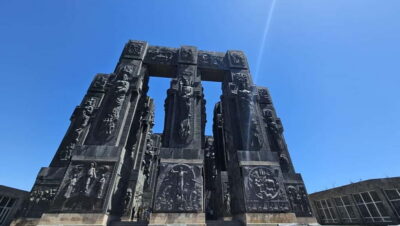
- The Chronicle of Georgia: huge stone, wide views
- The Bank of Georgia and the logic of Brutalism
- The Tbilisi Skybridge houses
- The surprise stop and lesser-known architecture
- What the guides add to the buildings
- Photography, walking, and the practical pace
- Is $54 a fair price?
- Who should book this Tbilisi tour?
- Should you book the Urbex and Soviet Tour?
- FAQ
- How long does the Tbilisi Urbex and Soviet Tour last?
- How much does the tour cost?
- Where does the tour meet?
- Is transport included?
- What language is the tour conducted in?
- How large is the group?
- Can I visit the Underground Printing House on a weekend?
- Are food and drinks included?
Key points to know before booking

- Stalin’s underground printing house: Visit a secret Bolshevik-era printing site where Stalin is said to have operated, with a guided visit lasting about 30 minutes.
- Concrete monuments across the city: See the Chronicle of Georgia, the Bank of Georgia building, the Skybridge houses, and other Soviet projects far from the old town.
- Personal stories matter: Guides explain how Georgian people lived under Communism and may introduce you to locals with memories of that period.
- Comfortable private transport: Moving by car or minibus makes it possible to cover distant parts of Tbilisi in one morning or afternoon.
- Weekday and weekend difference: The printing house is included Monday through Friday. On weekends, an optional Car Museum visit replaces it.
- A specialist tour with broad appeal: Architecture fans will have plenty to photograph, but the discussions of politics, daily life, and modern Georgia give the tour wider value.
Why this tour shows a different Tbilisi
Tbilisi is best known for its old churches, balconies, sulfur baths, and steep lanes. Those sights deserve your time, but they show only one part of the city. Soviet Tbilisi is spread across residential districts and major roads, so it is difficult to experience well on foot.
This tour solves that problem with transport between the stops. You get a broad look at the city’s infrastructure, from monumental concrete projects to working residential buildings and aging public structures.
The focus is not simply on ugly or impressive buildings. Your guide places them in the story of Georgia: Soviet planning, state power, local adaptation, independence, and the ways old structures continue to shape modern life.
That context is the reason I would choose this tour over hiring a car and copying the route yourself. One participant made the useful point that you could reach the sites for less money by arranging transport alone. The guide’s stories are what justify the extra cost.
More Soviet-era sights around Tbilisi:
- Tbilisi: Mtskheta Jvari Bazaar, Chronicles of Georgia & Wine
★ 5.0 · 1,088 reviews - Tbilisi:Mtskheta,Jvari,Bazaar,wine tasting,Chronicles of Georgia
★ 5.0 · 730 reviews - Tbilisi: The Chronicles of Georgia, Jvari & Mtskheta Tour
★ 5.0 · 307 reviews
Starting at Avlabari and crossing the city
The usual meeting point is outside Avlabari metro station, beside the round fountain. You can reach it by metro, public bus, or taxi, and the operator can advise you on the easiest route from your hotel.
The pickup option can vary, so check the exact arrangement when booking. From Avlabari, the group travels by car or minibus to a series of sites in different parts of Tbilisi.
The transport is a real advantage. Tbilisi is a large, hilly city, and these locations are not arranged in a tidy walking circuit. Traffic is part of the bargain, though. One participant noted that city congestion can take up a fair share of the five hours.
The vehicles have been praised for being clean and comfortable, and the driving has also received strong marks. Still, do not schedule an important dinner, train, or flight immediately afterward. The tour can run longer than the advertised five hours, especially when conversations and photo stops stretch naturally.
The underground printing house and Georgia’s revolutionary past
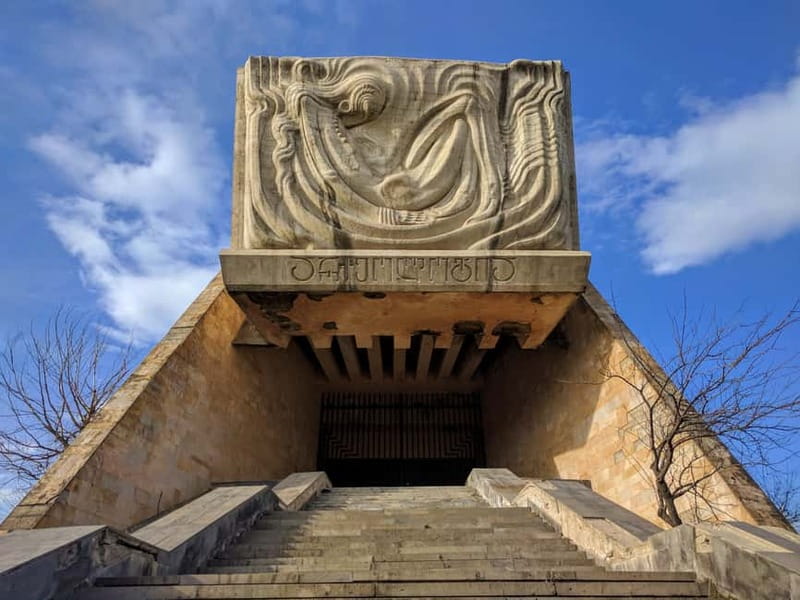
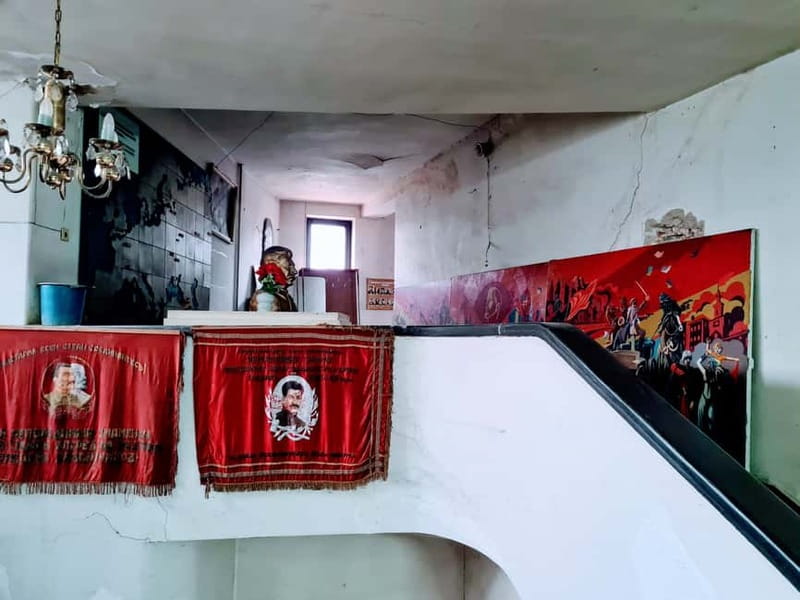
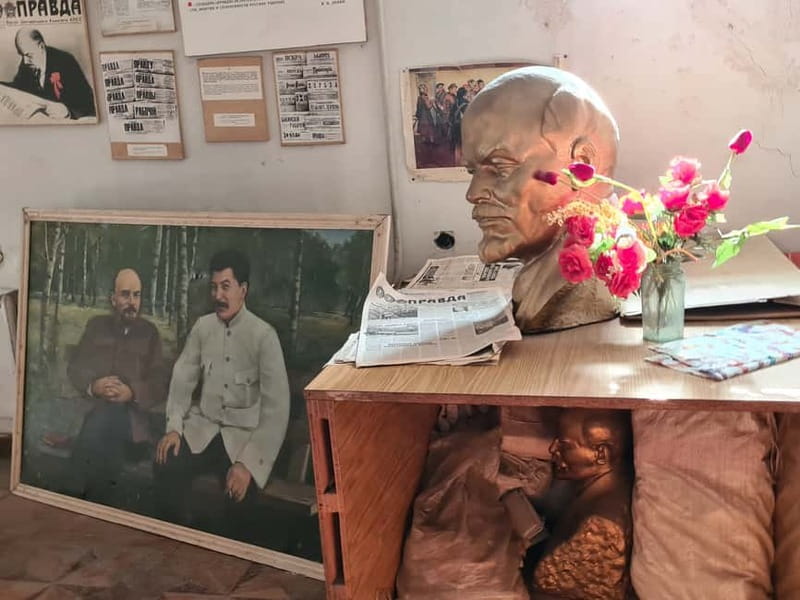
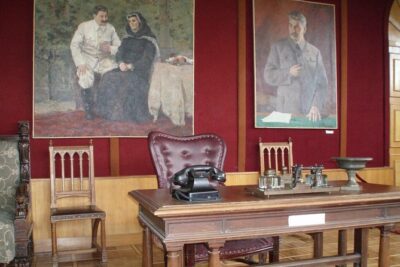
The Underground Printing House Museum is one of the most unusual stops. This concealed printing site is connected with the Bolshevik movement and Stalin, and the visit gives the political history a physical setting.
You spend about 30 minutes there with a guide. Instead of hearing only about Soviet leadership from a distance, you see the kind of hidden place used to produce and circulate political material.
This stop is especially valuable if you know little about Georgia before the Soviet period. It adds a layer of revolutionary history before the tour moves into Soviet architecture and everyday life.
There is an important scheduling point. The printing house operates as part of the tour on weekdays, Monday through Friday. On weekends, working hours mean that it is replaced by an optional Car Museum visit.
That change is not necessarily a weakness. The Car Museum has appealed to people interested in vintage vehicles and Soviet-era objects, and one guide connected the cars with stories about the period. Still, if the printing house is your main reason for booking, choose a weekday.
The Chronicle of Georgia: huge stone, wide views
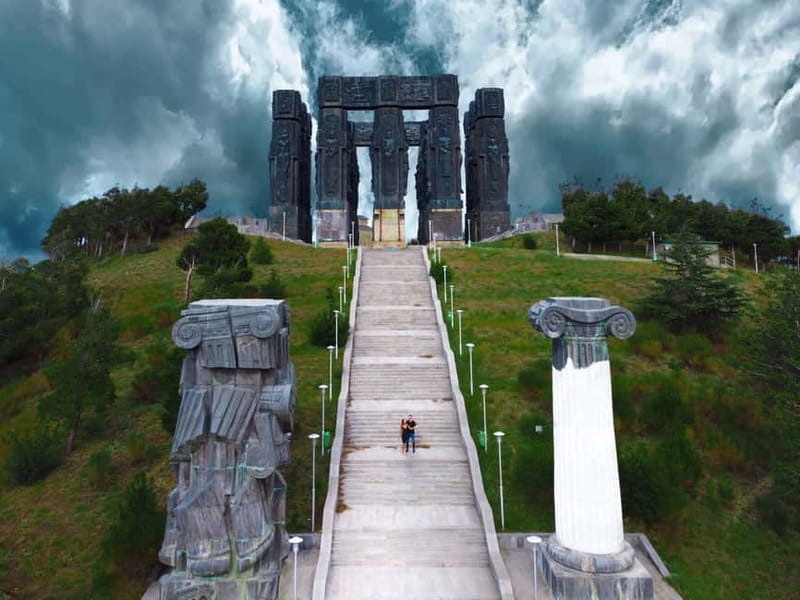
The Chronicle of Georgia is one of the tour’s major visual moments. The monument is made of enormous columns and carved panels, creating a dramatic setting above the city.
You get around 30 minutes here for a guided visit and photographs. The scale is hard to understand from pictures alone. The monument feels remote from the polished center of Tbilisi, which is part of its appeal.
Your guide can explain the images, the political setting, and the monument’s place in Georgian identity. The stop also gives you space for wide views and strong photographs, especially if you enjoy severe lines, weathered stone, and monumental composition.
I would not treat this as a quick photo stop with no explanation. The meaning of the monument matters. Without context, you may see only a grand concrete and stone structure. With a guide, it becomes part of the wider story of power, memory, and national identity.
More Tbilisi days to weigh up
- Tbilisi: Day Trip to Kazbegi, Gudauri, Gergeti, and Ananuri
★ 4.9 · 3,203 reviews - Day Trip to Kakheti Wine Region Including 9 Wine Tastings
★ 5.0 · 2,774 reviews - Highlights of Caucasus Mountains-Jinvali,Ananuri,Gudauri,Kazbegi(Group tour)
★ 5.0 · 2,682 reviews - From Tbilisi: Kakheti Wine Region Tour with 9 Wine Tastings
★ 4.9 · 2,541 reviews
The Bank of Georgia and the logic of Brutalism
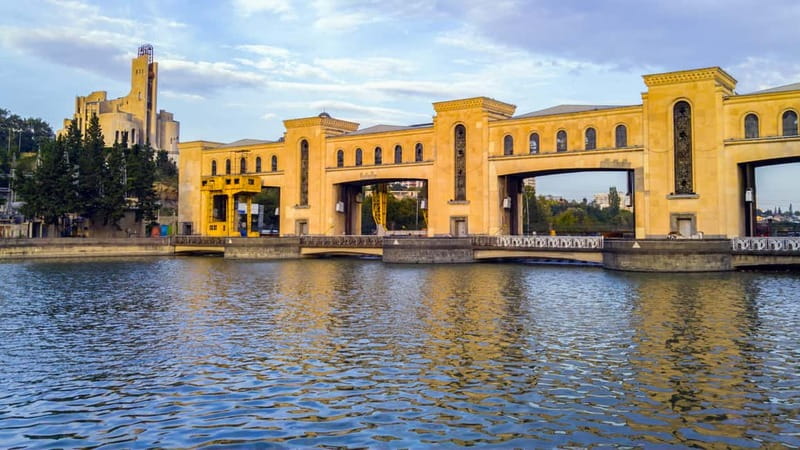
The Bank of Georgia building is viewed from outside for about 15 minutes. It is one of the clearest examples of the bold, stacked forms associated with Soviet Brutalist design.
The building’s shape makes more sense when you look at it as an experiment in structure and urban scale. It is not designed to blend quietly into its surroundings. It demands attention, and the tour gives you enough time to study its forms and take photographs.
Some parts of the route are restricted, so you should expect exterior views at several locations. That is worth knowing before you book. The tour is not a series of full interior inspections, and access can depend on working hours or local rules.
For photographers, the outside views are still rewarding. You can focus on repeating windows, sharp angles, concrete mass, and the contrast between old Soviet construction and newer city life around it.
The Tbilisi Skybridge houses
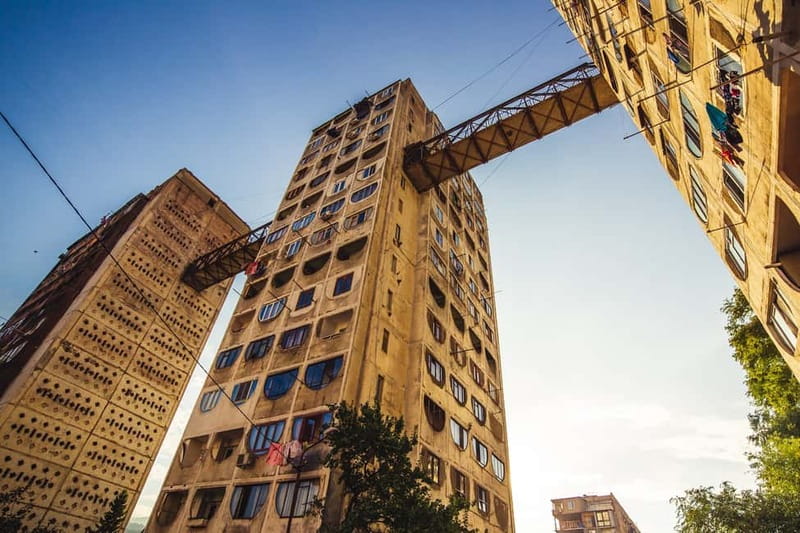
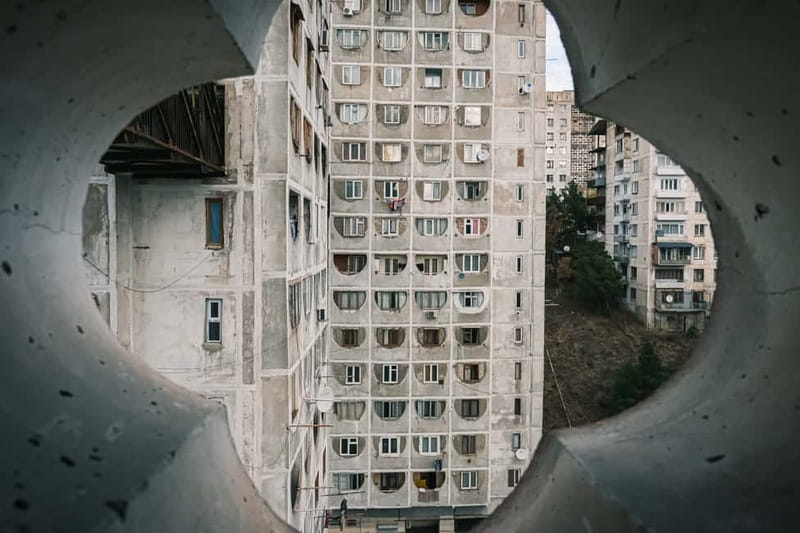
The Skybridge houses are among the most memorable stops. Their towers are connected by an elevated passage, creating a striking piece of residential design.
You spend roughly 30 minutes here, with a guided visit and time for photographs. The buildings are not merely abandoned monuments. They are part of a lived neighborhood, which makes the stop more interesting than a simple look at decaying concrete.
One of the most touching moments described by participants involved meeting the lift operator, who showed the group her tiny home. That kind of encounter gives the building a human scale. You begin to think about the people who use this architecture every day, not just the photographers who come to admire it.
A guide’s approach matters here. Giorgi and other guides have been praised for treating local people with respect and for explaining their lives without turning them into a spectacle. That is an important part of the experience.
The Skybridge stop may appeal even if you are not an architecture specialist. The design is easy to understand visually, and the human stories make it easier to remember.
The surprise stop and lesser-known architecture
The route includes another site described simply as a hidden or unexpected stop. You spend about 30 minutes on guided sightseeing and photography there.
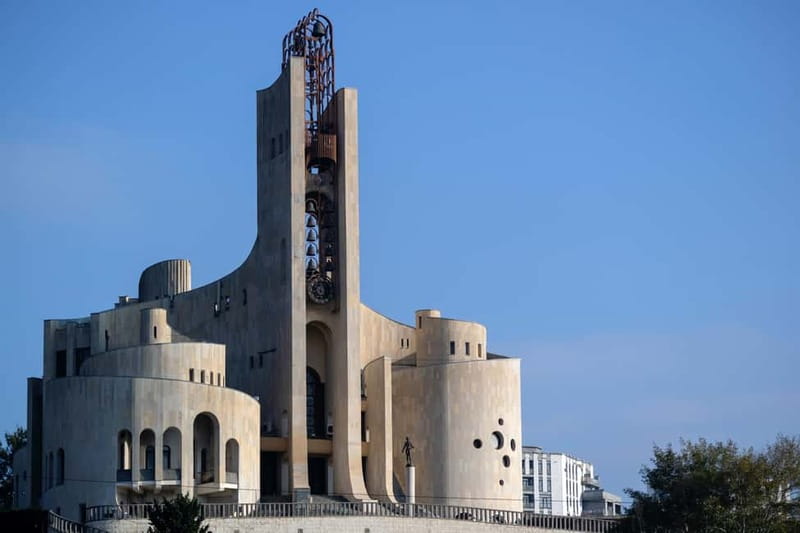
The exact location may vary, and some participants have seen the exterior of the former Archaeology Museum or other unusual Soviet projects. The flexible element is useful because it lets the guide respond to access, timing, and the interests of the group.
This is also where a small group helps. With no more than 10 people, it is easier to stop for questions, change the pace, or spend a little longer at a building that captures everyone’s attention.
Do not expect every stop to carry the same impact. One participant liked some sites more than others, particularly the connected towers. That is a fair warning. The tour is broad, and its value comes from the complete picture rather than five perfect monuments in a row.
What the guides add to the buildings
The strongest part of this experience is the guiding. Several guides lead the tour, including Giorgi, David, Temo, Zezva, and George. The repeated praise is consistent: they explain clearly, use humor, answer questions, and connect architecture with daily life.
David has been praised for making complex subjects easy to follow and for discussing current events and ordinary life as well as the Soviet period. Giorgi is often described as warm, funny, and deeply interested in Georgian history and architecture. Temo has been appreciated for taking time with questions and offering an authentic perspective.
You may also hear stories directly from people who lived through the Soviet era. Some participants met former KGB personnel or people with direct memories of the system. These conversations can be more revealing than a polished museum display, though they also require an open mind. Personal memories are valuable, but they are not the whole history.
The best guides avoid presenting Soviet life as a simple story of heroes and villains. They explain how people adapted, resisted, worked, raised families, and dealt with institutions. That is what turns a photography outing into a useful history lesson.
Photography, walking, and the practical pace
Bring a camera if you have one, but you do not need professional equipment. The route offers monumental forms, weathered surfaces, broad viewpoints, residential details, and unusual angles.
The tour includes several photo stops, but it is not a dedicated photography workshop. The guide provides suggestions and may take pictures of you, as one participant appreciated, yet the main purpose is to explain the places.
You will move in and out of the vehicle, with short guided visits rather than long walks. Wear comfortable shoes because old buildings and public areas may have uneven surfaces. Some locations have restricted access, so do not expect to enter every structure.
Food and drinks are not included. A participant described stopping at a local bakery for an inexpensive lunch, but this should not be treated as a guaranteed part of the schedule. Bring water and plan for food according to your start time.
Is $54 a fair price?
At $54 per person, this is not the cheapest way to see Soviet buildings in Tbilisi. If you only want transport, you could hire a car for less, especially with a larger group.
The price begins to make sense when you count what is included: transport between scattered locations, entrance fees, an English-speaking guide, historical interpretation, and access to places you might not locate easily on your own.
A small group also changes the experience. A limit of 10 people leaves room for questions and conversation, while transport keeps the day from becoming a tiring search for distant addresses.
Value depends on your interests. For a person who loves Brutalism, urban decay, modern history, or Soviet life, $54 is reasonable. For someone who prefers churches, food, and old-town streets, the same money may be better spent elsewhere.
The tour has received a perfect five-star rating from 127 participants, and transport has been given a perfect score by 96 percent of those evaluating it. The more useful point is not the score itself, but the pattern behind it: the guides, vehicles, and unusual route are the parts most likely to shape your day.
Who should book this Tbilisi tour?
I would recommend it to:
- Architecture fans who want more than the usual historic center
- Photographers looking for concrete, decay, scale, and unusual viewpoints
- People interested in Georgia’s Soviet past
- First-time visitors who want a wider understanding of Tbilisi
- Anyone curious about how political history affects ordinary neighborhoods
- Visitors who prefer small groups and conversation over a large bus tour
I would be more cautious if you dislike driving through traffic, need guaranteed access inside every building, or want a relaxed schedule with long periods at each site.
The tour is also a good early activity in a Tbilisi visit. It gives you a useful frame for understanding the city before you spend more time in its old center. You will notice Soviet blocks, infrastructure, and layers of recent history differently afterward.
Free cancellation is available up to 24 hours before departure, and you can reserve now while paying later. Those policies make it easier to fit the tour into a changing Georgia itinerary.
Should you book the Urbex and Soviet Tour?
Book it if you want Tbilisi beyond the familiar postcard route. The Underground Printing House, Chronicle of Georgia, Bank of Georgia, Skybridge houses, and the changing final stop create a varied half-day, while the guides add the personal and political detail that a car ride alone cannot provide.
My main advice is to choose a weekday if the printing house matters to you, leave extra time after the tour, and keep your expectations realistic about restricted interiors. If those limits suit you, this is one of the most distinctive ways to understand Tbilisi’s recent past and its continuing presence in the city.
FAQ
How long does the Tbilisi Urbex and Soviet Tour last?
The advertised duration is five hours. The schedule can run longer, so it is wise not to plan an important activity immediately afterward.
How much does the tour cost?
The price is $54 per person.
Where does the tour meet?
Your guide waits outside Avlabari metro station, at the round fountain in Tbilisi. You can reach the meeting point by metro, public bus, or taxi.
Is transport included?
Yes. Transport between the sights is included, using a car or minibus depending on the group and arrangement.
What language is the tour conducted in?
The live tour is conducted in English by a professional English-speaking guide.
How large is the group?
The tour is limited to 10 participants.
Can I visit the Underground Printing House on a weekend?
The Underground Printing House is included on weekday tours from Monday through Friday. On weekends, an optional Car Museum visit replaces it because of working hours.
Are food and drinks included?
No. Food and drinks are not included in the price.
Just added near Tbilisi
- Wine Tasting feel the Difference of Qvevri or Classical Wine★ 4.4 · 10 reviews
- Walking Tour in Old Tbilisi – Group Tour★ 4.5 · 8 reviews
- From Tbilisi: Kakheti and Kazbegi 2-Day 4X4 Jeep Tour pack★ 5.0 · 6 reviews
- Tbilisi: Vintage Fashion and Secondhand Thrifting Tour★ 5.0 · 11 reviews
- Uforgatable Kakheti Tour with wine tasting – in Georgia★ 4.9 · 5 reviews
- From Tbilisi: Uplistsikhe Caves and Mtskheta Town Day tour★ 5.0 · 2 reviews
- Tbilisi Airport to Gudauri, Bakuriani, Batumi, Tbilisi★ 5.0 · 3 reviews
- Private Adorable City Tour of Tbilisi★ 5.0 · 3 reviews
Soviet Heritage Tours, compared.
Mtskheta Jvari Bazaar, Chronicles of Georgia & Wine
Read our review →
Mtskheta,Jvari,Bazaar,wine tasting,Chronicles of Georgia
Read our review →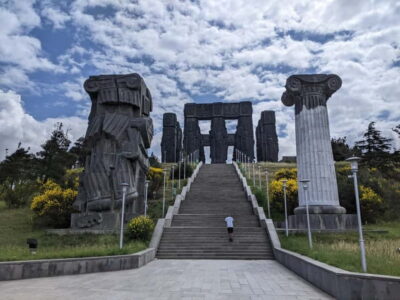
The Chronicles of Georgia, Jvari & Mtskheta Tour
Read our review →
1 Day Private Armenia: UNESCO, Soviet & Curated Family Lunch
Read our review →
Jvari-Uplistsike-Chronicle of Georgia, PRIVATE Trip
Read our review →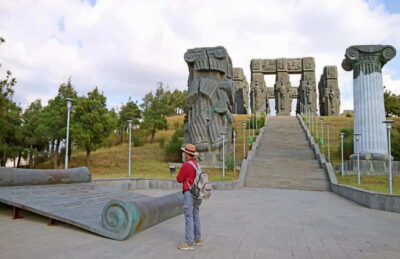
Day tour to Chronicles of Georgia, Gori city, Uplistsikhe cave
Read our review →
Tbilisi old town & soviet heritage – Private driver-guided Tour
Read our review →Browse the lists this tour appears in