
Reviewed · BORJOMI AND BAKURIANI TOURS
Abandoned sanatoriums of tskaltubo – group tour from Kutaisi
Tskaltubo keeps its Soviet past in plain sight. I like the local guides, especially Lasha, Giorgi, and Toko, who add personal stories and explain Georgia’s wider history. I also like the mix of grand sanatoriums, thermal springs, and a forgotten railway station.
The main limitation is time. Four hours gives you a strong introduction, but not enough to linger at every building or explore Tskaltubo independently. Some former sanatorium spaces are also still inhabited, so this is a respectful history tour, not a free-for-all urban exploration trip.
In This Review
- Key points at a glance
- Why this short tour is worth your afternoon
- Meeting in Kutaisi at 14:00
- Spring #6 and the story of Soviet Tskaltubo
- Spring #8 and unusual resort architecture
- Sanatorium Gelati, a children’s resort left behind
- Sanatorium Medea and the human side of ruins
- Sanatorium Druzhba and the scale of the resort
- The abandoned train station as a final chapter
- What the guides add to the experience
- Is $25 good value?
- Who should book this Tskaltubo tour?
- Should you book it?
- FAQ
- Where does the tour start?
- What time does the tour begin?
- Where does the tour finish?
- How long does the tour last?
- What language is the tour conducted in?
- What places are visited?
- What is included in the price?
- Can I cancel the booking?
Key points at a glance
- A $25 introduction to Tskaltubo: Transport from Kutaisi and guiding are included, making this one of the easier ways to see the town without arranging a car.
- Spring #6 opens the story: The tour begins with Tskaltubo’s thermal-water tradition and a discussion of Soviet occupation.
- Sanatorium Gelati has a striking setting: The former children’s sanatorium includes an old playground and a viewpoint into the building’s inner construction.
- Medea and Druzhba show different faces of decline: These stops help you see how once-grand public buildings have changed over time.
- The old train station makes a fitting finale: It connects Tskaltubo’s resort past with the wider Soviet transport system.
- The guide can make or break the afternoon: Local guides such as Lasha and Giorgi have received especially strong praise for their English, humor, care, and personal knowledge of Tskaltubo.
Why this short tour is worth your afternoon
Tskaltubo is not a polished resort frozen in its glory days. It is a town of grand plans, faded buildings, thermal water, and complicated change. That is exactly what makes it interesting.
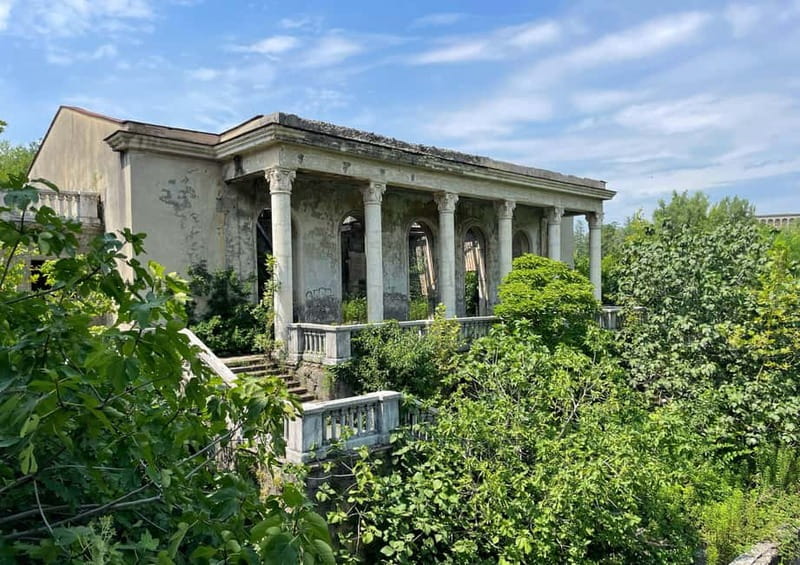
During the Soviet period, Tskaltubo was known for its mineral-water treatment facilities and large sanatoriums. Visitors came for medical cures, rest, and organized holidays. The buildings were designed to impress: broad entrances, decorative details, large internal spaces, and formal gardens or courtyards.
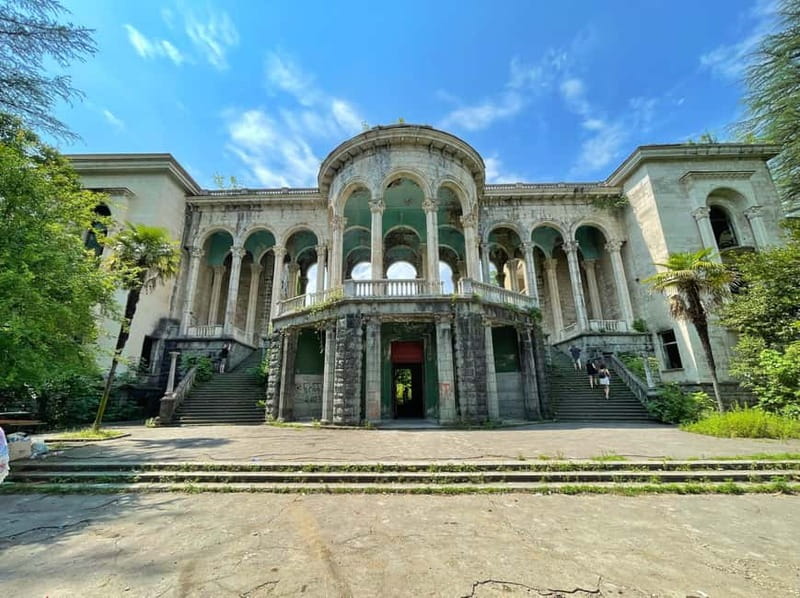
Today, many of those buildings are abandoned or badly worn. Yet the town is not simply empty. Some former facilities have been used by people displaced from other parts of Georgia, and traces of ordinary life can remain among the grand architecture. That gives the tour a human side that a quick photo stop would miss.
I like that this outing does not treat the sanatoriums as mere ruins. The guide explains the political setting, the Soviet period, and what happened after the system collapsed. Several guides have also added stories about daily life and modern Georgia, helping you connect the buildings with real people.
The tour costs $25 per person and lasts four hours. For that price, you receive transport from Kutaisi to Tskaltubo, transport between the stops, and an English-speaking guide. I consider that good value if you want a focused introduction without renting a car or trying to identify buildings on your own.
More days out to Borjomi and Bakuriani:
- Borjomi, Rabati & Vardzia – one day group tour from Kutaisi
★ 4.8 · 100 reviews - BORJOMI, RABATI & VARDZIA – Group Tour from Kutaisi
★ 4.5 · 76 reviews - Kutaisi: Tskaltubo Abandoned Soviet-Era Spas Tour
★ 4.9 · 40 reviews
Meeting in Kutaisi at 14:00
The afternoon begins at the Budget Georgia office in Kutaisi. The office is between the SwissCapital and Andazi shops, a useful landmark when you are finding the meeting point.
The stated departure time is 14:00, and the tour returns to the same office. That timing works well if you have spent the morning exploring Kutaisi or want to keep the day open for dinner afterward. It also gives you a clear half-day plan rather than an all-day commitment.
Transportation is part of the price, so you do not need to arrange a separate taxi to Tskaltubo. The quality of the driving has also been praised, including careful and relaxed driving from Lasha. That matters on a tour focused on buildings and history, since you can give your attention to the guide rather than the road.
The group format keeps the price low. The exact group size is not stated, so you should not expect a guaranteed private tour. Still, one booking resulted in an individual outing, showing that a small group or private-feeling afternoon can sometimes happen.
Spring #6 and the story of Soviet Tskaltubo
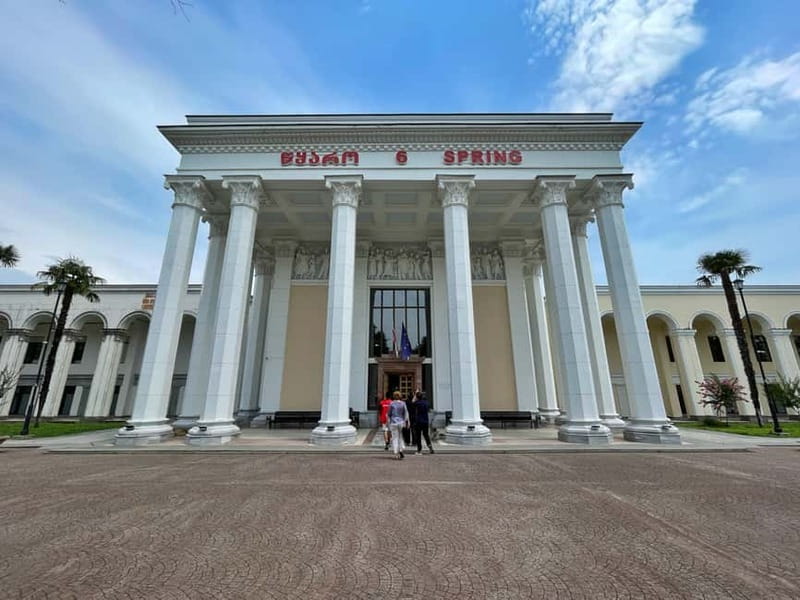
The first stop is thermal water Spring #6. The guide uses this place to introduce Tskaltubo’s past and to discuss Soviet occupation.
That opening is useful because it gives the rest of the visit a frame. Without some context, the sanatoriums can look like grand but confusing ruins. With an explanation of how the town functioned, you can begin to understand why so many large buildings were constructed here and why their decline matters.
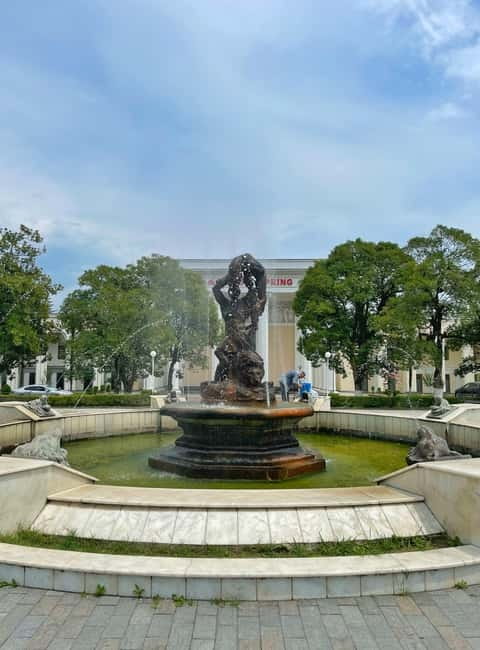
The spring also shows that Tskaltubo is more than a collection of abandoned buildings. Thermal water is central to the town’s identity. The tour starts with the source of that identity, then moves toward the institutions built around it.
I would pay close attention here, especially if you know little about Georgian and Soviet history. Guides such as Giorgi R have been praised for giving wider political and social context in clear English. That broader explanation is one of the strongest parts of the outing.
Spring #8 and unusual resort architecture
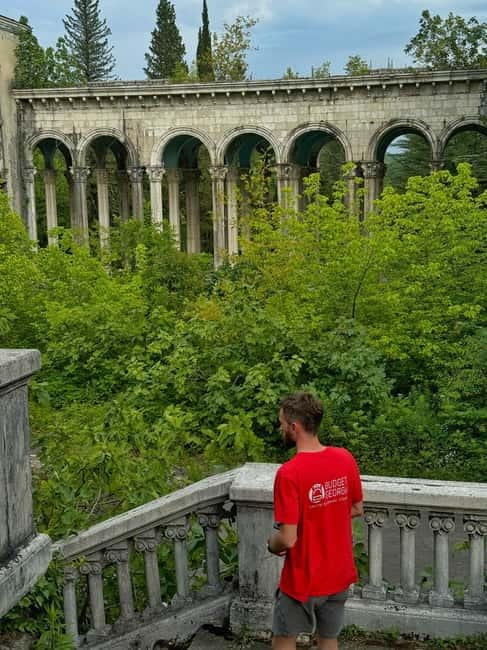
From Spring #6, you walk to Spring #8. This spring is noted for having the most unusual architecture among Tskaltubo’s springs.
The short walk helps break up the vehicle time and lets you see the town at street level. You are not simply being driven from one ruin to another. You get a sense of how the springs and sanatoriums fit into the town’s layout.
Spring #8 is especially worthwhile for visitors interested in design. The architecture is not presented as a perfectly preserved monument. Its value comes from the contrast between an unusual structure and the condition of the surrounding resort town.
Your guide will likely point out details that are easy to miss if you visit alone. Petra specifically appreciated a small detail about the local traffic lights, which gives you an idea of the kind of extra observation that can appear along the route. These side comments help the tour feel connected to present-day Tskaltubo, not sealed inside the past.
More Kutaisi days to weigh up
- Kutaisi: Martvili & Okatse Canyons & Prometheus Cave Tour
★ 4.9 · 829 reviews - From Kutaisi: Guided Tour of Okatse, Martvili, & Prometheus
★ 4.8 · 520 reviews - Kutaisi:Chiatura Tour with Katskhi Pillar & Cable Car
★ 4.9 · 433 reviews - CANYONS & CAVE Tour from Kutaisi – Okatse, Martvili & Prometheus
★ 4.5 · 307 reviews
Sanatorium Gelati, a children’s resort left behind
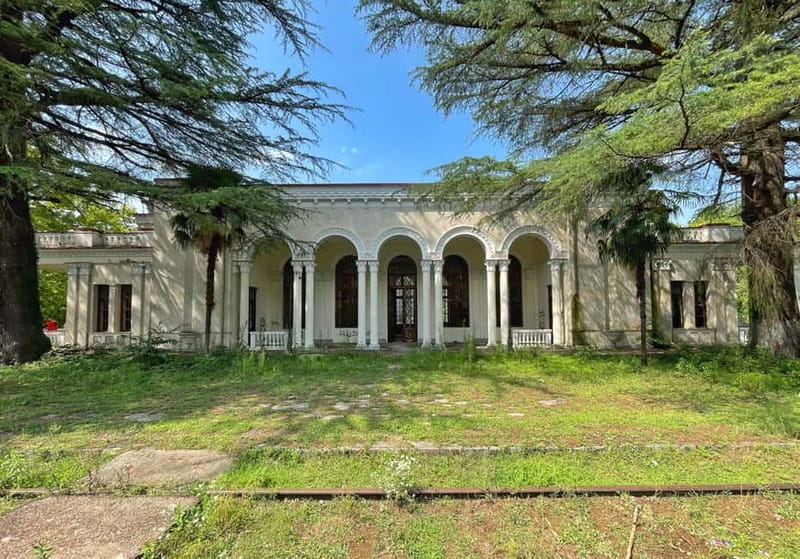
The next major stop is Sanatorium Gelati. It was specially built for children, and the site includes an old playground.
That detail changes the mood. A playground beside a decaying sanatorium is more than an architectural curiosity. It suggests the ordinary routines once associated with these buildings: children arriving for treatment or holidays, families gathering, and staff maintaining a large public institution.
Gelati also offers a beautiful viewpoint over the building’s inner construction. This is one of the tour’s best opportunities to understand the scale of the sanatoriums. From the right angle, you can see how the internal spaces were arranged and how much ambition went into the original design.
I would not expect a restored museum or a neatly labeled historic site. The appeal is the raw contrast between form and condition. The building was made to welcome and care for people, yet time and political change have left it worn.
This is also a place where you should follow the guide closely. Some sites have people living in or using parts of them. Mary specifically valued the respectful way the guide handled those situations. That is important: photography and curiosity should not override the privacy of people who now occupy these old spaces.
Sanatorium Medea and the human side of ruins
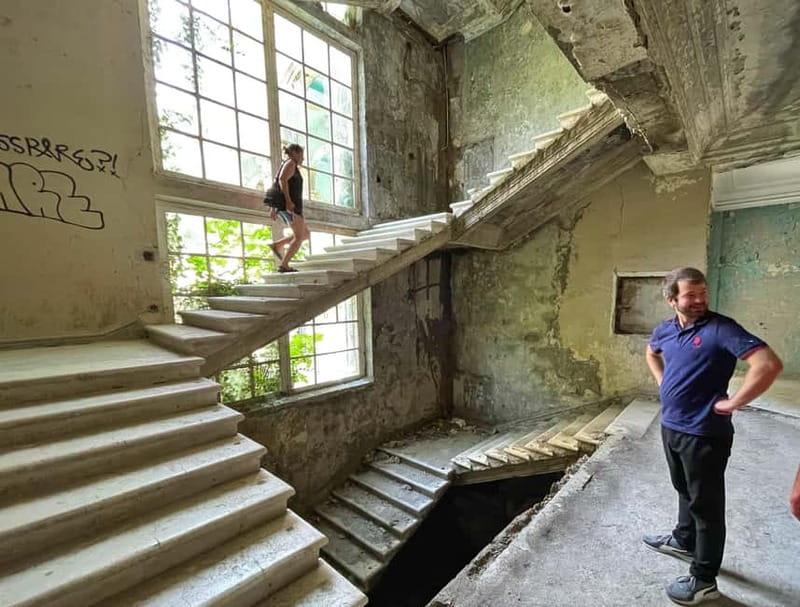
After Gelati, the group walks to Sanatorium Medea. The route continues the pattern of seeing one former institution after another, but the buildings are not interchangeable.
Medea helps you compare the design, condition, and atmosphere of different sanatoriums. Your guide can explain what each building was used for and how it fits into the town’s larger story. The value is in the comparison. One abandoned building can seem like an isolated oddity. Several buildings reveal a planned resort system.
The tour also avoids presenting Tskaltubo as an empty film set. The old structures have had later uses, and some people still inhabit parts of the town’s abandoned buildings. That can make the visit feel less theatrical and more complicated.
You may want time to take photographs, and the schedule allows some time at each stop. Still, Claudia’s useful point is worth keeping in mind: a four-hour tour cannot give you unlimited time to explore every corner. If you are a serious photographer or architecture researcher, you may wish you had a longer independent visit afterward.
Sanatorium Druzhba and the scale of the resort
The next walk takes you to Sanatorium Druzhba. By this point, you have seen the springs and two other sanatoriums, so Druzhba adds to a growing picture of how large Tskaltubo’s resort system once was.
The name itself reflects the political language of the Soviet period, but the building is also a physical reminder of the period’s scale. These were not small country clinics. They were major public facilities designed for organized treatment and recreation.
This is where a strong guide earns the price of admission. Lasha grew up in Tskaltubo and has offered personal insight into the town and its changes. Toko has also been praised for combining historical explanation with humor and an easy manner. That balance matters because the subject can otherwise become heavy.
I appreciate tours that leave room for questions, and this one appears to do that well. Charles asked many questions and found that Giorgi answered them in clear English. If you want a silent photography walk, this may feel too guided. If you want to understand what you are seeing, the explanation is a major advantage.
The abandoned train station as a final chapter
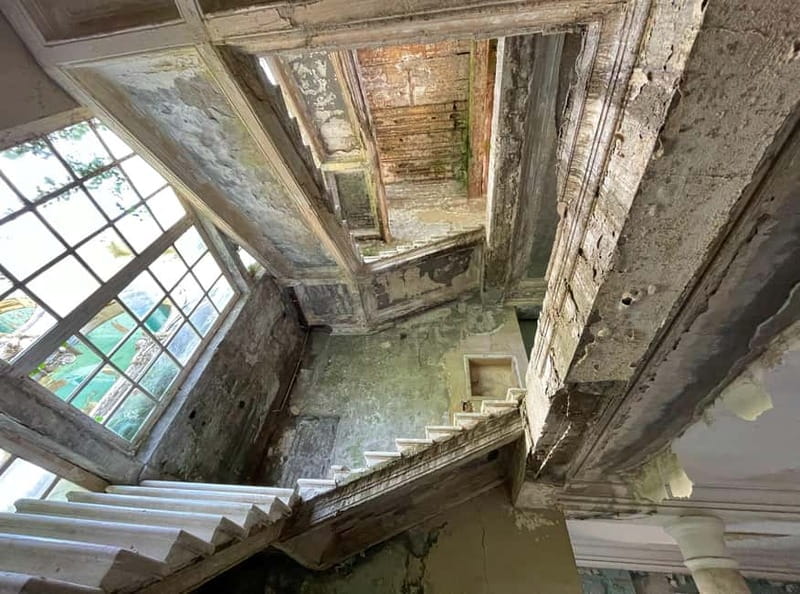
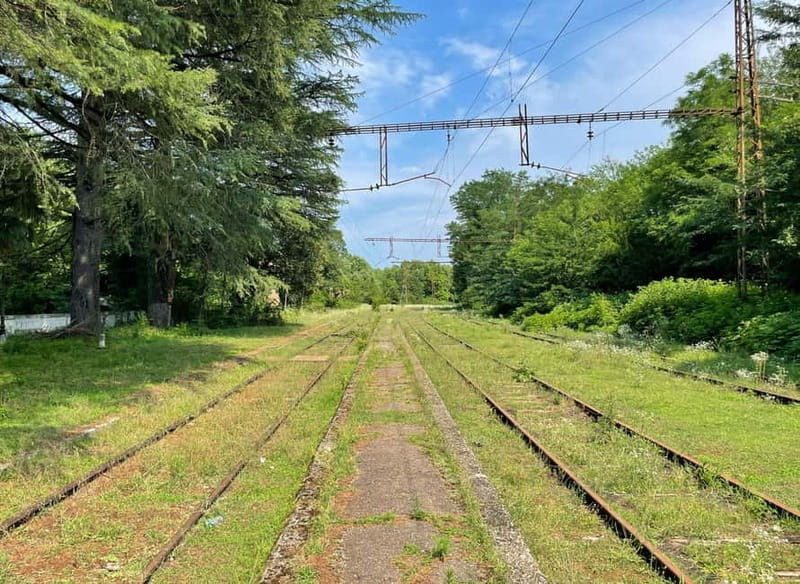
The last stop is the abandoned train station of Tskaltubo. It is a fitting end because rail transport helped connect resort towns with the wider state.
The station shifts the focus from treatment and leisure to movement. Sanatoriums required staff, supplies, and a steady flow of visitors. A railway station made that system possible and gave Tskaltubo a link to places far beyond the town.
As a final stop, the station also leaves you with a clear sense of decline. You have seen the springs that gave the town its purpose and the buildings that served its visitors. Now you see one of the systems that helped bring those visitors there.
The train station is not described as a restored attraction, so expect an atmospheric historical stop rather than a formal museum visit. For many people, that is exactly the point. The town’s story is visible in what remains, what has been reused, and what has been left behind.
What the guides add to the experience
The guide is the strongest reason to choose this organized tour instead of simply trying to locate old buildings yourself.
Giorgi has been praised for his English, professionalism, humor, and care. Toko is described as friendly, engaging, and good at making an afternoon feel relaxed. Lasha brings a particularly personal connection because he grew up in Tskaltubo and can point out details beyond the standard stops.
Several guides have also explained Georgian history in a wider context, including political and social changes. That makes the tour useful even if you are not mainly interested in Soviet architecture.
The praise is consistent on a few points: clear English, strong historical explanation, safe driving, room for questions, and a friendly manner. You should still remember that guides can vary from day to day, but the repeated strength of the guiding is a real advantage.
Is $25 good value?
At $25 per person, the tour is inexpensive for a four-hour outing that includes transportation from Kutaisi and guiding at multiple locations.
The value is especially good if you do not have a car. You avoid arranging transport to Tskaltubo, finding the springs, and locating the sanatoriums. You also receive background that would be difficult to gather from the buildings alone.
The price is less compelling if you already have private transport and prefer to spend an entire day photographing one or two buildings. In that case, the fixed schedule may feel restrictive. The tour is built for breadth and explanation, not unlimited time in one site.
Flexible booking also helps. You can reserve now and pay later, and cancellation is allowed up to 24 hours before departure for a full refund. Check the available start time when booking, since the stated schedule is 14:00 but availability can vary.
Who should book this Tskaltubo tour?
I would recommend it to you if you like twentieth-century history, Soviet architecture, unusual towns, or places that show how political change affects daily life.
It also suits visitors who want something different from Kutaisi’s churches, markets, and food stops without committing to a full-day excursion. The four-hour format leaves room for other plans.
You may enjoy it less if you want polished attractions, formal exhibitions, or a completely predictable route. This is a worn and sometimes eerie setting. The interest comes from the evidence of change, not from restoration.
Bring practical footwear and clothing suitable for walking between stops, but do not expect a strenuous hike. The itinerary includes walking from Spring #6 to Spring #8 and between several sanatoriums. Follow the guide’s instructions, particularly around old structures and occupied spaces.
Should you book it?
Book this tour if you want Tskaltubo explained, not merely photographed. The springs, Gelati, Medea, Druzhba, and the train station make a varied route, while the local guides add the personal and political context that gives the buildings meaning.
Skip it only if you already know Tskaltubo well or need unlimited time for independent exploration. For most visitors based in Kutaisi, $25 is a sensible price for a well-organized afternoon and a thoughtful look at one of Georgia’s most unusual towns.
FAQ
Where does the tour start?
The tour starts at the Budget Georgia office in Kutaisi, located between SwissCapital and Andazi shops.
What time does the tour begin?
The stated start time is 14:00.
Where does the tour finish?
The tour returns to the Budget Georgia office in Kutaisi.
How long does the tour last?
The tour lasts four hours.
What language is the tour conducted in?
The live tour guide speaks English.
What places are visited?
The route includes thermal water Springs #6 and #8, Sanatorium Gelati, Sanatorium Medea, Sanatorium Druzhba, and the abandoned train station of Tskaltubo.
What is included in the price?
The $25 price includes transportation from Kutaisi to Tskaltubo and guided visits to the sanatoriums and other old buildings.
Can I cancel the booking?
You can cancel up to 24 hours in advance for a full refund. You can also reserve now and pay later.
Just added near Kutaisi
- Wild Caving Experience in Melouri Cave Near Kutaisi★ 5.0 · 3 reviews
- Wine & Dine group tour from Kutaisi★ 4.6 · 3 reviews
- Private tour from KUTAISI: Bagrati, Gelati and Motsameta★ 5.0 · 5 reviews
- Tskhaltubo Old Soviet Spa Tour★ 4.5 · 12 reviews
- Day Tour to Georgian sky venice, Soviet city Chiatura★ 5.0 · 5 reviews
- Tskaltubo-Prometheus Cave-Geguti★ 5.0 · 6 reviews
- Ski & Snow Tour to Bakuriani from Kutaisi with Borjomi Stop★ 5.0 · 5 reviews
- Break Bread with Kutaisi Locals★ 5.0 · 4 reviews
Borjomi and Bakuriani Tours, compared.
Borjomi, Rabati & Vardzia Adventure Guided Tour
Read our review →
Borjomi, Rabati & Vardzia – one day group tour from Kutaisi
Read our review →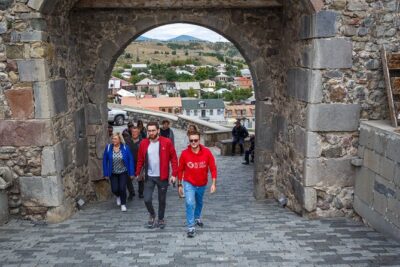
BORJOMI, RABATI & VARDZIA – Group Tour from Kutaisi
Read our review →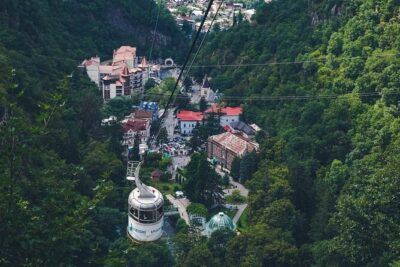
Vardzia, Rabati, and Borjomi Ancient Georgia Group Tour
Read our review →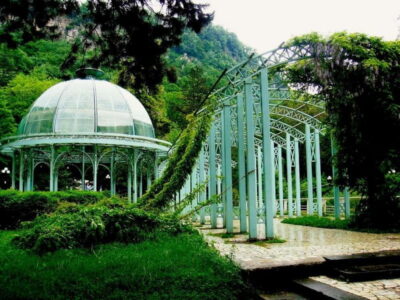
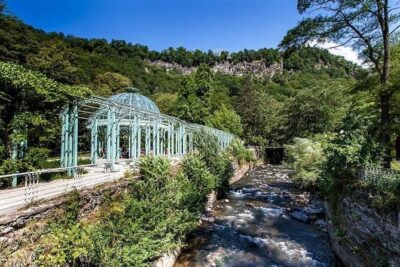
LEGENDARY PLACES OF GEORGIA: VARDZIA, BORJOMI, RABAT.( Group Tour)
Read our review →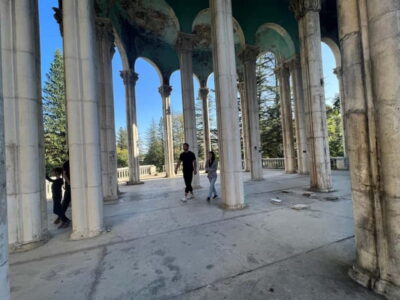
Browse the lists this tour appears in