
Reviewed · SOVIET HERITAGE TOURS
Tskhaltubo Old Soviet Spa Tour
Soviet spa ruins tell a strange story. This half-day outing from Kutaisi takes you into Tskhaltubo, once a grand mineral-water resort where Moscow-bound trains delivered visitors to lavish sanatoriums. I like the way the tour connects crumbling buildings to Soviet medical history, and I especially like that guide Akaki adds personal context rather than simply pointing at decayed walls.
The tour also visits several former sanatoriums, each with a different look and purpose. That variety gives the outing more depth, while Akaki’s eye for safe routes and strong photo angles adds real practical value. My main caution is communication: one booking went badly after the time changed and a private booking became a group outing, so confirm the start time and private format before setting off.
In This Review
- Key points to know before you go
- Why Tskhaltubo is worth three and a half hours
- Entering the former Soviet Riviera
- What you see at the former sanatoriums
- Akaki’s guiding style
- Price and the value of a private history tour
- Meeting point, timing, and the return to Kutaisi
- Who will enjoy this tour most
- Should you book the Tskhaltubo Old Soviet Spa Tour?
- FAQ
- Where does the Tskhaltubo Old Soviet Spa Tour start?
- What time does the tour begin?
- How long does the experience last?
- Where does the tour end?
- Is hotel pickup available?
- Is the tour conducted in English?
- Is this a private tour?
- What happens if the weather is poor?
Key points to know before you go
- Tskhaltubo was once a major Soviet spa resort: Eighteen sanatoriums were built from the 1920s onward, and daily trains reportedly arrived from Moscow by the 1980s.
- The tour lasts about three and a half hours: It starts at 2:00 p.m. from Free Walking Tour Kutaisi in central Kutaisi and returns there.
- Akaki is the guide to request by name if available: He is praised for his Soviet-era background, friendly manner, safety awareness, and help with photography.
- The buildings are abandoned and physically demanding: A moderate level of fitness is recommended, and you should expect uneven, worn spaces rather than a polished museum visit.
- The listed price is $78.27 per person: That can be fair for a private history-focused outing, but the value depends on receiving the private format promised at booking.
- The subject suits history fans and photographers: It also has a strong post-apocalyptic visual appeal for people drawn to The Last of Us or The Walking Dead.
Why Tskhaltubo is worth three and a half hours
Tskhaltubo is not just a collection of empty Soviet buildings. Its identity began with the mineral springs, whose healing qualities had been noted by foreign researchers as early as the 18th century. The water was used for balneotherapy, meaning treatment through bathing in mineral-rich water.
In 1920, the area became state property and was developed as a formal health resort. By 1953, it had become an important Soviet spa destination. The resort’s mineral water was promoted for conditions involving the limbs, peripheral nervous system, skin, heart, and blood vessels.
The water itself has an unusual practical feature. It comes from the springs at a comfortable bathing temperature, so it could be sent directly to the baths without heating or cooling. That detail helps explain why this quiet Georgian town became important enough to receive visitors from across the Soviet Union.
The tour gives you a way to see the remains of that system in place. You are not simply admiring old architecture. You are looking at a former state-run health machine, built around medicine, leisure, prestige, and mass public access.
More Soviet-era sights around Kutaisi:
- Kutaisi: Tskaltubo Abandoned Soviet-Era Spas Tour
★ 4.9 · 40 reviews - Day Tour to Georgian sky venice, Soviet city Chiatura
★ 5.0 · 5 reviews - Tbilisi: Mtskheta Jvari Bazaar, Chronicles of Georgia & Wine
★ 5.0 · 1,088 reviews
Entering the former Soviet Riviera
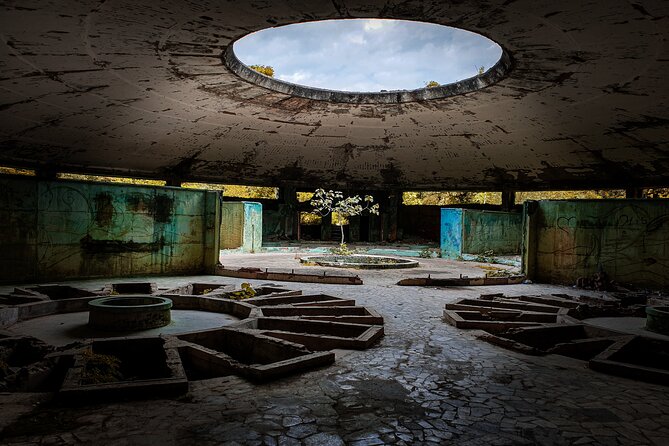
Tskhaltubo was part of the so-called Soviet Riviera, a chain of resort areas where people went for rest and medical treatment. The resort’s 18 sanatoriums were built over several decades, beginning in the 1920s. Their scale reflected the importance the Soviet state placed on organized holidays and state-sponsored health care.
By the 1980s, trains arrived daily from Moscow. That fact changes how you read the ruins. A building that now seems isolated once belonged to a busy resort network with long-distance rail links, doctors, staff, dining rooms, treatment facilities, and holiday schedules.
The tour’s strongest feature is its context. Without explanation, abandoned sanatoriums can blur together into a series of damaged facades. With Akaki, each stop can be linked to the resort’s former purpose and to the wider Soviet period. He has been praised for explaining Soviet history clearly and for taking visitors to several different complexes rather than showing only one.
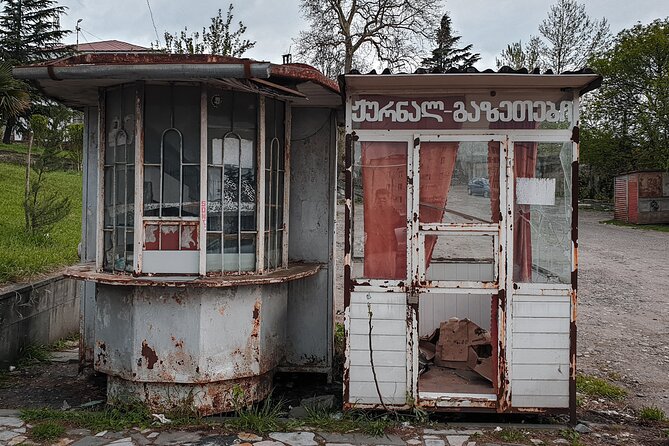
You should expect a visual experience, but not a formal guided museum. The appeal lies in the contrast between grand planning and present decay. Large institutional spaces, old resort architecture, and signs of abandonment create a mood that is hard to find in an ordinary city tour.
What you see at the former sanatoriums
The supplied tour details do not name each sanatorium or promise a fixed list of buildings. That is worth keeping in mind. The exact stops may depend on access, safety, weather, and local conditions.
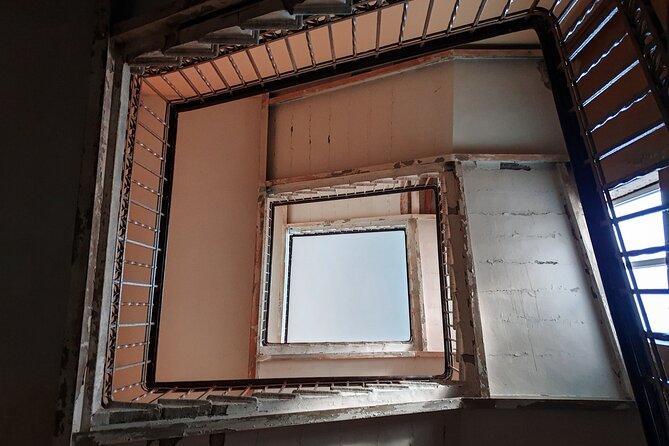
You can expect to visit several former sanatoriums, each different in appearance and former function. That variety is important. One building may suggest a grand public resort, while another may feel more practical and institutional. The experience works best when you pay attention to those differences instead of treating every ruin as the same photo backdrop.
Some places may be worn, open, or difficult underfoot. The recommendation for moderate physical fitness is not a small footnote. You should be ready for movement through aging structures and should follow the guide’s directions closely. The tour is not described as accessible for people with limited mobility, and no special accessibility details are provided.
Akaki’s safety awareness is one of the most useful parts of the experience. He has been specifically praised for knowing which parts of the buildings are suitable to enter and for helping visitors find good angles without taking needless risks. That matters in a place where the most interesting view may also be near an unstable or damaged section.
The photo opportunities are a bonus, not the whole point. The buildings have the sort of stark, abandoned character that appeals to fans of The Last of Us and The Walking Dead. Still, the best photographs will mean more if you understand what the buildings were designed to do.
Akaki’s guiding style
The guide can make or break this outing. Tskhaltubo’s abandoned structures do not explain themselves, and a guide who lacks background could reduce the trip to a walk through empty rooms.
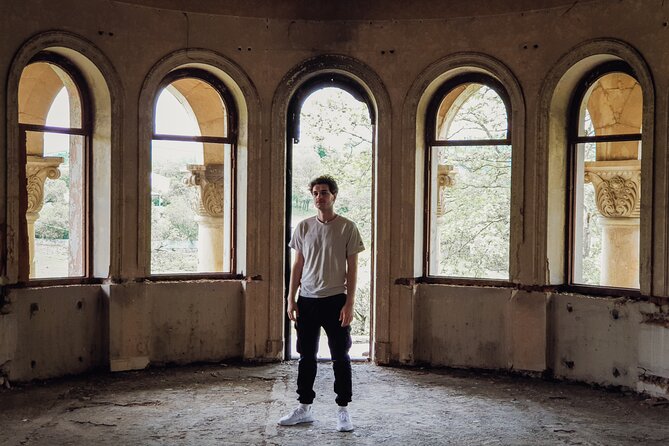
Akaki receives the strongest praise in the available feedback. He is described as warm, punctual, easy to talk to, and well prepared. His strength is not only dates and Soviet facts. He gives the sites a human and political setting, which helps you understand why the resort was built and why it later declined.
His approach also seems personal. He is said to adjust his help to the group, offer suggestions for better photographs, and pay attention to safety. That makes the outing more useful for someone who wants to ask questions or spend time examining details.
The private format is particularly attractive for this subject. A private tour lets you ask about Soviet medical care, resort life, architecture, or the fate of the buildings without worrying about holding up a large group. It can also make it easier to linger at a photo stop.
There is one important warning. One booking reportedly suffered from poor communication, an unannounced time change, and the addition of four other people to a booking that had been sold as private. The guide also reportedly questioned the price paid. This is a serious service issue, even though the other feedback is strongly positive.
To protect yourself, confirm the 2:00 p.m. start, meeting point, pickup details, and private status soon after booking. Keep the confirmation available on your phone. The tour is offered in English, and the main meeting point is Free Walking Tour Kutaisi, Gelati Kutaisi, in Kutaisi.
More Kutaisi days to weigh up
- Kutaisi: Martvili & Okatse Canyons & Prometheus Cave Tour
★ 4.9 · 829 reviews - From Kutaisi: Guided Tour of Okatse, Martvili, & Prometheus
★ 4.8 · 520 reviews - Kutaisi:Chiatura Tour with Katskhi Pillar & Cable Car
★ 4.9 · 433 reviews - CANYONS & CAVE Tour from Kutaisi – Okatse, Martvili & Prometheus
★ 4.5 · 307 reviews
Price and the value of a private history tour
At $78.27 per person, this is not the cheapest way to spend three and a half hours near Kutaisi. The price makes more sense if you receive a genuinely private outing with hotel pickup, an English-speaking guide, local access knowledge, and several carefully chosen sites.
The value is less about admission fees. Tskhaltubo itself is listed with free admission, so you are paying mainly for transport, guiding, interpretation, time, and the ability to see places you might not locate or enter confidently on your own.
That guide service is central. Without someone to explain the resort’s development and Soviet role, you could spend the afternoon photographing decayed buildings without understanding their purpose. Akaki’s background and photo guidance help turn the visit into a structured history experience.
The price becomes harder to justify if the private format is not honored or if communication is poor. A group outing may still be interesting, but it is a different product. If you are booking alone, the per-person cost is higher, so clear confirmation matters even more.
The fact that this experience is commonly booked around 20 days ahead suggests that advance planning is sensible. I would not wait until the last moment if your Kutaisi schedule is tight. You also need to allow for the tour’s weather requirement, since poor weather can lead to a new date or a refund.
Meeting point, timing, and the return to Kutaisi
The official start time is 2:00 p.m. at Free Walking Tour Kutaisi, Gelati Kutaisi, in Kutaisi. Pickup is offered, but you should confirm exactly where the pickup will take place rather than assume it is automatic.
The outing lasts about three hours and 30 minutes and ends back at the meeting point. That makes it easy to fit into a Kutaisi day, especially if you want a substantial afternoon activity without giving up an entire day.
Public transportation is nearby, but the tour information still identifies the walking-tour location as the start and finish. If you are relying on a pickup, settle the details in advance. One poor experience involved late communication about the meeting point and start time, so this is the part of the booking I would handle most carefully.
The return to Kutaisi is useful. You do not have to solve a separate transport problem at the end, and you can continue with dinner or an evening walk in the city. The afternoon departure also gives you time to reach the meeting point without an early-morning rush.
Who will enjoy this tour most
I would choose this tour if you have a strong interest in Soviet history, abandoned architecture, photography, or the way political systems shape daily life. It is particularly good for people who want the story behind a place, not just a quick stop for pictures.
It also suits visitors staying in Kutaisi who want an experience outside the city center. Tskhaltubo offers a very different setting and subject from Kutaisi’s churches, markets, and old streets.
You do not need to come from a post-Soviet country to appreciate it. The former spa system is accessible through broad themes: public health, mass holidays, state planning, and the rise and fall of large institutions. Fans of post-apocalyptic television and games may also enjoy the atmosphere, but the historical explanation is what gives the tour lasting value.
I would think twice if you dislike abandoned buildings, uneven walking, or uncertain access. This is not a polished attraction with displays, restrooms, and neatly marked paths described in the tour details. The moderate fitness recommendation should be taken seriously.
I would also be cautious if your schedule cannot tolerate communication problems. The cancellation policy allows a full refund when you cancel at least 24 hours before the start, but changes made within 24 hours are not accepted. If bad weather cancels the experience, you are offered another date or a full refund. A minimum number of participants is also required, and failure to meet it can lead to a new date, another experience, or a refund.
Should you book the Tskhaltubo Old Soviet Spa Tour?
I would book it for the history and the guide, not simply for abandoned-building photographs. Tskhaltubo’s former role as a Soviet spa resort is unusual, and the scale of its sanatorium system gives the visit a strong sense of place.
The best version of this outing is a private, English-language tour with Akaki, who can explain the sites, keep you out of unsafe areas, and point out worthwhile photo positions. The five-star feedback is consistent about those strengths, especially his historical background, friendly manner, and individual attention.
The main decision point is service reliability. Confirm the time, pickup, group size, and private arrangement before you go. If those details are settled, the $78.27 price can be reasonable for a specialized three-and-a-half-hour experience. If you are mainly seeking a cheap sightseeing trip, it may feel expensive.
For curious visitors based in Kutaisi, I think this is one of the more distinctive local excursions. Just arrive prepared for rough conditions, keep an open mind, and remember that the ruined walls are only half the story.
FAQ
Where does the Tskhaltubo Old Soviet Spa Tour start?
The tour starts at Free Walking Tour Kutaisi, Gelati Kutaisi, in Kutaisi, Georgia.
What time does the tour begin?
The listed start time is 2:00 p.m.
How long does the experience last?
It lasts approximately three hours and 30 minutes.
Where does the tour end?
The experience ends back at the meeting point in Kutaisi.
Is hotel pickup available?
Pickup is offered, but you should confirm the exact pickup arrangements when booking.
Is the tour conducted in English?
Yes. The experience is offered in English.
Is this a private tour?
The experience is described as a private activity for your group. Because one booking reportedly changed from private to group, confirm this detail before the tour date.
What happens if the weather is poor?
The experience requires good weather. If it is canceled because of poor weather, you can choose another date or receive a full refund.
Just added near Kutaisi
- Wild Caving Experience in Melouri Cave Near Kutaisi★ 5.0 · 3 reviews
- Wine & Dine group tour from Kutaisi★ 4.6 · 3 reviews
- Private tour from KUTAISI: Bagrati, Gelati and Motsameta★ 5.0 · 5 reviews
- Day Tour to Georgian sky venice, Soviet city Chiatura★ 5.0 · 5 reviews
- Tskaltubo-Prometheus Cave-Geguti★ 5.0 · 6 reviews
- Ski & Snow Tour to Bakuriani from Kutaisi with Borjomi Stop★ 5.0 · 5 reviews
- Kutaisi Airport to Tbilisi Private Transfer★ 5.0 · 3 reviews
- Break Bread with Kutaisi Locals★ 5.0 · 4 reviews
Soviet Heritage Tours, compared.
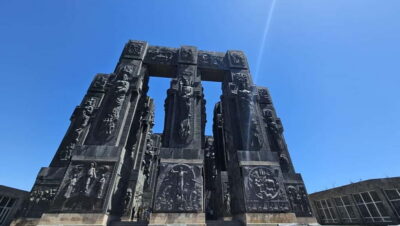
Mtskheta Jvari Bazaar, Chronicles of Georgia & Wine
Read our review →
Mtskheta,Jvari,Bazaar,wine tasting,Chronicles of Georgia
Read our review →
The Chronicles of Georgia, Jvari & Mtskheta Tour
Read our review →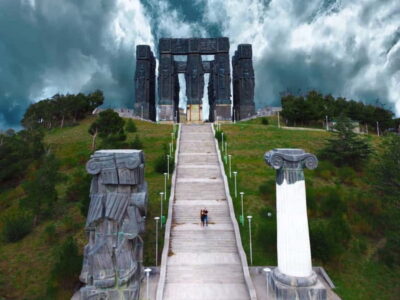

1 Day Private Armenia: UNESCO, Soviet & Curated Family Lunch
Read our review →
Jvari-Uplistsike-Chronicle of Georgia, PRIVATE Trip
Read our review →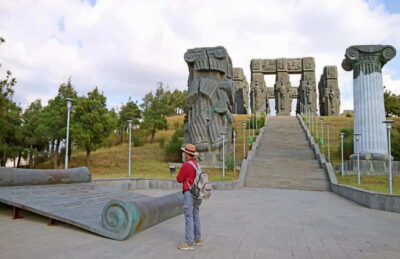
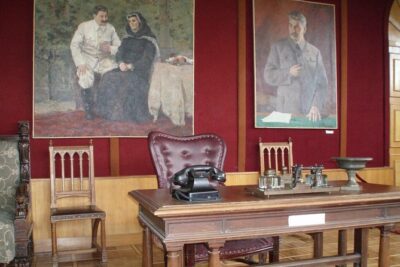
Day tour to Chronicles of Georgia, Gori city, Uplistsikhe cave
Read our review →Browse the lists this tour appears in