
Reviewed · SOVIET HERITAGE TOURS
Kutaisi: Tskaltubo Abandoned Soviet-Era Spas Tour
The past is still standing in Tskaltubo. This four-hour trip from Kutaisi takes you into abandoned Soviet sanatoriums and bathhouses, where grand colonnades, chandeliers, fountains, and cracked corridors tell the story of a once-famous spa town. I like the mix of architecture and history, and I like that the small group is limited to seven people.
The biggest plus is the guide-led access. Buildings with broken glass, rotting wood, and unstable concrete are not places to explore casually. The main drawback is that the tour involves a lot of walking on uneven ground, and some locations may change if access becomes impossible.
In This Review
- Key points to know before you go
- Why Tskaltubo feels unlike an ordinary day trip
- Meeting in Kutaisi and reaching the spa town
- Sanatorium Medea and the grand Soviet entrance
- Sanatorium Metallurgist and the lost theater
- Spring N6 and the bathhouse built for Stalin
- The abandoned bathhouse and the best urbex moments
- What the guide adds to the experience
- Safety, walking, and what to pack
- Time, group size, and value
- Who should book this Tskaltubo tour
- Should you book the abandoned spas tour?
- FAQ
- How long does the Tskaltubo abandoned spas tour last?
- Where does the tour start?
- Is transportation included?
- What language is the tour conducted in?
- How many people can join the tour?
- Which buildings are visited?
- What should I bring?
- Who should not take this tour?
Key points to know before you go
- Sanatorium Medea has the most photogenic exterior: Its colonnade, fountains, sculptures, and 1960s interiors make it the best stop for photographs.
- Sanatorium Metallurgist reveals the old glamour: Look for the huge chandelier, ornate metalwork, theater hall, and restaurant.
- Spring N6 is still in use: You will see one of Tskaltubo’s few working bathhouses, including a room built for Stalin’s visit.
- The tour is proper urbex, not a polished museum visit: Expect dust, rubbish, broken glass, crumbling surfaces, and buildings being reclaimed by plants.
- A small group makes a real difference: With no more than seven participants, it is easier to ask questions and move carefully through tight spaces.
- Comfort matters more than style: Wear sturdy walking shoes, carry water, and bring a camera if you want to capture the faded interiors.
Why Tskaltubo feels unlike an ordinary day trip
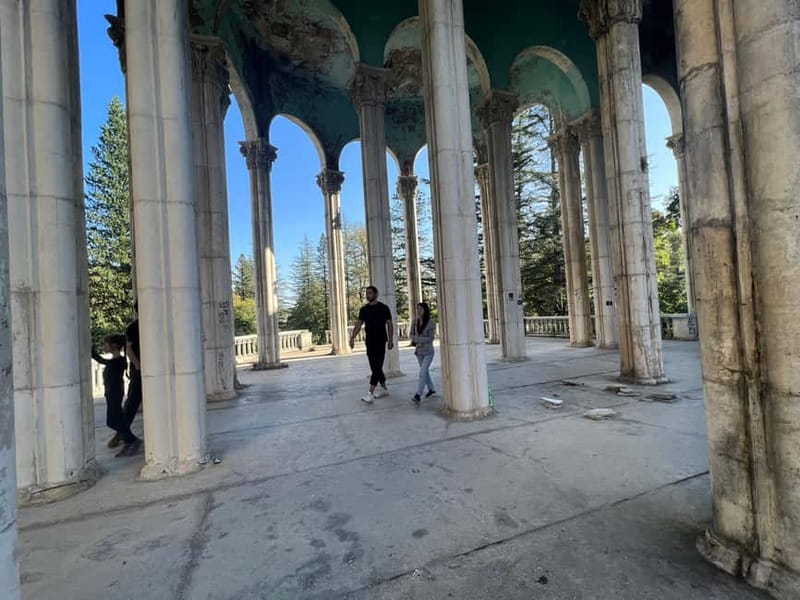
Tskaltubo was once a major Soviet spa destination. Hundreds of thousands of people came each year for its mineral waters, known locally as the waters of immortality. The town was built around treatment, rest, and ceremony, not simply a quick soak.
Today, several of its grand sanatoriums are abandoned. Their wide staircases, long corridors, formal halls, and oversized decorative details remain, but the original purpose has gone. Nature has begun to move in. The result is an unusual meeting of Soviet ambition and slow decay.
I think that contrast is the reason this tour works so well. You are not looking at ruins that were designed to be ruins. You are walking through hotels and bathhouses that once welcomed large numbers of people, then were left behind. A faded fountain or an empty theater hall gives you a clearer sense of that change than a standard museum display could.
The experience is best understood as an architecture and history tour with an urban exploration element. It is not a spa visit, and it is not a comfortable sightseeing circuit. You need to be happy walking through imperfect spaces and using your imagination.
More Soviet-era sights around Kutaisi:
- Tskhaltubo Old Soviet Spa Tour
★ 4.5 · 12 reviews - Day Tour to Georgian sky venice, Soviet city Chiatura
★ 5.0 · 5 reviews - Tbilisi: Mtskheta Jvari Bazaar, Chronicles of Georgia & Wine
★ 5.0 · 1,088 reviews
Meeting in Kutaisi and reaching the spa town
The guide meets you at the columns by Kutaisi Central Park, across from the Colchis Fountain. The park is currently fenced and under construction, so give yourself enough time to identify the meeting point rather than relying on the park entrance alone.
Transportation to Tskaltubo and back is included. That matters because the tour is only four hours long, and arranging separate transport would make the outing less convenient. You return to the same meeting point at the end.
The small-group format is another practical advantage. A maximum of seven people allows the guide to keep the pace controlled, answer questions, and point out details that would be easy to miss in a large crowd. It also helps inside narrow corridors and rooms where too many people would make movement awkward.
Several guides have been praised for making the outing personal and easy to follow. Names associated with the tour include Eva, Anna, Ana, and Teona. The strongest feedback focuses on their clear explanations, flexibility, safe approach, and ability to discuss subjects ranging from architecture and politics to Georgia’s past.
Sanatorium Medea and the grand Soviet entrance
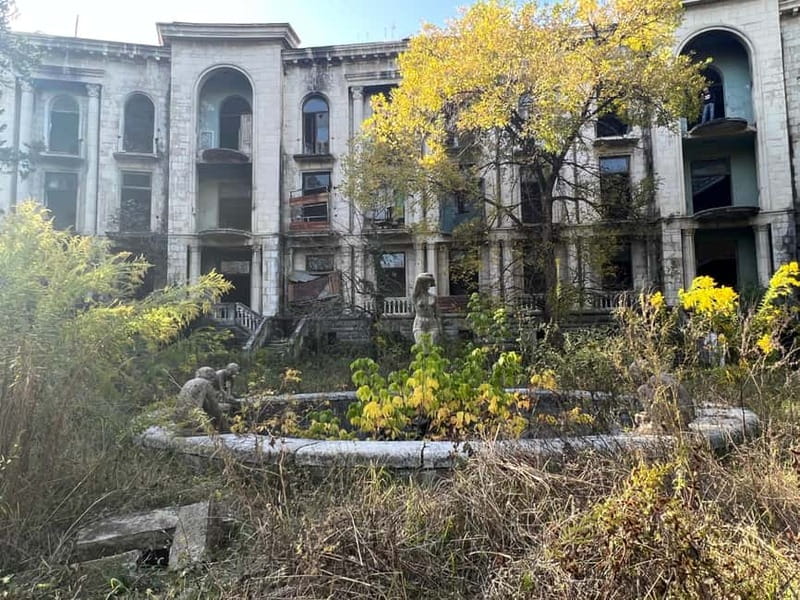
Your first major stop is Sanatorium Medea, built between 1954 and 1962. The exterior gives you the clearest sense of the scale and confidence behind Tskaltubo’s spa era.
The colonnade is the obvious photo stop. Its repeated columns create a formal entrance that once signaled comfort and status. Now, with parts of the building empty and weathered, the same design feels both elegant and slightly uncanny.
Inside, you can explore hotel rooms with original 1960s interiors. Do not expect every room to be intact, but the surviving details help you picture how the building once functioned. Patios with fountains and sculptures add another layer, especially where plants and weather have softened the hard lines of the original design.
I like this part of the visit because it gives you both the postcard view and the close-up view. The colonnade explains the public face of the sanatorium. The rooms and patios show how people actually experienced it.
Medea is also a good place to slow down. The most memorable details may not be the largest ones. Look at the proportions of the corridors, the placement of decorative features, and the way light enters empty rooms. Your guide can connect those details to the building’s former role rather than leaving you to see only decay.
Sanatorium Metallurgist and the lost theater
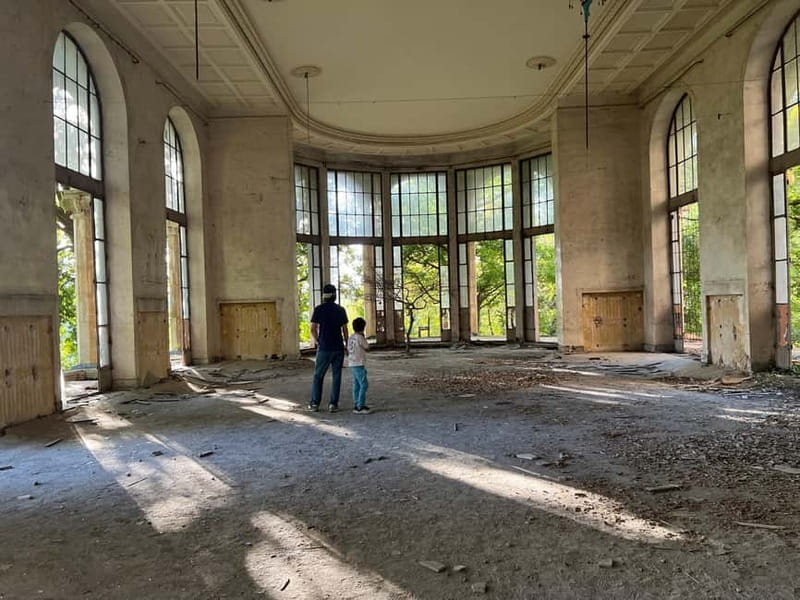
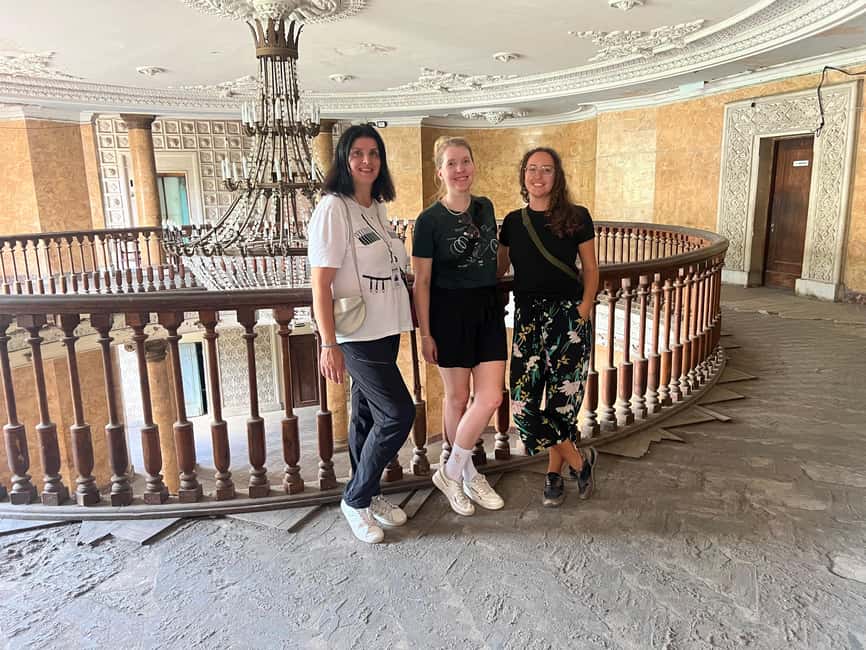
Sanatorium Metallurgist has a different mood. Its entrance is marked by a huge chandelier, a wonderfully oversized reminder that these buildings were meant to impress.
Inside, look for the metalwork. The decorative designs give the building a more elaborate character than a plain institutional hospital. In its active years, the hotel was intended to feel special, and the surviving details still show that effort.
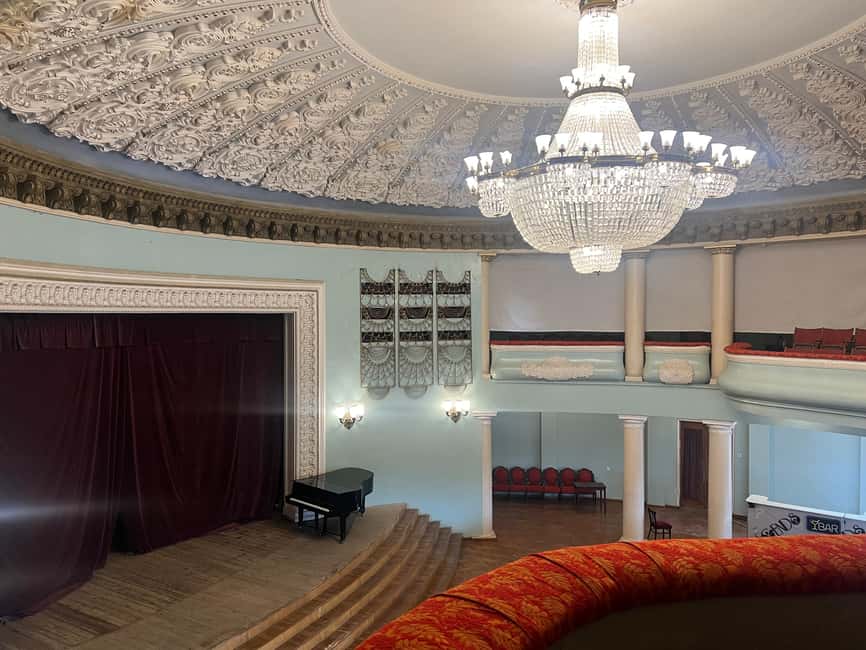
The tour continues through corridors, an old theater hall, and a restaurant hall. These rooms help explain that Tskaltubo was not only about medical treatments. A major spa town also needed places for dining, entertainment, social gatherings, and public display.
The theater is especially useful for understanding the scale of the complex. An empty performance room carries a different feeling from an empty guest room. You can imagine the building filled with people, then compare that image with the quiet, damaged interior in front of you.
This stop also shows why a guide is important. Without context, a chandelier is simply a striking object and an abandoned hall is just a good photograph. With explanation, you can connect each space to the way the sanatorium operated. The guide can also help you decide where to place your feet and which areas deserve caution.
More days out to Borjomi and Bakuriani:
- Borjomi, Rabati & Vardzia – one day group tour from Kutaisi
★ 4.8 · 100 reviews - Abandoned sanatoriums of tskaltubo – group tour from Kutaisi
★ 4.8 · 99 reviews - BORJOMI, RABATI & VARDZIA – Group Tour from Kutaisi
★ 4.5 · 76 reviews - BORJOMI, RABATI & VARDZIA – Group Tour From Tbilisi
★ 4.5 · 16 reviews
Spring N6 and the bathhouse built for Stalin
Spring N6 is one of the few working bathhouses remaining in Tskaltubo. This stop changes the rhythm of the tour. After walking through abandoned hotels, you see a place that still has an active connection to the town’s spa tradition.
The main point of interest is a bathhouse built especially for Stalin’s visit to Tskaltubo. That detail gives the building a direct link to Soviet political history, but the value of the stop is also architectural. It lets you compare a functioning bathhouse with the abandoned spaces visited earlier.
Tskaltubo’s mineral waters were central to its fame. They were called the waters of immortality, a name that captures the hope and ceremony surrounding the spa. The tour uses that story to explain why such large sanatoriums were built and why the town once attracted visitors on such a huge scale.
Spring N6 is not presented as a modern wellness experience. You are visiting to understand the town’s bathing tradition and to see a special historical space. Keep your expectations focused on architecture and history rather than a treatment or swimming opportunity.
The abandoned bathhouse and the best urbex moments
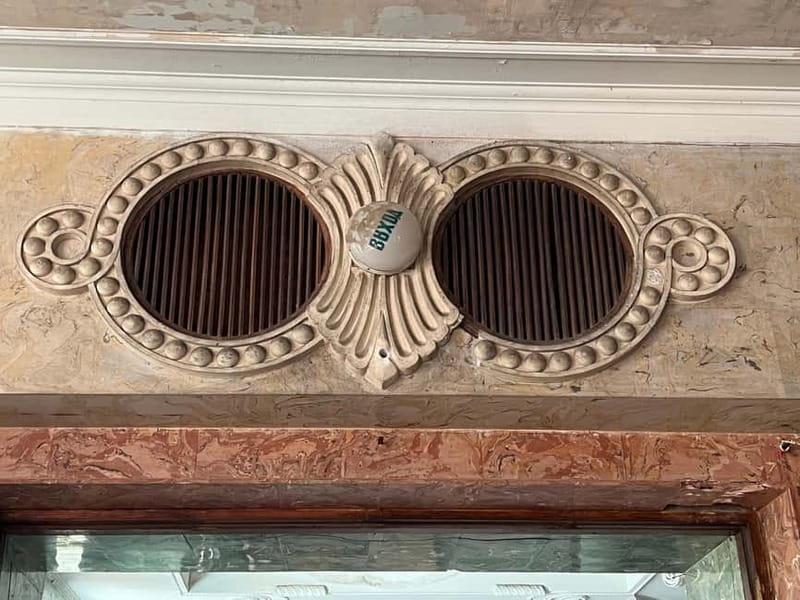
Before the tour ends, you make a short visit to another abandoned bathhouse nearby. This is the most raw part of the outing, and probably the one most likely to appeal to people who already enjoy urbex photography.
The building may contain rubbish, shards of glass, splintered wood, and crumbling concrete. Those conditions are part of the setting, but they are also genuine hazards. You should never rush for a photograph or step into a dark room without checking the ground.
The rule here is simple: take only photographs and leave only footprints. Do not remove tiles, signs, fixtures, pieces of furniture, or any other object. Abandoned buildings are fragile enough without visitors carrying away souvenirs.
Locations can change if a building becomes inaccessible. That is worth accepting before you book. The condition of these places is not fixed, and ownership, safety concerns, or investor plans may close an area without much notice. The tour’s appeal comes partly from seeing the buildings before redevelopment, but that also means the exact route cannot be guaranteed forever.
What the guide adds to the experience
I would not recommend entering these buildings alone. A guide adds safety, local awareness, and context that you cannot get from photographs.
The strongest guide feedback centers on three qualities: clear information, flexibility, and a calm approach to safety. Eva is praised for explaining the buildings and going beyond the basic route. Anna is described as especially helpful, while Teona is praised for her friendly manner and driving. Ana also receives strong marks for flexibility and personal attention.
That range of feedback suggests the experience is not delivered as a hurried script. Guides can answer questions, adjust the conversation to your interests, and give you time to look at details. One particularly good feature is the mix of subjects that can arise during the walk, including architecture, literature, politics, and the difficult changes of the 1990s.
The guide also helps turn an eerie scene into a human story. It is easy to focus only on peeling walls and plants growing through buildings. The better approach is to ask who used these rooms, why the buildings became important, and what happened when the spa system declined.
Safety, walking, and what to pack
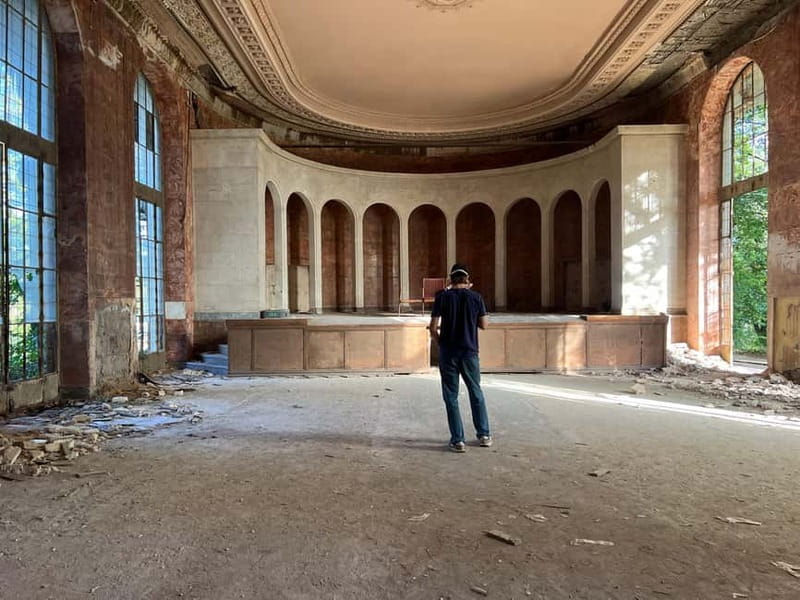
This is a physically demanding visit in a modest way. You do not need specialist climbing skills, but you do need to walk over uneven surfaces and remain alert inside damaged buildings.
Wear comfortable shoes with a firm sole. Water is essential, particularly if you are visiting in warm weather. A camera is useful, but keep it secondary to watching where you step.
There may be broken glass, loose wood, rubbish, and sections of crumbling concrete. Stay with the guide and do not wander into areas that have not been checked. You should also avoid touching unstable walls, railings, ceilings, or decorative features.
The experience is not suitable for children under 12, pregnant women, or people with mobility impairments. That is not a minor booking note. The combination of uneven ground and abandoned interiors genuinely limits who will find the tour comfortable.
Wear clothes that can handle dust. The supplied information does not promise protective equipment, so do not arrive expecting a polished indoor attraction. This is a working exploration of neglected buildings.
Time, group size, and value
The tour lasts four hours. That is enough time to visit Medea, Metallurgist, Spring N6, and an abandoned bathhouse without turning the day into an exhausting marathon.
One past participant wanted the tour to last longer and see even more buildings. I understand the feeling. Tskaltubo contains more abandoned structures than can fit into a short outing, and once you start noticing the architectural details, four hours passes quickly.
Still, the duration works well for a half-day plan from Kutaisi. You get transportation, an English-speaking guide, several major locations, and a route that would be difficult to arrange safely on your own. Meals and drinks are not included, so eat beforehand or plan food separately.
No tour price is provided here, so I cannot judge the exact cost. In value terms, look at what is included rather than comparing it with a simple taxi ride. The useful part is not just reaching Tskaltubo. It is having access arranged, transport handled, and the buildings explained by someone who knows how to move through them.
The group limit of seven also supports the value. A large group would make this kind of tour slower and less personal. Here, you have a better chance to ask questions and pause for photographs without holding up a crowd.
Free cancellation up to 24 hours before the start and a reserve-now, pay-later option make the booking less rigid. Check the available starting times before planning the rest of your day.
Who should book this Tskaltubo tour
I would choose this tour if you enjoy abandoned architecture, Soviet-era design, unusual local history, or photography with a slightly eerie edge. It also suits anyone who wants a simple half-day outing from Kutaisi without arranging a car and route independently.
You should book with realistic expectations. The buildings are not restored, clean, or fully predictable. You will not get a neat sequence of exhibits with signs beside every object. You will get a guide, a collection of striking spaces, and a chance to see what happens when grand public buildings are left to weather and plants.
This is not the right choice if you want a relaxing spa day, smooth paths, or a family attraction for young children. It is also a poor fit if uneven floors or damaged interiors make you nervous.
The experience has a 4.9 rating from 40 reviews, with repeated praise for the guides, safety, history, flexibility, and personal feel of the small group. The most useful takeaway is simple: the buildings are fascinating, but the guide is what makes the visit practical and worthwhile.
Should you book the abandoned spas tour?
Book it if you want to see Tskaltubo before more of its old sanatoriums are sold or changed for new investment. Medea gives you the grand colonnade and 1960s rooms, Metallurgist supplies the chandelier, metalwork, theater, and restaurant, and Spring N6 connects the abandoned past with a bathhouse still in use.
I especially recommend it to independent-minded visitors who want something beyond Georgia’s standard sightseeing route. Just bring sturdy shoes, water, patience, and respect for the buildings. If you do, this short trip from Kutaisi can become one of the most memorable ways to understand the rise and fall of Tskaltubo.
FAQ
How long does the Tskaltubo abandoned spas tour last?
The tour lasts four hours. Starting times vary, so check availability when booking.
Where does the tour start?
The guide meets you at the columns by Kutaisi Central Park, across from the Colchis Fountain. The park is currently fenced and under construction.
Is transportation included?
Yes. Transportation from Kutaisi to Tskaltubo and back to the meeting point is included.
What language is the tour conducted in?
The tour is conducted in English with a live guide.
How many people can join the tour?
The group is limited to seven participants.
Which buildings are visited?
The route includes Sanatorium Medea, Sanatorium Metallurgist, Spring N6, and a nearby abandoned bathhouse. Locations may change if a building becomes inaccessible.
What should I bring?
Bring comfortable walking shoes, water, and a camera if you want to photograph the buildings.
Who should not take this tour?
The tour is not suitable for children under 12, pregnant women, or people with mobility impairments. Abandoned buildings contain hazards such as broken glass, splintered wood, rubbish, and crumbling concrete.
Just added near Kutaisi
- Wild Caving Experience in Melouri Cave Near Kutaisi★ 5.0 · 3 reviews
- Wine & Dine group tour from Kutaisi★ 4.6 · 3 reviews
- Private tour from KUTAISI: Bagrati, Gelati and Motsameta★ 5.0 · 5 reviews
- Tskhaltubo Old Soviet Spa Tour★ 4.5 · 12 reviews
- Day Tour to Georgian sky venice, Soviet city Chiatura★ 5.0 · 5 reviews
- Tskaltubo-Prometheus Cave-Geguti★ 5.0 · 6 reviews
- Ski & Snow Tour to Bakuriani from Kutaisi with Borjomi Stop★ 5.0 · 5 reviews
- Kutaisi Airport to Tbilisi Private Transfer★ 5.0 · 3 reviews
Soviet Heritage Tours, compared.
Mtskheta Jvari Bazaar, Chronicles of Georgia & Wine
Read our review →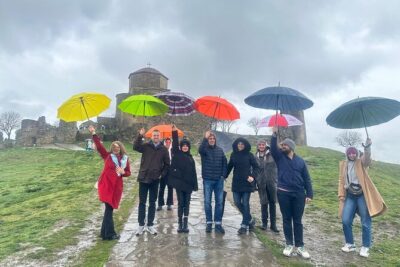
Mtskheta,Jvari,Bazaar,wine tasting,Chronicles of Georgia
Read our review →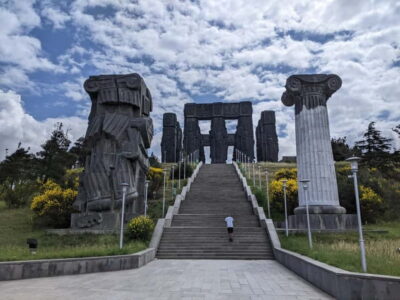
The Chronicles of Georgia, Jvari & Mtskheta Tour
Read our review →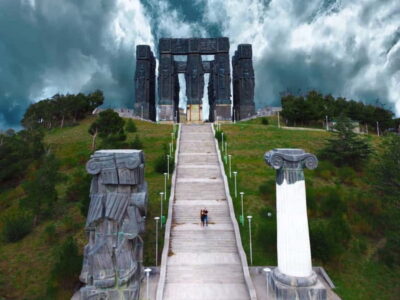

1 Day Private Armenia: UNESCO, Soviet & Curated Family Lunch
Read our review →
Jvari-Uplistsike-Chronicle of Georgia, PRIVATE Trip
Read our review →
Day tour to Chronicles of Georgia, Gori city, Uplistsikhe cave
Read our review →Browse the lists this tour appears in