
Reviewed · SOVIET HERITAGE TOURS
Brutalist Tbilisi: Urban exploration and untold stories
Tbilisi has a stranger side. This four-hour tour leaves the postcard balconies behind and takes you by car to Soviet monuments, neglected modernist buildings, steep residential districts, and places most visitors would never find alone. I especially like the comfortable driving route, which covers a wide spread of the city without turning the day into a hill-climbing contest. I also like the human stories behind the concrete, since the guide connects grand designs with ordinary life, political change, and the people who still use these buildings.
The main consideration is simple: this is not a polished sightseeing circuit. Some stops involve abandoned or neglected structures, and the route can change with traffic, weather, or local conditions. People who dislike heights, rougher urban settings, or Soviet-era architecture may find parts of the tour unsettling rather than entertaining.
In This Review
- Why this Tbilisi tour is different
- A half-day route through Tbilisi’s Soviet past
- The City of Students and Tbilisi’s outer districts
- Bagebi Cable Road: a short ride into the past
- Nutsubidze Skybridge and the drama of residential design
- Bank of Georgia and Tbilisi’s boldest concrete icon
- A local bakery stop keeps the tour human
- The abandoned museum and Tbilisi’s darker places
- The Chronicle of Georgia above the Tbilisi Sea
- What the guides add to the concrete
- Is $75 a fair price for four hours?
- Who should book this tour?
- My verdict on Brutalist Tbilisi
- FAQ
- How long does the Brutalist Tbilisi tour last?
- What languages are available?
- Is transportation included?
- Is lunch included?
- Is the tour suitable for children?
- Can I cancel or pay later?
Why this Tbilisi tour is different
- You see Tbilisi by car, not by exhausting foot circuit: The route reaches distant districts and steep neighborhoods in one half-day.
- The architecture has a human story: Your guide explains how these buildings shaped daily life, not only who designed them.
- The old cable car adds a rare moving piece of Soviet-era Tbilisi: It gives the tour a short but memorable ride above the city.
- Nutsubidze Skybridge is a real highlight: Suspended bridges connect apartment blocks in a striking 1970s complex.
- The tour supports internally displaced people: Part of the $75 fee goes toward helping IDPs in Georgia.
- A bakery stop keeps the experience grounded: Local snacks break up the concrete and monuments with something warm and everyday.
A half-day route through Tbilisi’s Soviet past
The tour lasts about four hours and is offered as a private group experience in English or Russian. Pickup is available from your accommodation or another central location in Tbilisi when you choose the private option, and the vehicle carries you between districts rather than asking you to cover the city on foot.
That matters in Tbilisi. The places on this route are spread out, and several are in hilly areas. You will still get out for photo stops, short visits, and guided explanations, but the car keeps the pace manageable. Bottled water, entrance fees, and the guide are included. Lunch is not.
The exact order can shift. Traffic in Tbilisi is a serious factor, and weather may affect outdoor stops. One useful feature is the tour’s flexibility: guides have sometimes added an extra site when time and interest allowed. Khatuma, for example, showed one group the Palace of Rituals after they asked about it. That kind of small adjustment can make a private outing feel more personal.
More Soviet-era sights around Tbilisi:
- Tbilisi: Mtskheta Jvari Bazaar, Chronicles of Georgia & Wine
★ 5.0 · 1,088 reviews - Tbilisi:Mtskheta,Jvari,Bazaar,wine tasting,Chronicles of Georgia
★ 5.0 · 730 reviews - Tbilisi: The Chronicles of Georgia, Jvari & Mtskheta Tour
★ 5.0 · 307 reviews
The City of Students and Tbilisi’s outer districts
The first major stop is described as the City of Students, where you have about 45 minutes for a guided visit and photographs. The name points to a large institutional and residential part of the city rather than the old center tourists usually see.
This is a good opening because it gives you a sense of how Tbilisi expanded beyond its historic core. You can look at the scale of the planning, the relationship between apartment blocks and public buildings, and the practical side of Soviet urban design. The guide’s job here is especially important. Without context, large concrete buildings can blur together. With a good explanation, you begin to see how education, housing, public services, and state planning fit into one urban system.
Do not expect a compact museum with neat labels. This is an outdoor look at a living part of Tbilisi. You might see ordinary buildings and working neighborhoods alongside the more dramatic architecture, which is part of the point. The tour is interested in the city as people use it now, not as a frozen architectural display.
Bagebi Cable Road: a short ride into the past
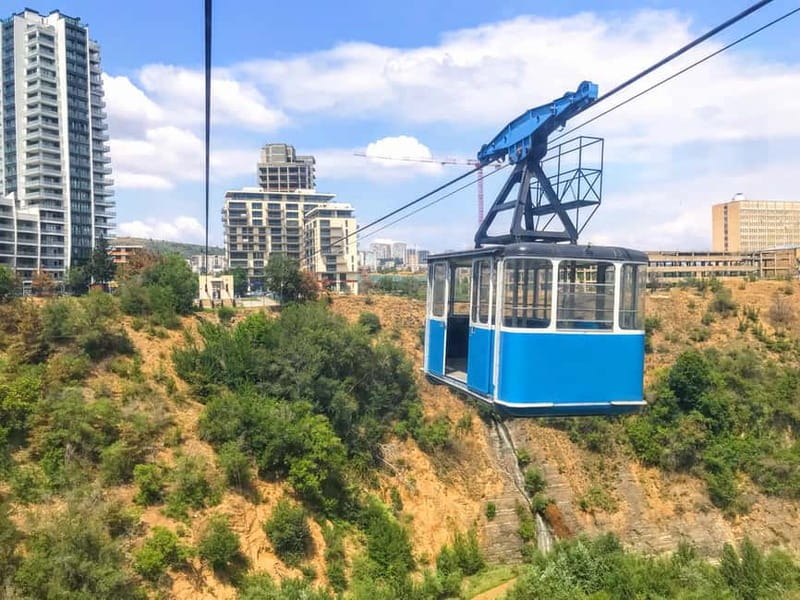
The Bagebi Cable Road stop includes a photo opportunity, a guided visit, and a cable car ride of roughly 25 minutes. It is one of the tour’s more unusual elements because you are not just looking at Soviet infrastructure. You get to experience a piece of it in motion.
The ride also gives you a different view of Tbilisi’s shape. The city’s slopes and separated districts make more sense from above, and the short journey helps explain why cable transport mattered in a hilly urban setting. It is a practical reminder that Soviet architecture was not only about monumental facades. It also included systems intended to move workers and residents through difficult terrain.
The main caution is height. This tour is specifically not suitable for people afraid of heights, and the cable car is a clear reason why. If you are comfortable with elevated views, the ride adds texture and variety. If you are not, tell the operator before booking and confirm the current route.
Nutsubidze Skybridge and the drama of residential design
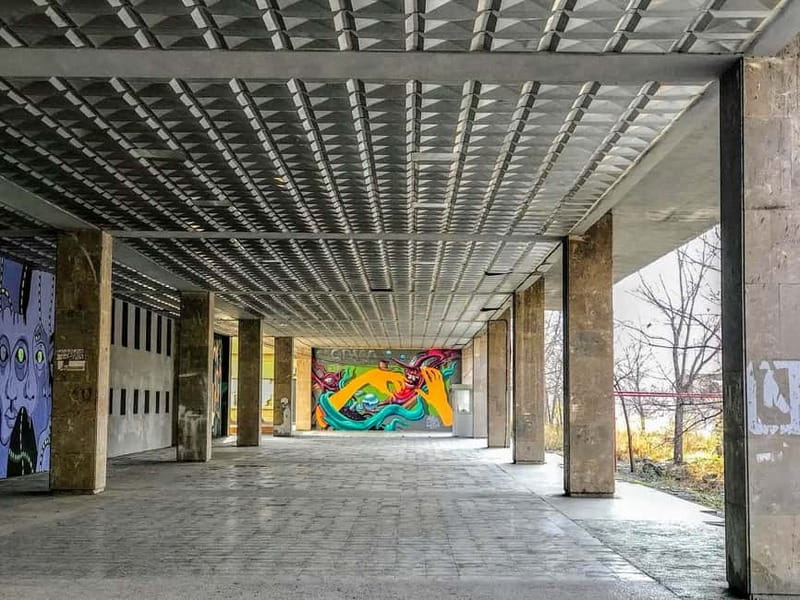
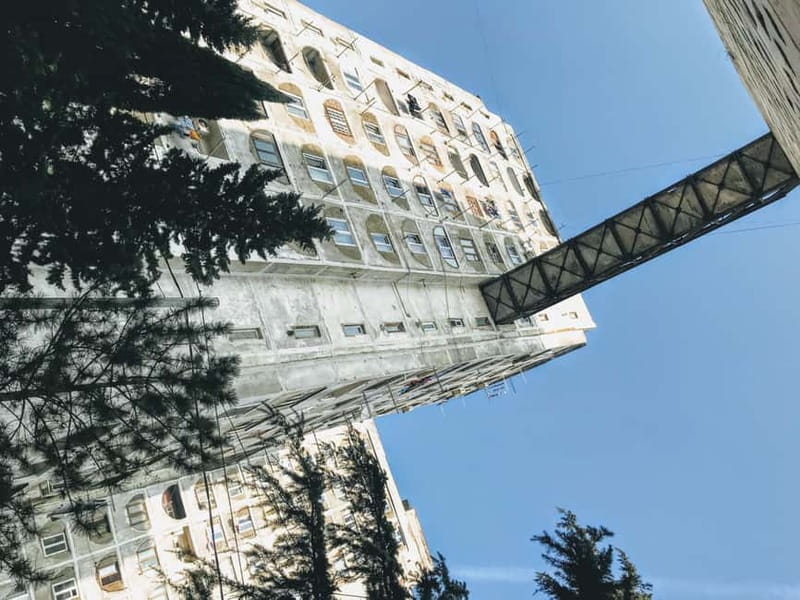
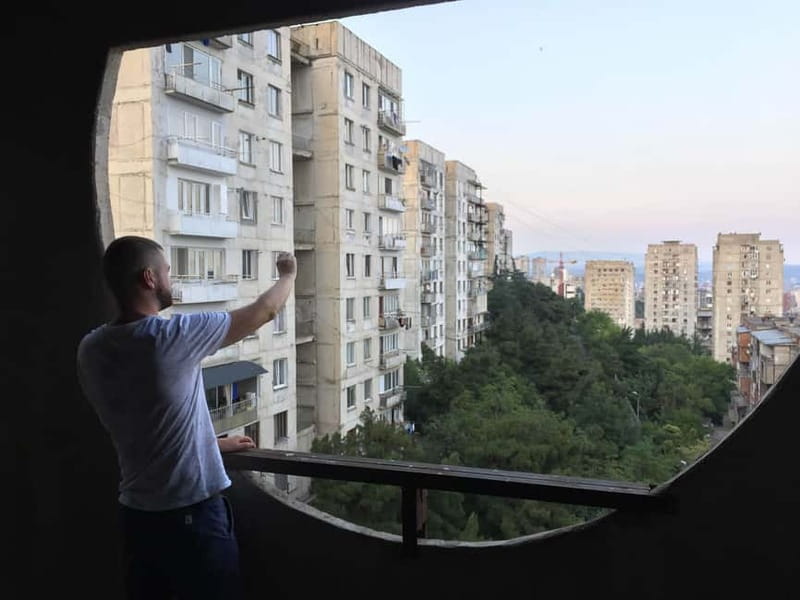
The Nutsubidze Skybridge is one of the strongest stops for anyone interested in Brutalist or modernist architecture. This 1970s residential complex uses suspended sky bridges to connect apartment buildings, creating an arrangement that feels almost cinematic.
You will have around 40 minutes here for photographs, a guided visit, and views along the route. The appeal is not just the shape of the bridges. It is the way an enormous housing project tries to solve everyday problems through design. Connections between blocks can make a complex more than a collection of isolated towers. They can create routes, shortcuts, and shared points within a large residential setting.
At the same time, this is still a residential area. You are not entering a theme park built for architectural fans. Be respectful when taking photographs, and follow the guide’s directions about where to stop. The setting may feel rough around the edges, which is exactly what many people appreciate, but it also means you should wear sensible shoes.
The skybridge is a strong example of why a car-based tour works. Reaching it on your own would require more planning and a willingness to navigate unfamiliar neighborhoods. Here, you can focus on the structure and the explanation rather than spending half the afternoon figuring out transport.
More Tbilisi days to weigh up
- Tbilisi: Day Trip to Kazbegi, Gudauri, Gergeti, and Ananuri
★ 4.9 · 3,203 reviews - Day Trip to Kakheti Wine Region Including 9 Wine Tastings
★ 5.0 · 2,774 reviews - Highlights of Caucasus Mountains-Jinvali,Ananuri,Gudauri,Kazbegi(Group tour)
★ 5.0 · 2,682 reviews - From Tbilisi: Kakheti Wine Region Tour with 9 Wine Tastings
★ 4.9 · 2,541 reviews
Bank of Georgia and Tbilisi’s boldest concrete icon
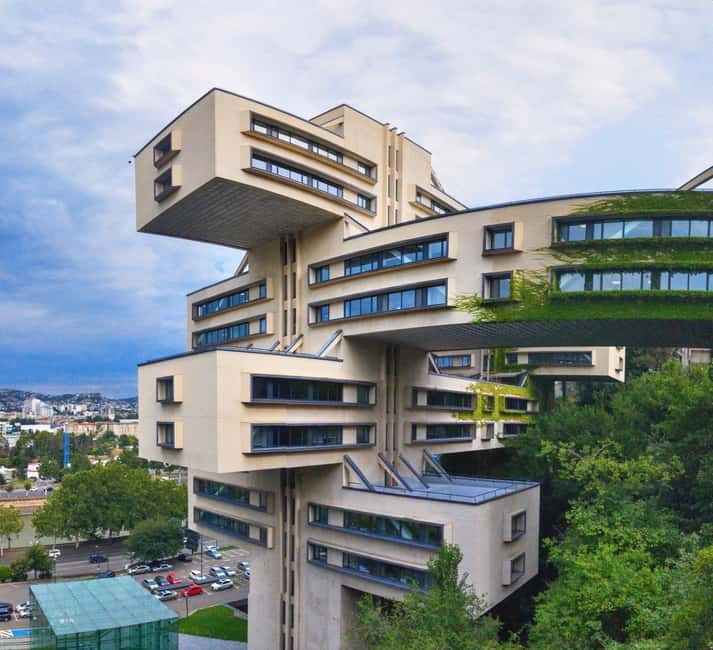
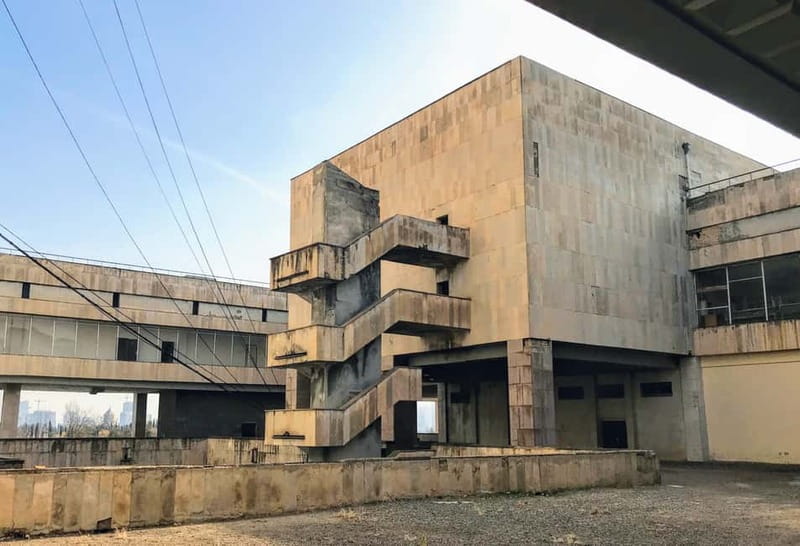
The Bank of Georgia building, formerly associated with the Ministry of Highways of the Georgian SSR, is one of the best-known Brutalist structures in Eastern Europe. The tour gives it about 20 minutes, with time for a guided look and sightseeing.
The building’s most striking feature is its unusual stacked composition. Large blocks appear to rest and intersect above the ground, creating a form that feels both engineered and improbable. It is a useful stop for understanding the ambition of late Soviet modernism. The structure was designed to make an institution visible and powerful, but it also pushes architectural experimentation far beyond the usual office box.
Your guide can help you read the building at two levels. First, there is the design: mass, balance, repetition, and concrete. Second, there is the institution: what the building represented during the Georgian Soviet period and how its meaning changed after independence.
The short stop is enough for an exterior visit and explanation, but architecture enthusiasts may wish it lasted longer. If you want a slow photographic study, you may need to make quick decisions. The wider tour gives you several major sites, so the tradeoff is variety rather than long time at each building.
A local bakery stop keeps the tour human
After several large monuments, the stop at a local bakery is a welcome change of scale. You have about 15 minutes for street food and local snacks. Lunch is not included, so think of this as a small taste rather than a full meal.
I like this part because it connects the grand architectural story to everyday Georgia. Soviet buildings can feel remote when viewed only as objects. A bakery, by contrast, is immediate and practical. It gives you a chance to sample something local while your guide points you toward Georgian food you may want to try later.
One guide also offered useful suggestions for local food places and chimney cake. That sort of advice can be valuable after the tour, especially if you want to move beyond the most obvious restaurant choices. Bring an appetite, but do not depend on this stop as lunch.
The abandoned museum and Tbilisi’s darker places
The route includes the former Museum of Archaeology, described as a powerful modernist building that is now abandoned. It also includes the Suicide Bridge, a place tied to the city’s darker history.
These are not light sightseeing stops, and the tour does not try to make them cute. The former museum shows how a building can retain force even after its original purpose disappears. Empty or neglected spaces reveal a different side of urban change: institutions close, priorities shift, and structures remain behind.
The Suicide Bridge requires a more careful tone. It is a location connected with suffering, not merely an unusual photo backdrop. Your guide’s interpretation matters here, and you should be prepared for a serious conversation. If you want only cheerful attractions, this portion may not suit you.
The route may include other unnamed photo and guided stops, with one lasting around 45 minutes. That flexibility is useful because the city’s architecture does not fit neatly into a fixed checklist. It also means you should not assume every departure will look identical. Weather, traffic, and conditions can change the order or selection of stops.
The Chronicle of Georgia above the Tbilisi Sea
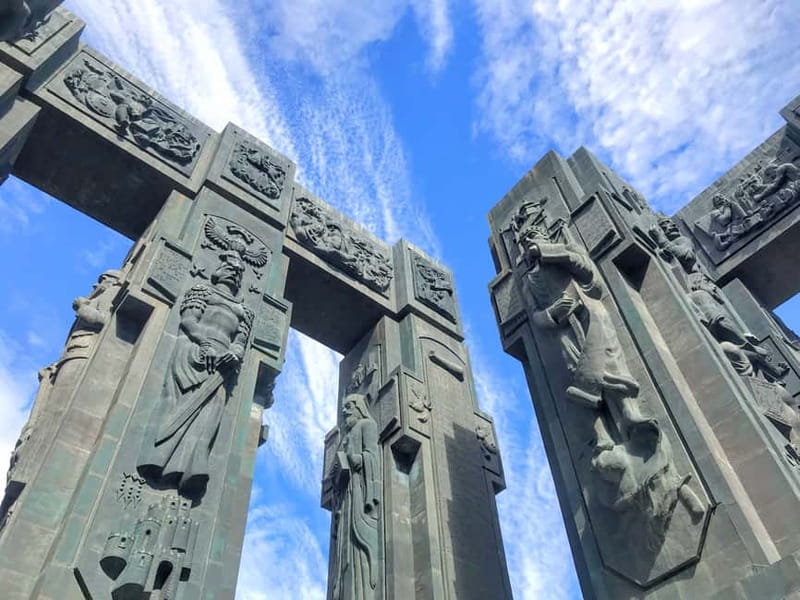
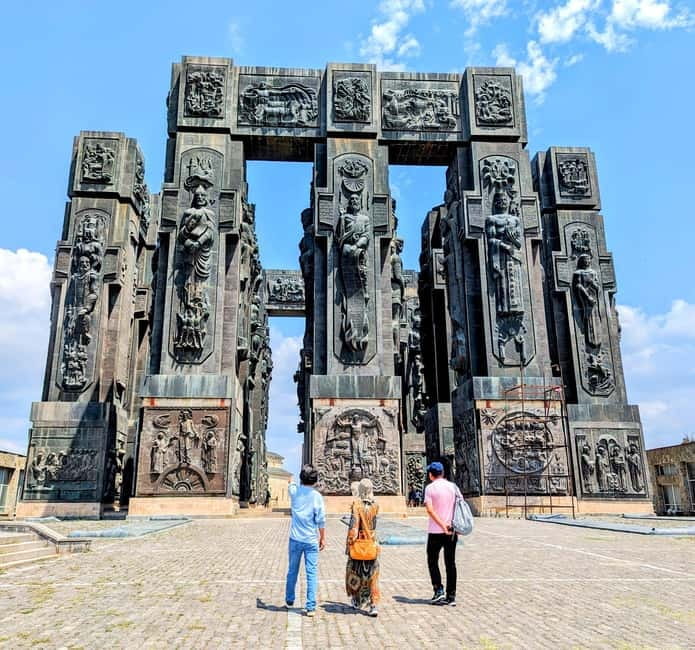
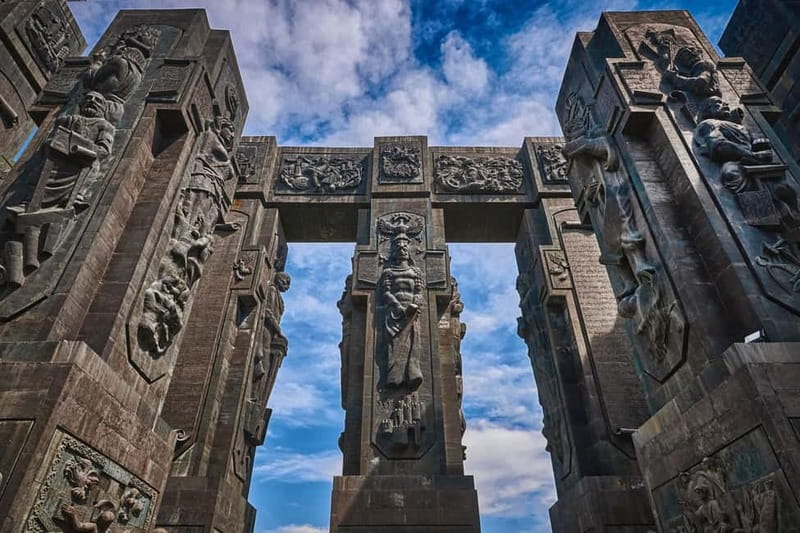
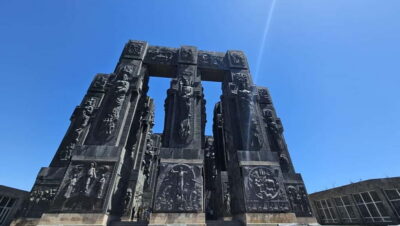
The Chronicle of Georgia, often called the Georgian Stonehenge, is the final major highlight. Large monumental columns and sculpted figures overlook the Tbilisi Sea, creating one of the city’s most dramatic viewpoints.
You get about 45 minutes for a guided visit, free time, photographs, and aerial views. The site feels different from the apartment complexes and office buildings earlier in the day. It is more ceremonial, more isolated, and built to create a national story in stone.
The guide can explain the monument’s place in Georgia’s Soviet-era cultural setting, while also helping you understand how it is viewed today. That distinction matters. The Chronicle is not simply an old Soviet monument, and it is not simply a religious site. Its meaning sits somewhere between state art, national identity, public memory, and changing Georgian politics.
Bring a phone or camera, but give yourself time to look without photographing every column. The open setting and elevated position make this one of the tour’s best places for broad views. Wind and weather may affect comfort, so a light layer is sensible even when central Tbilisi feels warm.
What the guides add to the concrete
The strongest part of this experience is the guide’s interpretation. The architecture is impressive, but the tour becomes much more valuable when someone explains how people lived with it.
Guides including Khatuna, Khatuma, Jonah, Alex, Aleksi, Oksana, and Khato have been praised for clear explanations, humor, patience, and strong knowledge of Georgian culture and Soviet architecture. That range of names suggests you should not expect one fixed personality, but the consistent pattern is useful: the guiding is the heart of the experience.
Jonah was praised for combining detailed information with a pleasant, professional manner. Khatuna was noted for answering questions, discussing Brutalism and the Soviet past, and offering food advice. Oksana was described as enthusiastic about Georgia and its architectural history. Those details tell you what to look for in a good guide: not only facts about dates and architects, but an ability to connect buildings with daily life.
The private format helps here. You can ask why a building was made in a certain way, what changed after the Soviet period, or how residents feel about a place now. You are not trapped in a large group waiting for everyone to take the same photograph.
Is $75 a fair price for four hours?
At $75 per person, this is not the cheapest way to see Tbilisi. It is also not a simple transfer with a few photo stops. The fee covers a local guide, entrance fees, bottled water, and transport between scattered sites. With the private option, pickup and drop-off at your accommodation or another central location are included.
I think the price makes the most sense if you value access and interpretation. You are paying to reach difficult-to-combine locations, ride the old cable car, hear local context, and avoid arranging several taxis or transport connections. The social-impact element also matters, since part of the fee supports internally displaced people in Georgia.
The value is weaker if you only want famous central sights. This tour does not replace a first visit to Tbilisi’s Old Town, major churches, or classic viewpoints. It works best as a second layer, or for anyone whose main interests are architecture, urban change, Soviet history, and places beyond the standard route.
Who should book this tour?
I would choose this experience if you enjoy buildings with a past, imperfect city spaces, and stories that do not fit neatly into a postcard. It is also a smart choice if you have only one day for unusual Tbilisi sights and prefer a car to a long walking route.
It suits adults and older teenagers, but children under 12 are not permitted. The tour is not suitable for people with mobility impairments, people afraid of heights, or anyone carrying large luggage, oversize bags, strollers, or baby carriages. Pets are not allowed, and intoxication, alcohol, and drugs are prohibited.
Wear comfortable shoes even though the tour uses a car. You will still make several visits and photo stops, and the sites may not have smooth, formal paths.
My verdict on Brutalist Tbilisi
Book this tour if you want to see the Tbilisi that does not appear on the usual postcard. The Bank of Georgia building, Nutsubidze Skybridge, Chronicle of Georgia, and old cable car create a varied half-day, while the bakery stop and personal stories keep the outing from becoming an architecture lecture.
Skip it if abandoned buildings, serious subjects, concrete megastructures, and heights are not your idea of a good afternoon. For the right audience, though, $75 buys more than transport. It gives you a clearer view of how Tbilisi was planned, how it changed, and how people continue to live with its Soviet inheritance.
FAQ
How long does the Brutalist Tbilisi tour last?
The tour lasts about four hours. Traffic, weather, and other conditions can make the duration longer or change the order of the stops.
What languages are available?
The live guide is available in English or Russian.
Is transportation included?
Yes. The experience uses car transport between the sites, and pickup is included at your accommodation or another central Tbilisi location when the private option is selected.
Is lunch included?
No. Bottled water and a local bakery snack stop are included, but lunch is not.
Is the tour suitable for children?
No. It is not suitable for children under 12.
Can I cancel or pay later?
You can cancel up to 24 hours in advance for a full refund. A reserve-now, pay-later option is also available.
Just added near Tbilisi
- Wine Tasting feel the Difference of Qvevri or Classical Wine★ 4.4 · 10 reviews
- Walking Tour in Old Tbilisi – Group Tour★ 4.5 · 8 reviews
- From Tbilisi: Kakheti and Kazbegi 2-Day 4X4 Jeep Tour pack★ 5.0 · 6 reviews
- Tbilisi: Vintage Fashion and Secondhand Thrifting Tour★ 5.0 · 11 reviews
- Uforgatable Kakheti Tour with wine tasting – in Georgia★ 4.9 · 5 reviews
- From Tbilisi: Uplistsikhe Caves and Mtskheta Town Day tour★ 5.0 · 2 reviews
- Tbilisi Airport to Gudauri, Bakuriani, Batumi, Tbilisi★ 5.0 · 3 reviews
- Private Adorable City Tour of Tbilisi★ 5.0 · 3 reviews
Soviet Heritage Tours, compared.
Mtskheta Jvari Bazaar, Chronicles of Georgia & Wine
Read our review →
Mtskheta,Jvari,Bazaar,wine tasting,Chronicles of Georgia
Read our review →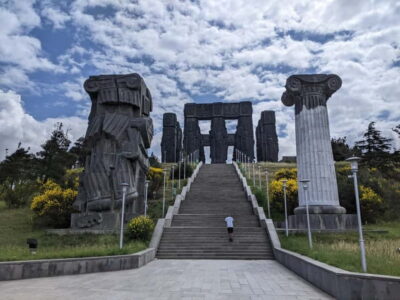
The Chronicles of Georgia, Jvari & Mtskheta Tour
Read our review →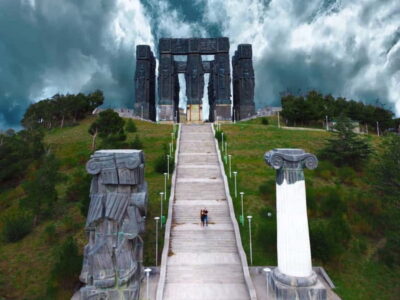

1 Day Private Armenia: UNESCO, Soviet & Curated Family Lunch
Read our review →
Jvari-Uplistsike-Chronicle of Georgia, PRIVATE Trip
Read our review →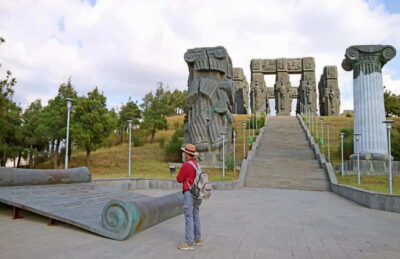
Day tour to Chronicles of Georgia, Gori city, Uplistsikhe cave
Read our review →Browse the lists this tour appears in