
Reviewed · CITY TOURS
City tour Tbilisi on red bus
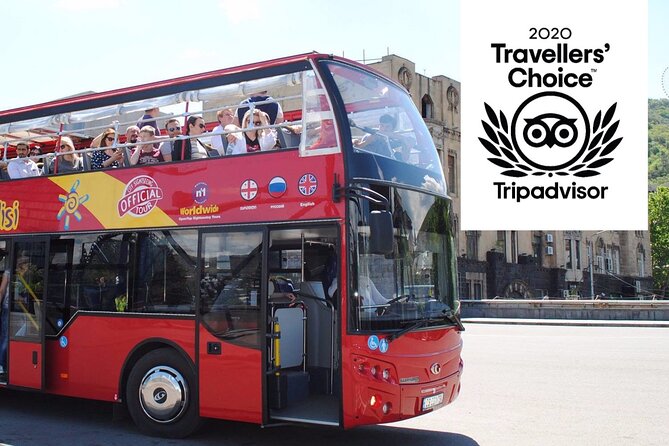
See Tbilisi before you explore it. This red double-decker bus tour gives you a useful first look at the Old Town, sulphur baths, riverfront, bridges, markets, and main avenues without demanding much walking. I especially like the 24-hour ticket and the chance to sit back with a headset while you get your bearings.
The tour also works well for anyone with limited mobility, a sprained ankle, or simply low energy after a long journey. The views from the bus are the main reward, and the English-speaking staff can answer questions when a guide is present. The main drawback is that the ride can feel rushed, and the audio commentary may not explain each sight clearly enough for first-time visitors.
In This Review
- Key points to know before you book
- What the $20 ticket gives you
- Starting at Kote Afkhazi Street
- The Old Town, Meidan Square, and the sulphur baths
- Metekhi Cathedral and the Mtkvari River
- Dry Bridge Market and the city’s public spaces
- Freedom Square, Rustaveli Avenue, and Heroes Square
- Headsets, languages, and the level of guidance
- How the hop-on hop-off system works in practice
- Mobility, comfort, and family use
- Weather and seat choice matter
- Who will get the most from this tour?
- Booking, cancellation, and final advice
- FAQ
- How long does the Tbilisi red bus tour take?
- Where does the tour start?
- What time does the tour start?
- How long is the ticket valid?
- Is an audio guide included?
- What sights does the route pass?
- Can I cancel for a full refund?
Key points to know before you book
- The route covers Tbilisi’s essential sights: You pass the Old Town walls, Meidan Square, the sulphur bath district, Metekhi, Rike Park, the Peace Bridge, Freedom Square, Rustaveli Avenue, and more.
- Your ticket is valid for 24 hours: You can use the bus as a sightseeing loop and, in principle, hop off to explore before catching another bus.
- The full circuit may be shorter than advertised: The stated duration is about 90 minutes, but some rides have finished in roughly an hour.
- Headsets are provided: Commentary is available in 14 languages, although the quality and clarity of the explanation can vary.
- The meeting point is central: You start at 44 Kote Afkhazi Street, close to Tbilisi’s Old Town and public transport.
- Wait times can affect the value: Buses may arrive about 30 minutes apart, and one reported wait lasted around an hour.
What the $20 ticket gives you

The fare is $20 per person, which is reasonable if you use the bus as both a sightseeing ride and a way to move around central Tbilisi. The ticket lasts 24 hours, not just for one circuit, so you can return the next day at the same time if the schedule works for your plans.
That longer validity is the strongest part of the price. One ride gives you an overview, but the real value comes when you use it to pause at a stop, walk around, and board again later. If you stay on for only one circuit, the cost is less attractive, especially if the ride lasts closer to one hour than 90 minutes.
I would think of this as a moving orientation tour, not a full guided visit to Tbilisi. You are paying for views, transport, and basic commentary. You are not paying for entry to museums, a walking guide through narrow lanes, or a detailed explanation at every monument.
Food and drinks are not included. You will need to arrange those yourself, which is easy enough in central Tbilisi, but it is worth remembering if you plan to spend the entire day using the bus.
More Tbilisi days to weigh up
- Tbilisi: Day Trip to Kazbegi, Gudauri, Gergeti, and Ananuri
★ 4.9 · 3,203 reviews - Day Trip to Kakheti Wine Region Including 9 Wine Tastings
★ 5.0 · 2,774 reviews - Highlights of Caucasus Mountains-Jinvali,Ananuri,Gudauri,Kazbegi(Group tour)
★ 5.0 · 2,682 reviews
Starting at Kote Afkhazi Street
The tour starts at 10:00 am from 44 Kote Afkhazi Street. This address places you near the Old Town, a useful location for beginning a day of sightseeing. The activity also ends back at the same meeting point, so you are not left trying to find your way across the city.
Arrive with enough time to identify the bus and collect your headset. The maximum group size is 50 people, though one quieter ride was described as comfortable and not overcrowded. At other times, the experience may feel less relaxed, especially if several people are waiting for the next bus.
The first practical point is the timetable. The advertised circuit takes about 1 hour and 30 minutes, but the actual ride has sometimes lasted closer to an hour. At the same time, long waits have been reported, including one of about 60 minutes when the expected wait was 40 minutes.
That makes the tour better for a flexible morning than for a tightly planned schedule. If you have a train, airport transfer, or timed museum visit, do not build your day around catching a bus at an exact minute.
The Old Town, Meidan Square, and the sulphur baths
The route begins with some of Tbilisi’s most appealing sights. The Old Town is where the city feels most distinctive, with defensive walls, older streets, balconies, and buildings gathered around the Mtkvari River.
Meidan Square is a natural reference point for exploring this part of the city. From the bus, you get a broad view and a sense of how the older quarter fits together. The nearby Meidan Bazaar is passed rather than visited, so you should not expect time inside the market as part of the tour.
The sulphur bath district is another key highlight. Tbilisi’s name is linked to its warm mineral springs, and the bath area helps explain why the city grew here. From the bus, you can see the district and note where you might return on foot. If this is your first hour in Tbilisi, I find that kind of preview useful: you can mark places that deserve a closer look later.
The limitation is the speed. A bus gives you a wider view, but it cannot pause at every interesting doorway or let you study the details. If you want the Old Town to make sense, use the ride as a map in motion, then walk back through the streets afterward.
Metekhi Cathedral and the Mtkvari River
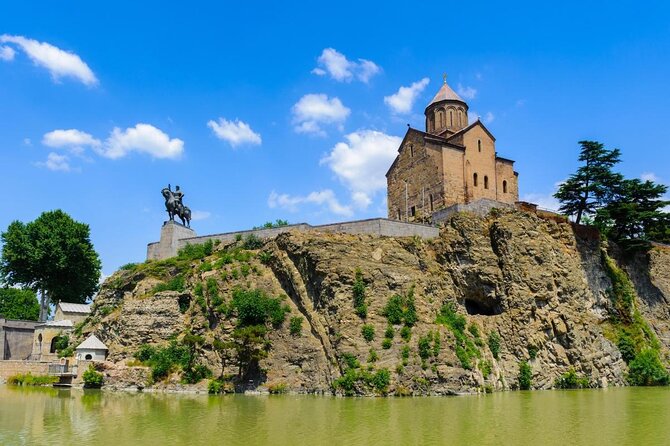
The bus passes Metekhi Cathedral and the Metekhi wall, both linked to the rocky area above the Mtkvari River. This section is one of the more scenic parts of the ride because the river and raised viewpoints help you understand Tbilisi’s shape.
Metekhi Cathedral is not a formal stop with a guided visit included. You pass by it, so the bus gives you a chance to see its position and decide if you want to return independently. The same applies to the river views. You can take in the broad scene from your seat, but a quick photograph may be difficult if the bus is moving fast.
This is a good example of the tour’s strengths and weaknesses. I like that it connects several parts of the city that might seem separate when you first arrive. But the audio may not always tell you exactly where to look, and one account found it hard to match the spoken description to the buildings outside.
Keep your headset on and watch the route as the commentary plays. If a sight catches your eye, make a note of it rather than assuming you will have time to study it from the bus.
A slower pace, same corner of the Caucasus:
- From Tbilisi: Kakheti Wine Region Tour with 9 Wine Tastings
★ 4.9 · 2,541 reviews - Tbilisi: Mtskheta, Jvari, Gori and Uplistsikhe Day Tour
★ 4.9 · 2,396 reviews - From Tbilisi to Kazbegi, Ananuri, Gudauri & Gergeti
★ 4.9 · 2,278 reviews - Tbilisi: Kakheti Wine Region Tour with 10 Wine Tastings
★ 5.0 · 2,160 reviews
Dry Bridge Market and the city’s public spaces
Dry Bridge Market is passed on the route. The market is known as a flea market area, and it gives you another possible stop for a separate visit. The bus does not include purchases, browsing time, or a market walk.
That distinction matters. A stop listed on the route may mean only that the bus passes nearby. The tour takes you past places such as Dry Bridge Market, Meidan Bazaar, and Metekhi Cathedral, but it does not give you a guided visit inside each one.
Rike Park and the Peace Bridge offer a change from the older streets. The park sits along the river, while the curved pedestrian bridge creates one of Tbilisi’s most recognizable modern views. From the upper deck, you may get a better sense of the connection between the river, the park, and the older neighborhoods on the opposite bank.
If you want photographs, consider the weather and your seat. Rain and cold can make an open upper deck uncomfortable, while the lower level offers more shelter. One difficult ride became especially unpleasant when passengers were asked to get off in wet, cold conditions and wait for a later bus.
Freedom Square, Rustaveli Avenue, and Heroes Square
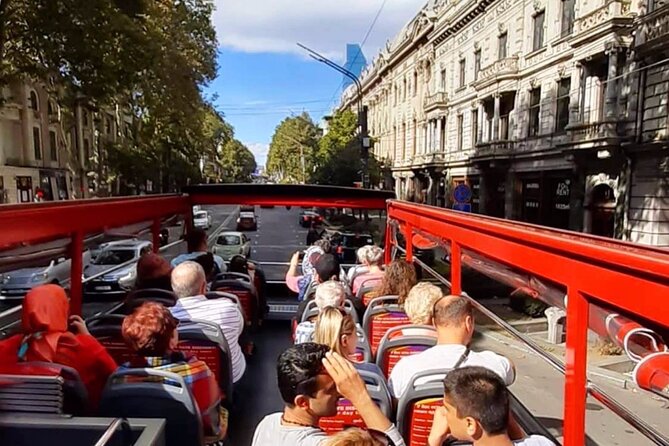
The route then reaches broader central streets, including Freedom Square and Rustaveli Avenue. These areas show a different side of Tbilisi, with major public buildings, shops, institutions, and a more open urban layout.
Rustaveli Avenue is important for understanding present-day Tbilisi. It is also a useful area to revisit on foot because the bus moves through it quickly. Freedom Square is another good orientation point, linking the Old Town with the city’s modern center.
Heroes Square and Agmashenebeli Avenue extend the view beyond the oldest quarter. The route therefore does more than circle the main tourist center. It helps you see how Tbilisi stretches outward from the river and historic core.
The tradeoff is that the bus cannot give you much time at any one location. You see more areas, but you learn less about each one. I would not choose this tour as your only cultural introduction if you want detailed stories, careful architecture notes, or long stops at monuments.
Headsets, languages, and the level of guidance

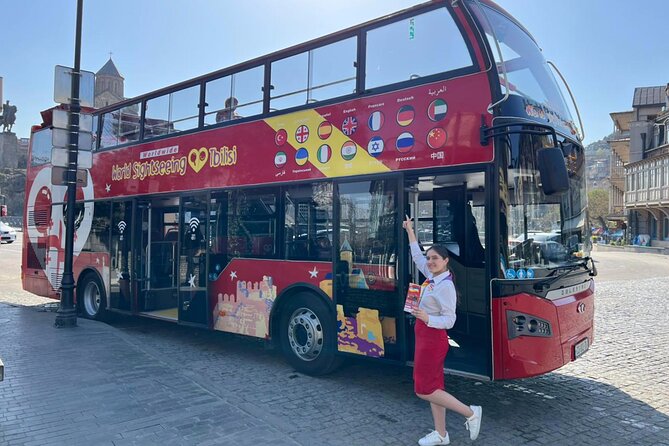
Headsets are included so you can hear the commentary clearly. The audio guide is available in 14 languages, while the tour is listed as being offered in English. A multilingual guide may also operate the bus, and some rides have included an English-speaking guide who answered questions and supplied a brochure.
That combination can be helpful, but you should know what kind of guidance to expect. This is not always a live walking tour with a guide pointing out each building. At times, the information comes mainly through the recorded audio.
The commentary has received mixed reactions. Some people found it clear and useful, while others felt it offered too little detail and did not explain when to hop off. Stops may be announced without a clear explanation of how long the bus will wait or whether you should find a later bus yourself.
Before getting off, ask the staff a direct question: How often does the next bus come, and where should I wait? That small step can prevent confusion. If you are unsure, staying on for the full loop is the safer choice, then return to selected places independently.
How the hop-on hop-off system works in practice
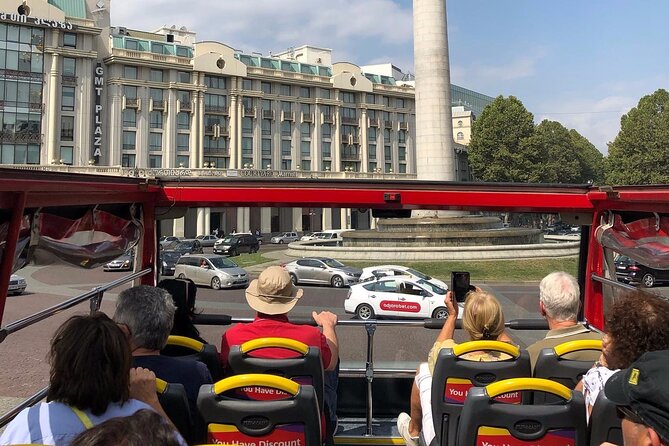
The 24-hour ticket suggests a flexible hop-on hop-off day. In practice, you should treat that flexibility as useful but not perfectly timed.
The buses may arrive about every 30 minutes, and delays can happen. If you hop off at a market or viewpoint, you may need to wait before the next bus arrives. That is manageable in good weather, but much less pleasant in rain or cold.
The tour is therefore best when you have spare time and a simple plan. You might ride the complete circuit first, choose one or two areas to revisit, and then use the remaining ticket time for transport. Trying to cover many stops with strict timing could become frustrating.
Also note that the route may repeat part of itself. One account described roughly 30 percent duplication, with the bus passing near an earlier section of the line. That is not a serious problem for an orientation ride, but it can make the route feel slower if you are hoping to see entirely new areas.
Mobility, comfort, and family use
This bus tour can be a smart choice if walking is difficult. One particularly positive experience came from a passenger with a sprained ankle who could not walk around Tbilisi as much as planned. Sitting on the bus provided a way to see the city without putting extra strain on the injury.
Most people can participate, and no specific health restrictions are listed. Children must be accompanied by an adult. The tour is also near public transportation, which makes reaching the meeting point easier.
Still, mobility needs can vary. The supplied information does not confirm wheelchair access, lift details, or the exact boarding arrangements. If you need those services, contact the operator before booking rather than assuming the double-decker bus will be suitable.
For families, the short circuit and open views may hold children’s attention better than a long walking tour. The lack of food, drinks, and guaranteed close-up stops means you should plan breaks separately.
Weather and seat choice matter
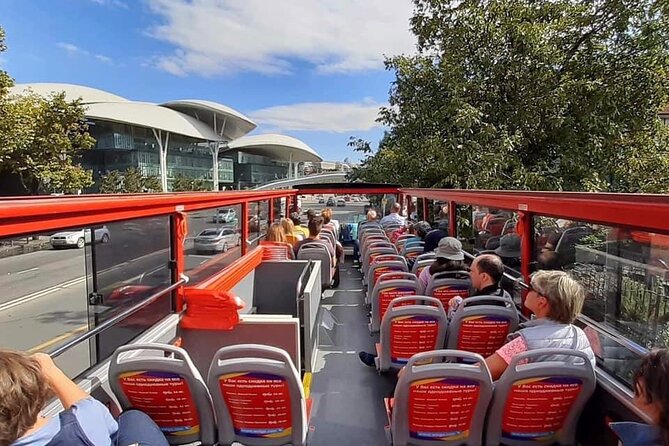
Tbilisi can be enjoyable from the upper deck when the weather is dry and mild. You get a wider view of the river, hills, streets, and buildings, and the height helps you see how the neighborhoods connect.
Rain changes the calculation. The upper deck may be exposed, and waiting 30 minutes for another bus can feel long when the pavement is wet and the air is cold. If the weather looks poor, choose the sheltered seating area and avoid hopping off unless you are certain about the next bus.
A fast-moving bus also affects photography. You may get broad city views, but not always a clean shot of a particular church, bridge, or market stall. Use the ride to identify photo locations, then return on foot when you want a better look.
Who will get the most from this tour?
I would recommend the red bus for a first morning in Tbilisi, especially if you want a simple overview before choosing where to spend more time. It suits you if you prefer sitting to walking, are traveling with someone who has limited mobility, or want to see several districts in a short period.
It is also useful for visitors who like independent exploring. The bus can show you the city’s layout, while the 24-hour ticket gives you a chance to return to selected areas.
I would be more cautious if you want detailed historical interpretation or a carefully managed schedule. The audio can feel thin, the circuit may finish early, and waiting times can reduce the value of the ticket. A walking tour would likely be better for close study of the Old Town, though the bus remains easier on your feet.
The overall rating of 4.3 from 139 ratings reflects that split. The strongest praise focuses on the city overview, helpful staff, clear headsets, comfortable rides, and the 24-hour access. The main complaints involve missing audio devices, unclear hop-off instructions, fast driving, short actual duration, and delays.
Booking, cancellation, and final advice
The tour costs $20, starts at 10:00 am, and offers free cancellation up to 24 hours before the start time. Changes or cancellations made less than 24 hours ahead are not accepted for a refund.
Book this tour if you want a low-effort introduction to Tbilisi and will make real use of the 24-hour ticket. Ride the complete route first, keep notes about places you want to revisit, and ask clearly about the next bus before getting off.
Skip it if your main goal is detailed explanation at every sight or a tightly timed itinerary. For the best value, pair the bus with your own walking time in the Old Town, around the sulphur baths, and near the Peace Bridge. Used that way, the red bus is a practical first look, not the whole Tbilisi experience.
FAQ
How long does the Tbilisi red bus tour take?
The advertised duration is approximately 1 hour and 30 minutes. Actual rides have sometimes lasted about one hour, so allow extra time for waiting and possible delays.
Where does the tour start?
The meeting point is 44 Kote Afkhazi Street, Tbilisi 0105, Georgia. The activity ends back at the same meeting point.
What time does the tour start?
The stated start time is 10:00 am.
How long is the ticket valid?
The ticket is valid for 24 hours, allowing you to use the bus beyond one sightseeing circuit.
Is an audio guide included?
Yes. Headsets are included, and the audio guide is available in 14 languages. The tour is offered in English, and a multilingual guide may operate the bus.
What sights does the route pass?
The route passes the Old Town and its defensive walls, Meidan Square, the sulphur bath district, the Mtkvari River, Metekhi Cathedral and wall, Dry Bridge Market, Rike Park, the Peace Bridge, Freedom Square, Rustaveli Avenue, Heroes Square, Agmashenebeli Avenue, and other city sights.
Can I cancel for a full refund?
Yes, if you cancel at least 24 hours before the experience start time. Cancellations or changes made less than 24 hours before the start are not eligible for a refund.
Just added near Tbilisi
- Wine Tasting feel the Difference of Qvevri or Classical Wine★ 4.4 · 10 reviews
- Walking Tour in Old Tbilisi – Group Tour★ 4.5 · 8 reviews
- From Tbilisi: Kakheti and Kazbegi 2-Day 4X4 Jeep Tour pack★ 5.0 · 6 reviews
- Tbilisi: Vintage Fashion and Secondhand Thrifting Tour★ 5.0 · 11 reviews
- Uforgatable Kakheti Tour with wine tasting – in Georgia★ 4.9 · 5 reviews
- From Tbilisi: Uplistsikhe Caves and Mtskheta Town Day tour★ 5.0 · 2 reviews
- Private Adorable City Tour of Tbilisi★ 5.0 · 3 reviews
- Tbilisi Airport to Gudauri, Bakuriani, Batumi, Tbilisi★ 5.0 · 3 reviews
City Tours, compared.


Kakheti;City of Love Sighnaghi, Bodbe. KTW. Wine House Group tour
Read our review →
Old and New City Guided Tour with 2 Cable Car Rides
Read our review →
Old & New City Guided Tour with 15 Tastings & Wine
Read our review →
Mtskheta – Jvari. Full City Tour on Hop On Hop Off Bus
Read our review →
Day tour to Chronicles of Georgia, Gori city, Uplistsikhe cave
Read our review →
City Pub Crawl with welcome shots in game format
Read our review →Browse the lists this tour appears in