
Reviewed · GORI AND STALIN MUSEUM TOURS
From Tbilisi: Mtskheta, Gori, and Uplistsikhe Day Trip
Ancient Georgia fits into one long day. This 9-hour trip links Mtskheta’s sacred churches, Gori’s Stalin Museum, and the remarkable rock-cut city of Uplistsikhe, giving you three very different views of Georgian history. I especially like the sweeping view from Jvari Monastery and the chance to walk through Uplistsikhe’s caves, tunnels, temples, and theater. The main concern is organization: the departure point can be confusing, the vehicle may be packed, and English commentary may share time with Russian.
The route covers a lot of ground, so it suits you if you want a broad first look beyond Tbilisi rather than a slow visit to one place. The guide, Davit Lotsulashvili, is described as punctual and well-informed by some passengers, but others found the explanations dull or felt that communication before departure was weak. The trip can be good value, but you should confirm admission fees and language arrangements before you commit.
In This Review
- Key points at a glance
- What this Tbilisi day trip actually covers
- Jvari Monastery and the first view of Mtskheta
- Gori and the unsettling Stalin Museum
- Uplistsikhe, where the rock becomes a city
- Lunch near Uplistsikhe and the question of extra costs
- Svetitskhoveli Cathedral and a possible timing problem
- Transport, group size, and guide quality
- Who should book this experience
- Should you book the Mtskheta, Gori, and Uplistsikhe tour?
- FAQ
- How long does the day trip last?
- Where does the tour start and finish?
- Which languages are available?
- How much walking is involved?
- Is the tour suitable for wheelchair users?
- Are entrance fees and lunch included?
- Can I cancel or pay later?
Key points at a glance
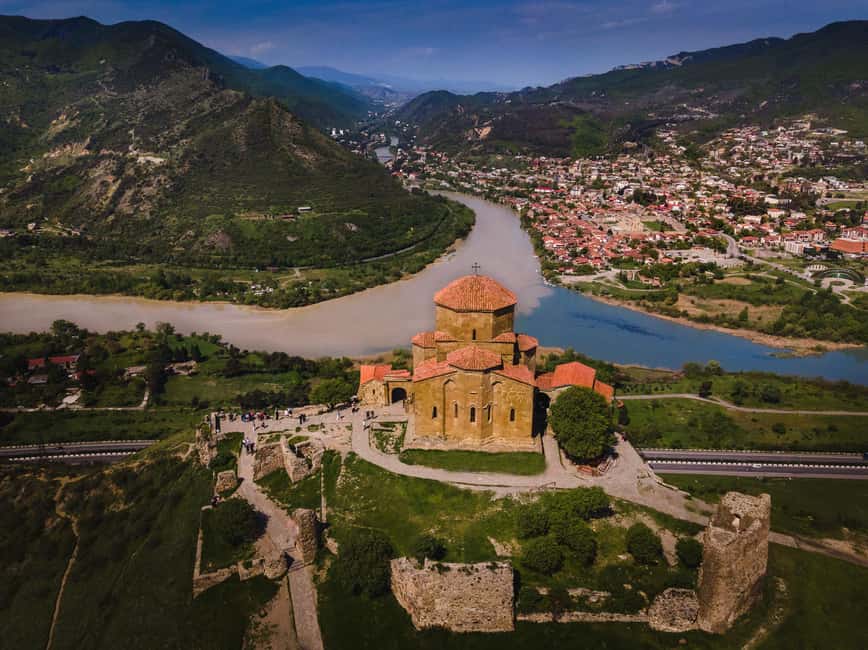
- Jvari Monastery gives you the day’s best early view: From this hilltop church, you can look across Mtskheta and the meeting point of the Mtkvari and Aragvi rivers.
- Uplistsikhe is the most memorable stop: Its sandstone chambers, passageways, pagan spaces, Christian structures, and rock-cut theater make it unlike the other sites.
- Gori adds a difficult modern chapter: The Stalin Museum presents the dictator’s life through personal objects, photographs, and Soviet-era material.
- Mtskheta may come late in the day: The order can change, and a late arrival may limit access to Svetitskhoveli Cathedral.
- Russian and English are both used: This is useful for a mixed group, but English-speaking passengers may receive less commentary.
- Expect moderate walking and possible extra fees: Comfortable shoes, water, sun protection, and a little cash are sensible.
What this Tbilisi day trip actually covers
This is a compact tour through Shida Kartli, one of the most important historical areas outside Tbilisi. In nine hours, you visit old religious centers, a medieval fortress, a Soviet-era museum, and an ancient settlement carved into sandstone cliffs.
That range is the chief attraction. In one day, you move from Georgia’s early Christian traditions to the Soviet period and then much farther back to the Iron Age. You will not study each site at museum length, but you will come away with a useful outline of how the country’s past is layered.
The meeting point is at 2 Abano Street in Tbilisi’s sulfur-baths district. That area is easy to identify once you are there, but the start can be hectic when several vehicles and groups gather at the same time. One passenger described a crowd of roughly 50 people trying to determine which vehicle and guide belonged to which booking.
I recommend arriving at least 15 minutes early, as requested, and asking for the vehicle connected with Davit Lotsulashvili or Georgia Tours. Have your booking details ready on your phone. This small bit of preparation matters because the first half hour can otherwise disappear before the coach leaves.
More Gori and Stalin Museum runs:
- Tbilisi: Mtskheta, Jvari, Gori and Uplistsikhe Day Tour
★ 4.9 · 2,396 reviews - Day Trip to Mtskheta Gori and Uplistsikhe
★ 5.0 · 1,801 reviews - From Tbilisi : Mtskheta, Jvari, Gori & Uplistsikhe Day Trip
★ 4.8 · 432 reviews
Jvari Monastery and the first view of Mtskheta
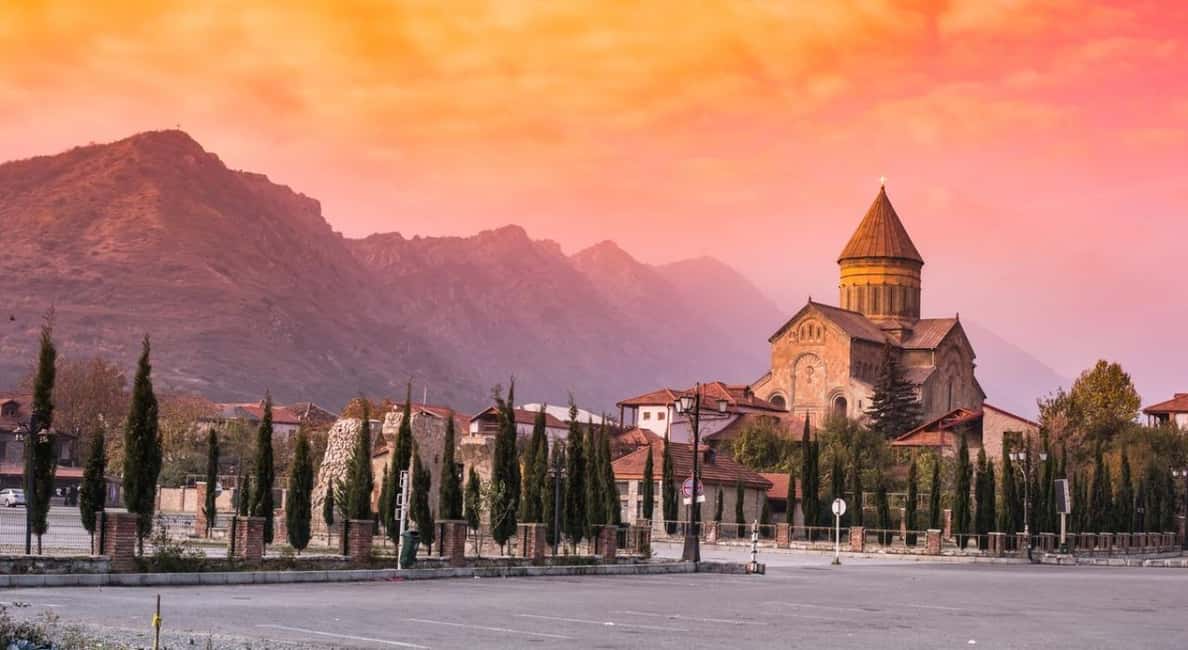
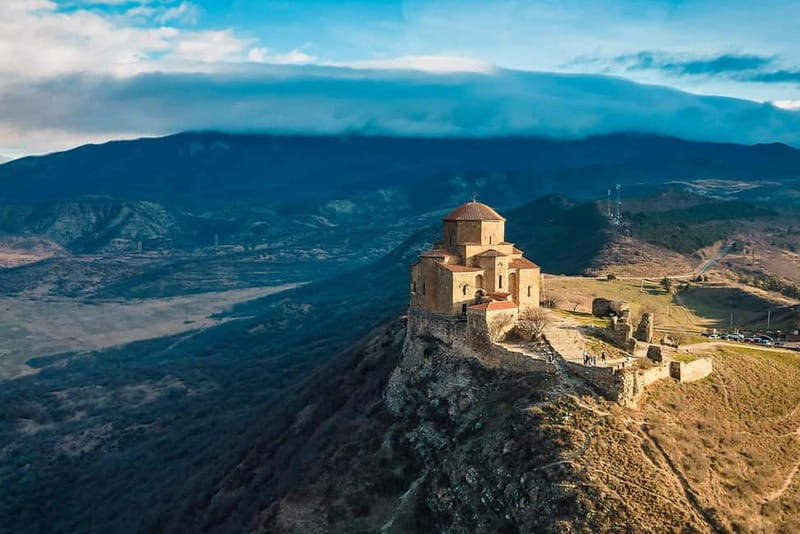
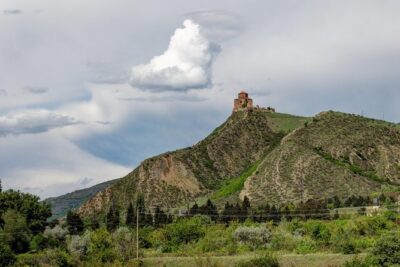
Jvari Monastery is usually the first major stop, with about 40 minutes for a guided visit, photographs, and a walk around the site. The church dates from the sixth century and is closely linked with Georgia’s Orthodox Christian tradition.
The setting is the real prize. From the hill, you get a broad view over Mtskheta and the countryside around it. The town sits near the meeting of the Mtkvari and Aragvi rivers, and this high viewpoint helps you understand why Mtskheta became such an important center.
Jvari is not a large complex, so 40 minutes can be enough for the main church, the exterior, the view, and a short explanation. You will want sturdy shoes because the ground around the church may be uneven, and the open hilltop offers little shelter from strong sun.
I like this stop because it gives you geographic context before you enter Mtskheta itself. Instead of seeing a church in isolation, you can look down toward the old religious center and understand its position. If the weather is clear, bring your camera, but do not let photography replace the view itself.
Gori and the unsettling Stalin Museum
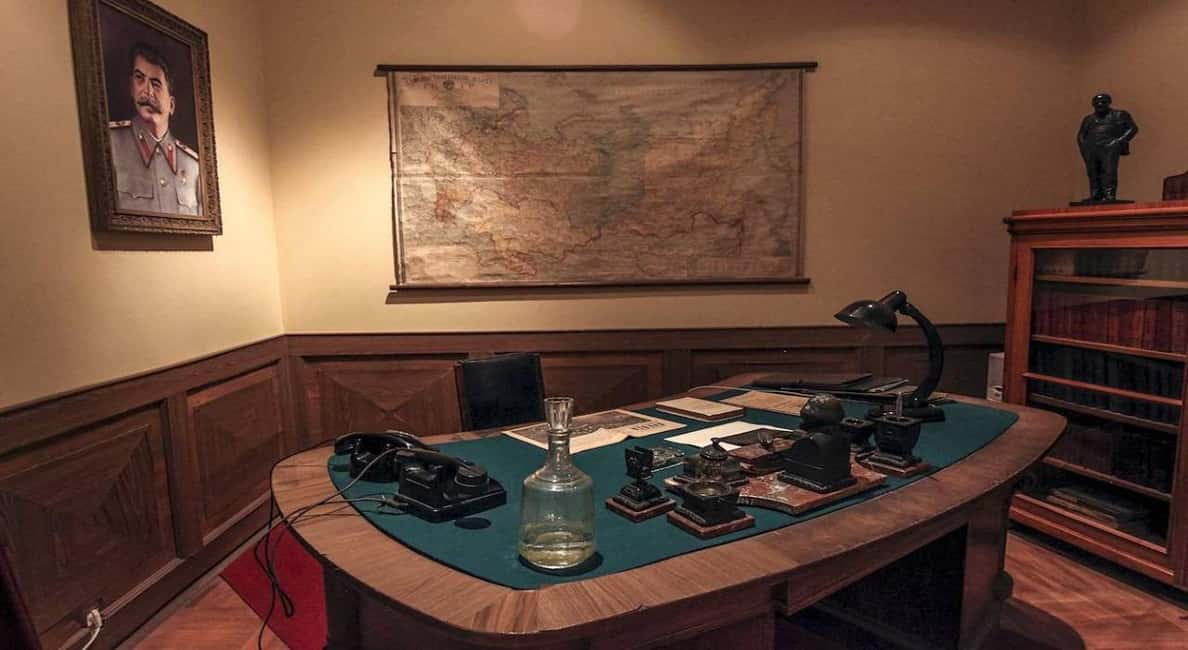
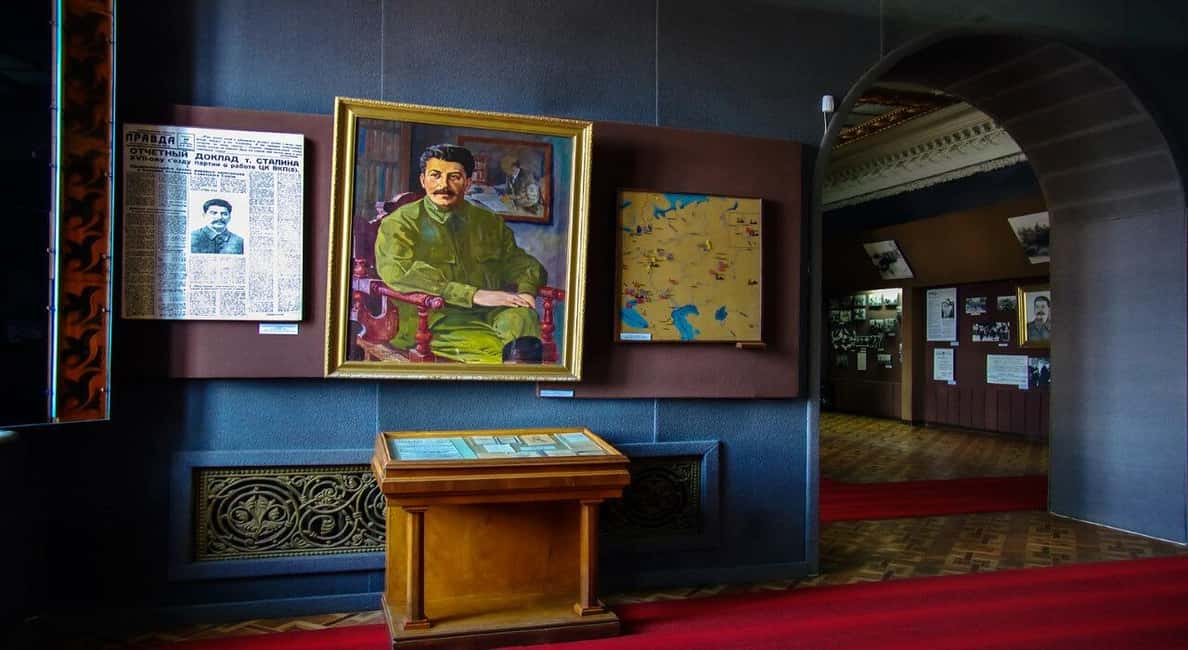
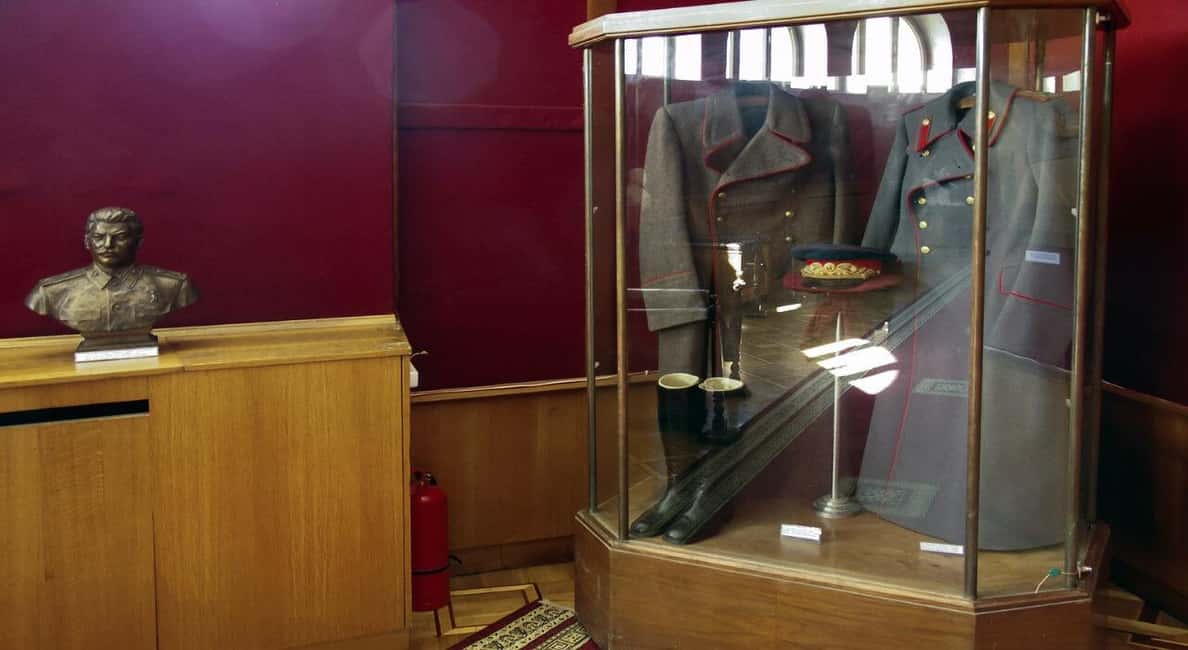
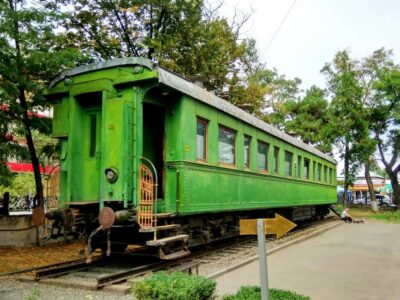
Gori is the most politically charged stop. It is the birthplace of Joseph Stalin, and the Stalin Museum presents his life through childhood material, photographs, personal objects, and Soviet memorabilia. The museum also preserves his childhood home and includes a railway carriage associated with him.
You should expect a one-hour visit, including a guided walk and time to see the displays. The museum is valuable because it shows how Stalin was presented in the Soviet system, but it can feel more commemorative than openly critical. That difference matters. You may leave with questions about what is highlighted, what is softened, and how a birthplace museum handles a ruler responsible for enormous suffering.
One passenger called the museum frightening, which is a fair reaction. The polished displays and personal objects can make a brutal period feel unusually close and personal. I would not treat this as a simple celebration of Stalin, but neither should you expect a full modern history of Soviet repression in one short visit.
Your guide’s explanation will shape the experience. Davit has received praise for keeping the schedule and knowing the sites, while another passenger found the commentary during the day flat and disconnected. If the group is bilingual, English explanations may also be shorter than you expect.
Gori Fortress is included in the wider description of the day, but the timed route specifically allows about an hour at the Stalin Museum and does not give a separate listed visit for the fortress. Ask the guide early whether the fortress will be visited or viewed from the vehicle. That prevents a common misunderstanding about what is included in the schedule.
Uplistsikhe, where the rock becomes a city
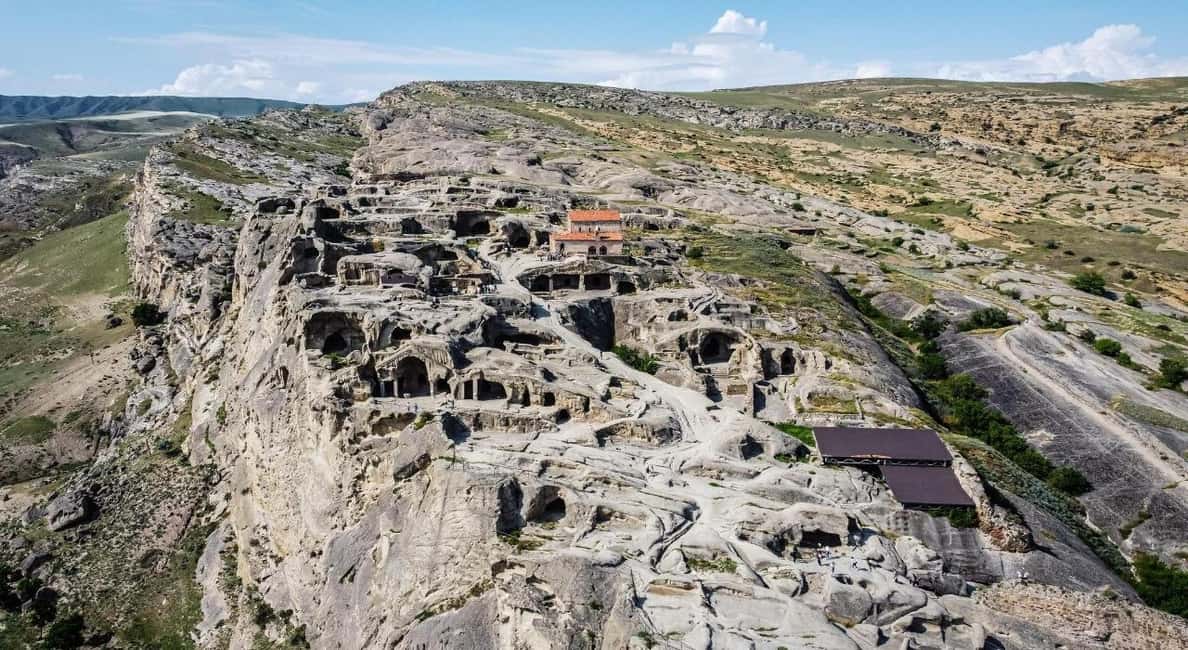
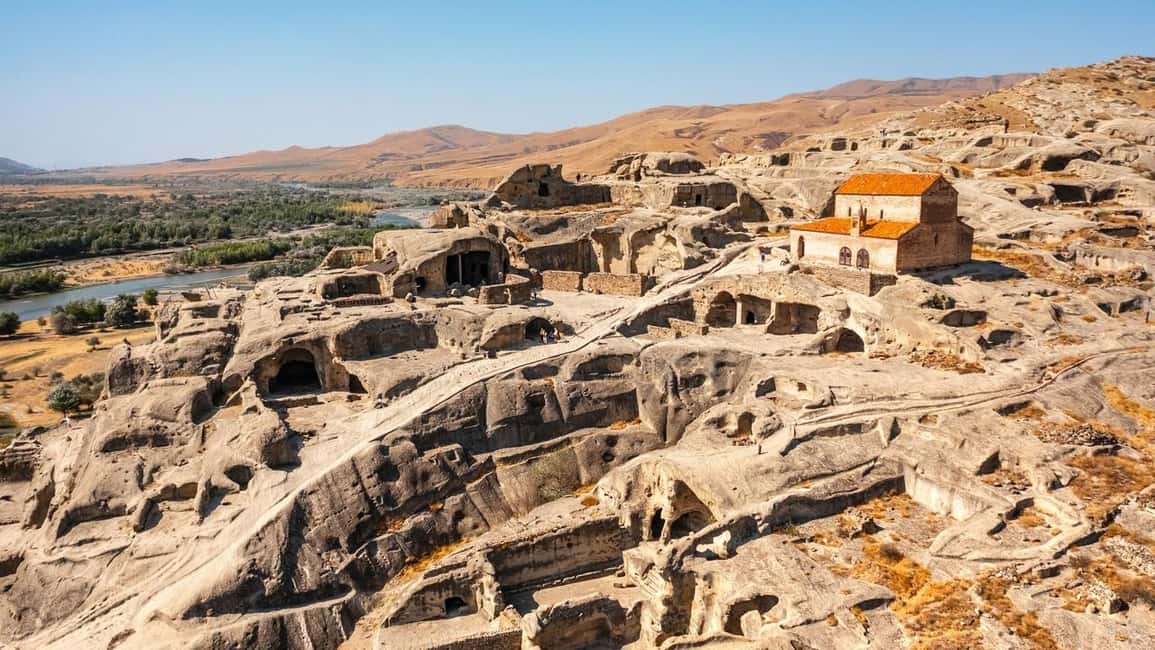
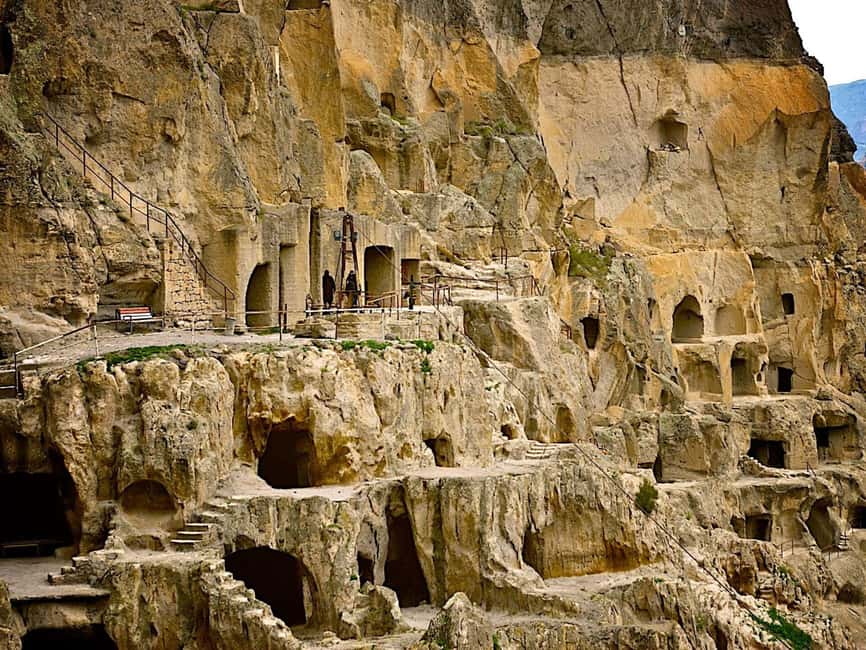
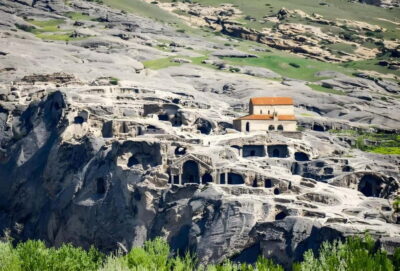
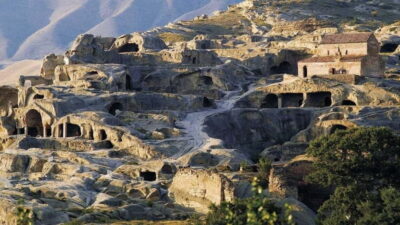
Uplistsikhe is the stop I would most look forward to. This ancient settlement was cut into sandstone and includes caves, tunnels, temples, passageways, early Christian buildings, and a rock-hewn theater. It began in the early Iron Age and later served as a major cultural and religious center.
You have about an hour for the guided visit, followed by an hour for lunch nearby. That gives you enough time to see the main route, but not enough to wander every corner slowly. The site spreads across exposed rock, so comfortable shoes are not optional advice here. You will climb and walk over uneven surfaces, and the sun can feel strong on the open stone.
The appeal is physical as much as historical. You can see how rooms were cut directly into the cliff, then pass through narrow corridors and open spaces. The mix of pagan and Christian remains shows that Uplistsikhe changed with Georgia’s religious life instead of belonging to only one period.
The views toward the valley and Mtkvari River add another layer. From the rock city, the surrounding countryside makes sense as part of the settlement’s importance. This is not just a collection of caves. It is a place shaped by trade, worship, defense, and daily life over many centuries.
I would give yourself mental room for the site. The paths may feel exposed, and the stone can be tiring after the earlier stops. Bring water and sunscreen, and keep your camera ready, but watch your footing first.
More cave cities you can walk through:
- Tbilisi: Borjomi, Rabati & Vardzia Adventure Guided Tour
★ 4.9 · 817 reviews - From Tbilisi: Rainbow Mountain & David Gareja Monastery Trip
★ 4.9 · 705 reviews - Day Trip to Rainbow Mountains and David Gareja
★ 5.0 · 408 reviews - From Tbilisi: Mtskheta, Jvari, Gori, Uplistsikhe Guided Tour
★ 4.7 · 354 reviews
Lunch near Uplistsikhe and the question of extra costs
The schedule allows one hour for lunch after Uplistsikhe. The supplied details do not name a restaurant or state that lunch is included, so you should confirm whether food is covered or paid separately before departure.
Admission fees also need attention. One passenger reported two separate 15 GEL entrance charges, for a total of 30 GEL, in addition to a base fare described as $19 at the time of booking. Prices can change, and the exact amount may depend on the booking date, but the practical lesson is simple: do not assume every entrance is included in the headline fare.
Even with those costs, this can be good value if you want to see all three areas without arranging separate transport. A private taxi or several independent transfers would require more planning, and you would need to manage the timing yourself. The tradeoff is a fixed group schedule, less space in the vehicle, and less control over how long you stay at each stop.
Ask three questions before paying:
- Is lunch included, or should you budget separately?
- Which entrance tickets are included?
- Will the guide speak in English for the full tour, or will the group be bilingual?
Those answers will tell you far more about the real value than the basic fare alone.
Svetitskhoveli Cathedral and a possible timing problem
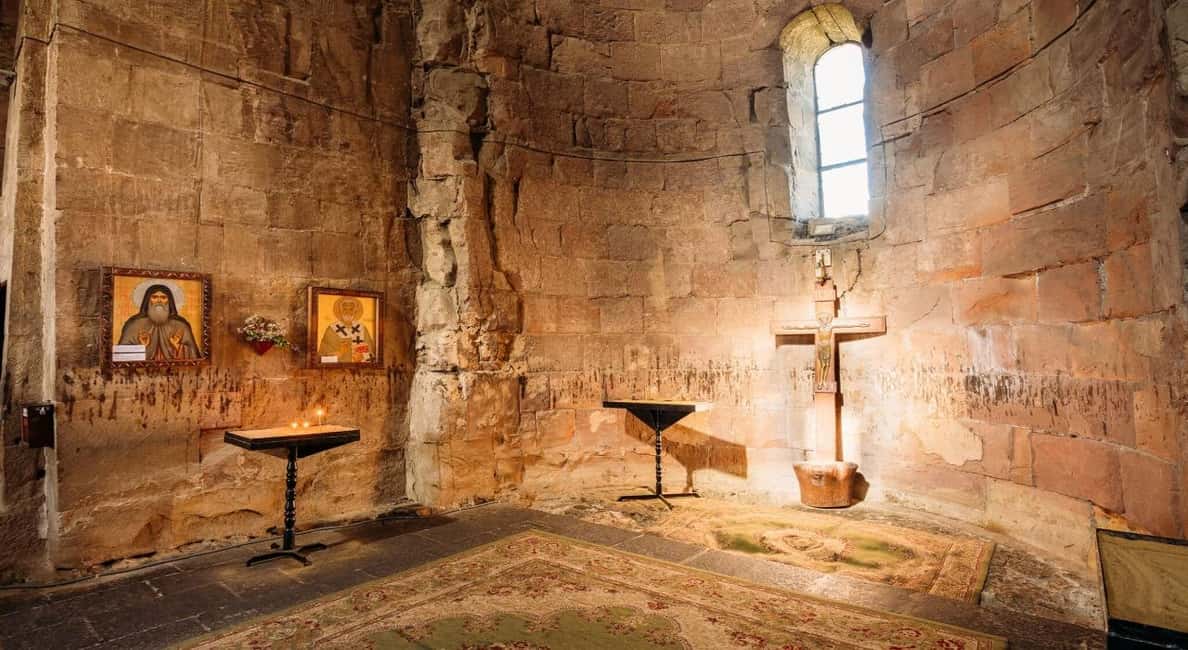
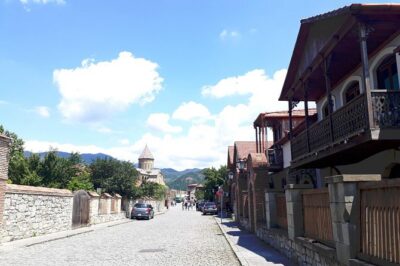
Svetitskhoveli Cathedral is the final listed sightseeing stop, with about 40 minutes for a guided visit, photographs, and a walk. Mtskheta’s cathedral is one of Georgia’s most important religious buildings and is associated with the robe of Christ, making it a major pilgrimage site for Orthodox Christians.
The building is impressive even if you are not religious. Its scale, stonework, icons, and spiritual importance give Mtskheta a different feel from Jvari’s hilltop setting. Here, you are inside the country’s religious center rather than looking down on it.
Timing is the weak point. The schedule may place Mtskheta late in the day instead of first, and one passenger reported arriving too late to enter the cathedral. Access to an active church can depend on opening hours, services, or local rules, so do not assume that a photo stop guarantees interior access.
I would ask the guide at the start whether Svetitskhoveli will be visited early or late. If entering the cathedral is one of your main reasons for booking, this question is important enough to ask before the vehicle leaves. A view from outside is worthwhile, but it is not the same as seeing the interior.
Transport, group size, and guide quality
The tour is designed for a group vehicle rather than a private car. That keeps the cost down, but the ride may feel crowded. One passenger who was tall found the legroom inadequate, so you may want to arrive early and choose your seat if the vehicle allows it.
The driver received positive comments for handling the route, but the group’s timing can suffer when people return late from stops. Delays of up to 15 minutes were reported, with little apparent enforcement. That may sound minor, but on a packed nine-hour schedule, every delay can reduce time at the final church.
Guide quality appears uneven. Kamil described the day as well planned and on schedule, with a guide who explained the places well. Other passengers found the guide hard to reach before departure or felt that the historical descriptions were boring.
Davit Lotsulashvili is the named provider and guide connected with Georgia Tours. Live guiding is offered in English and Russian. If you speak English, clarify how the language split will work, especially if the group contains many Russian-speaking passengers. A bilingual tour can be perfectly workable, but repeated explanations in two languages naturally reduce the time available for each stop.
Who should book this experience
I would choose this trip if you have limited time in Tbilisi and want a broad introduction to Georgian history. It works especially well for you if ancient churches, archaeological sites, Soviet history, and scenic viewpoints all sound worthwhile in the same day.
It also suits budget-conscious visitors who prefer a ready-made route. The main sites are far easier to combine with organized transport than by trying to connect them independently in a single day.
I would hesitate if you need a quiet, spacious vehicle, detailed English commentary, or complete control over the schedule. It is also a poor fit for anyone with mobility limitations. The tour is not suitable for wheelchair users, children under six, or people who cannot manage a moderate amount of walking over uneven ground.
Bring comfortable shoes, a hat, sunscreen, water, and a camera. Smoking is not allowed during the activity. Check the forecast before leaving, since the route includes exposed hilltops and open rock.
Should you book the Mtskheta, Gori, and Uplistsikhe tour?
Book it if you want maximum historical variety in one day. Jvari gives you the great opening view, Gori presents a troubling but important Soviet chapter, and Uplistsikhe provides the most unusual setting of the three. Together, they make a strong day outside Tbilisi.
Book with realistic expectations about the group format. Confirm the departure details, language balance, entrance fees, lunch arrangements, and the planned order of Mtskheta before you go. If those points are clear, the trip offers solid value and some genuinely memorable sights.
If Svetitskhoveli’s interior is essential, consider a tour that guarantees an earlier Mtskheta visit or arrange that stop independently. If your priority is seeing Uplistsikhe, however, this is a practical way to reach the cave city while adding two major Georgian sites along the route.
FAQ
How long does the day trip last?
The activity lasts about 9 hours, including transport, guided visits, sightseeing walks, and lunch time.
Where does the tour start and finish?
It starts and returns at 2 Abano Street in Tbilisi’s sulfur-baths district. The meeting point coordinates are 41.68839645385742, 44.8110237121582.
Which languages are available?
Live guiding is offered in English and Russian. If you prefer English, confirm how much of the commentary will be delivered in English when the group is bilingual.
How much walking is involved?
You should expect a moderate amount of walking at Jvari Monastery, Uplistsikhe, and Svetitskhoveli Cathedral. Uplistsikhe includes uneven rock surfaces, caves, and passages, so comfortable shoes are important.
Is the tour suitable for wheelchair users?
No. The experience is not suitable for wheelchair users or people with mobility impairments.
Are entrance fees and lunch included?
The supplied details do not clearly confirm that all entrance fees or lunch are included. One passenger reported two 15 GEL admission charges, so you should confirm the inclusions and carry extra money.
Can I cancel or pay later?
You can cancel up to 24 hours before departure for a full refund. A reserve-now, pay-later option is also available, allowing you to hold a place without paying immediately.
More 1-Day Tours in Tbilisi
- Tbilisi: Day Trip to Kazbegi, Gudauri, Gergeti, and Ananuri
★ 4.9 · 3,203 reviews - Day Trip to Kakheti Wine Region Including 9 Wine Tastings
★ 5.0 · 2,774 reviews - Day Trip to Kazbegi and Gudauri
★ 5.0 · 2,009 reviews - Day Trip to Armenia Including Homemade Lunch
★ 5.0 · 1,162 reviews
More Mtskheta and Jvari Half-Days
- Tbilisi: Mtskheta Jvari Bazaar, Chronicles of Georgia & Wine
★ 5.0 · 1,088 reviews - Tbilisi:Mtskheta,Jvari,Bazaar,wine tasting,Chronicles of Georgia
★ 5.0 · 730 reviews - Tbilisi: The Chronicles of Georgia, Jvari & Mtskheta Tour
★ 5.0 · 307 reviews - From Tbilisi: Mtskheta, Jvari, Gori & Uplistsikhe Cave Tour
★ 4.7 · 296 reviews
Just added near Tbilisi
- Wine Tasting feel the Difference of Qvevri or Classical Wine★ 4.4 · 10 reviews
- Walking Tour in Old Tbilisi – Group Tour★ 4.5 · 8 reviews
- From Tbilisi: Kakheti and Kazbegi 2-Day 4X4 Jeep Tour pack★ 5.0 · 6 reviews
- Tbilisi: Vintage Fashion and Secondhand Thrifting Tour★ 5.0 · 11 reviews
- Uforgatable Kakheti Tour with wine tasting – in Georgia★ 4.9 · 5 reviews
- From Tbilisi: Uplistsikhe Caves and Mtskheta Town Day tour★ 5.0 · 2 reviews
- Tbilisi Airport to Gudauri, Bakuriani, Batumi, Tbilisi★ 5.0 · 3 reviews
- Private Adorable City Tour of Tbilisi★ 5.0 · 3 reviews
Gori and Stalin Museum Tours, compared.
Mtskheta, Jvari, Gori and Uplistsikhe Day Tour
Read our review →
Mtskheta, Jvari, gori, uflistsikhe, history and panorama (group tours)
Read our review →Browse the lists this tour appears in