
Reviewed · BORJOMI AND BAKURIANI TOURS
Kutaisi: Walking Tour & Tskaltubo Abandoned Sanatoriums
Two sides of western Georgia meet here. You get a friendly introduction to Kutaisi’s streets, market, bridges, and food, then ride to Tskaltubo for a look at grand Soviet spa buildings slowly giving way to nature. I especially like the small group of no more than four people and the chance to taste a fresh Georgian pretzel rather than simply walk past the city’s food culture. The visit to the abandoned sanatoriums also gives this tour a clear identity.
The main consideration is pace. The city walk is fairly short, while Tskaltubo takes about 50 minutes of guided exploring, so you should not expect a full historical tour of Kutaisi or a long urban-exploration session. English is provided, though one guest felt the guide’s level could be stronger.
In This Review
- Key points at a glance
- Why this tour works as a first look at Kutaisi
- From the White Bridge to the Rioni River
- Green Bazaar: the most useful city stop
- The route toward Bagrati Cathedral
- The short ride from Kutaisi to Tskaltubo
- Inside the Iveria and Medea sanatorium areas
- What Davit adds to the experience
- Timing, comfort, and what to bring
- Is $31 a fair price?
- Who should book this experience?
- Should you book the Kutaisi and Tskaltubo tour?
- FAQ
- Where does the tour start?
- How long does the experience last?
- Is transportation to Tskaltubo included?
- What food is included?
- Is the tour available in English?
- What should I bring?
Key points at a glance
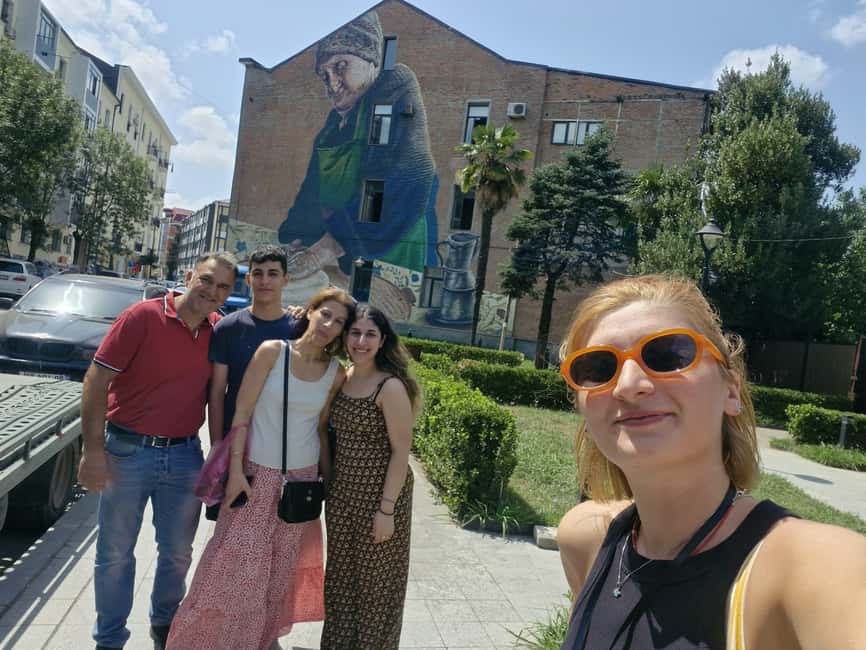
- A compact Kutaisi introduction: Walk from the Meskhishvili Theatre area through Rustaveli Street, the White Bridge, Green Bazaar, and the area below Bagrati Cathedral.
- Fresh bakery stop included: Your Georgian pretzel gives you a simple taste of everyday local food without adding to the tour price.
- Green Bazaar is a real local stop: You can see produce, spices, homemade goods, and buy small treats with cash.
- Tskaltubo adds the unusual element: Old Soviet sanatoriums such as Iveria and Medea reveal the scale of a former spa resort.
- Davit earns strong praise: His storytelling, humor, city knowledge, and willingness to answer questions are major strengths.
- Good value at $31: Transport to Tskaltubo, the guide, the Kutaisi walk, market visit, and pretzel are all included.
Why this tour works as a first look at Kutaisi
Kutaisi can be hard to read at first. Its important sights are spread through ordinary streets, working markets, river crossings, and busy public spaces rather than arranged in one neat historic center. This tour helps you connect those pieces.
You begin near the white columns by the Meskhishvili Theatre, at the TourHub Georgia meeting point in Bulvaris Park. Depending on the option you book, the exact meeting point may vary, so check your confirmation before setting out.
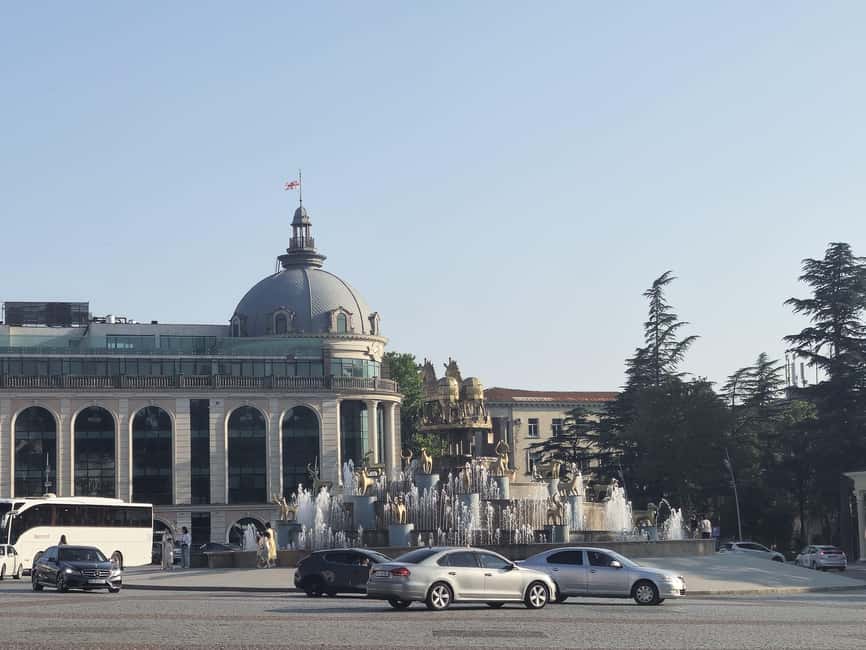
From there, the route leads toward the Colchis Fountain and along historic Rustaveli Street. The fountain is a useful early stop for photographs and orientation. It gives you a sense of the city’s public center before the walk moves into streets where daily life matters more than landmark collecting.
I like this balance. You see recognizable sights, but you also pass bakeries, market halls, bridges, and local streets. Your guide can explain what you are seeing in the moment, which is more useful than reading a short plaque and moving on.
More days out to Borjomi and Bakuriani:
- Borjomi, Rabati & Vardzia – one day group tour from Kutaisi
★ 4.8 · 100 reviews - Abandoned sanatoriums of tskaltubo – group tour from Kutaisi
★ 4.8 · 99 reviews - BORJOMI, RABATI & VARDZIA – Group Tour from Kutaisi
★ 4.5 · 76 reviews
From the White Bridge to the Rioni River
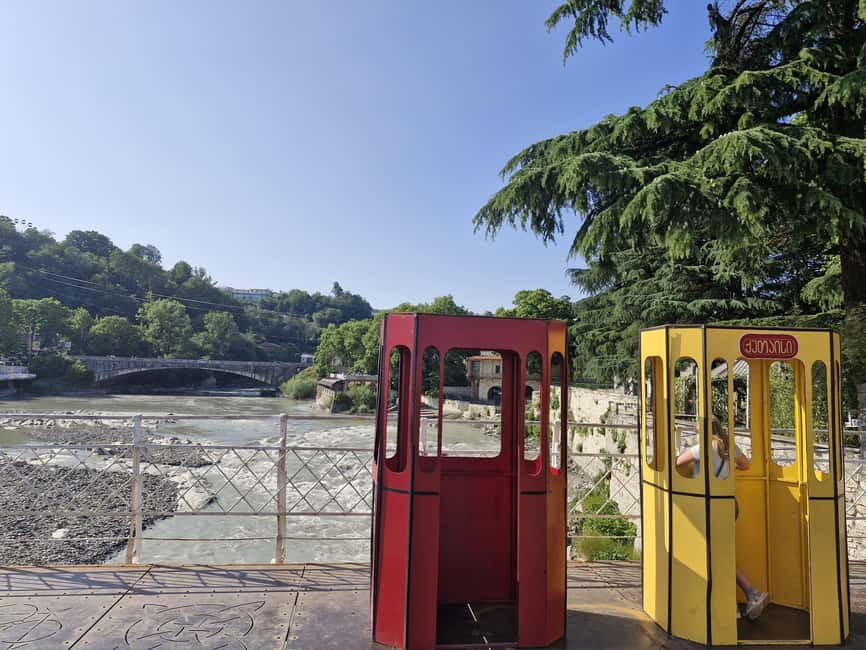
The White Bridge is one of the tour’s best photo stops. It crosses the Rioni River and gives you a clear view of the water and the city around it. You have about 15 minutes here for sightseeing and pictures, enough time to pause without turning the tour into a long photography session.
The bridge also helps make Kutaisi feel like a living city rather than a collection of monuments. You are crossing a working route with the river below and the urban center around you. Ask Davit about the city’s buildings and people here. His strongest quality, according to the available feedback, is his habit of explaining details and answering questions instead of rushing through prepared facts.
After the bridge, the group stops at a local bakery for a Georgian pretzel. This is a small detail, but it improves the experience. You get a warm, simple snack tied to ordinary Georgian life, and the break gives your feet a rest before the market.
Do not expect a full meal. The pretzel is a snack, not a substitute for lunch. If you are hungry, save room for the Green Bazaar and carry some small cash for extra treats.
Green Bazaar: the most useful city stop
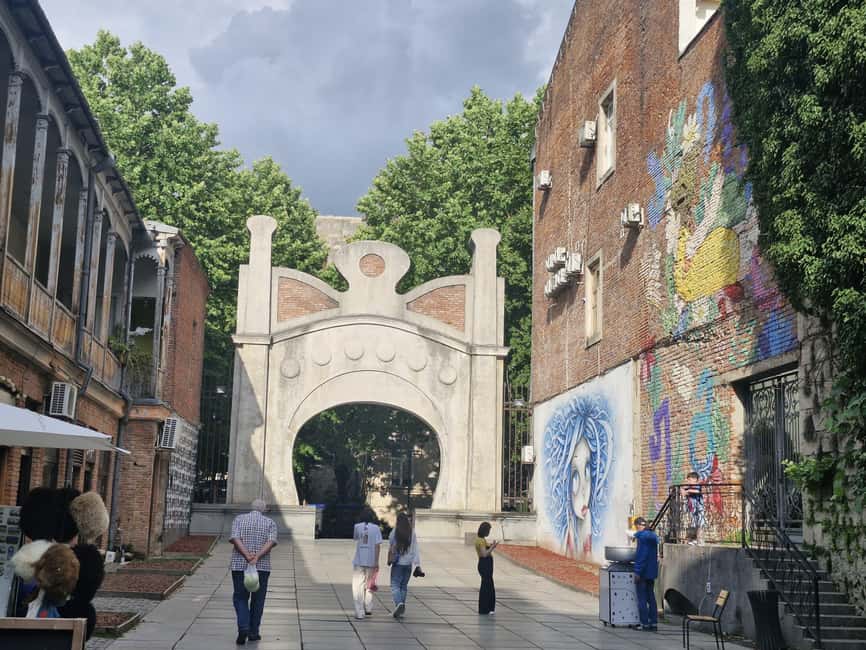
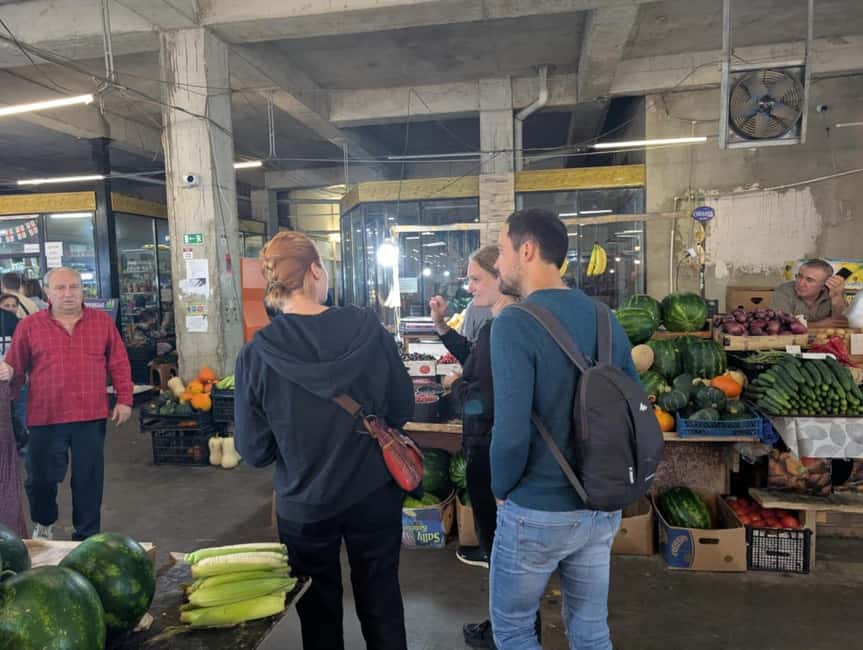
The Green Bazaar is where the tour becomes most connected to everyday Kutaisi. Inside, you can see fresh fruit and vegetables, spices, and homemade goods. The market has an active, practical feel. People are there to shop, not perform for tourists.
You have around 20 minutes for the market visit. That is enough to look through the halls, notice the produce, and buy something small, but it is not enough for a slow, detailed food tour. I would use this time to ask your guide about local ingredients and dishes, then make one or two purchases if something catches your eye.
The guide’s local recommendations are valuable here. Davit has been praised for explaining Georgian specialties and helping visitors understand what they are seeing. If you want to eat well later, ask about favorite dishes, good cafes, and places for a drink. Those personal suggestions may be more useful than a long list of restaurants copied from a guidebook.
Bring cash. Market purchases are not included, and the tour specifically advises carrying small money for treats. The market can also be crowded and active, so keep your belongings close and stay aware of the group.
The route toward Bagrati Cathedral
After the market, the walk continues through Kutaisi with another sightseeing stop and a short photo stop at a less-publicized location. The exact details of the secret stop are not specified, which is part of its appeal. It may be a brief viewpoint, street scene, or local place that fits the guide’s route that day.
The walking section ends at the foot of the steps leading to Bagrati Cathedral. This is important to understand before booking. The tour finishes at the bottom of the steps, not necessarily with a full cathedral visit. If Bagrati is high on your list, you can continue upward after the tour if time and energy allow, but that extra visit is not described as part of the included route.
This first section takes you through a useful cross-section of Kutaisi: civic spaces, a river crossing, food, a market, and a major religious landmark. It is not an exhaustive city tour. Instead, it gives you enough context to explore more confidently afterward.
More walking tours in Kutaisi:
- Kutaisi: Cultural Walking Tour
★ 4.9 · 66 reviews - Kutaisi Walking Tour
★ 5.0 · 59 reviews - Kutaisi walking tour with A GLASS OF FINE WINE
★ 4.5 · 48 reviews - Kutaisi: Guided Walking Tour with Local Snack
★ 5.0 · 16 reviews
The short ride from Kutaisi to Tskaltubo
After the walking tour, you travel by comfortable vehicle to Tskaltubo, about 20 minutes from Kutaisi. This transfer is a major reason the $31 price feels fair. You are not left to arrange a taxi or figure out public transport for the second half of the experience.
Tskaltubo is a small, green town known for its former spa culture and Soviet-era sanatoriums. It was once a luxury resort, built around mineral-water treatments and large public facilities. Today, some buildings are restored while others are empty, damaged, and being taken back by plants and weather.
That contrast gives the excursion its strongest visual subject. You are not only looking at decay. You are seeing the remains of an ambitious resort system, along with signs that some parts of the town have found a new life.
The guide walks you through the parks and streets, pointing out the exteriors and, where safe, some interiors of famous sanatoriums. The word safe matters. Abandoned buildings can have unstable floors, broken glass, and restricted areas. Stay with the guide and do not treat the visit as permission to enter every open doorway.
Inside the Iveria and Medea sanatorium areas
Iveria and Medea are among the named sanatoriums included on the route. Their large Soviet designs help explain the scale of Tskaltubo’s former spa industry. You can look at the facades, columns, corridors, and surviving decorative details while hearing how the resort once served visitors seeking health treatments and leisure.
Some interiors may be available, but access depends on safety and conditions. The tour is not a formal architectural survey, and you should expect a guided look rather than a full building-by-building exploration.
Photography is one of the main pleasures here. Empty halls, peeling surfaces, overgrown edges, and large abandoned spaces create strong images. Bring a camera, but also take time to look at the structure itself. The best part is often the contrast between the buildings’ former polish and their current condition.
One useful detail from the guide’s approach is that the route can include restored buildings as well as abandoned ones. This makes the story more complete. You see not just ruins, but the different paths these old resort structures have taken.
What Davit adds to the experience
The guide can make or break a tour like this. Here, Davit is repeatedly praised for his organization, humor, detailed explanations, and friendly manner. He is described as ready to answer questions about Kutaisi, Georgia, the sanatoriums, and local customs.
That matters because Tskaltubo’s buildings can look impressive even without context. A guide helps you understand what the spaces were built for and why the town mattered. Davit also adds practical value by suggesting places to eat, drink, and explore after the tour.
The small group is another major advantage. With a maximum of four people, you can ask questions without shouting across a crowd. It is easier to keep the group together in the market and easier for the guide to adjust explanations to your interests.
There is one fair caveat. One French guest found the guide very approachable and strong on the subject, but felt his English could improve, even though it remained understandable. If you need highly polished English or complex historical discussion, keep that in mind.
Timing, comfort, and what to bring
The listed duration is two to four hours, with starting times depending on availability. The actual flow includes roughly 15 minutes at the Colchis Fountain, 15 minutes at the White Bridge, a 10-minute bakery break, a short viewpoint stop, about 20 minutes in the market, and around 50 minutes in Tskaltubo, plus walking and driving time.
That range likely reflects the route, group pace, and time spent asking questions. Do not schedule a tight connection immediately afterward. You finish back in central Kutaisi, at the TourHub Georgia area in Bulvaris Park, but the exact drop-off option can vary.
Wear comfortable shoes. You will walk through city streets, market areas, parks, and possibly uneven surfaces near old buildings. Bring water, especially in warm weather, and carry a camera if abandoned architecture interests you.
The tour is not presented as physically demanding, but it is still a walking experience. Anyone with mobility concerns should ask the provider for current route details before booking, since the information supplied does not specify accessibility conditions.
Is $31 a fair price?
At $31 per person, the tour offers a solid amount for a half-day outing. You receive a guided Kutaisi walk, a bakery snack, a Green Bazaar visit, transport to Tskaltubo, a guided visit there, and a return to the city center.
The value is strongest if you want both city orientation and a special-interest stop. A basic Kutaisi walking tour may cost less, but it would not include the vehicle transfer and Tskaltubo visit. A private taxi to Tskaltubo would give you more control, but you would lose the guide’s local explanations and the convenience of a planned route.
The tradeoff is depth. You are getting a compact introduction rather than a full day devoted to either Kutaisi or Soviet architecture. If you want hours for market shopping, a long meal, or extensive photography inside abandoned buildings, you may prefer a longer private arrangement.
Free cancellation up to 24 hours before the start and the reserve-now, pay-later option also make the booking flexible. Those policies are useful when your Georgia itinerary is still changing.
Who should book this experience?
I would recommend this tour to first-time visitors who want an easy introduction to Kutaisi with something unusual added. It also suits photographers, architecture fans, urban explorers who prefer a guided setting, and people interested in the Soviet past of the region.
It is a good fit for solo visitors and couples because the four-person limit keeps the experience personal. It should also work well for anyone who wants restaurant and cafe advice from a local guide rather than relying only on online searches.
You may want another option if your priority is a long, detailed visit to Bagrati Cathedral, extensive market shopping, or unrestricted access to abandoned buildings. The itinerary moves at a compact pace, and the focus is split between Kutaisi and Tskaltubo.
Should you book the Kutaisi and Tskaltubo tour?
Book it if you want two very different experiences in one outing: a friendly city walk with food and market stops, followed by striking Soviet-era ruins outside Kutaisi. The combination is unusual, the transport removes hassle, and Davit’s humor and detailed explanations appear to be a real strength.
Skip it only if you want a slow city tour or a serious urban-exploration expedition. For $31, a small group, a local snack, market access, transport, and a guided look at Iveria and Medea, this is a practical choice for seeing more of the area in a short time.
FAQ
Where does the tour start?
The meeting point may vary by booking option. Listed starting locations include TourHub Georgia and the columns at Bulvaris Park near the Meskhishvili Theatre.
How long does the experience last?
The stated duration is between two and four hours. The exact timing depends on availability, the selected start time, and the pace of the group.
Is transportation to Tskaltubo included?
Yes. After the Kutaisi walking tour, you travel by comfortable vehicle to Tskaltubo, which is about 20 minutes from Kutaisi. The tour returns you to central Kutaisi afterward.
What food is included?
A fresh Georgian pretzel from a local bakery is included. Extra treats or purchases at Green Bazaar are not included, so bring some small cash.
Is the tour available in English?
Yes. The tour has a live English-speaking guide.
What should I bring?
Bring comfortable shoes, water, and a camera. The experience includes walking through Kutaisi, the market, Tskaltubo’s parks, and areas near old sanatorium buildings.
Just added near Kutaisi
- Wild Caving Experience in Melouri Cave Near Kutaisi★ 5.0 · 3 reviews
- Wine & Dine group tour from Kutaisi★ 4.6 · 3 reviews
- Private tour from KUTAISI: Bagrati, Gelati and Motsameta★ 5.0 · 5 reviews
- Tskhaltubo Old Soviet Spa Tour★ 4.5 · 12 reviews
- Day Tour to Georgian sky venice, Soviet city Chiatura★ 5.0 · 5 reviews
- Tskaltubo-Prometheus Cave-Geguti★ 5.0 · 6 reviews
- Ski & Snow Tour to Bakuriani from Kutaisi with Borjomi Stop★ 5.0 · 5 reviews
- Break Bread with Kutaisi Locals★ 5.0 · 4 reviews
Borjomi and Bakuriani Tours, compared.
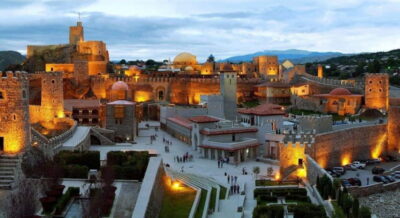
Borjomi, Rabati & Vardzia Adventure Guided Tour
Read our review →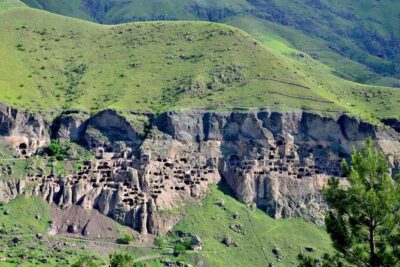
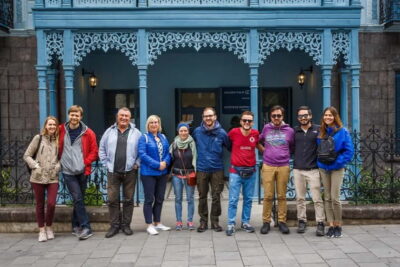
Borjomi, Rabati & Vardzia – one day group tour from Kutaisi
Read our review →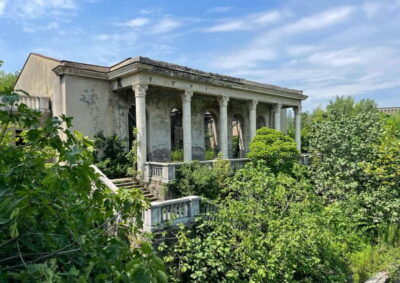
Abandoned sanatoriums of tskaltubo – group tour from Kutaisi
Read our review →
BORJOMI, RABATI & VARDZIA – Group Tour from Kutaisi
Read our review →
Vardzia, Rabati, and Borjomi Ancient Georgia Group Tour
Read our review →
LEGENDARY PLACES OF GEORGIA: VARDZIA, BORJOMI, RABAT.( Group Tour)
Read our review →Browse the lists this tour appears in