
Reviewed · GORI AND STALIN MUSEUM TOURS
Mtskheta-Jvari, Gori and Uplistsikhe from Tbilisi
Georgia’s past fits neatly into one long day. From Tbilisi, this 10-hour trip links Jvari Monastery and Mtskheta, two key places in Georgian Christianity, with Gori’s Stalin Museum and the ancient cave city of Uplistsikhe. I like the range: sacred sites, Soviet history and archaeology all appear before dinner.
I also like the careful driving and live guiding, especially on a full-day route through Shida Kartli. Guides speak English or Russian, and one highly praised guide, Lana, is noted for keeping the day well organized. The main drawback is that $9 does not cover the paid attractions, and the schedule involves enough walking to rule out anyone with mobility limits.
In This Review
- Key points to know before booking
- Why this day trip works from Tbilisi
- Jvari Monastery and the river junction
- Mtskheta and Svetitskhoveli Cathedral
- Gori and the Stalin Museum
- Uplistsikhe, the ancient city in the rocks
- The guide and driver can shape the whole day
- Food, timing and what to pack
- Who will get the most from this tour?
- Is the $9 price really good value?
- Should you book this Mtskheta, Gori and Uplistsikhe tour?
- FAQ
- How long does the tour last?
- Where does the tour begin?
- Which languages are available?
- Are entrance tickets included?
- Is the tour suitable for people with mobility impairments?
- What should I bring?
Key points to know before booking
- Four major stops in 10 hours: Jvari, Mtskheta, Gori and Uplistsikhe make this a busy but worthwhile day outside Tbilisi.
- Jvari gives you the best opening view: The monastery looks across the meeting point of the Mtkvari and Aragvi rivers.
- Mtskheta is Georgia’s spiritual center: Svetitskhoveli Cathedral is the key sight, with its association with Christ’s tunic and Georgia’s royal past.
- Gori adds a difficult modern chapter: The Stalin Museum presents the birthplace, personal objects and armored railway carriage of the Soviet leader.
- Uplistsikhe rewards sturdy shoes: The ancient rock-cut city has temples, homes, streets and squares, but uneven ground makes walking important.
- The low fare has extra costs: The Stalin Museum and Uplistsikhe each charge 15 Georgian lari, and both tickets are optional.
Why this day trip works from Tbilisi
If you want to understand Georgia beyond its capital, this is a useful first excursion. The route moves through three very different layers of the country: early Christianity in Mtskheta, Soviet power in Gori and pre-Christian cave settlement at Uplistsikhe.
That variety is the tour’s best feature. You are not spending the whole day looking at similar churches or repeating the same type of museum. One stop gives you grand views, another asks moral questions, and the final one lets you walk through the remains of an ancient town.
The price is unusually low at $9 per person. Think of that as the cost of the transport and guide service, not the final sightseeing budget. If you enter both paid attractions, you add 30 Georgian lari per person, while the churches and outdoor viewing at Jvari remain the more economical parts of the day.
The tour begins at the small fountain at 1 Galaktion Tabidze Street, near Freedom Square. That central meeting point is practical, but you should arrive with enough time to find the fountain and group before departure. The return is to the same address.
Transport is described as comfortable, with drivers who have at least seven years of experience on these roads. That matters here. You are covering several places in one day, and the route includes regular road travel between Tbilisi, Mtskheta, Gori and Uplistsikhe. A careful driver makes a long day much easier.
More Gori and Stalin Museum runs:
- Tbilisi: Mtskheta, Jvari, Gori and Uplistsikhe Day Tour
★ 4.9 · 2,396 reviews - Day Trip to Mtskheta Gori and Uplistsikhe
★ 5.0 · 1,801 reviews - From Tbilisi : Mtskheta, Jvari, Gori & Uplistsikhe Day Trip
★ 4.8 · 432 reviews
Jvari Monastery and the river junction
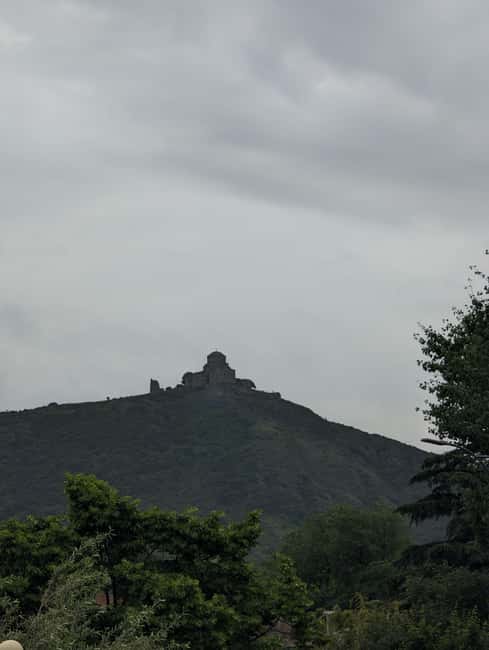
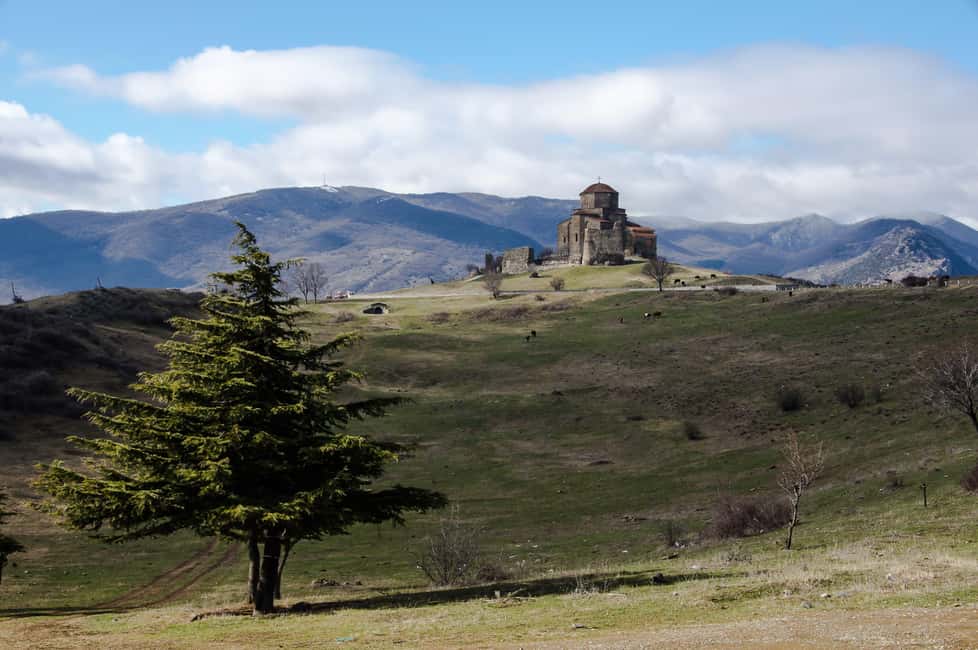
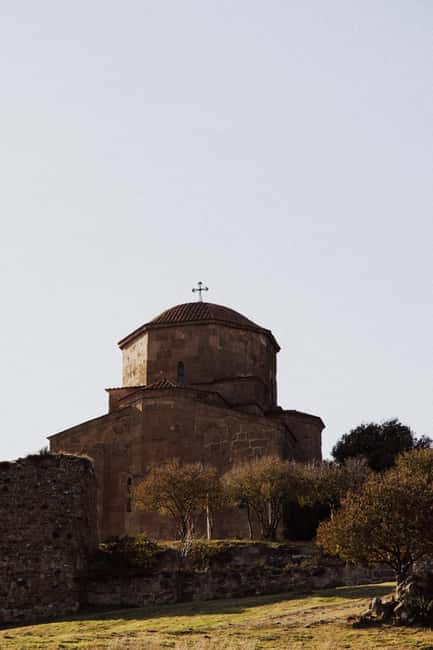
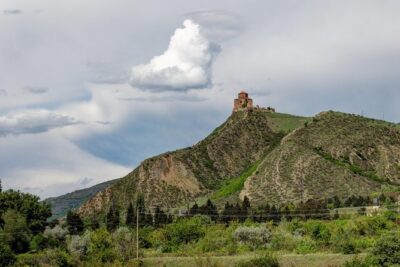
Jvari is the first major sight, and it earns its place at the start. Set on a hill above Mtskheta, the monastery gives you a broad view toward the point where the Mtkvari and Aragvi rivers meet. It is a quick lesson in why this area became so important.
The stop lasts about 40 minutes, including a guided visit and time for photographs. That is enough for the main view and a short look at the monastery, though not enough for a slow, detailed study of every architectural feature.
I would pay attention to the setting as much as the building. From above, Mtskheta’s position becomes clear, and the two rivers help explain the area’s strategic and spiritual importance. Bring your camera, but do not spend the whole stop behind it. The view is the point.
Jvari is also the part of the day most affected by weather. Cloud or haze can soften the river view, while bright sun can make the hilltop feel exposed. Water, sunscreen and a hat are sensible additions, especially in warmer months.
The site requires some walking, and the overall tour is rated as involving a moderate amount of it. Comfortable shoes are not a suggestion here. They are part of the basic equipment.
Mtskheta and Svetitskhoveli Cathedral
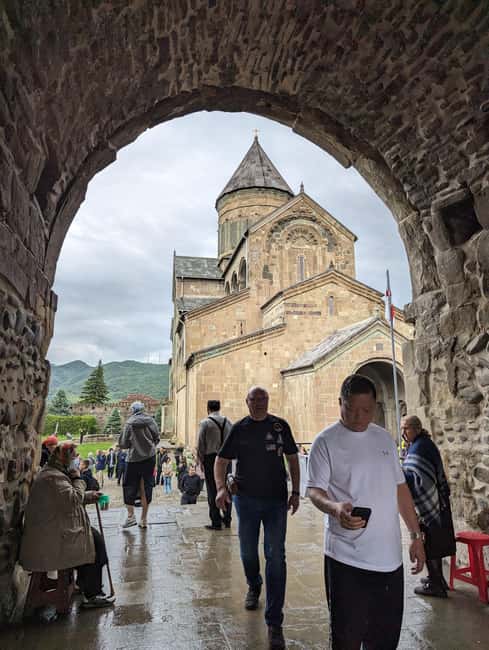
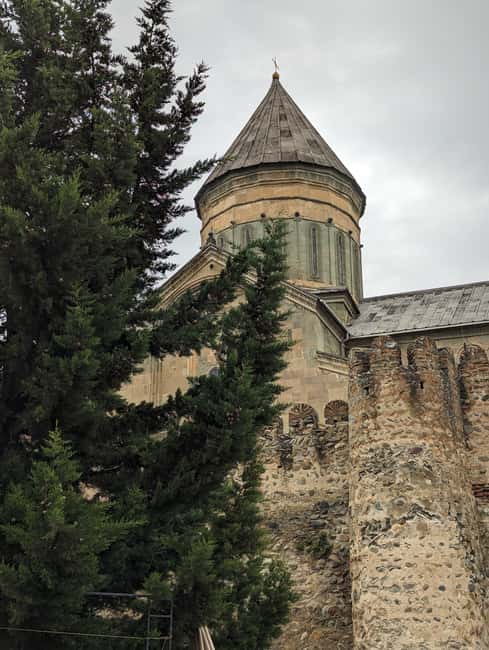
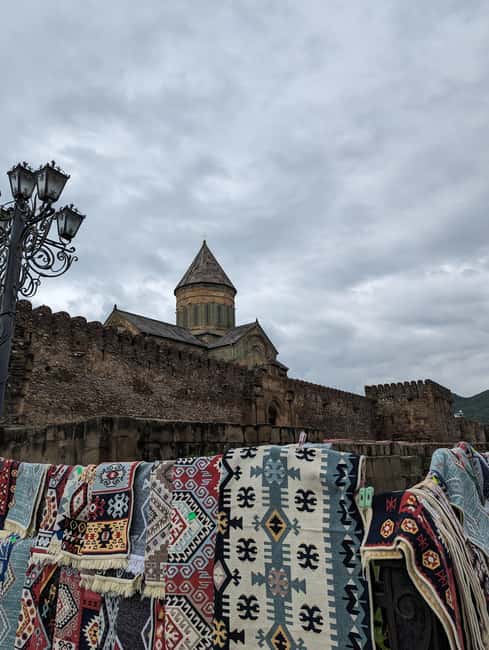
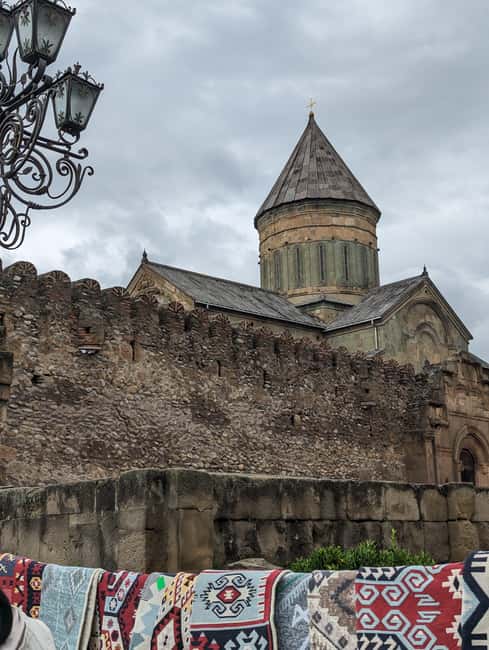
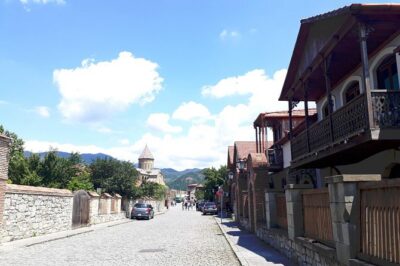
After Jvari, the tour continues to Mtskheta, Georgia’s first capital and a major religious center. The guided visit lasts about an hour, giving you more time than at the hilltop monastery to understand the city’s role.
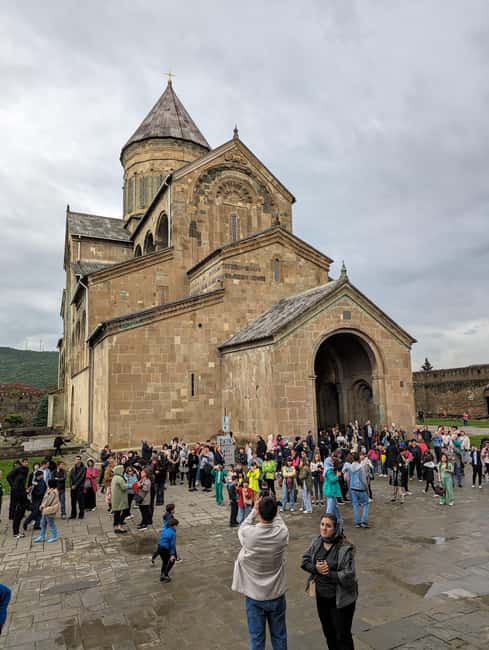
The central sight is Svetitskhoveli Cathedral, one of Georgia’s most sacred churches. It is associated with the tunic of Christ, and the cathedral also carries strong links to the country’s royal and religious story. Even if you are not especially interested in church history, this stop helps explain why Georgia’s Christian identity is so central to its culture.
The best approach is to listen for the connection between place and belief. Mtskheta is not simply an old town with a large church. It is a place where Georgian religious life, monarchy and national memory meet.
The schedule describes this as a guided and photographic stop, so you should expect a focused visit rather than free time to explore every corner at your own pace. That is a fair trade on a route with four major stops, but independent-minded visitors may find the timing a little brisk.
Mtskheta also balances the hilltop views at Jvari. At Jvari, you look out over the region. In Mtskheta, you look closely at the buildings and the continuing importance of the town. Together, the two stops make a strong opening pair.
Gori and the Stalin Museum
Gori changes the mood. The town is connected with Joseph Stalin, the Soviet leader born there, and the main attraction is the house-museum dedicated to his life.
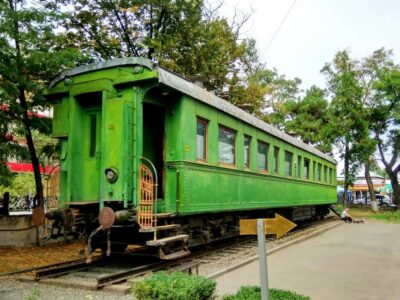
The visit lasts around an hour and a half, including the guided portion and time for photographs. The museum includes the house where Stalin was born and lived, his personal belongings and an armored railway carriage associated with him.
This is the most politically complicated stop of the day. A visit does not require admiration. It gives you a chance to examine how a major historical figure is presented in his birthplace, and to consider the gap between local pride, Soviet memory and the wider record of Stalin’s rule.
I would set aside enough time to look beyond the famous name. The birthplace and personal objects make the history feel concrete, while the railway carriage offers a striking reminder of how a head of state traveled and worked. The combination is more memorable than a standard portrait gallery.
The museum entrance costs 15 Georgian lari and is not included in the $9 tour price. You can skip the museum and remain with the group according to the ticket policy, so you are not forced to pay. Still, if you are interested in twentieth-century history, this is one of the more distinctive parts of the route.
The quality of the guide matters especially here. A guide who can answer questions fairly and provide context will make the stop far better than a quick walk through personal artifacts. Feedback highlights guides who were open to questions and offered useful information about Georgia. Lana is specifically praised for making the day well organized.
More cave cities you can walk through:
- Tbilisi: Borjomi, Rabati & Vardzia Adventure Guided Tour
★ 4.9 · 817 reviews - From Tbilisi: Rainbow Mountain & David Gareja Monastery Trip
★ 4.9 · 705 reviews - Day Trip to Rainbow Mountains and David Gareja
★ 5.0 · 408 reviews - From Tbilisi: Mtskheta, Jvari, Gori, Uplistsikhe Guided Tour
★ 4.7 · 354 reviews
Uplistsikhe, the ancient city in the rocks
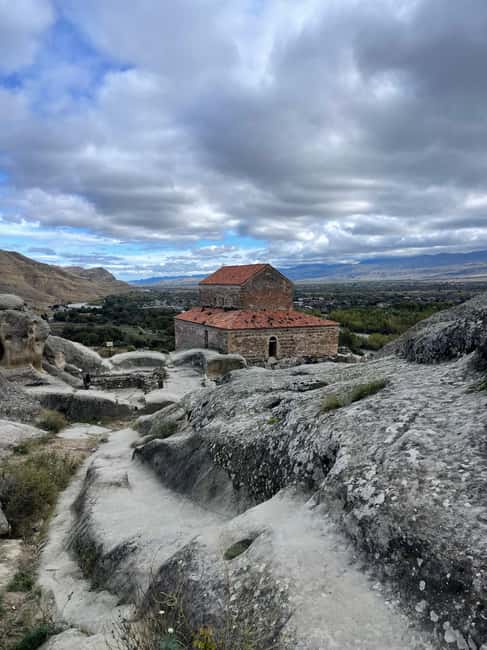
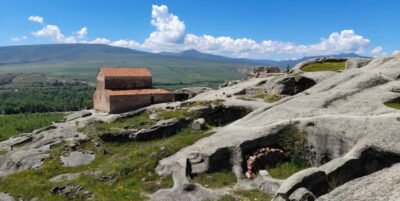
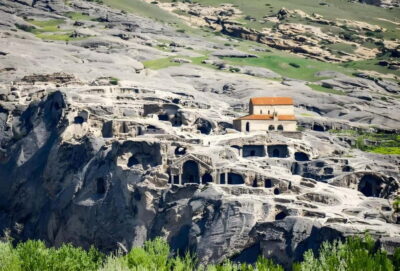
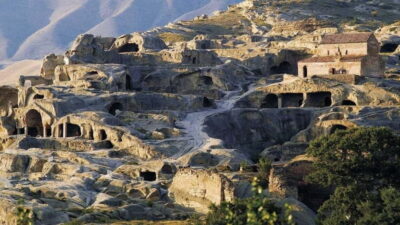
The final major stop is Uplistsikhe, an ancient cave city cut into rock. The remains include temples, houses, streets and squares, giving you a chance to walk through the outline of a once active settlement rather than view a single monument.
The visit lasts about an hour and a half. That is helpful because Uplistsikhe needs time to make sense. At first, the rock-cut rooms can look like scattered openings. With a guide’s explanation, the streets and spaces begin to read as parts of an organized town.
This is the most physically demanding stop. You should expect uneven surfaces and a moderate amount of walking across the site. The tour is not suitable for wheelchair users, people with mobility impairments or pregnant women, and the supplied guidance also recommends comfortable shoes.
Uplistsikhe is a good place to slow down mentally, even if the timetable is moving along. Look at the relationship between the rooms, passages and open areas. The remains show practical daily life as well as worship, which gives the site a human scale.
The entrance fee is 15 Georgian lari, also paid separately. Like the museum ticket, it is optional. I would include it if you have enough interest and energy for ancient archaeology, since it is the stop that cannot be replaced by photographs alone.
By placing Uplistsikhe last, the tour finishes with a site that feels different from both Mtskheta and Gori. You move from a living religious center and a modern historical museum into a much older settlement whose original life must be pieced together from stone.
The guide and driver can shape the whole day
A 10-hour tour depends heavily on the people running it. The advertised service includes a live guide in English or Russian, plus transport with an experienced driver. That is more important than it may sound, since the tour has a lot of ground to cover.
The strongest praise focuses on clear explanations, considerate service and careful driving. One account describes a guide who answered many questions about Georgia and a driver who handled the roads safely. Another gives special credit to Lana for good organization.
The tone can also be light. One guide added a short Georgian-language lesson, which is a pleasant touch on a day otherwise packed with churches, museums and archaeology. Do not expect a language class, but a few words can make the trip feel more connected to the country.
There is one useful caution. English information may not always be equally detailed at every point. One rating praised the schedule and scenery but wanted more explanation in English. If precise historical detail is important to you, ask questions as you go rather than waiting for a long lecture at one stop.
The guide service is also where the $9 price should be judged. You are paying for a full day’s route and live assistance, not just a bus transfer. A good guide turns four separate attractions into a story about Georgia. A less active guide would make the same route feel like a long ride with brief stops.
Food, timing and what to pack
The day is long, and food arrangements deserve attention. One piece of feedback asked for a better place to eat, so you should not assume the meal stop will be the highlight. The supplied details do not specify a restaurant, menu or meal inclusion.
Bring water and consider a small snack. The official advice also calls for sunscreen and comfortable shoes. A camera is useful at Jvari and Uplistsikhe, but the more important item is footwear that can handle a moderate amount of walking.
The schedule gives approximately 40 minutes at Jvari, one hour in Mtskheta, 1.5 hours in Gori and 1.5 hours at Uplistsikhe. The rest of the 10-hour day goes toward driving, meeting the group and moving between sites. You should expect a structured day, not a relaxed countryside outing.
That structure suits you if you want to see a lot in limited time. It is less suited to you if you prefer lingering in one town, taking long meal breaks or setting your own pace at every site.
The meeting point at Freedom Square makes this a practical option for anyone staying in central Tbilisi. Since the tour returns to the same place, you can plan the rest of your evening without arranging a second pickup point.
Who will get the most from this tour?
I would recommend this trip to first-time visitors who want a strong overview of Georgian history outside Tbilisi. In one day, you see a major Christian center, an important cathedral, a Soviet museum and an ancient settlement.
It also suits history-minded visitors who enjoy contrasts. Jvari and Svetitskhoveli offer religious and national history. Gori raises questions about Stalin’s legacy. Uplistsikhe takes you much further back, to a settlement preserved in rock.
The tour is a good fit for people who value transport and a guide more than complete independence. You do not need to work out the road connections between four sites, and you can use the guide to link them together.
I would hesitate to recommend it to anyone who needs step-free access or finds uneven walking difficult. It is also a poor match for a slow-paced holiday, since the day is full and the stops are timed.
The 4.8 rating from 25 reviews supports the idea that the service is generally well received, especially for organization, guiding and driving. Still, the lower score concerning English detail and food is worth keeping in mind. The tour seems strongest as a value-focused history day, not as a polished luxury excursion.
Is the $9 price really good value?
Yes, provided you calculate the extras. At $9, the tour offers transport and a live guide for 10 hours, which is a low starting price for this route. Add 15 Georgian lari for the Stalin Museum and 15 Georgian lari for Uplistsikhe if you want both paid visits.
You can choose not to enter either attraction, so the final cost remains flexible. That is useful if you have already visited one of them, are watching your budget or prefer the churches and outdoor sights.
For most people, I would budget for at least one paid entrance, and preferably both if this is your first visit. The museum and cave city are not filler stops. They provide two of the day’s strongest contrasts.
Free cancellation up to 24 hours before departure and the option to reserve now and pay later add flexibility. The more important practical point is to check the available start time before booking, since the activity lasts a full 10 hours.
Should you book this Mtskheta, Gori and Uplistsikhe tour?
Book it if you want a packed, affordable day that explains several sides of Georgia. The best reasons are the varied route, the hilltop view from Jvari, Svetitskhoveli’s religious importance, the unusual Gori museum and the walk through Uplistsikhe.
I would book the paid entrances as part of your budget, wear proper shoes and bring water. Go in expecting a focused schedule and possibly a less memorable food stop, but also expect careful driving and a guide who can add much-needed context.
Skip it if you need accessible terrain, dislike long road days or want hours of free time at each site. For everyone else, Funny Travel Georgia offers a sensible way to see Shida Kartli without arranging four separate visits.
FAQ
How long does the tour last?
The tour lasts 10 hours, including the visits to Jvari Monastery, Mtskheta, Gori and Uplistsikhe, as well as travel between the stops.
Where does the tour begin?
The group meets at the small fountain at 1 Galaktion Tabidze Street on Freedom Square in Tbilisi. The tour returns to the same address.
Which languages are available?
Live guiding is available in English and Russian.
Are entrance tickets included?
No. The Stalin Museum costs 15 Georgian lari, and Uplistsikhe costs 15 Georgian lari. Both tickets are optional.
Is the tour suitable for people with mobility impairments?
No. The tour involves a moderate amount of walking and is not suitable for pregnant women, people with mobility impairments or wheelchair users.
What should I bring?
Bring comfortable shoes, water and a camera. Sunscreen is also recommended, particularly for the outdoor portions of the day.
More Mtskheta and Jvari Half-Days
- Tbilisi: Mtskheta Jvari Bazaar, Chronicles of Georgia & Wine
★ 5.0 · 1,088 reviews - Tbilisi:Mtskheta,Jvari,Bazaar,wine tasting,Chronicles of Georgia
★ 5.0 · 730 reviews - Tbilisi: The Chronicles of Georgia, Jvari & Mtskheta Tour
★ 5.0 · 307 reviews - From Tbilisi: Mtskheta, Jvari, Gori & Uplistsikhe Cave Tour
★ 4.7 · 296 reviews
Just added near Tbilisi
- Wine Tasting feel the Difference of Qvevri or Classical Wine★ 4.4 · 10 reviews
- Walking Tour in Old Tbilisi – Group Tour★ 4.5 · 8 reviews
- From Tbilisi: Kakheti and Kazbegi 2-Day 4X4 Jeep Tour pack★ 5.0 · 6 reviews
- Tbilisi: Vintage Fashion and Secondhand Thrifting Tour★ 5.0 · 11 reviews
- Uforgatable Kakheti Tour with wine tasting – in Georgia★ 4.9 · 5 reviews
- From Tbilisi: Uplistsikhe Caves and Mtskheta Town Day tour★ 5.0 · 2 reviews
- Tbilisi Airport to Gudauri, Bakuriani, Batumi, Tbilisi★ 5.0 · 3 reviews
- Private Adorable City Tour of Tbilisi★ 5.0 · 3 reviews
Gori and Stalin Museum Tours, compared.
Mtskheta, Jvari, Gori and Uplistsikhe Day Tour
Read our review →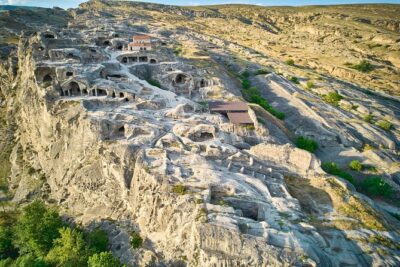
Mtskheta, Jvari, gori, uflistsikhe, history and panorama (group tours)
Read our review →Browse the lists this tour appears in