
Reviewed · GORI AND STALIN MUSEUM TOURS
One-day tour in ancient Mtskheta, Gori and Uplistsikhe
History packs tightly into this day. From the hilltop view at Jvari Monastery to the stone chambers of Uplistsikhe, this tour gives you three very different windows into Georgia’s past. I like the included pickup, air-conditioned vehicle, bottled water, and professional guide service. I also like the mix of religious sites, royal history, Soviet memory, and archaeology.
The main drawback is the pace. Ten hours is enough to see the key places, but not enough for long, unhurried visits. You also pay separately for the Stalin Museum and Uplistsikhe, and lunch is not included. If the tour does not reach its minimum number of participants, it may be canceled, although Evatour has arranged a private replacement without charging extra in at least one case.
In This Review
- Key Things to Know Before You Book
- Why This Day Trip Works from Tbilisi
- Jvari Monastery and the Meeting Rivers
- Mtskheta, Svetitskhoveli, and Georgia’s Christian Story
- Gori Fortress and the City of Stalin
- The Stalin Museum and a Soviet-Era Presentation
- Uplistsikhe, Georgia’s Rock-Cut Town
- The Guide, Vehicle, and Overall Pace
- What the $50.13 Price Really Includes
- Who Should Book This Tour?
- Final Verdict: A Strong History Day Outside Tbilisi
- FAQ
- How long does the tour last?
- Where does the tour begin?
- What places are visited?
- Is transportation included?
- Are entrance fees included?
- Is lunch included?
- How large can the group be?
- What is the cancellation policy?
Key Things to Know Before You Book
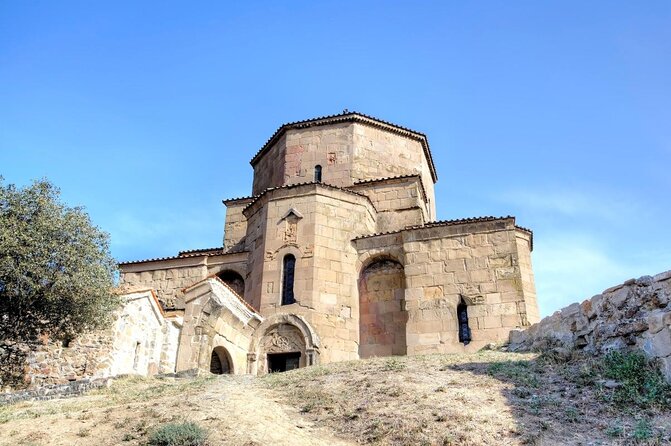
- Jvari gives you the great opening view: The sixth-century monastery looks across the meeting point of the Mtkvari and Aragvi rivers toward Mtskheta.
- Mtskheta combines a small old town with major religious sites: You visit Svetitskhoveli Cathedral, one of Georgia’s most important churches.
- Gori adds a complicated modern chapter: The town is Joseph Stalin’s birthplace, and his museum preserves a distinctly Soviet presentation of his life.
- Uplistsikhe is the most unusual stop: This ancient cave town was carved into rock and once served as a political and religious center.
- The schedule is full but practical: The tour lasts about 10 hours, with roughly 20 minutes at Jvari, 30 minutes at Svetitskhoveli, 30 minutes at Gori Fortress, 45 minutes at the Stalin Museum, and one hour at Uplistsikhe.
- The price is reasonable for a guided day: At $50.13 per person, transport, fuel, water, pickup, and guide service are included, while two admission fees and lunch are extra.
Why This Day Trip Works from Tbilisi
Mtskheta, Gori, and Uplistsikhe lie west of Tbilisi, and together they make a sensible day outside the capital. You begin with Georgia’s Christian heritage, move into the country’s medieval and royal past, then finish with a Soviet-era museum and an ancient rock settlement.
That range is the tour’s strongest feature. You are not spending ten hours looking at similar churches or ruins. Each stop asks a different question: how did Christianity shape Georgia, how did old kingdoms organize power, how should a country remember Stalin, and how did people live before modern cities?
The tour costs $50.13 per person. For that price, the value comes mainly from the transport and the amount of ground covered in one day. A private car, fuel, pickup, and a guide would normally make these places more costly to arrange independently, especially if you do not want to work out the route yourself.
Still, budget for the extras. The Stalin Museum and Uplistsikhe charge admission separately, and lunch is your responsibility. The supplied information does not give the exact admission prices or a scheduled lunch stop, so ask the operator about both before departure.
The group can include up to 20 people. That is small enough to remain manageable, but it is not a private tour by default. Pickup is offered, and confirmation is provided at booking. The tour also has a mobile ticket, which is useful when you are moving between several stops.
More Gori and Stalin Museum runs:
- Tbilisi: Mtskheta, Jvari, Gori and Uplistsikhe Day Tour
★ 4.9 · 2,396 reviews - Day Trip to Mtskheta Gori and Uplistsikhe
★ 5.0 · 1,801 reviews - From Tbilisi : Mtskheta, Jvari, Gori & Uplistsikhe Day Trip
★ 4.8 · 432 reviews
Jvari Monastery and the Meeting Rivers
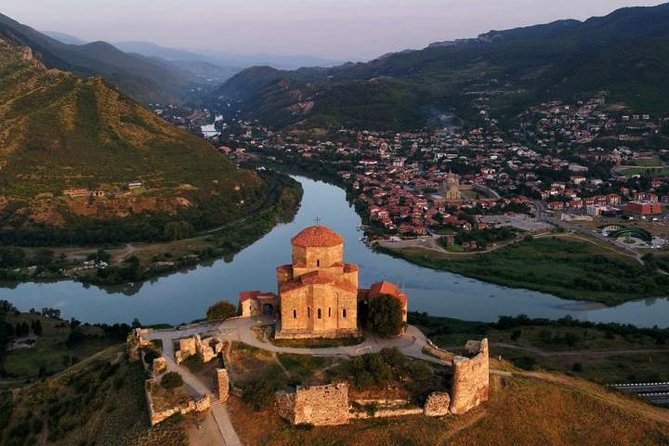
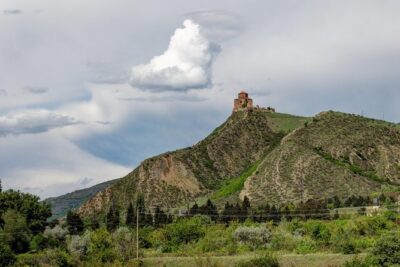
Jvari Monastery is a short but important first stop. It sits on a rocky hill above Mtskheta, at the confluence of the Mtkvari and Aragvi rivers. The setting explains much of its appeal: you get a broad view of the old capital and the surrounding Georgian countryside before entering the day’s next historic center.
The monastery dates from the sixth century and is tied to the adoption of Christianity in Georgia. According to the traditional account, King Mirian III placed a large wooden cross here after Georgia accepted Christianity. Later, in the second half of the sixth century, Guaram, ruler of Kartli, built a small church beside the Holy Cross.
You have about 20 minutes at Jvari. That is enough to look inside, take in the hilltop position, and hear the basic story, but it is not a long church visit. If you care about photography, this is the moment to be ready before the group moves on. The viewpoint is the point of the stop as much as the stone building itself.
Jvari is recognized by UNESCO as part of the historic monuments of Mtskheta. The UNESCO status matters here because the monastery is not simply a scenic church. It is part of the early Christian story of Georgia, a country where religious identity remains closely tied to national history.
Dress and behavior should be respectful. This is an active Georgian Orthodox site, not only an archaeological attraction. The provided details do not specify a dress code, so your safest choice is modest clothing and quiet conduct inside.
Mtskheta, Svetitskhoveli, and Georgia’s Christian Story
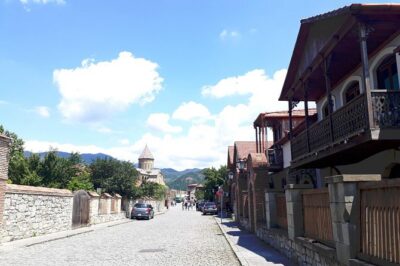
From Jvari, the tour continues to Mtskheta, the former capital of the Kingdom of Iberia. The old town is known for its streets, balconies, and traditional architecture, so do not focus only on the cathedral. Use the walk to notice the town’s scale and layout. Mtskheta feels different from Tbilisi because the historic center is more compact and closely tied to its religious monuments.
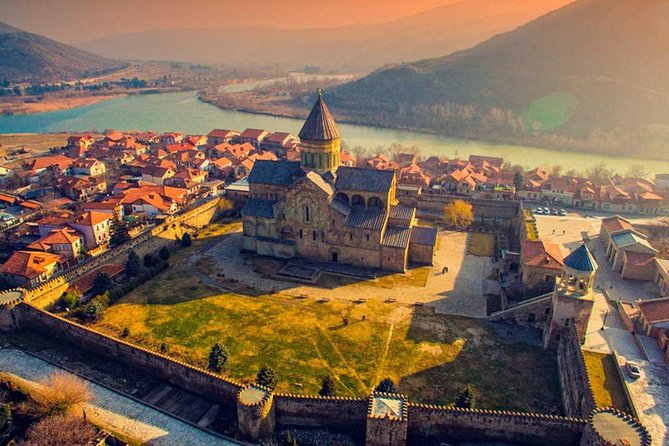
The main visit is Svetitskhoveli Cathedral, with about 30 minutes allotted. It is an Eastern Orthodox church and a UNESCO World Heritage site. The present cathedral was built in the eleventh century and is the second-largest church building in Georgia, after Tbilisi’s Holy Trinity Cathedral.
The name and importance of Svetitskhoveli are linked to a religious legend about the Tunic of Jesus Christ. The story tells of Elioz, a citizen of Mtskheta, who found the tunic in Jerusalem. His sister Sidonia died after touching it and was buried wrapped in the garment. A cedar tree then grew over her grave, and the tree became part of the story of the cathedral’s origin.
You do not need to accept the legend literally to understand why it matters. Religious traditions often explain why a place became sacred, and this story helps explain Svetitskhoveli’s place in Georgian faith and culture. Inside, your guide can provide context that makes the carvings, icons, and worship space easier to read.
Thirty minutes is a short visit for a cathedral with this much history. You will get the central points, but you may not have time to examine every detail. The benefit is that the tour avoids spending the whole morning at one site, which keeps the full day possible.
Mtskheta is one of the stops where the guide adds real value. A bare walk through an old town can become a series of pretty balconies and photographs. With historical explanation, you can connect the streets, the church, the former capital, and Georgia’s conversion to Christianity.
Gori Fortress and the City of Stalin
Gori changes the mood. Its best-known connection is Joseph Stalin, who was born here, but the town also has a medieval fortress above it. Gori Fortress occupies a hill and dates in origin to the thirteenth century, though the structure changed hands and was rebuilt over later centuries.
The castle was captured by the Ottomans in the sixteenth century and later passed repeatedly between Ottoman, Georgian, and Persian control. Much of what you see today dates from the seventeenth and eighteenth centuries. A 6.2-magnitude earthquake in 1920 caused serious damage, which helps explain the fortress’s partly ruined appearance.
You have about 30 minutes at Gori Fortress. That should give you time to walk around the hilltop area and hear how Gori fit into the region’s military history. The stop is also useful because it prevents the city from being reduced to one man and one museum.
The fortress is free according to the tour details. That keeps this part of the day simple, though you should expect uneven stone surfaces and an uphill setting. The information provided does not promise a fully accessible route, so anyone with mobility concerns should ask Evatour for current details before booking.
More cave cities you can walk through:
- Tbilisi: Borjomi, Rabati & Vardzia Adventure Guided Tour
★ 4.9 · 817 reviews - From Tbilisi: Rainbow Mountain & David Gareja Monastery Trip
★ 4.9 · 705 reviews - Day Trip to Rainbow Mountains and David Gareja
★ 5.0 · 408 reviews - From Tbilisi: Mtskheta, Jvari, Gori, Uplistsikhe Guided Tour
★ 4.7 · 354 reviews
The Stalin Museum and a Soviet-Era Presentation
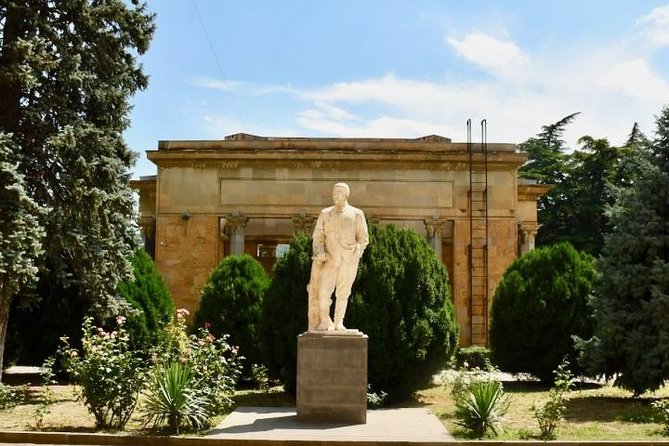
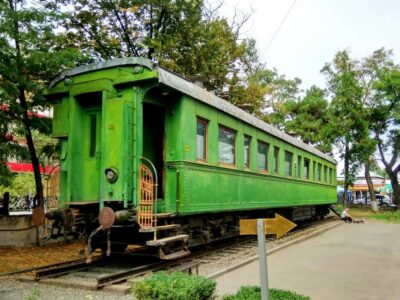
The Joseph Stalin Museum is one of the day’s most thought-provoking stops. Stalin was born in Gori, and the museum is dedicated to his life. It includes his childhood home, museum displays, and a train carriage associated with him. The visit is scheduled for about 45 minutes.
The museum retains its Soviet-era character. That is important to understand before entering. The presentation does not simply offer a neutral, modern biography. Its tone and display style reflect the period in which the museum was created, making the building itself part of the story.
Some of the exhibits are unusual and not easily found elsewhere. The material is presented in Georgian and Russian, so an English-speaking guide can make a major difference. One especially practical tip is to ask your guide to explain the displays as you go rather than relying only on written labels.
The museum can be fascinating, but it may also feel uncomfortable. Stalin’s rule involved mass repression, forced collectivization, purges, and wartime decisions that affected millions. The museum’s older presentation may not give equal weight to all those subjects. I would treat the visit as both a look at Stalin and a lesson in how political memory was shaped during the Soviet period.
Admission is not included. The tour provides 45 minutes, which is enough for a focused visit but may feel brief if you want to read every display. If the museum is a major reason for your booking, confirm whether the guide enters with the group and offers English explanations.
Uplistsikhe, Georgia’s Rock-Cut Town
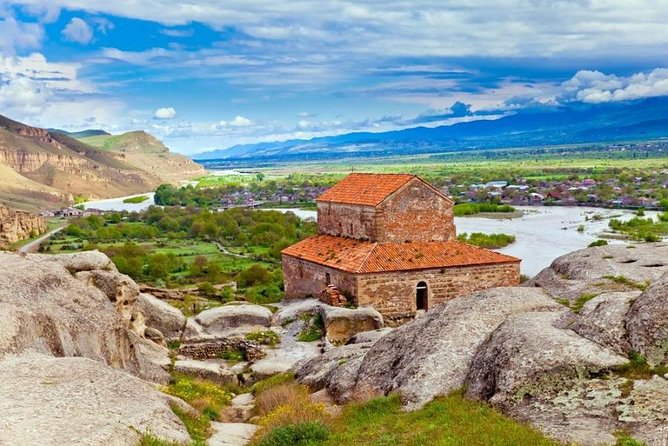
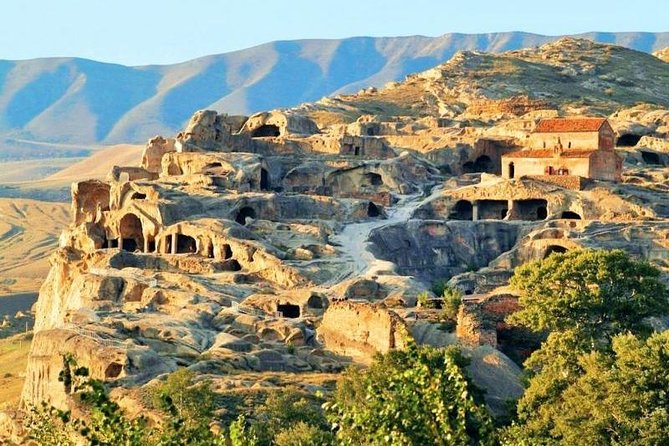
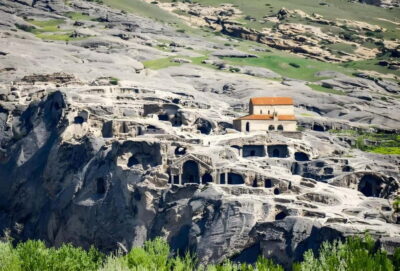
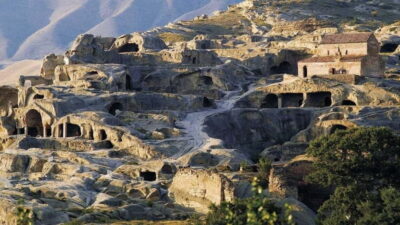
Uplistsikhe is the most distinctive stop of the day. The name means fortress of the lord, and archaeologists identify the site as one of Georgia’s oldest urban settlements. Its history reaches back to the second or first millennium BC, making it far older than the medieval buildings seen earlier.
The settlement was carved into rock in the heartland of the ancient Kingdom of Kartli, also known to classical writers as Iberia. In antiquity, Uplistsikhe served as a major political and religious center. During the Middle Ages, it sat on a trade route linking Byzantium with India and China.
You have about one hour here. Wear practical shoes and watch your footing. The site includes rock-cut rooms, passages, and open areas, and the terrain can be uneven. The supplied tour information does not describe the exact walking conditions or a full accessibility plan, so ask before booking if steep or irregular surfaces are a concern.
Uplistsikhe rewards attention to structure. Look at how rooms were cut from the rock and how the settlement used its position for defense and administration. The site was not merely a set of caves. It was an organized town with religious, political, and commercial importance.
Medieval Georgian tradition credited the foundation to the mythical Uplos, son of Mtskhetos and grandson of Kartlos. This legend connects Uplistsikhe to the same larger national origin stories that surround Mtskheta. The archaeological evidence, however, takes the settlement much further back, into the second and first millennia BC.
Admission is extra, like the Stalin Museum. One hour gives you a useful introduction, but the site could easily occupy more time for anyone interested in archaeology. On a tightly scheduled day, the guide’s explanations help you decide which details deserve your attention.
The Guide, Vehicle, and Overall Pace
Transport is by air-conditioned vehicle, and bottled water and fuel costs are included. Those details may sound ordinary, but they matter on a ten-hour route. You are moving between several towns and historic sites, so a reliable vehicle is more valuable than a polished vehicle description.
Pickup is offered, which makes the morning easier. The tour is based in Tbilisi and is near public transportation, although the exact pickup arrangements are not provided. Confirm your pickup point and start time after booking.
The guide is central to the experience. One particularly positive arrangement involved a guide named Aleko, who led a solo replacement tour after the original departure was canceled for low numbers. That suggests useful flexibility from Evatour, though it does not guarantee that Aleko will lead your departure.
The published rating is five out of five from three reviews. That is encouraging, especially because the praise focuses on the host, transport, information, and willingness to adapt. It is still a small sample, so I would use it as a positive signal rather than proof that every departure will be identical.
The day will feel full. Jvari and Svetitskhoveli are short visits, while Gori Fortress, the Stalin Museum, and Uplistsikhe each require walking and attention. You should book this tour for coverage and context, not for slow meals or long stretches of free time.
What the $50.13 Price Really Includes
At $50.13, this is a strong value if you want to see all three destinations in one day. The fee covers an air-conditioned vehicle, bottled water, fuel surcharge, pickup, and professional guide service. It also saves you the trouble of arranging transport between five separate stops.
The price does not cover lunch, the Stalin Museum, or Uplistsikhe. Those costs are not necessarily a problem, but they affect your real budget. Ask for the current admission fees and how lunch is handled before you set out.
A self-guided trip could offer more time at each site, especially Uplistsikhe and the Stalin Museum. The tradeoff is planning the route, transport, and timing yourself. This tour is better value for you if your priority is seeing the major sights efficiently with historical explanation.
The free cancellation policy allows a full refund when you cancel at least 24 hours before the start time. Changes or cancellations inside that window are not accepted for a refund. Since the tour requires a minimum number of participants, Evatour may cancel a departure and offer another date, another experience, or a full refund.
Who Should Book This Tour?
I would choose this tour if you have limited time in Tbilisi and want a broad introduction to central Georgian history. It suits first-time visitors who want ancient churches, a fortress, a Soviet museum, and an archaeological site without arranging several separate excursions.
It is also a good fit for anyone who values a guide’s explanations. Mtskheta and the Stalin Museum carry stories that are easy to misunderstand without context, and Uplistsikhe makes more sense when you know its role as a settlement and trade center.
You may want another option if you prefer slow travel. The schedule gives you a useful look at each place, but not a leisurely one. History enthusiasts who want extensive museum reading or a long archaeological visit may find the one-hour and 45-minute stops too short.
Final Verdict: A Strong History Day Outside Tbilisi
Book this tour if you want maximum variety in one day and accept a steady pace. Jvari’s hilltop setting, Mtskheta’s cathedral, Gori’s divided memory of Stalin, and Uplistsikhe’s ancient rock rooms give the day a clear sense of progression.
I would especially recommend it for a first visit to Georgia, provided you budget for the two extra admissions and lunch. If you want a slow, deeply focused visit to one site, choose a shorter private outing instead. If you want a practical, affordable route through several of Georgia’s most important historic places, this Evatour day is a sensible choice.
FAQ
How long does the tour last?
The tour lasts approximately 10 hours.
Where does the tour begin?
The tour is based in Tbilisi, Georgia, and pickup is offered.
What places are visited?
The route includes Jvari Monastery, Mtskheta and Svetitskhoveli Cathedral, Gori Fortress, the Stalin Museum, and Uplistsikhe Cave Town.
Is transportation included?
Yes. An air-conditioned vehicle, fuel surcharge, and bottled water are included.
Are entrance fees included?
Admission to the Stalin Museum and Uplistsikhe is not included. The tour information lists free admission for Jvari Monastery, Svetitskhoveli Cathedral, and Gori Fortress.
Is lunch included?
No. Lunch is not included in the tour price.
How large can the group be?
The maximum group size is 20 people.
What is the cancellation policy?
You can cancel up to 24 hours before the experience’s start time for a full refund. Cancellations or changes made less than 24 hours before the start time are not accepted for a refund.
More Mtskheta and Jvari Half-Days
- Tbilisi: Mtskheta Jvari Bazaar, Chronicles of Georgia & Wine
★ 5.0 · 1,088 reviews - Tbilisi:Mtskheta,Jvari,Bazaar,wine tasting,Chronicles of Georgia
★ 5.0 · 730 reviews - Tbilisi: The Chronicles of Georgia, Jvari & Mtskheta Tour
★ 5.0 · 307 reviews - From Tbilisi: Mtskheta, Jvari, Gori & Uplistsikhe Cave Tour
★ 4.7 · 296 reviews
Just added near Tbilisi
- Wine Tasting feel the Difference of Qvevri or Classical Wine★ 4.4 · 10 reviews
- Walking Tour in Old Tbilisi – Group Tour★ 4.5 · 8 reviews
- From Tbilisi: Kakheti and Kazbegi 2-Day 4X4 Jeep Tour pack★ 5.0 · 6 reviews
- Tbilisi: Vintage Fashion and Secondhand Thrifting Tour★ 5.0 · 11 reviews
- Uforgatable Kakheti Tour with wine tasting – in Georgia★ 4.9 · 5 reviews
- From Tbilisi: Uplistsikhe Caves and Mtskheta Town Day tour★ 5.0 · 2 reviews
- Tbilisi Airport to Gudauri, Bakuriani, Batumi, Tbilisi★ 5.0 · 3 reviews
- Private Adorable City Tour of Tbilisi★ 5.0 · 3 reviews
Gori and Stalin Museum Tours, compared.
Mtskheta, Jvari, Gori and Uplistsikhe Day Tour
Read our review →
Mtskheta, Jvari, gori, uflistsikhe, history and panorama (group tours)
Read our review →Browse the lists this tour appears in