
Reviewed · SOVIET HERITAGE TOURS
Soviet Tour – Hidden Tbilisi
Tbilisi has Soviet stories hiding in plain sight. I like this tour for its small six-person group and its sharp focus on unusual buildings, monuments, and political history beyond the usual old town route. The air-conditioned vehicle also matters, since the sights are spread across the city rather than packed into one walkable district. The main consideration is timing: it is advertised at three to four hours, but a full version with extra stops and long conversations can run closer to five.
I also like that the experience does not treat Soviet architecture as a collection of odd concrete shapes. Guides such as Giorgi, Irakli, David, and George connect each place to Georgian life, state power, propaganda, and changing uses. You should expect an educational outing rather than a glossy sightseeing loop, and the underground printing house can feel more serious than scenic.
In This Review
- Key points to know before booking
- Why Soviet Tbilisi deserves a separate tour
- The first two hours with Real Georgia Tours
- The Bank of Georgia and its unusual shape
- The Chronicles of Georgia at the edge of the city
- Below ground at Stalin’s underground printing house
- Guides who make the difference
- Optional additions and the value of flexibility
- Is $99 a fair price?
- Who should book this Tbilisi experience?
- Practical advice before you go
- Should you book Soviet Tour, Hidden Tbilisi?
- FAQ
- How long does Soviet Tour, Hidden Tbilisi last?
- What language is the tour offered in?
- How many people can join the tour?
- Is transportation included during the tour?
- Where does the tour start and finish?
- Are admission tickets included?
- Can I cancel for a full refund?
Key points to know before booking
- Small groups make the history conversational: A maximum of six people gives you room to ask about Georgia, Stalin, architecture, and daily life under Soviet rule.
- The route crosses Tbilisi: The included air-conditioned vehicle saves time and energy as you move between widely separated sites.
- The Bank of Georgia building has a practical origin: Its unusual form was shaped by a pragmatic reason, not simply a desire to make a dramatic monument.
- The Chronicles of Georgia brings grand Soviet symbolism outdoors: The huge stone monument offers both socialist monumentalism and broad views toward Tbilisi’s outer districts.
- Stalin’s printing house adds human and political weight: You see the underground place where propaganda leaflets and plans were produced.
- Extra stops may be possible: One account describes an optional Soviet car museum, while another mentions personal introductions to historians and a khachapuri surprise.
Why Soviet Tbilisi deserves a separate tour
Tbilisi is often introduced through balconies, churches, sulfur baths, and narrow old-town lanes. Those are worthwhile, but they tell only part of the city’s story. Soviet rule altered public spaces, architecture, transport, industry, education, and the way history was presented.
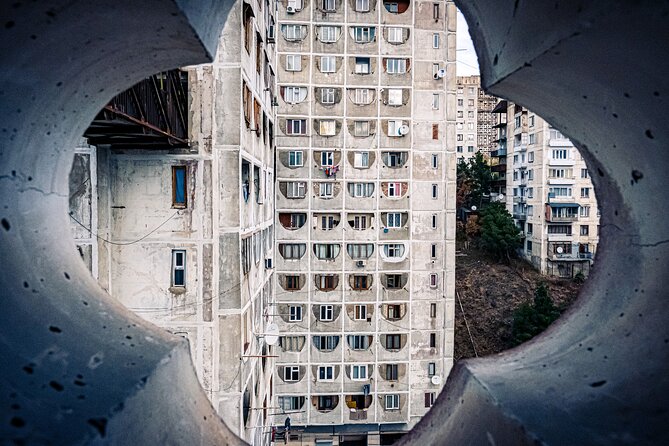
This experience takes you into that less polished layer of the city. You see buildings that were made for banks, administration, propaganda, commemoration, and control. Some are strange. Some are imposing. Others are simply practical structures that became important because of how people used them.
I like the approach because it treats Soviet Tbilisi as more than a photo opportunity. You are encouraged to ask what a building was meant to communicate, who had access to it, and what happened to it after the Soviet period. That makes the tour useful even if you are not an architecture specialist.
The group limit of six is a real advantage here. With a large bus group, a guide would need to deliver a fixed speech and move on. In a small vehicle, you can ask why Georgian experience differed from life elsewhere in the Soviet Union, or how people remember the period today. Guides named in the experience include Giorgi, Irakli, David, and George, and the strongest praise centers on their clear explanations, warmth, and ability to answer questions.
More Soviet-era sights around Tbilisi:
- Tbilisi: Mtskheta Jvari Bazaar, Chronicles of Georgia & Wine
★ 5.0 · 1,088 reviews - Tbilisi:Mtskheta,Jvari,Bazaar,wine tasting,Chronicles of Georgia
★ 5.0 · 730 reviews - Tbilisi: The Chronicles of Georgia, Jvari & Mtskheta Tour
★ 5.0 · 307 reviews
The first two hours with Real Georgia Tours
The main sightseeing portion begins with a broad look at the non-touristic side of Tbilisi. Rather than spending the opening stretch at one famous landmark, your guide moves through several Soviet-era monuments and buildings spread across the city.
That format gives you useful context. You are not seeing isolated curiosities. You are comparing different types of Soviet design and different purposes. One building may express state authority, another may serve a practical civic need, and another may use monumental scale to shape public memory.
I would use this early section to ask questions. How much of the design came from Moscow, and how much reflected local Georgian ideas? Which buildings still serve their original purpose? What has been preserved, altered, or allowed to fade? The guides are praised for connecting architecture with modern and historic Georgia, so this is where the tour’s value grows beyond taking pictures.
The wording of the schedule allows about two hours for this wider city tour. The complete experience is listed at roughly three to four hours, including the named stops that follow. In practice, allow some flexibility. A guide may spend more time answering questions, show an additional location, or arrange an unscheduled stop if the group is interested.
That flexibility is appealing, but it also means you should not plan a tight appointment immediately afterward. One account describes a journey lasting about five hours, with five Soviet-related places, conversations with historians, and extra interpretation. Treat the published duration as an estimate rather than a stopwatch promise.
The Bank of Georgia and its unusual shape
The Bank of Georgia headquarters is one of the route’s most interesting architectural stops. It is often placed among the top examples of Soviet architecture, and the building’s shape immediately explains why it attracts attention.
The important detail is that the form had a pragmatic reason. This gives your guide a chance to move the conversation away from the lazy idea that all Soviet buildings were designed simply to look severe or strange. Here, the shape relates to function, planning, and the demands placed on the building.
You will have about 15 minutes at this stop, with no separate admission charge. That is enough for an explanation and photographs, but not for a long architectural study. If this is the sight you most want to examine, ask your guide to explain the practical logic carefully.
The short visit also fits the overall rhythm. The tour is not trying to turn every stop into a full museum visit. It gives you a series of strong examples, then lets the guide build connections between them. I find that approach more useful than spending the whole afternoon on one building while missing the wider city.
The Chronicles of Georgia at the edge of the city
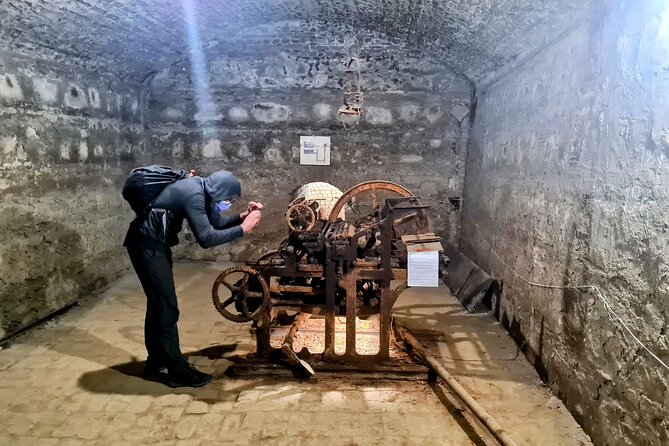
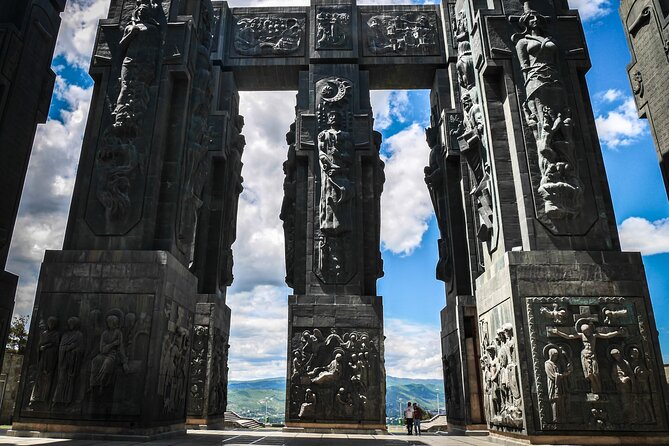
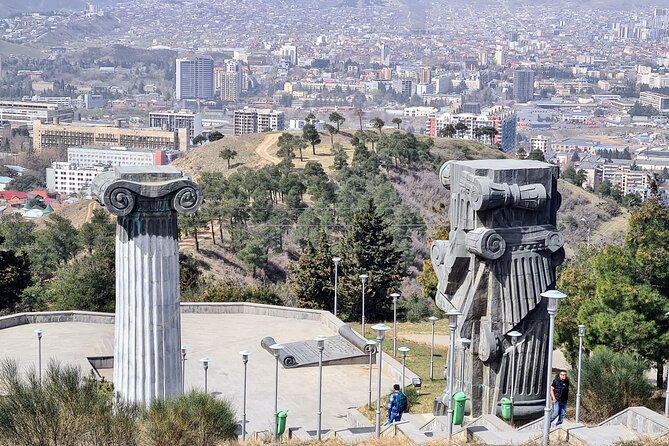
The Chronicles of Georgia is the tour’s grandest outdoor stop. It is sometimes called the Stonehenge of Tbilisi because of its enormous stone columns and imposing scale. The comparison is catchy, though the monument belongs to a very different political and artistic world.
This is a clear example of socialist monumentalism. The monument uses size, stone, and placement to make history feel official and permanent. Your guide can help you read the site as political art rather than just a dramatic viewpoint.
You get about 30 minutes here. That should give you time to see the columns, take in the setting, and look across Tbilisi’s outer districts. The panorama is a useful counterpoint to the city center. Instead of seeing only restored streets and tourist landmarks, you get a sense of the wider urban area.
The site may be the most rewarding place for photographs, but do not let the views distract you from the explanation. Ask what stories the monument presents and which stories it leaves out. That question gets to the heart of how public history worked under Soviet rule.
Because it is outdoors, this stop may feel more weather-dependent than the vehicle or museum portions. The provided details do not specify shelter, so I would dress for the conditions and bring water. The visit itself is free, but its value depends heavily on the guide’s interpretation.
More Tbilisi days to weigh up
- Tbilisi: Day Trip to Kazbegi, Gudauri, Gergeti, and Ananuri
★ 4.9 · 3,203 reviews - Day Trip to Kakheti Wine Region Including 9 Wine Tastings
★ 5.0 · 2,774 reviews - Highlights of Caucasus Mountains-Jinvali,Ananuri,Gudauri,Kazbegi(Group tour)
★ 5.0 · 2,682 reviews - From Tbilisi: Kakheti Wine Region Tour with 9 Wine Tastings
★ 4.9 · 2,541 reviews
Below ground at Stalin’s underground printing house
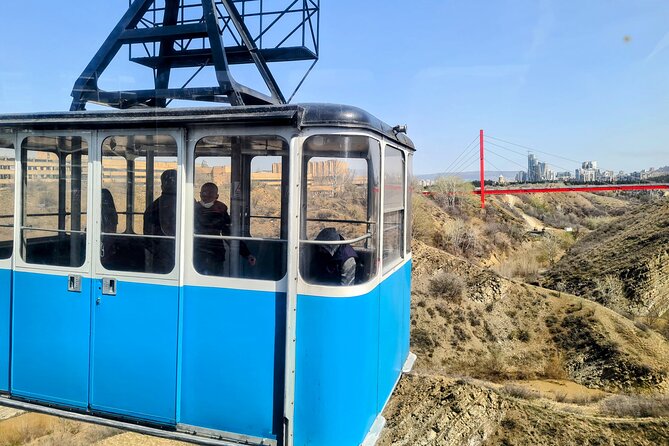
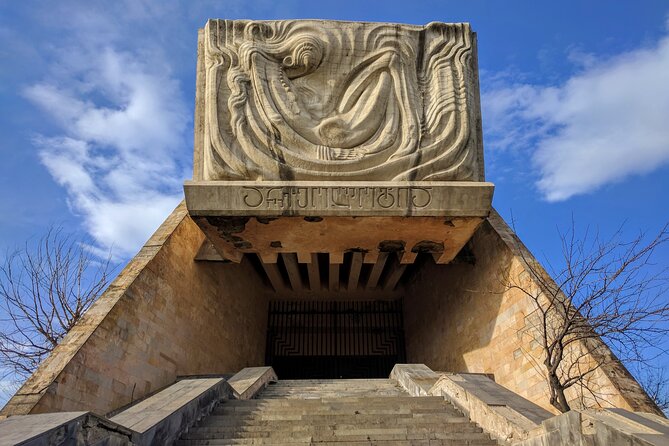
The underground printing house is the most intimate and politically charged stop. Here, Stalin and his supporters produced plans and propaganda leaflets. The site gives the tour a direct connection to revolutionary organizing, clandestine work, and the use of printed material to spread political ideas.
You get about 40 minutes, and admission is included. That is a substantial portion of the outing, which makes sense. A place like this needs explanation. Without context, an underground room can seem like a curiosity. With a guide, it becomes a way to understand how political movements operated and how propaganda reached ordinary people.
I would expect this stop to be less polished than a conventional museum. The appeal is not a grand display but the sense of a working hidden space tied to real political activity. The subject matter may also feel darker than the architectural stops, especially if you are thinking about censorship, coercion, and the wider cost of revolutionary politics.
A particularly strong version of the tour may include conversations with people connected to the sites. One detailed account describes introductions to two historians who manage locations and explain how they view the Soviet period. That sort of personal perspective can add a human layer that a standard plaque cannot provide.
The exact availability of these conversations is not guaranteed, so I would not book solely for them. Still, the possibility helps explain why a small group is useful. If a historian is available, you have a better chance to ask questions and hear a thoughtful exchange rather than being hurried through with a large crowd.
Guides who make the difference

The guide is central to this experience. Soviet architecture can be fascinating, but it can also become a blur of concrete, dates, and political labels without a strong storyteller.
Giorgi is praised for connecting architecture with both historic and modern Georgia. Irakli is described as especially good at answering questions about Georgian history and the Soviet period. David is noted for offering relevant background stories about how buildings relate to the country’s past and present. George is praised for clear communication before the tour, a steady flow of information, and flexibility during the outing.
Those details matter because the route is not just a fixed collection of photo stops. The best guide will respond to what interests you. If you care about design, ask about construction and purpose. If politics interests you, ask about propaganda and memory. If you are curious about daily life, ask how ordinary people experienced the period.
One especially charming touch was a special bean-filled khachapuri offered at the end of one outing. It is not listed as a standard inclusion, so do not count on receiving it. But it shows the kind of personal Georgian touch that can make a history tour feel warm rather than purely academic.
Optional additions and the value of flexibility
The core route includes the wider city tour, the Bank of Georgia, the Chronicles of Georgia, and the underground printing house. One group also chose an additional Soviet car museum stop, with restored cars and bikes.
That museum is not part of the guaranteed route described here, so confirm any extra stop with the provider before you count on it. If available, it would suit anyone interested in Soviet objects, design, engineering, or transport. It also gives the tour a change of pace after monuments and political history.
The guides may also be willing to respond to interests outside the planned stops. George is praised for making time to look at other things, and for dropping a participant somewhere more convenient after the tour. Again, do not assume a custom drop-off is guaranteed, but it is worth asking politely if your plans have changed.
I like this flexible style, yet it comes with one tradeoff. A tour with extras can run longer than the advertised three to four hours. If you have an evening train, a timed museum entry, or a restaurant reservation, keep a generous buffer.
Is $99 a fair price?
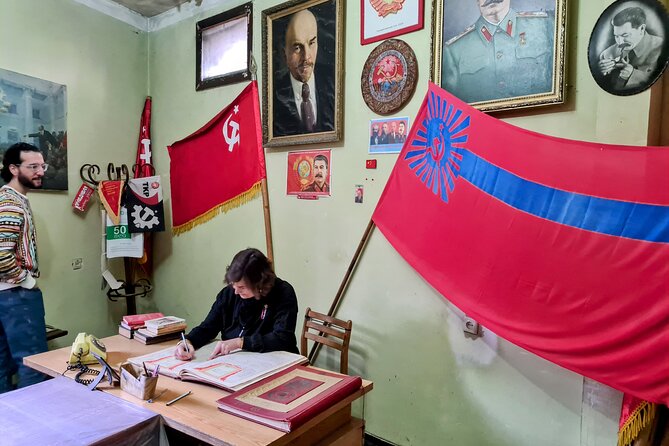
At $99 per person, this is not a bargain-priced city ride. The price becomes easier to justify if you value a private-feeling small group, an air-conditioned vehicle, admission to the underground printing house, and a guide who can explain the sites in English.
You are paying for more than transport. The sights are spread across Tbilisi, and reaching them independently would require planning, public transport, taxis, and background research. You could probably visit some locations for less money on your own, but you would lose the connecting story and may struggle to understand why each place matters.
The group limit of six improves the value. You are not paying for a large coach operation with little personal attention. You get a guide who can answer questions and adjust the pace, at least within the limits of the day.
I would recommend the price to people with a serious interest in Soviet history, architecture, or Georgian politics. If you mainly want famous Tbilisi views and old-town atmosphere, the cost may feel high for a tour that spends much of its time outside the classic postcard route.
Group discounts are available, so check the final price if you are booking with companions. The experience is offered in English, includes a mobile ticket, and confirmation arrives at booking. You arrange your own way to the meeting point at 2 Rose Revolution Square, and the outing returns there at the end.
Who should book this Tbilisi experience?
I would choose this tour if you want to understand how the Soviet period shaped Georgia in large and small ways. It suits visitors who enjoy architecture, political history, unusual museums, and conversations with local guides.
It also works well for repeat visitors who have already seen the old town and want a different side of Tbilisi. The route reaches places you might not choose on your own, especially when you do not know where the city’s Soviet-era landmarks are located.
The small group should suit solo visitors and couples who prefer questions and conversation. Most people can participate, and the route is near public transport, but the supplied details do not describe step-free access or specific mobility arrangements. If accessibility is important, ask the provider before booking, especially because the underground printing house may have physical limitations.
This is less suitable if you dislike history lectures, prefer a relaxed walking tour, or want every minute planned to the exact schedule. The subject can also be politically heavy. The guide’s humor and warmth help, but the printing house and propaganda material are not light entertainment.
Practical advice before you go
Meet at 2 Rose Revolution Square, and remember that transport to the meeting point is not included. The tour ends back there, although a more convenient drop-off may sometimes be possible if the guide agrees.
Plan for roughly three to four hours, but leave extra time if you want to ask questions or add a museum stop. One detailed outing lasted about five hours, so I would avoid booking a close follow-up commitment.
Wear sensible clothing for both vehicle time and outdoor exploration. The Chronicles of Georgia is an open-air stop, while the printing house takes you underground. The experience includes an air-conditioned vehicle, so you can cover a lot of ground without spending the whole day in the heat.
Free cancellation is available when you cancel at least 24 hours before the local start time. Changes or cancellations made inside that window are not accepted for a refund.
Should you book Soviet Tour, Hidden Tbilisi?
I would book it if you want the city’s Soviet story told through real buildings and places rather than a textbook. The strongest reasons are the small group, the air-conditioned transport, the unusual route, and guides such as Giorgi, Irakli, David, and George who bring plenty of context.
I would skip it if your Tbilisi visit is very short and you only want the old town, churches, baths, and classic viewpoints. At $99, this is a focused history experience, not a general introduction to the city.
For the right person, it offers a memorable way to see Tbilisi’s less familiar face. Just keep your schedule loose, ask questions, and treat the published duration as an estimate.
FAQ
How long does Soviet Tour, Hidden Tbilisi last?
The experience is listed as approximately three to four hours. Individual outings may last longer when the group spends extra time at sites, speaks with historians, or adds another stop.
What language is the tour offered in?
The tour is offered in English.
How many people can join the tour?
The maximum group size is six people.
Is transportation included during the tour?
An air-conditioned vehicle is included for moving between the city’s scattered sights. Transfer to and from the meeting point is not included.
Where does the tour start and finish?
The tour starts at 2 Rose Revolution Square, Tbilisi 0108, Georgia. It ends back at the meeting point.
Are admission tickets included?
Admission to Real Georgia Tours and Stalin’s underground printing house is included. The Bank of Georgia and Chronicles of Georgia stops have no separate admission charge.
Can I cancel for a full refund?
Yes. You can receive a full refund if you cancel at least 24 hours before the experience start time. Cancellations or changes made less than 24 hours before the start time are not accepted for a refund.
Just added near Tbilisi
- Wine Tasting feel the Difference of Qvevri or Classical Wine★ 4.4 · 10 reviews
- Walking Tour in Old Tbilisi – Group Tour★ 4.5 · 8 reviews
- From Tbilisi: Kakheti and Kazbegi 2-Day 4X4 Jeep Tour pack★ 5.0 · 6 reviews
- Tbilisi: Vintage Fashion and Secondhand Thrifting Tour★ 5.0 · 11 reviews
- Uforgatable Kakheti Tour with wine tasting – in Georgia★ 4.9 · 5 reviews
- From Tbilisi: Uplistsikhe Caves and Mtskheta Town Day tour★ 5.0 · 2 reviews
- Tbilisi Airport to Gudauri, Bakuriani, Batumi, Tbilisi★ 5.0 · 3 reviews
- Private Adorable City Tour of Tbilisi★ 5.0 · 3 reviews
Soviet Heritage Tours, compared.
Mtskheta Jvari Bazaar, Chronicles of Georgia & Wine
Read our review →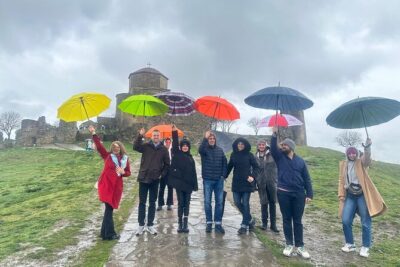
Mtskheta,Jvari,Bazaar,wine tasting,Chronicles of Georgia
Read our review →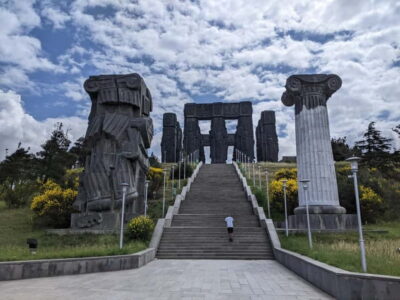
The Chronicles of Georgia, Jvari & Mtskheta Tour
Read our review →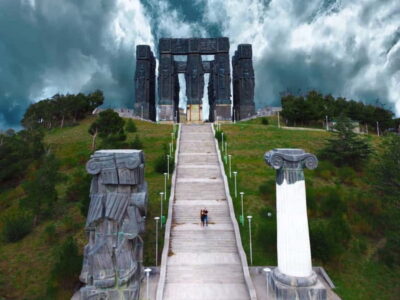

1 Day Private Armenia: UNESCO, Soviet & Curated Family Lunch
Read our review →
Jvari-Uplistsike-Chronicle of Georgia, PRIVATE Trip
Read our review →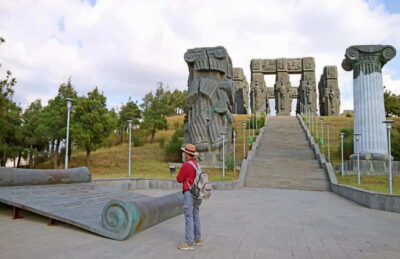

Day tour to Chronicles of Georgia, Gori city, Uplistsikhe cave
Read our review →Browse the lists this tour appears in