
Reviewed · SOVIET HERITAGE TOURS
Tbilisi: Discover the Soviet Past Walking Tour
Tbilisi’s Soviet past still whispers from its streets. I like that this two-hour walking tour looks beyond grand political events to family life, propaganda, surveillance, and the odd little truths people shared privately. I also like the personal angle, with guides such as Natalie bringing lived experience and local memory into the story. The main drawback is that two hours can only provide an overview, and the route is not suitable for wheelchair users.
This is a good choice if you have already seen Tbilisi’s old town and want to understand the modern country better. The tour costs $26 per person, which feels fair for a small-group experience with an English-speaking local guide, especially if the conversation is as flexible as the tour description suggests. Still, do not expect a standard parade of famous sights. This is about reading the city through its buildings, streets, silences, and stories.
In This Review
- Key points to know before booking
- Why Tbilisi’s Soviet past matters
- Meeting the guide at Freedom Square
- Reading Soviet architecture through the city
- The private world behind official slogans
- Politics, propaganda, and ordinary family life
- A conversational two-hour format
- The guide’s style is central to the experience
- What the $26 price gets you
- Who should book this walking tour
- Practical tips for getting more from the walk
- FAQ
- Where does the Tbilisi Soviet past walking tour begin?
- How long does the tour last?
- What language is the tour conducted in?
- How much does the experience cost?
- Can I reserve now and pay later?
- Can I cancel for a full refund?
- Is the tour suitable for wheelchair users?
- Should you book the Soviet Past Walking Tour?
Key points to know before booking
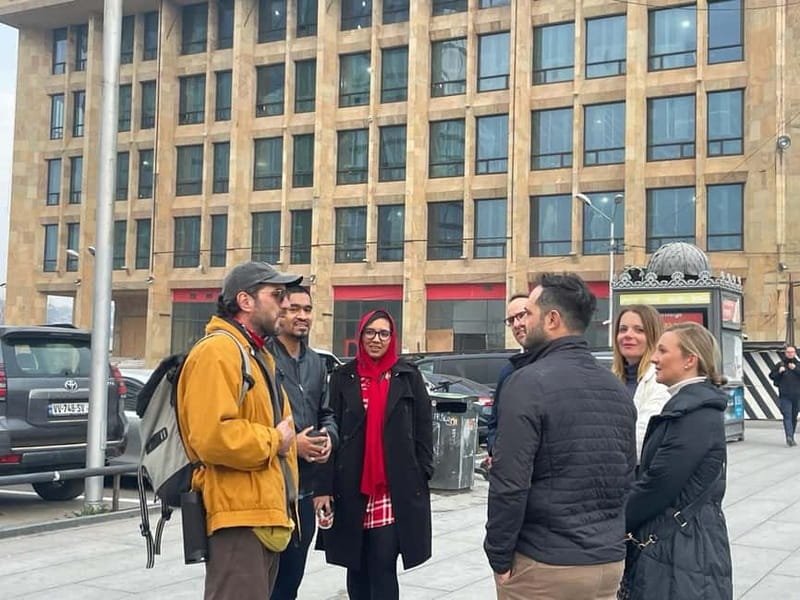
- Freedom Square is the starting point: Meet your guide in front of the Gryphon statue, an easy landmark in central Tbilisi.
- The focus is everyday Soviet life: Politics matters, but so do family routines, whispered information, surveillance, and daily compromises.
- Architecture becomes historical evidence: Soviet design and urban planning help explain how power shaped public space.
- Natalie receives special praise: Her warm, lively style and personal storytelling help keep serious subjects approachable.
- The format is conversational: You can ask questions, and the guide may adjust the discussion rather than deliver long, fixed speeches.
- Plan for a walking route, not a museum visit: Wear sensible shoes and expect the city itself to provide the setting.
Why Tbilisi’s Soviet past matters
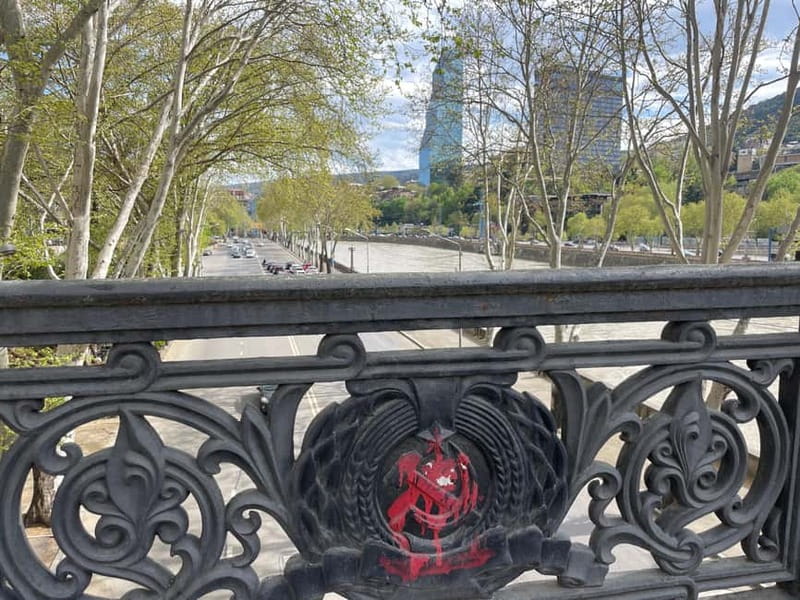
Georgia’s Soviet period was not a neat chapter that began and ended with dates in a textbook. It affected work, education, family life, language, travel, housing, public behavior, and the way people spoke around one another.
That is the useful promise of this tour. You are not only hearing about the Soviet state as a political system. You are looking at how its rules entered ordinary life. The subject includes propaganda and state power, but also the small decisions people made to protect their families, preserve private opinions, or get through the day.
I find that approach far more useful than a list of leaders and official policies. It helps you understand why independence matters so strongly in Georgia and why the country’s relationship with Russia and its own recent past can be so sensitive.
The tour also gives you a way to connect Tbilisi’s present with its built environment. Soviet architecture was not simply a style. Buildings, public spaces, roads, and institutions could express authority, order, uniformity, or control. A guide who explains those features can help you see things you might otherwise pass without a second thought.
More Walking Tours in Tbilisi
- Tbilisi Walking Tour Including Cable Car and Traditional Bakery
★ 5.0 · 1,310 reviews - Tbilisi: City Highlights Guided Walking Tour
★ 4.9 · 1,114 reviews - Tbilisi:Evening Walking & Talking Tour with Wine & Boat Ride
★ 5.0 · 572 reviews
Meeting the guide at Freedom Square
The experience begins at Freedom Square, in front of the Gryphon statue. This is a practical meeting point because it is central, recognizable, and easier to find than a small café or side street.
Arrive with enough time to locate the statue and settle in. The supplied information does not specify a hotel pickup or transportation, so you should plan to reach Freedom Square on your own. Since this is a walking experience, the tour begins right in the middle of the city rather than at a separate visitor center.
The opening location also gives the subject immediate weight. Freedom Square is a place associated with public life, political change, and Georgia’s modern identity. The tour uses that central setting as a doorway into an era when public spaces, official messages, and political expression carried real risks.
Several comments praise the guide’s manner, especially Natalie, whose name also appears as Natalia in one account. She is described as warm, energetic, passionate, and easy to talk with. That matters here. Soviet history can become dry when it is presented as a string of dates, but a lively guide can turn a square into the beginning of a human story.
Reading Soviet architecture through the city
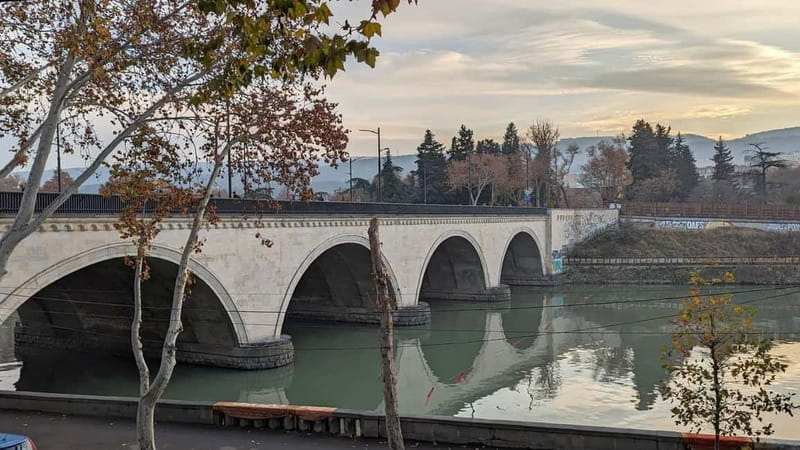
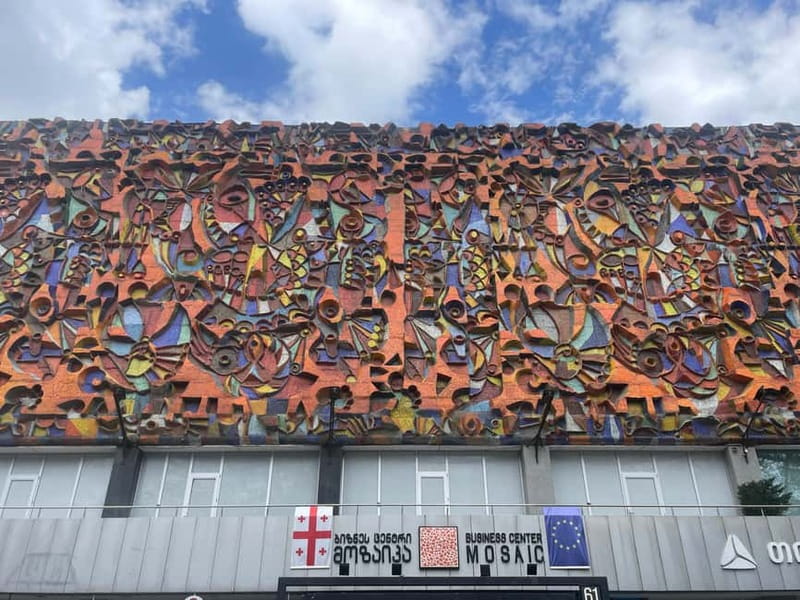
One of the strongest parts of the experience is its attention to Soviet design and urban planning. You will encounter striking examples of architecture along the walking route, though the available details do not name each building or promise entry inside any particular site.
That lack of a fixed landmark list is worth understanding. This is not a tour built around one famous monument. The point is to notice how Soviet-era design appears across the city and how those choices relate to public authority and daily life.
Your guide may explain why certain forms look imposing, repetitive, practical, or severe. You might discuss the relationship between large public structures and the people who used them. You might also consider how a city can communicate political ideas without a speech or a poster.
For you, the value is in learning how to look. After the tour, a plain façade or broad public space may no longer seem plain. You will have a set of questions to ask: Who was this space meant for? What behavior did it encourage? What did the design say about the state and the individual?
The route is also a useful counterpoint to Tbilisi’s better-known old town. Traditional balconies, narrow streets, and older churches often dominate a first visit. This tour shifts your attention to the more recent built city and shows that Tbilisi cannot be understood through medieval and imperial history alone.
The private world behind official slogans
The most appealing part of the experience is its promise to discuss what people knew and whispered about but rarely found in official books. That takes the tour away from simple propaganda analysis and toward the private world behind public language.
You may hear about the difference between what people said at home and what they said in public. You may consider how surveillance changed friendships, workplaces, schools, and family conversations. The exact stories will depend on the guide and the questions in the group, but the theme is clear: constant observation shaped behavior even when nobody was actively being questioned.
This is where a personal guide can make a real difference. A local account can explain not only what the system claimed to do, but how it felt to live with uncertainty. Who could be trusted? Which subjects were safe? How did people pass along information? What did it mean to keep one part of your life private?
The tour does not present Soviet life as one simple experience. Georgia had its own culture, memories, and forms of resistance within the wider Soviet system. A good discussion should leave room for contradiction: people could feel pride in certain achievements, frustration with shortages or restrictions, attachment to familiar routines, and anger at political control all at once.
That balance is important. You are likely to get more from this experience if you arrive ready to ask questions rather than expecting one clean verdict on the entire period.
More Soviet-era sights around Tbilisi:
- Tbilisi: Mtskheta Jvari Bazaar, Chronicles of Georgia & Wine
★ 5.0 · 1,088 reviews - Tbilisi:Mtskheta,Jvari,Bazaar,wine tasting,Chronicles of Georgia
★ 5.0 · 730 reviews - Tbilisi: The Chronicles of Georgia, Jvari & Mtskheta Tour
★ 5.0 · 307 reviews - Tbilisi: The Urbex and Soviet Tour of Tbilisi
★ 5.0 · 127 reviews
Politics, propaganda, and ordinary family life
The subject reaches from high politics down to family life. That range is one of the reasons the tour can appeal to both history fans and curious first-time visitors.
Official politics helps explain the structure of the Soviet Union, but family life shows how the system affected real people. A discussion of homes, work, education, and private routines can give you a clearer sense of what political control meant in practice.
The tour also addresses propaganda. You may look at how official messages shaped the way people understood the state, their neighbors, and the outside world. The useful question is not only what the government wanted people to believe, but how people interpreted, repeated, ignored, or quietly mocked those messages.
Personal and quirky stories can make this material easier to absorb. One comment specifically praised the way the guide mixed unusual details and personal accounts with solid information, without turning the tour into a long speech. That sounds like the right approach for a subject that could otherwise become heavy.
I would recommend listening for the small details. A strange rule, a private joke, or a family habit can reveal more about an era than a paragraph of official policy. Those details also help you connect Georgia’s past with the people you meet in the present.
A conversational two-hour format
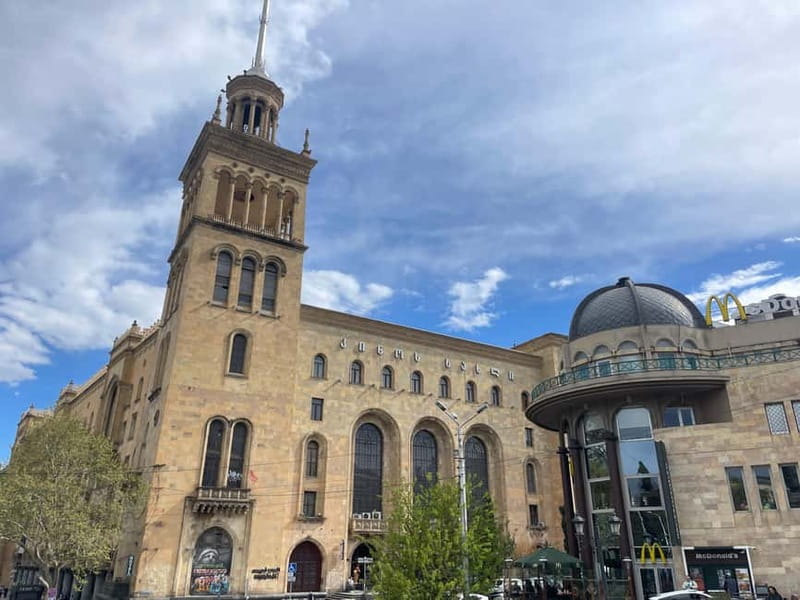
The tour lasts two hours. That is long enough to establish a clear picture of Soviet Georgia, but short enough to fit into a busy Tbilisi itinerary.
The pace appears to favor explanation and discussion rather than a rapid checklist of stops. The guide is expected to offer commentary on architecture, urban planning, cultural life, surveillance, and historical context, while leaving room for questions.
That format suits me because the best questions often come after you see a building or hear a surprising story. One participant praised the tour because the discussion felt like a conversation with a friend and did not follow a rigid script. Another appreciated that the guide gave useful information without long monologues.
You should keep your expectations realistic. A two-hour walk cannot cover every stage of Soviet rule, every important building, or every part of Georgia’s modern political story. If you want a full academic treatment, this will feel brief. If you want a clear, human introduction before exploring further on your own, the length works well.
The small-group format is another plus. The exact group size is not given, but the experience is described as a small-group tour. That normally creates better conditions for questions and makes it easier for the guide to respond to the interests of the people present.
The guide’s style is central to the experience
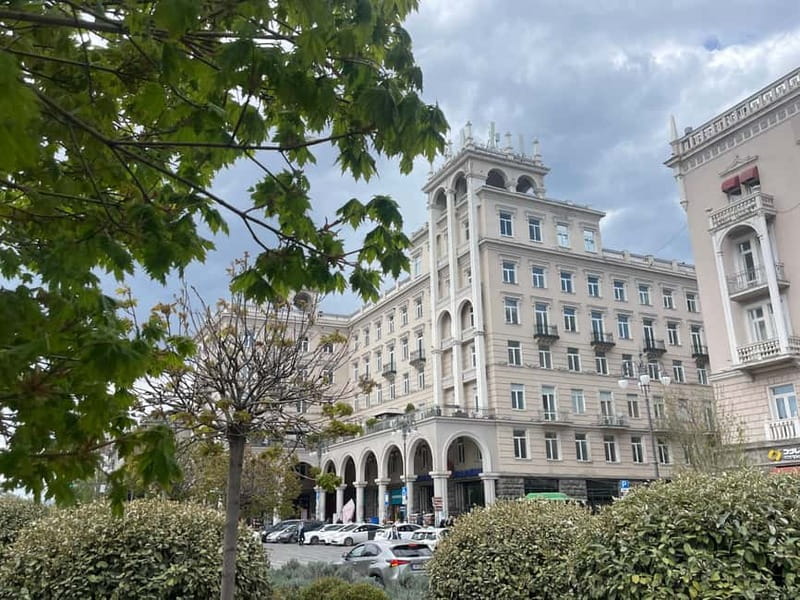
This tour depends heavily on the person leading it. The subject is serious, and the route alone cannot carry the experience. You need a guide who can explain difficult material clearly, avoid grand speeches, and connect large events to ordinary lives.
Natalie receives especially warm praise for her enthusiasm, authenticity, and love of sharing Georgian history. She is also described as fun, energetic, and highly approachable. Those qualities matter because a discussion of surveillance and political pressure can feel distant or intimidating if delivered without warmth.
The strongest comments describe a guide who answers questions naturally and adjusts the conversation to the group. That makes the experience feel personal rather than pre-recorded. It also means your tour may differ slightly depending on what you want to discuss.
The guide is English-speaking, and the available comments praise the quality of the English. That is important for a topic where a small misunderstanding can change the meaning of a story. You should still ask for clarification whenever a political term, place, or period is unfamiliar.
What the $26 price gets you
At $26 per person, this is not the cheapest way to spend two hours in Tbilisi, but the price is reasonable for a small-group walking tour with a professional local guide and a focused subject.
You are paying for interpretation, not transportation, admission tickets, or a meal. The value comes from the route and the guide’s ability to explain what you are seeing. If Natalie or another strong guide brings the promised personal perspective, the tour can save you hours of trying to piece together Georgia’s Soviet story from scattered sources.
The price is especially fair if you are interested in modern history, architecture, politics, or local culture. It is less compelling if you only want famous sights or a broad introduction to Tbilisi. A first-time visitor who has not yet seen the old town may prefer a general city tour before choosing a specialist walk like this.
Flexible booking adds practical value. You can reserve now and pay later, and cancellation is free up to 24 hours before the start time. Starting times depend on availability, so check the schedule before planning other activities around it.
Who should book this walking tour
I would choose this experience for you if you:
- Want to understand Georgia beyond its older monuments
- Enjoy modern political and social history
- Like architecture with an explanation of how and why it was built
- Prefer personal stories to a formal lecture
- Are comfortable walking for two hours
- Want an English-language activity with a local guide
- Have questions about Soviet life, surveillance, or Georgia’s road to independence
It may not suit you if you need step-free access or use a wheelchair, since the activity is specifically marked as unsuitable for wheelchair users. You should also think about the emotional tone. The subject includes control, fear, propaganda, and private hardship, so it is not simply a light sightseeing stroll.
If you are traveling with children, the supplied information does not give a recommended age or a special family format. You will need to decide if your children are ready for the political and social subjects covered.
Practical tips for getting more from the walk
Read a little about Georgia before you go, but do not worry about memorizing dates. A basic sense of the country’s independence and its relationship with Russia will help you place the stories in context.
Bring questions. Ask how official policy affected ordinary people, how families handled sensitive subjects, or how the guide’s own relatives and acquaintances experienced the period. The conversational style appears to reward curiosity.
Wear comfortable shoes and dress for a walking tour. The route is outdoors and the activity lasts two hours, but no further weather or clothing details are provided, so check the forecast on the day.
Keep the rest of your schedule flexible after the tour. The walk ends with a better set of questions about Tbilisi, and you may want time to look at Soviet-era buildings again or continue the discussion over coffee.
FAQ
Where does the Tbilisi Soviet past walking tour begin?
The guide waits at Freedom Square, in front of the Gryphon statue.
How long does the tour last?
The walking tour lasts two hours.
What language is the tour conducted in?
The live tour guide speaks English.
How much does the experience cost?
The listed price is $26 per person.
Can I reserve now and pay later?
Yes. You can reserve your place and pay nothing at the time of booking.
Can I cancel for a full refund?
Yes. You can cancel up to 24 hours in advance for a full refund.
Is the tour suitable for wheelchair users?
No. The activity is listed as unsuitable for wheelchair users.
Should you book the Soviet Past Walking Tour?
Book it if you want the part of Tbilisi that does not appear in a standard old-town walk. The mix of Soviet architecture, surveillance, propaganda, family life, and private stories gives you a better sense of how Georgia’s recent past still shapes its identity.
I especially like the guide-led, conversational approach. Natalie, also referred to as Natalia, is praised for warmth, energy, strong English, and the ability to answer questions without sounding scripted. That personal style is likely to matter more than the number of buildings you see.
Skip it if you want a broad city introduction, a museum-style tour, or accessible walking conditions. But if you are curious about how people actually lived under Soviet rule, $26 buys a thoughtful and useful two hours in central Tbilisi.
Just added near Tbilisi
- Wine Tasting feel the Difference of Qvevri or Classical Wine★ 4.4 · 10 reviews
- Walking Tour in Old Tbilisi – Group Tour★ 4.5 · 8 reviews
- From Tbilisi: Kakheti and Kazbegi 2-Day 4X4 Jeep Tour pack★ 5.0 · 6 reviews
- Tbilisi: Vintage Fashion and Secondhand Thrifting Tour★ 5.0 · 11 reviews
- Uforgatable Kakheti Tour with wine tasting – in Georgia★ 4.9 · 5 reviews
- From Tbilisi: Uplistsikhe Caves and Mtskheta Town Day tour★ 5.0 · 2 reviews
- Tbilisi Airport to Gudauri, Bakuriani, Batumi, Tbilisi★ 5.0 · 3 reviews
- Private Adorable City Tour of Tbilisi★ 5.0 · 3 reviews
Soviet Heritage Tours, compared.
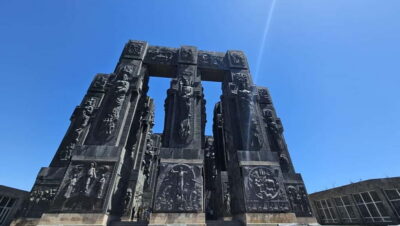
Mtskheta Jvari Bazaar, Chronicles of Georgia & Wine
Read our review →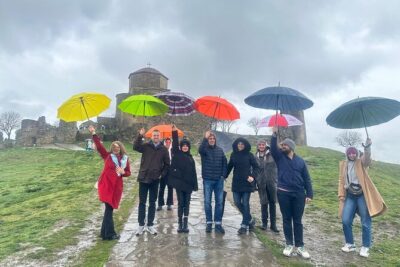
Mtskheta,Jvari,Bazaar,wine tasting,Chronicles of Georgia
Read our review →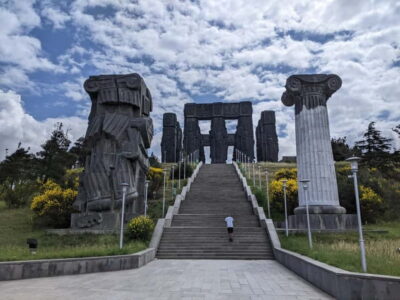
The Chronicles of Georgia, Jvari & Mtskheta Tour
Read our review →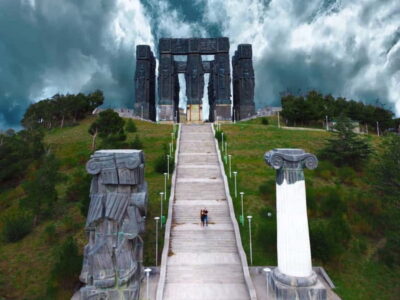

1 Day Private Armenia: UNESCO, Soviet & Curated Family Lunch
Read our review →
Jvari-Uplistsike-Chronicle of Georgia, PRIVATE Trip
Read our review →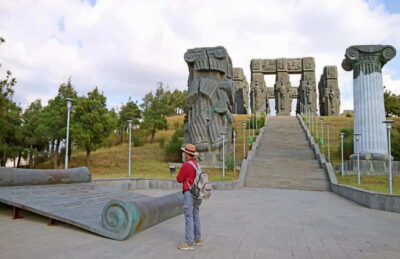
Day tour to Chronicles of Georgia, Gori city, Uplistsikhe cave
Read our review →Browse the lists this tour appears in