
Reviewed · GORI AND STALIN MUSEUM TOURS
Tbilisi : Mtskheta, Jvari, Gori and Uplistsikhe , Day Tour.
Georgia’s past is packed into one long day. This $16 tour from Tbilisi links ancient churches, a former capital, Stalin’s hometown, and a remarkable rock-cut settlement, giving you a useful first look at the Kartli region without arranging several separate trips. I especially like the contrast between Uplistsikhe’s pagan and Christian remains and the calm, commanding views from Jvari Monastery. I also like that you can choose between free time in Gori and the optional Stalin Museum.
The main drawback is the schedule. Eight hours is enough for a strong introduction, but the day moves at a brisk pace, with many stops and some time spent getting on and off the vehicle. The extra admission charges for Uplistsikhe and the Stalin Museum also mean the headline price is not the complete cost.
In This Review
- Key points to know before booking
- Why this day trip covers so much
- Jvari Monastery and the meeting of two rivers
- Mtskheta and Svetitskhoveli Cathedral
- Gori, Stalin, and the choices behind the stop
- Uplistsikhe, Georgia’s rock-cut town
- Panoramic views from Gudauri and Devil’s Valley
- Transport, pace, and group comfort
- Is $16 really good value?
- Who should book this tour?
- Final recommendation
- FAQ
- How long does the tour last?
- Where is the meeting point?
- Which languages are available?
- What is included in the price?
- How much is entry to Uplistsikhe?
- Is the Stalin Museum visit required?
- Can I cancel or pay later?
Key points to know before booking
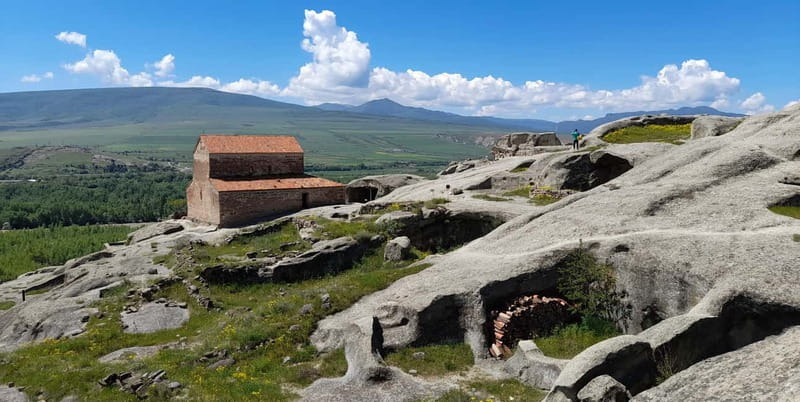
- Uplistsikhe is the day’s most unusual stop: This ancient rock-hewn town includes structures from the Early Iron Age through the Late Middle Ages.
- Jvari gives you the big view: The monastery sits above the meeting point of the Aragvi and Mtkvari rivers, with Mtskheta below.
- Mtskheta brings Georgia’s religious story into focus: Jvari Monastery and Svetitskhoveli Cathedral are both tied to the country’s early Christian tradition and UNESCO recognition.
- Gori offers two different experiences: You can spend time in town or pay extra to visit the Stalin Museum, including Stalin’s original house and railway carriage.
- The price is unusually low: At $16 per person, transportation, a certified guide, and visits to the listed places are included, but food and admission fees are not.
- The tour suits an active first-time visitor: Expect about eight hours, a small group or shared vehicle, and a fairly full program rather than a slow, leisurely outing.
Why this day trip covers so much
The route moves through Shida Kartli, one of Georgia’s most important historical regions. In a single day, you see the country’s old religious center at Mtskheta, the Soviet legacy of Gori, and the much older settlement of Uplistsikhe.
That range is the main reason to book. The tour is not built around one famous sight. Instead, it gives you several pieces of Georgia’s story and lets you compare them. A medieval church feels different after you have walked through a pre-Christian rock town. Gori makes more sense after you have heard how old the surrounding region is.
The vehicle leaves from the intersection of Kote and Abkhazian Streets on the Maidan, near Vakhtang Gorgasali Square. The same square is used for the return. This is convenient if you are staying in or near Tbilisi’s old center, but you should allow time to find the exact meeting point before departure.
The tour lasts about eight hours. English and Russian guiding are available. A certified guide and transportation are included, which makes the $16 fare strong value, especially if you want a broad introduction without hiring a private car.
The tradeoff is clear: you pay little, but you share the day and follow a fixed route. If you want long photo sessions, extended church visits, or a relaxed lunch, this will feel tight.
More Gori and Stalin Museum runs:
- Tbilisi: Mtskheta, Jvari, Gori and Uplistsikhe Day Tour
★ 4.9 · 2,396 reviews - Day Trip to Mtskheta Gori and Uplistsikhe
★ 5.0 · 1,801 reviews - From Tbilisi : Mtskheta, Jvari, Gori & Uplistsikhe Day Trip
★ 4.8 · 432 reviews
Jvari Monastery and the meeting of two rivers
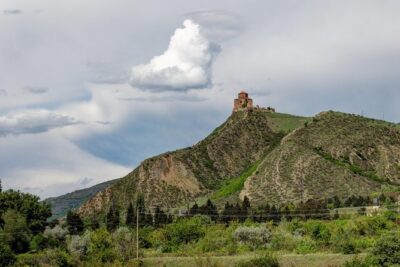
Jvari Monastery is an excellent opening stop because it gives you both a major monument and an immediate sense of the region’s geography. The sixth-century Georgian Orthodox monastery sits on a rocky mount above Mtskheta.
From here, you can look toward the confluence of the Aragvi and Mtkvari rivers. The two waterways meet below the hill, and the view explains why Mtskheta was such an important settlement. The town controlled a natural meeting point and later became the capital of the early Georgian Kingdom of Iberia.
The name Jvari means Monastery of the Cross. That name reflects the site’s importance in Georgian Christian tradition. The monastery is not a large complex, so the guided visit is focused rather than sprawling. You will likely spend much of the one-hour stop taking in the view, hearing the religious story, and photographing the town below.
I would bring shoes with a firm sole. The stop includes a rocky hilltop setting, and the experience is more about the position of the monastery than a long indoor visit. Weather can also change the quality of the views, so do not judge the stop only by your photographs. Even in less clear conditions, the location helps explain Mtskheta’s importance.
Jvari is listed as part of Mtskheta’s UNESCO World Heritage recognition. That matters because it is not simply a scenic church stop. It is one of the places where Georgia’s religious identity, early statehood, and older trade routes come together.
Mtskheta and Svetitskhoveli Cathedral
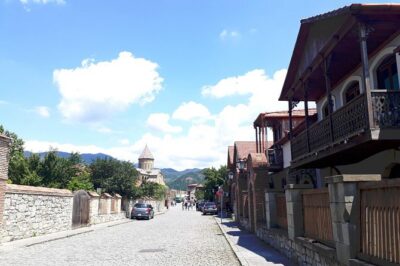
Mtskheta was the capital of the early Georgian Kingdom of Iberia from the third century BC to the fifth century AD. It is one of the most important historic towns in the country, and the tour gives you time to see both the town and its central cathedral.
The separate Mtskheta stop lasts about an hour, followed by roughly 30 minutes at Svetitskhoveli Cathedral. This split is useful. You get some time to look around the old capital rather than being rushed directly from the vehicle into the church.
Svetitskhoveli is one of Georgia’s principal Georgian Orthodox churches. It is also associated with the burial site of Christ’s robe, making it one of the country’s most venerated places of worship. The building’s religious importance is the main reason to visit, but the setting matters too. Mtskheta is not just a museum town. It remains a place of worship with a strong spiritual role.
Dress and behavior should be respectful inside the cathedral. The provided details do not specify a dress code, but this is an active religious site, not simply an old building. Keep your voice low and follow any instructions from the guide or church staff.
The two Mtskheta stops are among the most valuable parts of the day for anyone interested in Georgian Christianity. If churches are not your main interest, you may find the visit shorter than the surrounding historical story deserves. Still, the combination of Jvari and Svetitskhoveli gives you a solid understanding of why Mtskheta is recognized by UNESCO.
Gori, Stalin, and the choices behind the stop
Gori is known as the birthplace of Joseph Stalin, the Soviet leader who was born here. The town adds a very different chapter to the route. After ancient churches and archaeological remains, you are suddenly dealing with the political history of the twentieth century.
The planned Gori portion includes about an hour and a half for a photo stop, a visit, and guiding. You then have an optional 30-minute visit to the Stalin Museum, followed by another hour of break time and photographs in Gori.
That gives you two ways to handle this part of the tour. You can explore Gori without paying for the museum, or you can use the optional museum visit to examine Stalin’s life and public image in more detail.
The museum retains its Soviet-era character. Its displays include Stalin’s original house and his railway carriage. Those objects are unusual because they connect a world historical figure to the town where he was born. At the same time, the museum’s presentation can feel shaped by the era in which it was created. You should visit with a critical eye rather than expecting a neutral account of Soviet history.
The admission fee is 15 GEL, about $6, and it is not included in the tour price. If you have a strong interest in Soviet history, the charge is reasonable for the extra context. If your main goal is medieval Georgia, use the free time in Gori instead.
The schedule gives you a useful choice, but it also creates a timing question. Visiting the museum reduces your free time in town. If you want both a careful museum visit and a relaxed lunch, the day may feel compressed.
More cave cities you can walk through:
- Tbilisi: Borjomi, Rabati & Vardzia Adventure Guided Tour
★ 4.9 · 817 reviews - From Tbilisi: Rainbow Mountain & David Gareja Monastery Trip
★ 4.9 · 705 reviews - Day Trip to Rainbow Mountains and David Gareja
★ 5.0 · 408 reviews - From Tbilisi: Mtskheta, Jvari, Gori, Uplistsikhe Guided Tour
★ 4.7 · 354 reviews
Uplistsikhe, Georgia’s rock-cut town
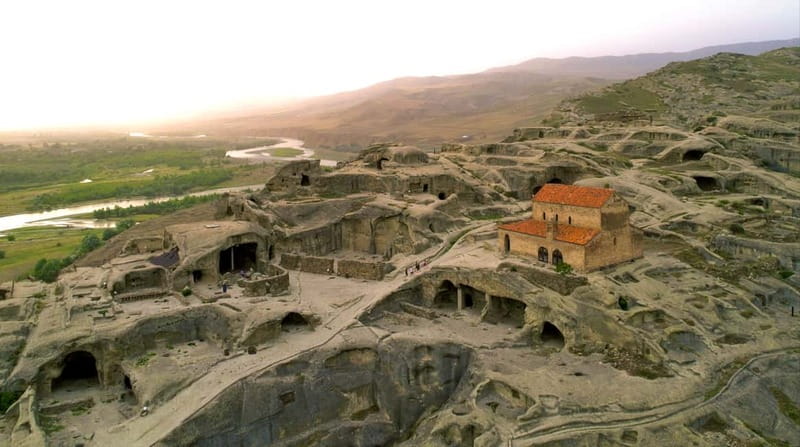
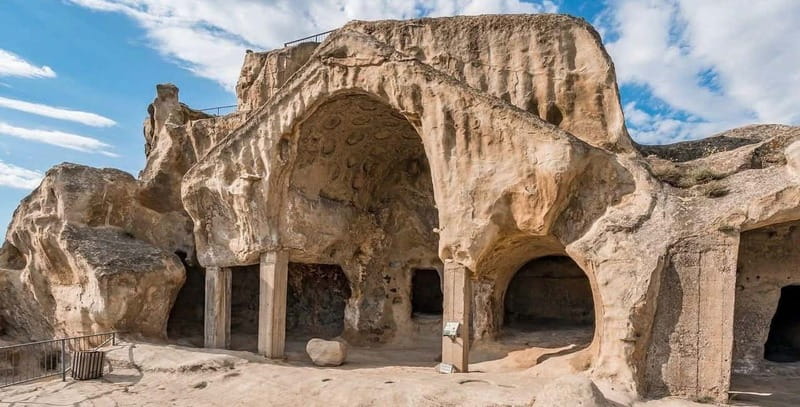
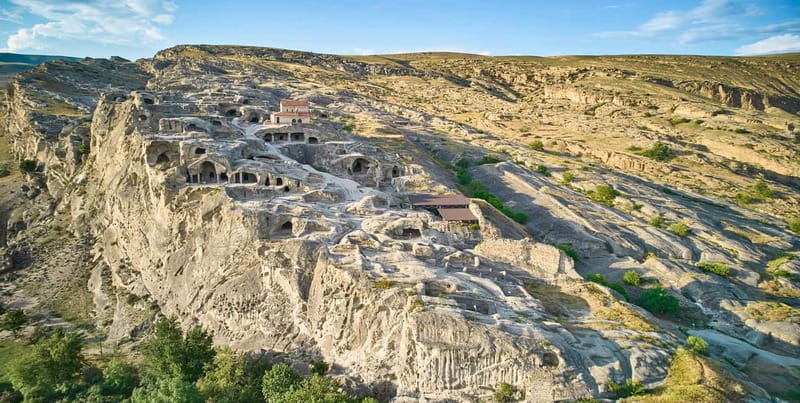
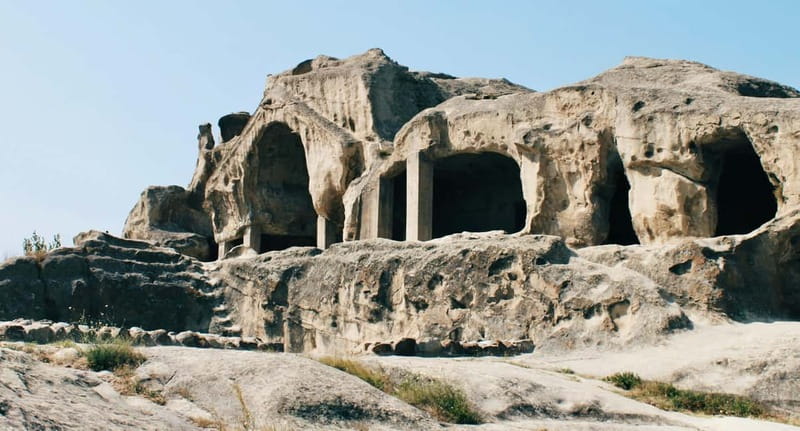
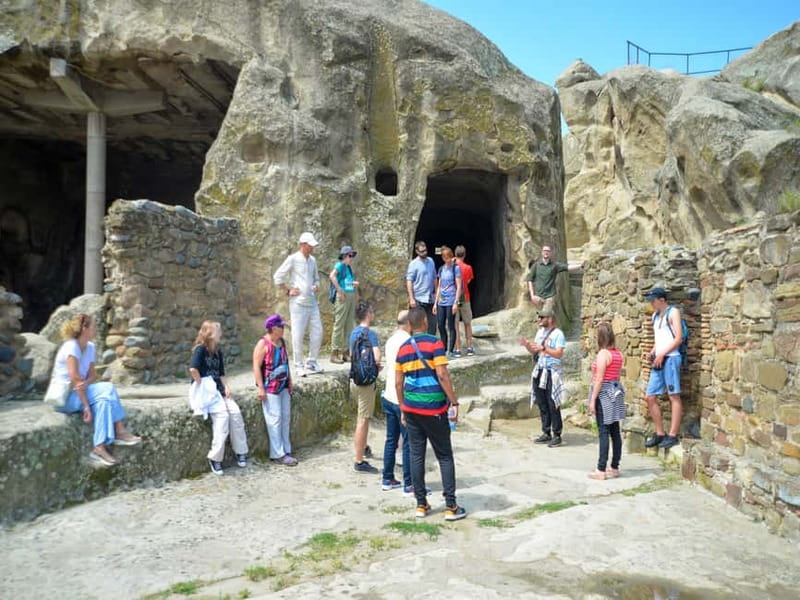
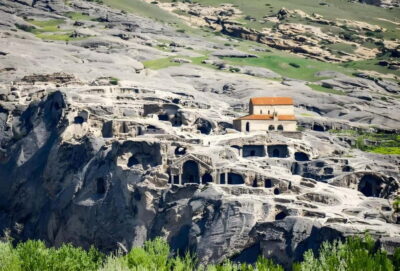
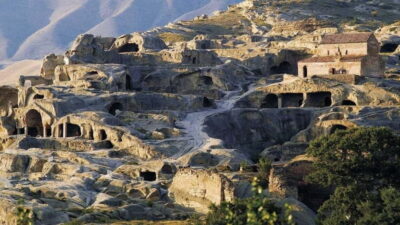
Uplistsikhe is the most distinctive stop on the route. This ancient settlement was cut into rock and contains structures dating from the Early Iron Age to the Late Middle Ages.
The site is notable for the way different traditions appear together. Pagan architecture from cultural influences linked to Anatolia and Iran existed alongside later Christian structures. That mixture gives Uplistsikhe a different feel from the churches at Mtskheta. You are not looking at one polished monument. You are walking through the remains of a settlement that changed over many centuries.
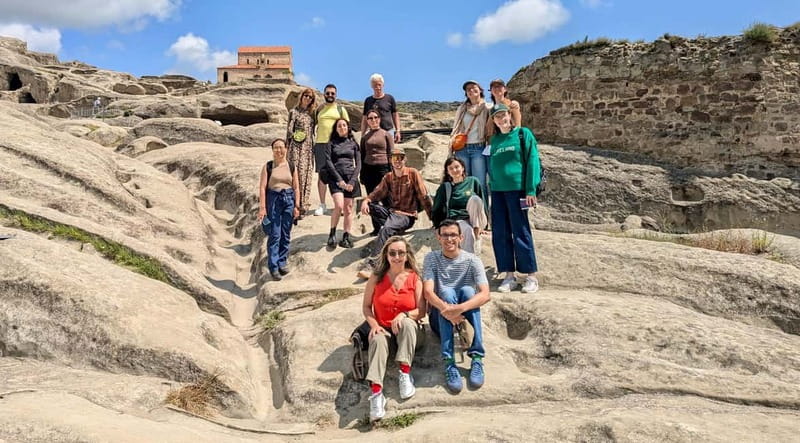
The tour allows about 40 minutes for the guided visit. That is enough to see the main features and understand the site’s importance, but it is not a long archaeological exploration. The uneven rock surfaces and exposed setting also make sensible footwear important.
Uplistsikhe has an entrance charge of 15 GEL, about $6, payable separately. Add that fee to the $16 tour price when working out your budget. If you also visit the Stalin Museum, your basic cost becomes roughly $28 before food and drinks.
The guide’s role is especially useful here. Rock-cut rooms can look similar when you first arrive, and the historical meaning is not always obvious from the stone alone. A good explanation helps you picture how the settlement changed from an early fortified and religious site into a place with Christian buildings and later medieval use.
Lunch is taken in the region after the Uplistsikhe visit. Food and drinks are not included, so you should budget separately. The break is a welcome pause after the morning’s churches and the walk through the cave town. It is also a chance to try local food rather than treating the day as a series of quick photo stops.
Panoramic views from Gudauri and Devil’s Valley
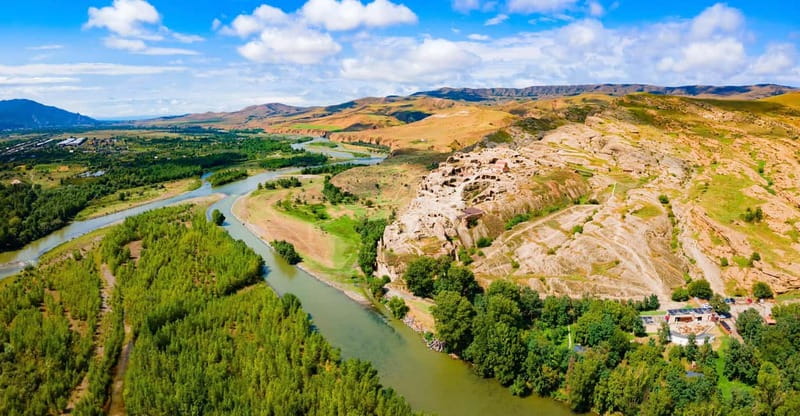
The experience highlights panoramic views from Gudauri and Devil’s Valley. These scenery stops add a more open, dramatic side to a tour otherwise centered on ruins, towns, and churches.
The available schedule gives the clearest timing for Jvari, Mtskheta, Gori, the Stalin Museum, and Uplistsikhe, but it does not assign separate durations to Gudauri or Devil’s Valley. Treat these viewpoints as route highlights that may depend on the day’s exact driving plan and conditions.
If seeing these views is a top priority, confirm the precise stopping plan before you book. That is especially important because the tour already has a full eight-hour program. A viewpoint can be very worthwhile, but it may also mean less free time elsewhere if the route changes.
Transport, pace, and group comfort
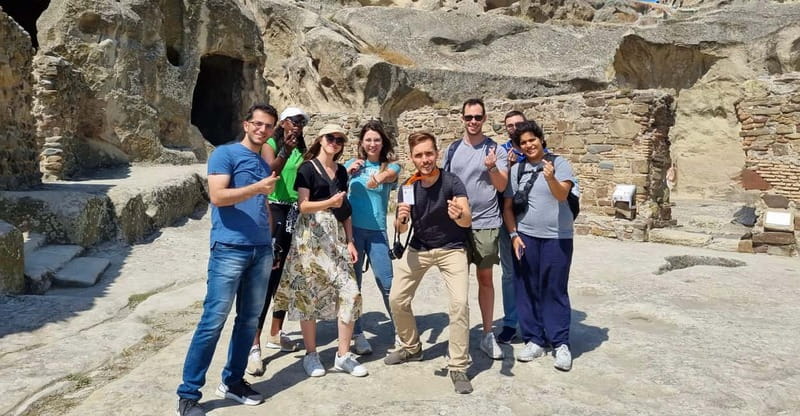
The transportation service is included in the price. A verified participant description praised the small group, comfortable car, carefully managed timing, and a friendly, helpful, smiling driver. Those details matter on a route with several stops and a fair amount of time on the road.
A comfortable vehicle can make the difference between finishing the day pleased and finishing it worn out. The comments about well-calculated timing also suggest that the operator understands how to fit the major sights into one day.
Still, this is not a private tour. The supplied information does not promise a specific vehicle type or fixed group size, so you should not assume a luxury car or a completely flexible schedule. The experience is best for someone who values convenience and coverage over personal control.
The guide quality receives strong praise. One Italian participant specifically described the guide as well prepared, while another rated the overall trip at the highest level. There is no guide name provided, so I cannot tell you who will lead your departure. What I can say is that the guiding component is important here. Without clear explanations, Uplistsikhe and the religious sites can feel like a fast sequence of old stones.
Is $16 really good value?
Yes, with a few qualifications. For $16 per person, you receive transportation, a certified guide, and visits to the main locations. A self-organized day would require arranging transport between Tbilisi, Mtskheta, Gori, and Uplistsikhe, then keeping track of the return.
The extra costs are easy to calculate:
- Tour price: $16 per person
- Uplistsikhe entrance: 15 GEL, about $6
- Stalin Museum: 15 GEL, about $6, optional
- Food and drinks: not included
That makes the lowest realistic cost about $22 per person before lunch, assuming you visit Uplistsikhe but skip the Stalin Museum. With the museum, it is about $28 before food.
For the number of major places covered, that remains good value. The price is particularly attractive if you are traveling alone or as a couple and do not want to pay for a private vehicle. The main thing you give up is flexibility.
Free cancellation is available up to 24 hours before departure for a full refund, and you can reserve now and pay later. Those terms are useful if your Tbilisi plans may shift, but they do not change the fixed nature of the day itself.
Who should book this tour?
I would recommend it to first-time visitors who want a broad view of Georgian history in one outing. It works especially well if you have limited time in Tbilisi and want to see more than the city.
History fans will appreciate the range, from Early Iron Age remains at Uplistsikhe to medieval Christian monuments and twentieth-century Soviet history in Gori. Photographers will like Jvari’s river view, Mtskheta’s old streets, and the unusual forms of the rock-cut town.
The tour is also a good match for budget-conscious visitors. The low base price and shared transportation keep the cost down, while the optional Stalin Museum lets you decide how much to spend.
I would hesitate if you dislike full schedules, want long meals, or prefer to explore one place slowly. The 40-minute Uplistsikhe visit and 30-minute cathedral visit are introductions, not thorough examinations. You will see a lot, but you will not have unlimited time at any one site.
Final recommendation
Book this tour if you want an inexpensive, well-packed route through Georgia’s ancient, religious, and Soviet past. The strongest reasons are the excellent variety, the views from Jvari, the unusual Uplistsikhe visit, and the reported comfort and kindness of the driver.
Skip it only if you need a private timetable or want a slow archaeological day. For most visitors based in Tbilisi, this is a practical way to reach Mtskheta, Gori, and Uplistsikhe without spending much or solving the transport puzzle yourself.
FAQ
How long does the tour last?
The tour lasts about eight hours, beginning and ending at Vakhtang Gorgasali Square in Tbilisi.
Where is the meeting point?
Meet at the intersection of Kote and Abkhazian Streets on the Maidan.
Which languages are available?
The live guide service is available in English and Russian.
What is included in the price?
The $16 price includes a certified guide, transportation, and visits to the listed places. Food, drinks, and the two stated entrance fees are not included.
How much is entry to Uplistsikhe?
Entry to Uplistsikhe costs 15 GEL, listed as about $6 per person.
Is the Stalin Museum visit required?
No. The Stalin Museum visit is optional and costs 15 GEL, about $6 per person. You can instead use the time to explore Gori.
Can I cancel or pay later?
You can cancel up to 24 hours in advance for a full refund. The booking option also allows you to reserve your place and pay later.
More Mtskheta and Jvari Half-Days
- Tbilisi: Mtskheta Jvari Bazaar, Chronicles of Georgia & Wine
★ 5.0 · 1,088 reviews - Tbilisi:Mtskheta,Jvari,Bazaar,wine tasting,Chronicles of Georgia
★ 5.0 · 730 reviews - Tbilisi: The Chronicles of Georgia, Jvari & Mtskheta Tour
★ 5.0 · 307 reviews - From Tbilisi: Mtskheta, Jvari, Gori & Uplistsikhe Cave Tour
★ 4.7 · 296 reviews
Just added near Tbilisi
- Wine Tasting feel the Difference of Qvevri or Classical Wine★ 4.4 · 10 reviews
- Walking Tour in Old Tbilisi – Group Tour★ 4.5 · 8 reviews
- From Tbilisi: Kakheti and Kazbegi 2-Day 4X4 Jeep Tour pack★ 5.0 · 6 reviews
- Tbilisi: Vintage Fashion and Secondhand Thrifting Tour★ 5.0 · 11 reviews
- Uforgatable Kakheti Tour with wine tasting – in Georgia★ 4.9 · 5 reviews
- From Tbilisi: Uplistsikhe Caves and Mtskheta Town Day tour★ 5.0 · 2 reviews
- Tbilisi Airport to Gudauri, Bakuriani, Batumi, Tbilisi★ 5.0 · 3 reviews
- Private Adorable City Tour of Tbilisi★ 5.0 · 3 reviews
Gori and Stalin Museum Tours, compared.
Mtskheta, Jvari, Gori and Uplistsikhe Day Tour
Read our review →
Mtskheta, Jvari, gori, uflistsikhe, history and panorama (group tours)
Read our review →Browse the lists this tour appears in