
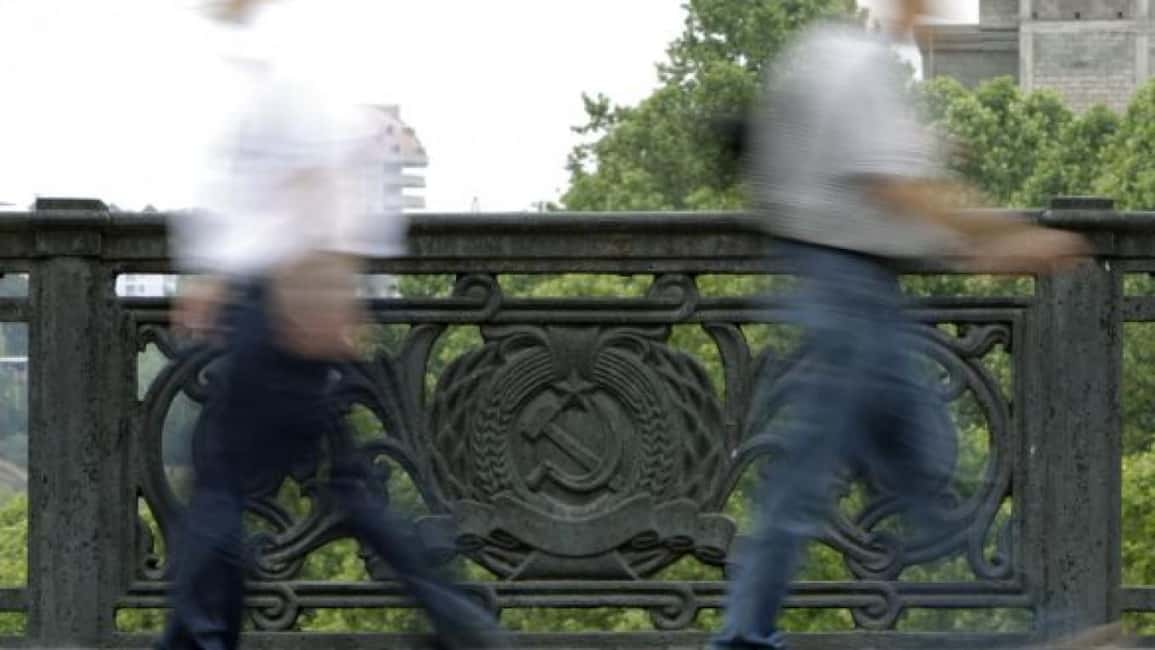
Reviewed · SOVIET HERITAGE TOURS
Tbilisi: Soviet Union Walking Tour
Georgia’s Soviet past is still underfoot. This 90-minute Tbilisi walking tour connects Soviet buildings and public spaces with the private stories of people who lived through the era. I like the way it treats history as daily life, not just dates and political leaders. I also like the focus on food and music, small details that make a strict political system easier to understand.
The main consideration is its short length. At $25 per person, it offers a fair introduction, but you should not expect an exhaustive study of Georgia under Soviet rule. The tour is also not suitable for wheelchair users, and comfortable shoes are essential.
In This Review
- Key points to know before you book
- Why Soviet Tbilisi makes a strong walking subject
- Reading Soviet architecture across Tbilisi
- From public words to private whispers
- Food and music bring the era closer
- How the 90-minute format shapes the experience
- What $25 buys you in Tbilisi
- Who will get the most from this walk
- Practical details that affect your choice
- How to make the most of the stories
- Should you book the Soviet Union Walking Tour?
- FAQ
- How long is the Tbilisi Soviet Union Walking Tour?
- How much does the tour cost?
- What languages are available?
- What does the tour include?
- Do I need comfortable shoes?
- Is the tour suitable for wheelchair users?
- Can I cancel the tour for a refund?
Key points to know before you book
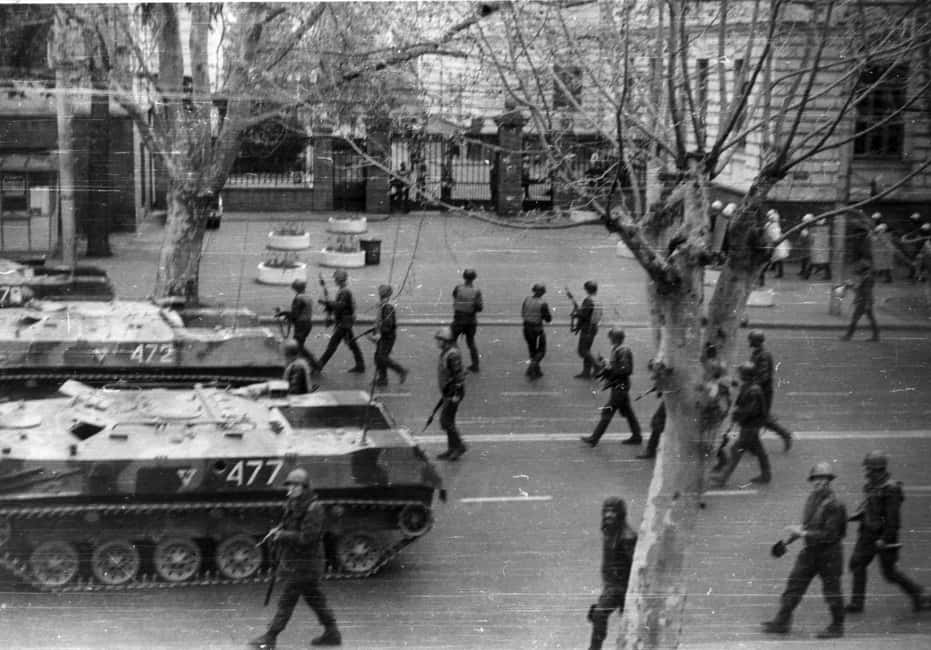
- A 90-minute introduction: The tour gives you a focused look at Soviet Tbilisi without taking up half your day.
- Architecture with meaning: Soviet buildings and public spaces become clues to how power shaped ordinary life.
- Private stories matter: The guide covers control, resistance, quiet joy, and things that were not said in public.
- Food and music add texture: You learn about what people ate and which music they secretly loved.
- English and Russian guiding: You can take the tour in either language.
- Flexible booking: You can cancel up to 24 hours before the activity for a full refund and reserve without paying immediately.
Why Soviet Tbilisi makes a strong walking subject
Tbilisi is a city where different periods sit close together. A Soviet-era building may share a street with older Georgian architecture, later construction, or ordinary modern life. That mixture makes a walking tour useful because you can connect political history to the streets around you.
This experience focuses on the Soviet Union as a lived system. You are not simply shown large buildings and told when they were constructed. The guide explains how public spaces could communicate authority, how architecture could reflect the priorities of the state, and how people adjusted their behavior depending on who was listening.
That shift from dates to daily choices is the tour’s best feature. You might hear about what could be discussed openly, what stayed inside the home, and how people found small ways to enjoy themselves under strict political control. Those details help you understand why Soviet history still feels personal in Georgia.
The tour also covers Georgia’s occupation by the Soviet Union. That wording matters. It places local experience at the center rather than treating the USSR as an abstract political block. You get a Georgian perspective on a period that affected government, culture, work, food, music, and family life.
More Walking Tours in Tbilisi
- Tbilisi Walking Tour Including Cable Car and Traditional Bakery
★ 5.0 · 1,310 reviews - Tbilisi: City Highlights Guided Walking Tour
★ 4.9 · 1,114 reviews - Tbilisi:Evening Walking & Talking Tour with Wine & Boat Ride
★ 5.0 · 572 reviews
Reading Soviet architecture across Tbilisi
The architectural portion gives the tour its physical backbone. You walk through public spaces and examine Soviet design with a guide who can point out details you might otherwise pass without a thought.
The available information does not name each building or publish a fixed stop by stop route, so I would not book this expecting a list of famous landmarks. The value lies more in learning how to read the urban setting. A plain facade, a broad public area, or a heavy institutional building can say something about the state that commissioned it and the kind of behavior it expected from citizens.
A guide can also provide the missing human scale. Buildings alone do not explain how people experienced them. Were they places of work, official ceremony, surveillance, waiting, or everyday errands? The tour’s stated focus on public spaces suggests that you will consider how shared areas were used and what they represented.
This is helpful if you are new to Soviet architecture. You do not need a background in design or Georgian history. The guide gives you a framework for noticing form, purpose, and power while you walk.
The drawback is that architecture fans looking for technical detail should keep their expectations measured. The activity promises exploration and interpretation, not a specialist architectural lecture. If your main goal is to inspect a large number of named buildings, a longer city walk may suit you better.
From public words to private whispers
The most interesting part of the experience is likely the contrast between public behavior and private belief. Under a powerful regime, people often learned to separate what could be said at work or in a public place from what could be discussed with family and close friends.
The tour deals with those quiet boundaries through personal stories. Some stories were hidden, and some were never officially told. That approach helps you understand control in practical terms. It was not only a matter of laws or official speeches. It also shaped conversation, trust, humor, ambition, and the way people judged risk.
I appreciate this focus because it avoids turning the past into a simple good-versus-bad story. Life under the Soviet system could include fear and restriction, but also friendship, routine, creativity, and moments of happiness. A serious tour should make room for all of those realities.
You may hear about quiet resistance, but the supplied details do not promise dramatic tales of spies or secret escapes. That is a good thing in some ways. The quieter stories of adapting, withholding an opinion, or finding pleasure in ordinary life can be more revealing than a parade of heroic anecdotes.
The guide speaks English or Russian, which makes the tour accessible to a wide range of people. Since no individual guide is named, you may want to confirm the language and start time when you book.
Food and music bring the era closer
Food is one of the quickest ways to make political history feel real. The tour considers what people ate, giving you a view of shortages, habits, access, and routine without reducing the subject to a list of official policies.
The details provided do not promise tastings, so do not arrive expecting a meal or food samples. Instead, treat this part as cultural context. What appeared on a household table could reveal more about the wider system than a formal slogan could.
Music offers another personal route into the period. The tour looks at the music people secretly loved, which opens a window onto taste, identity, and private freedom. Music can carry ideas and emotions that are difficult to state directly. It can also show how people maintained a sense of self when public culture was tightly managed.
I like these two subjects because they give the tour warmth. Architecture explains the public face of the system. Food and music show how people lived within it. Together, they keep the experience from becoming a cold account of concrete, politics, and official institutions.
More Soviet-era sights around Tbilisi:
- Tbilisi: Mtskheta Jvari Bazaar, Chronicles of Georgia & Wine
★ 5.0 · 1,088 reviews - Tbilisi:Mtskheta,Jvari,Bazaar,wine tasting,Chronicles of Georgia
★ 5.0 · 730 reviews - Tbilisi: The Chronicles of Georgia, Jvari & Mtskheta Tour
★ 5.0 · 307 reviews - Tbilisi: The Urbex and Soviet Tour of Tbilisi
★ 5.0 · 127 reviews
How the 90-minute format shapes the experience
Ninety minutes is enough time for a clear introduction, especially if you are new to Tbilisi or want historical context before exploring on your own. The short format also makes it easy to fit around a museum visit, meal, or separate city walk.
You should expect a brisk pace. This is a walking tour, and the activity specifically recommends comfortable shoes. The route may involve standing and moving between several public spaces, though the exact walking distance is not provided.
The time limit also means the guide must choose carefully. You will get the main themes: Soviet architecture, public life, personal stories, food, music, control, and resistance. You will not get every chapter of Georgian twentieth-century history.
I see that as a strength for a first visit. A good introduction gives you questions to carry into the rest of your time in Tbilisi. If you already have a strong academic interest in the Soviet period, you may find the coverage too brief and prefer a longer specialist program.
What $25 buys you in Tbilisi
At $25 per person, the price is reasonable for a live guided walk that combines architecture with social history. You are paying for interpretation, not transport, meals, or entry to a major attraction.
That distinction matters. The tour’s value comes from the guide’s ability to explain what you see and connect it to human experience. If you simply want photographs of Soviet buildings, you could walk around parts of Tbilisi on your own. You would miss the personal stories and the historical frame that make those buildings meaningful.
The current score is 5 out of 5 from two verified bookings. One booking described the experience as well organized and useful as an introduction to the history. Another praised its account of Georgia and the Soviet occupation, along with its attention to Russian and Soviet architecture.
That praise points to the right way to judge the tour. It is not trying to be a full university course. It is designed to give you a well-structured starting point. For that purpose, $25 is a sensible cost, particularly if you want a guide rather than a self-guided walk.
Who will get the most from this walk
I would recommend this experience to you if you:
- Want a clear first look at Georgia’s Soviet past
- Enjoy architecture but want the social story behind it
- Prefer personal accounts to a purely political lecture
- Are curious about food, music, and everyday life under state control
- Have 90 minutes available and can walk comfortably
- Want an English or Russian language tour
It should suit history-minded visitors, architecture fans, students, and anyone trying to understand modern Georgia beyond its older churches and historic center.
I would be more cautious if you need step-free access. The experience is not suitable for wheelchair users. I would also choose another activity if you want a long, highly detailed survey of every period of Soviet rule or a tour centered on specific named monuments.
Families can decide based on the ages and interests of their children. The subject includes occupation, control, and resistance, so it is not a light sightseeing walk. Older children and teenagers who enjoy history may find the personal stories useful, but the tour is best for people ready to listen and reflect.
Practical details that affect your choice
The activity lasts 90 minutes, but the exact starting times depend on availability. Check the schedule before building the rest of your day around it.
You can reserve now and pay later, which helps if your Tbilisi plans are still changing. You can also cancel up to 24 hours in advance for a full refund. These terms are useful when you are arranging several activities in a city and do not yet know how your days will fit together.
Wear comfortable shoes. That sounds obvious, but it is the one specific clothing instruction provided, and it is worth taking seriously for a walking route with several stops.
The guide operates in English and Russian. If language choice is important to you, confirm the available option for your selected time rather than assuming both languages will be offered in the same departure.
The route and meeting point are not specified in the supplied details. Check those before you set out, especially if you are staying outside central Tbilisi or have a tight connection afterward.
How to make the most of the stories
You will get more from this tour if you listen for contrasts. Notice the difference between a public space designed to express official power and the private habits people used to preserve comfort or identity.
Ask yourself what the guide’s stories reveal about ordinary choices. What did people eat when options were limited? Why might certain music have felt private or risky? How did a person decide what could be said aloud? These questions turn a walk into a way of understanding the period.
It also helps to separate the physical remains from the political meaning attached to them. A Soviet building may now serve a different purpose, or it may simply be part of the daily city. The tour can help you see how the past remains present without assuming that every old structure carries one simple message.
Because the tour is short, keep notes mentally or on your phone after each major theme. You may want to explore a building, neighborhood, or historical subject later. The activity works well as a starting point for a broader visit to Tbilisi.
Should you book the Soviet Union Walking Tour?
Book it if you want a concise, human account of Soviet Tbilisi and you are happy to learn through a mix of architecture, public spaces, personal stories, food, and music. The well-organized format, English and Russian guiding, and $25 price make it a practical introduction.
Skip it if you need wheelchair access, dislike walking, or want a long technical study of Soviet buildings. For most history-curious visitors, though, this is a worthwhile way to look beyond the surface of Tbilisi and understand how a powerful regime shaped ordinary Georgian life.
FAQ
How long is the Tbilisi Soviet Union Walking Tour?
The tour lasts 90 minutes.
How much does the tour cost?
The price is $25 per person.
What languages are available?
The live guide offers the tour in English and Russian.
What does the tour include?
It includes a guided walking tour, personal stories from the Soviet era, and exploration of Soviet architecture and public spaces.
Do I need comfortable shoes?
Yes. Comfortable shoes are recommended because the experience is a walking tour.
Is the tour suitable for wheelchair users?
No. The activity is not suitable for wheelchair users.
Can I cancel the tour for a refund?
Yes. You can cancel up to 24 hours in advance for a full refund. You can also reserve now and pay later.
Just added near Tbilisi
- Wine Tasting feel the Difference of Qvevri or Classical Wine★ 4.4 · 10 reviews
- Walking Tour in Old Tbilisi – Group Tour★ 4.5 · 8 reviews
- From Tbilisi: Kakheti and Kazbegi 2-Day 4X4 Jeep Tour pack★ 5.0 · 6 reviews
- Tbilisi: Vintage Fashion and Secondhand Thrifting Tour★ 5.0 · 11 reviews
- Uforgatable Kakheti Tour with wine tasting – in Georgia★ 4.9 · 5 reviews
- From Tbilisi: Uplistsikhe Caves and Mtskheta Town Day tour★ 5.0 · 2 reviews
- Tbilisi Airport to Gudauri, Bakuriani, Batumi, Tbilisi★ 5.0 · 3 reviews
- Private Adorable City Tour of Tbilisi★ 5.0 · 3 reviews
Soviet Heritage Tours, compared.
Mtskheta Jvari Bazaar, Chronicles of Georgia & Wine
Read our review →
Mtskheta,Jvari,Bazaar,wine tasting,Chronicles of Georgia
Read our review →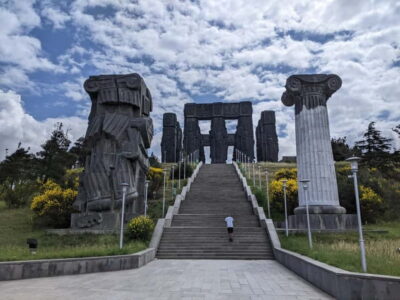
The Chronicles of Georgia, Jvari & Mtskheta Tour
Read our review →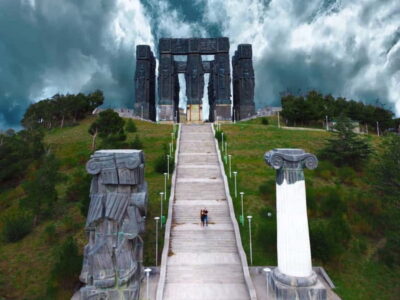

1 Day Private Armenia: UNESCO, Soviet & Curated Family Lunch
Read our review →
Jvari-Uplistsike-Chronicle of Georgia, PRIVATE Trip
Read our review →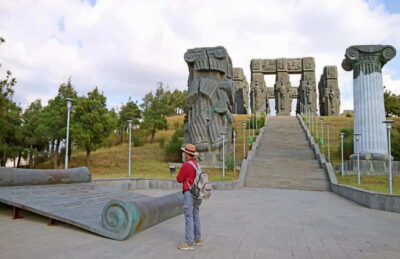
Day tour to Chronicles of Georgia, Gori city, Uplistsikhe cave
Read our review →Browse the lists this tour appears in