
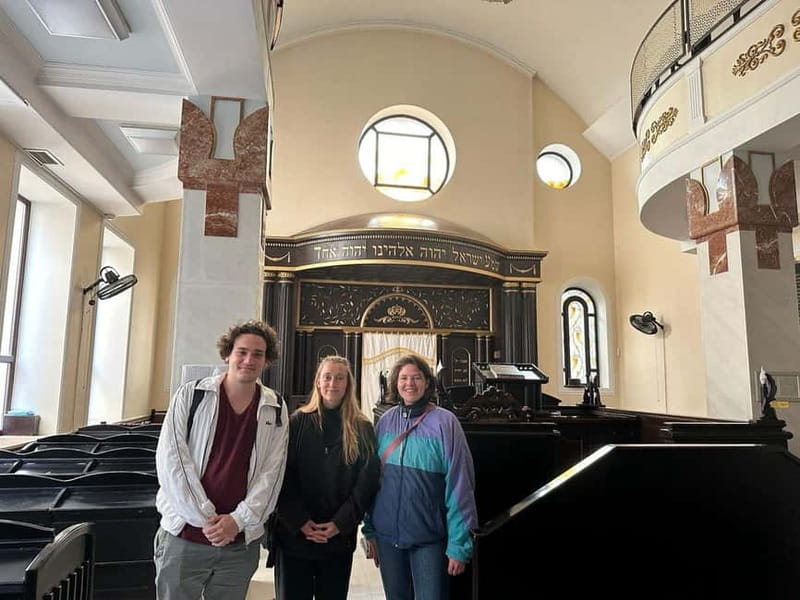
Reviewed · HISTORICAL TOURS
Tbilisi: Jewish Heritage Walking Tour
History lives in Tbilisi’s side streets. This two-hour walk offers a focused look at Georgian Jewish life, pairing the David Baazov Georgian-Jewish Friendship Museum with two synagogues, old Jewish landmarks, and stories of how Jewish settlers found a home in Georgia. I like that the tour stays in the Old Town, so you get cultural context without spending half the outing in a vehicle.
I also like the small-group format, limited to 10 people, and the included kosher wine tasting. Guide Teona receives especially warm praise for her clear explanations, patience, and personal approach. The main drawback is that this is a walking tour over city streets, and it is not suitable for wheelchair users or people with mobility impairments.
In This Review
- Key points to know before booking
- Why Georgian Jewish history belongs in your Tbilisi plans
- Starting at Gudiashvili Square
- The David Baazov Museum sets the tone
- Walking through the Old Town
- Leselidze Street and the memory of Jewish Tbilisi
- Two synagogues, two reminders that the story continues
- Teona’s guiding style makes a difference
- Is two hours enough?
- What $51 includes, and what it does not
- Who should book this walk?
- FAQ
- How long is the Jewish Heritage Walking Tour?
- Where does the tour meet?
- What language is the tour conducted in?
- Is museum admission included?
- Is the kosher wine tasting included?
- How many people can join the group?
- Is the tour suitable for wheelchair users?
- Should you book it?
Key points to know before booking

- The David Baazov Museum gives the tour its historical anchor: You begin with an indoor visit that explains the connection between Georgian and Jewish communities.
- Two synagogues add living religious context: These are not simply photo stops. They help show that Jewish life in Georgia is part of the present, not only the past.
- Leselidze Street brings the story into the Old Town: The route connects Jewish heritage with one of central Tbilisi’s most atmospheric streets.
- Teona is the guide to hope for: Her friendly, patient style and strong command of the subject are repeatedly praised.
- The tour is compact but focused: Two hours is enough for a useful introduction, though not enough for every detail of Georgian Jewish history.
- The $51 price is reasonable for a specialist walk: Museum admission, professional guiding, and kosher wine are included, which improves the value.
Why Georgian Jewish history belongs in your Tbilisi plans

Tbilisi is often introduced through its churches, bathhouses, balconies, and fortress views. Those sights matter, but the city also makes more sense when you learn how different communities lived alongside one another.
This tour focuses on Jewish settlers who found sanctuary in Georgia and became part of Georgian society. You are not just looking at old buildings. You are learning about ties between two communities, the pressures that shaped Jewish life, and the ways people maintained identity while living in a broader Georgian setting.
I find that a focused tour like this can be more useful than trying to piece together the story from plaques and guidebooks. The subject is specific, the route is short, and the guide can connect a building or street to the people who used it.
The tour also offers a different view of the Old Town. Instead of passing through only as a scenic district, you look for traces of Jewish homes, businesses, worship, and community life. That makes the walk feel less like sightseeing and more like reading a second layer of the city.
More Walking Tours in Tbilisi
- Tbilisi Walking Tour Including Cable Car and Traditional Bakery
★ 5.0 · 1,310 reviews - Tbilisi: City Highlights Guided Walking Tour
★ 4.9 · 1,114 reviews - Tbilisi:Evening Walking & Talking Tour with Wine & Boat Ride
★ 5.0 · 572 reviews
Starting at Gudiashvili Square
The meeting point is Gudiashvili Square, with the provided address given as 2 Lado Gudiashvili Square and the meeting instructions naming Gudiashvili Square 12. I would check your WhatsApp or email before setting out, since the guide plans to contact you before the meeting and the exact number should be clear.
Gudiashvili Square is a sensible place to begin. You are already in central Tbilisi, close to the Old Town streets that shape the walking portion. There is no separate transport segment listed, so you should plan to arrive ready to walk from the square.
Wear comfortable shoes. That sounds like routine advice, but it matters here because the tour covers Old Town streets on foot for much of the experience. Bring a camera if you want to record architectural details, street scenes, and the places tied to the Jewish community.
The meeting point also gives the group a chance to settle into a small format. With no more than 10 participants, it should be easier to hear explanations and ask questions than on a large city tour. If the group is very small, the conversation may feel almost like a private introduction.
The David Baazov Museum sets the tone

The first major stop is the David Baazov Georgian-Jewish Friendship Museum. Entry is included, so you do not need to budget a separate museum ticket.
This visit matters because it gives the walking route a framework. Rather than beginning with disconnected buildings, you first encounter the story of Georgian-Jewish relations in a place designed to explore that bond. The museum helps explain why the tour is about more than a minority community living in one district. It is also about contact, acceptance, and shared civic life.
I would pay close attention to how the guide links the museum to the streets outside. A good guide can help you carry the museum’s themes into the rest of the walk, especially when you later see synagogues and former Jewish areas.
The museum stop may be the most useful part for anyone starting with little background. You do not need to arrive with specialist knowledge. The tour is built to give you a clear foundation, and the highly positive comments about Teona point to her ability to explain the subject in a warm, accessible way.
There is a practical tradeoff. Museum time reduces the minutes available for wandering the Old Town. If you want a broad city tour with many major sights, this will feel narrow. If you want a concentrated look at Jewish life in Georgia, the museum is exactly what makes the route worthwhile.
Walking through the Old Town
The walking section lasts about 50 minutes within the two-hour experience. That leaves time for the museum, the synagogues, the street stories, and the wine tasting, though the precise order may vary.
As you move through the Old Town, the guide brings Jewish life into view through places that might otherwise pass unnoticed. You hear about Jewish settlers who found safety in Georgia and about the ways they became part of local society.
This is where the tour’s subject becomes more personal. Streets carry traces of ordinary life: where people lived, worked, worshipped, and met one another. The value is not just in seeing a landmark. It is in understanding how a community fit into the larger city.
I like the fact that the route does not treat history as something sealed inside a museum. The Old Town setting lets you compare the past with Tbilisi as it appears today. You see beautiful buildings and older streets while learning how the city’s population changed over time.
The route is not designed as a general architectural walk, even though you will see buildings from Tbilisi’s past and present. If you want detailed information about every balcony, church, or fortress, choose a broader city tour. Here, the built environment supports the Jewish story rather than taking center stage.
A slower pace, same corner of the Caucasus:
- Tbilisi: Day Trip to Kazbegi, Gudauri, Gergeti, and Ananuri
★ 4.9 · 3,203 reviews - Day Trip to Kakheti Wine Region Including 9 Wine Tastings
★ 5.0 · 2,774 reviews - Highlights of Caucasus Mountains-Jinvali,Ananuri,Gudauri,Kazbegi(Group tour)
★ 5.0 · 2,682 reviews - From Tbilisi: Kakheti Wine Region Tour with 9 Wine Tastings
★ 4.9 · 2,541 reviews
Leselidze Street and the memory of Jewish Tbilisi
Leselidze Street is one of the key outdoor stops. The tour presents it as a former center of Jewish life, filled with stories of the people who lived and worked there.
The street is important because it helps you picture a community in daily motion. A museum can preserve documents and objects, while a street gives you a sense of place. You can better understand the scale of Jewish life in Tbilisi when the guide points out how this part of the city once connected people and businesses.
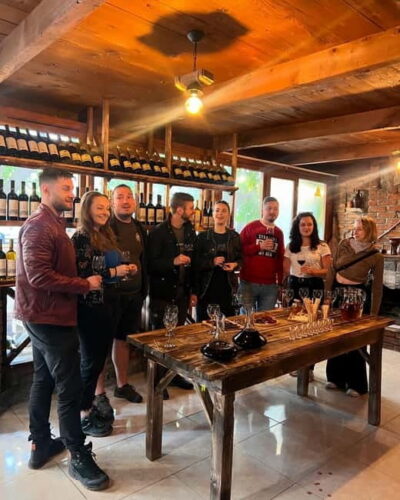
The included kosher wine tasting adds a simple but welcome social moment. It is not presented as a separate food tour, so you should think of it as a small cultural addition rather than a full tasting session. Still, it connects the walk with Georgian hospitality and gives the group time to talk.
At $51 per person, that tasting has modest financial value by itself. Its real value comes from the combination: you receive a specialist guide, museum admission, a focused walking route, and a kosher wine experience in one short outing.
I would not book this tour mainly for the wine. Book it for the history, then enjoy the wine as a fitting extra. The tasting may be especially meaningful if you keep kosher or have an interest in Jewish food and drink traditions, but the tour’s main strength is its interpretation of place and community.
Two synagogues, two reminders that the story continues
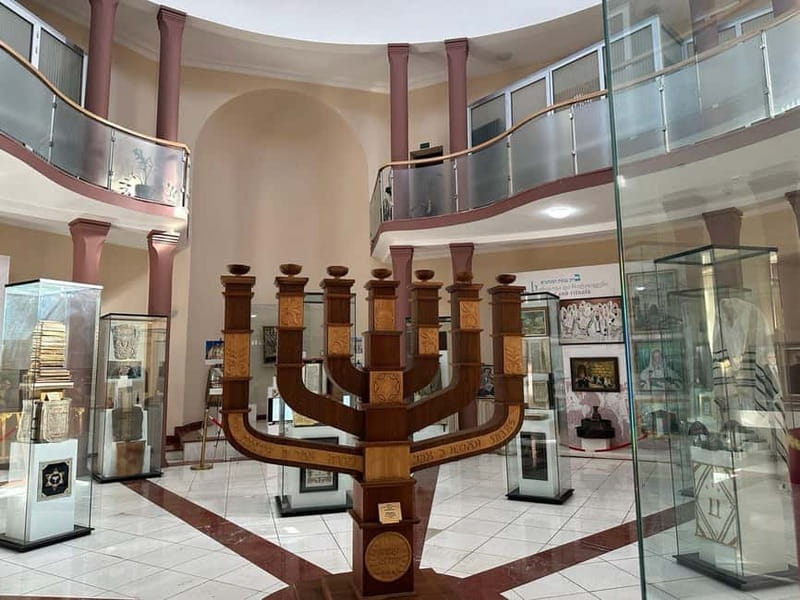
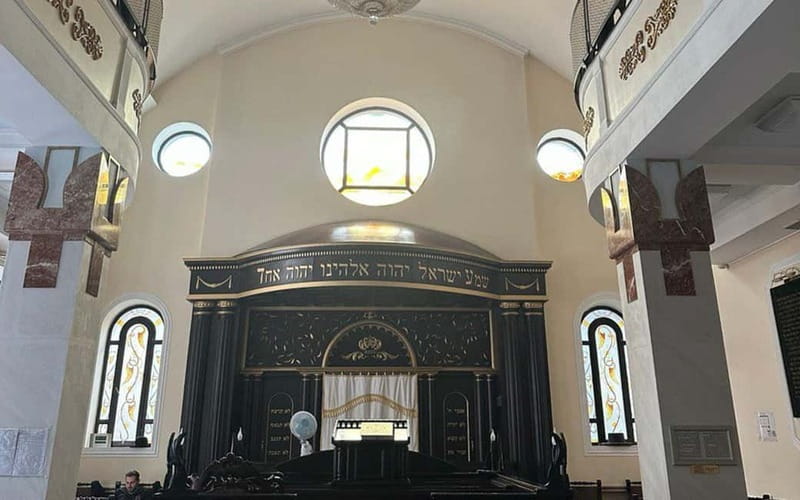
The tour visits two synagogues. Their names are not specified in the available information, so you should not expect the booking details to tell you exactly which buildings you will enter or see.
That uncertainty does not lessen their importance. The synagogues show that Georgian Jewish heritage is not only an academic subject or a memory from an earlier era. Jewish religious life remains part of Tbilisi’s present.
Your guide can explain the role of each site and help you understand the difference between looking at a religious building from outside and learning what it means to the community. Be respectful with photography and follow any instructions given during the visit.
These stops also give the tour emotional balance. The museum and street stories deal with history, change, and memory. The synagogues connect those subjects with continuity. You come away with a fuller picture than you would get from seeing only former Jewish neighborhoods.
The two synagogue visits may be brief, depending on the group and access at the time. This is a guided walking tour, not a long religious architecture study. Still, two sites within two hours provide a useful introduction for anyone who wants more than a passing reference to Jewish life in Tbilisi.
Teona’s guiding style makes a difference

The strongest praise centers on Teona. I would value a guide who can handle a subject like this with care, since Jewish history in Georgia involves migration, identity, religion, community relations, and political change.
Teona is described as friendly, warm, patient, supportive, professional, and very well informed. One participant praised her scientific approach, while another said the tour ended with a thorough understanding of Georgian Jewish history. Those details suggest a guide who can offer facts without turning the walk into a dry lecture.
Her personal style matters in a small group. You have more room to ask questions, pause over a detail, or request clarification. A large group can make a specialist tour feel distant. A group capped at 10 should make the experience more direct.
The praise is also consistent across several nationalities, including participants from Israel, Germany, Belarus, and Canada. That does not guarantee that every group will have the same guide, but Teona is clearly associated with the experience and is the name I would look for when confirming the booking.
The guide’s role is especially important because the supplied route description gives broad themes rather than a long list of objects or named landmarks. The quality of the tour depends on how well those themes become specific, human stories. The feedback suggests that Teona does that part well.
Is two hours enough?
Two hours is a good length for a first look. You can fit this tour into a morning or afternoon without giving up a full day of sightseeing.
The short format also suits you if you are visiting Tbilisi for only a few days. You get a clear introduction to Georgian Jewish heritage, then still have time for the rest of the Old Town, museums, food, or evening plans.
The limitation is depth. Georgian Jewish history covers far more than a museum visit, one street, and two synagogues can show. If you already know the subject well, you may want a longer or more specialized experience. The tour is best understood as a strong starting point.
The pace should be manageable for most people who are comfortable walking, but the activity is specifically not suitable for people with mobility impairments or wheelchair users. You should also remember that the tour returns to Gudiashvili Square, so you finish where you began rather than at a separate drop-off point.
What $51 includes, and what it does not
The price is $51 per person. That is not bargain-basement pricing for a two-hour walk, but the cost is easier to justify because it includes three useful components:
- A professional English-speaking guide
- Entry to the David Baazov Georgian-Jewish Friendship Museum
- Kosher wine tasting
You are paying for a specialist subject and interpretation, not simply for someone to lead you down Old Town streets. If you value context and want to ask questions, the price is fair.
The small group improves the value. A limit of 10 people gives you a better chance to hear the guide and take part in the discussion. It also makes the tour more personal than a standard large-group city walk.
Gratuity is not included. You should allow for that if the guide gives you a worthwhile experience, particularly if Teona leads the tour and provides the patient, careful explanation described by past participants.
Free cancellation is available up to 24 hours before the start for a full refund, and you can reserve now and pay later. Those terms help if your Tbilisi schedule is still shifting.
Who should book this walk?
I would recommend it to you if Jewish history is a central part of your trip, if you want to understand Tbilisi through its communities, or if you prefer a focused cultural walk to a broad checklist of monuments.
It is also a good choice for visitors from Jewish backgrounds who want a respectful introduction to Georgian Jewish life. The combination of the museum, synagogues, former Jewish streets, and kosher wine gives the experience a clear cultural shape.
You should also consider it if you have already seen Tbilisi’s main sights and want something more specific. The route offers another way to read the Old Town, with attention to people and community rather than only architecture.
I would choose a different tour if you want a general overview of Tbilisi, a food-focused outing, or a route designed for wheelchair access. The subject is narrow, and the walking requirement is firm.
FAQ
How long is the Jewish Heritage Walking Tour?
The tour lasts two hours. The guided walking portion in Tbilisi’s Old Town is listed as about 50 minutes, with the remaining time covering the museum, synagogues, and kosher wine tasting.
Where does the tour meet?
The meeting point is Gudiashvili Square in Tbilisi. The information gives both 2 Lado Gudiashvili Square and Gudiashvili Square 12, so check your WhatsApp or email for the final meeting details before arrival.
What language is the tour conducted in?
The tour is conducted in English with a live English-speaking guide.
Is museum admission included?
Yes. Entry to the David Baazov Georgian-Jewish Friendship Museum is included in the price.
Is the kosher wine tasting included?
Yes. Kosher wine tasting is included.
How many people can join the group?
The tour is limited to 10 participants, making it a small-group experience.
Is the tour suitable for wheelchair users?
No. The activity is not suitable for wheelchair users or people with mobility impairments.
Should you book it?
Book this tour if you want a concise, thoughtful introduction to Jewish life in Georgia rather than another general walk around Tbilisi. The strongest reasons are the museum admission, two synagogue visits, the former Jewish quarter around Leselidze Street, and Teona’s praised ability to explain the subject with warmth and care.
At $51, it is best value for you if history and personal guiding matter more than covering a large number of sights. Wear good shoes, confirm the exact square address, and keep your schedule flexible enough for a two-hour walk. For the right audience, this is a focused way to see a less familiar side of Tbilisi.
More History Tours in Tbilisi
- Tbilisi: Guided Walking Tour of Historic City
★ 4.9 · 156 reviews - Mtskheta, Jvari, gori, uflistsikhe, history and panorama (group tours)
★ 4.5 · 107 reviews - Tbilisi old town & soviet heritage – Private driver-guided Tour
★ 5.0 · 83 reviews - Private Wine tasting in Historic Karalashvili Wine Cellar
★ 5.0 · 60 reviews
Just added near Tbilisi
- Wine Tasting feel the Difference of Qvevri or Classical Wine★ 4.4 · 10 reviews
- Walking Tour in Old Tbilisi – Group Tour★ 4.5 · 8 reviews
- From Tbilisi: Kakheti and Kazbegi 2-Day 4X4 Jeep Tour pack★ 5.0 · 6 reviews
- Tbilisi: Vintage Fashion and Secondhand Thrifting Tour★ 5.0 · 11 reviews
- Uforgatable Kakheti Tour with wine tasting – in Georgia★ 4.9 · 5 reviews
- From Tbilisi: Uplistsikhe Caves and Mtskheta Town Day tour★ 5.0 · 2 reviews
- Tbilisi Airport to Gudauri, Bakuriani, Batumi, Tbilisi★ 5.0 · 3 reviews
- Private Adorable City Tour of Tbilisi★ 5.0 · 3 reviews
Historical Tours, compared.


Mtskheta, Jvari, gori, uflistsikhe, history and panorama (group tours)
Read our review →
Tbilisi old town & soviet heritage – Private driver-guided Tour
Read our review →
Private Wine tasting in Historic Karalashvili Wine Cellar
Read our review →

Browse the lists this tour appears in