
Reviewed · HISTORICAL TOURS
Tbilisi: Religious Heritage Guided Walking Tour
Old faiths share the same streets. This two-hour walk through Tbilisi’s historic core brings together a Catholic church, Armenian Apostolic church, synagogue, mosque, Orthodox church, and the remains of a Zoroastrian fire temple. I like the unusual range of sites, and I like that the guide explains both the beliefs and the everyday ways these communities shaped Georgia.
The walk costs $25 per person, which feels fair for a guided look at six religious traditions in a compact area. The main consideration is access: the route is not suitable for wheelchair users, and you should wear comfortable shoes and respectful clothing for the places of worship.
In This Review
- Key points to know before you go
- Why this Tbilisi walk is different
- Starting at Freedom Square
- A Catholic church with an unexpected architectural note
- The Armenian Apostolic Church and Georgia’s wider story
- Entering Tbilisi’s Jewish story at the synagogue
- The mosque and its Sunni-Shia connection
- The ancient Zoroastrian Fire Temple remains
- The Orthodox church and Georgia’s majority faith
- What the two-hour format really means
- Is $25 a fair price?
- Who will enjoy this walk most?
- My verdict on Tbilisi’s religious heritage walk
- FAQ
- How long does the religious heritage tour last?
- How much does the tour cost?
- Which religious sites are included?
- Does the tour visit Freedom Square?
- What languages are available?
- Are comfortable shoes recommended?
- Is respectful clothing recommended?
- Is the tour suitable for wheelchair users?
Key points to know before you go
- Six faith traditions in two hours: You visit Catholic, Armenian Apostolic, Jewish, Muslim, Orthodox Christian, and Zoroastrian sites.
- A rare mosque visit: The mosque is noted for Sunni and Shia worshippers praying together, an unusual detail that adds real substance to the tour.
- The fire temple is a remnant: You see the remains of an ancient Zoroastrian Fire Temple rather than a complete working place of worship.
- Freedom Square begins the story: The route starts with one of Tbilisi’s best-known public spaces before moving into its religious past.
- English and Russian guides: The tour is offered in both languages, with a live guide leading the walk.
- Plan for stairs and uneven walking: Comfortable footwear is important, and the experience is not suitable for wheelchair users.
Why this Tbilisi walk is different
Tbilisi is often introduced through its old balconies, river views, sulfur baths, and hilltop churches. Those sights matter, but the city also makes more sense when you look at the faiths that have shared its streets.
This tour gives you that wider view in a short period. Instead of visiting only the dominant Georgian Orthodox tradition, you move through several religious communities and learn how each one fits into the city’s story. That makes the walk useful for anyone who wants more than a quick photo stop.
I especially like the way the route invites comparison. You can ask how different religions understand worship, community, sacred space, and tradition. The guide also explains where beliefs differ, without turning the walk into a formal theology lesson.
The tour has received two five-star ratings from verified bookings, with praise for its friendly presentation and engaging explanations. One particularly useful detail is the focus on the mosque, where Sunni and Shia Muslims pray together. That is the sort of local fact that gives the walk more weight than a simple checklist of buildings.
More Walking Tours in Tbilisi
- Tbilisi Walking Tour Including Cable Car and Traditional Bakery
★ 5.0 · 1,310 reviews - Tbilisi: City Highlights Guided Walking Tour
★ 4.9 · 1,114 reviews - Tbilisi:Evening Walking & Talking Tour with Wine & Boat Ride
★ 5.0 · 572 reviews
Starting at Freedom Square
Freedom Square is a practical starting point because it gives you a quick sense of modern Tbilisi before the route turns toward older religious sites. The square has been central to the city’s public life, and it helps frame the tour’s larger theme: Tbilisi has changed many times while keeping layers of its past close at hand.
You may not spend a long time here. Think of it as the opening page rather than the main chapter. The guide uses the square to orient you before leading you toward the historic core.
This first stop is also useful if you are new to Tbilisi. A guided walk can help you understand how the central districts connect, especially when you are still learning the city’s layout. Since the entire activity lasts only two hours, the guide needs to keep the pace moving.
A Catholic church with an unexpected architectural note
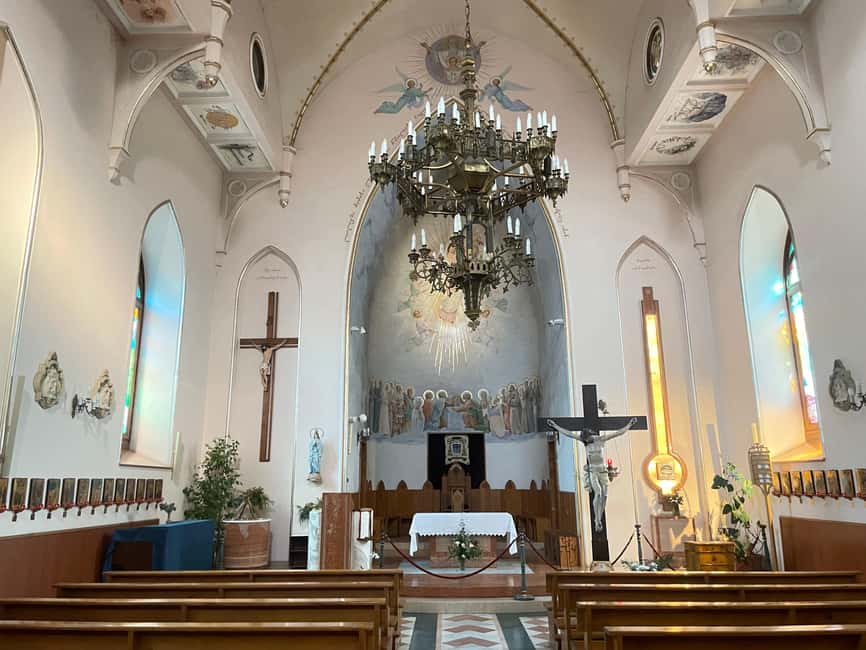
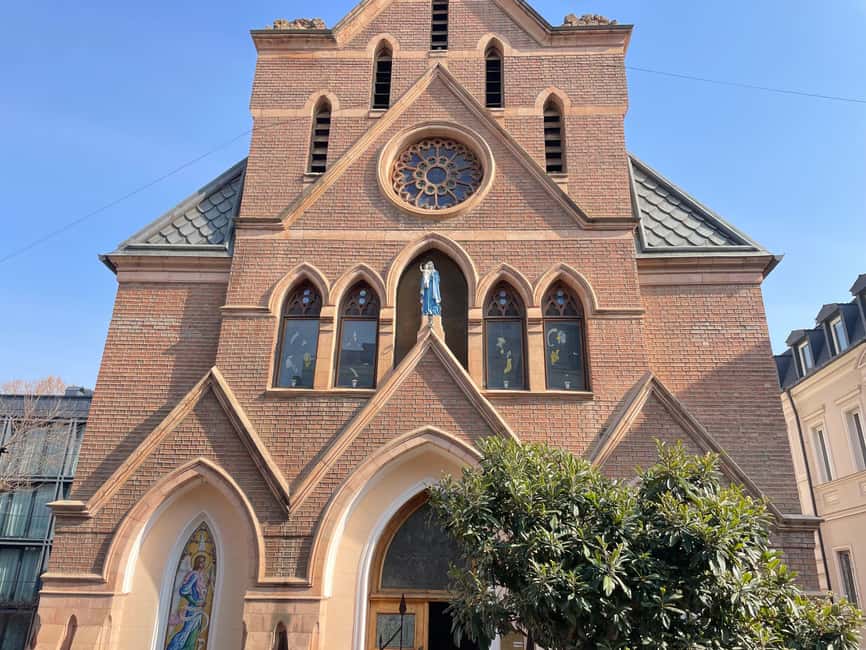
The Catholic church gives you the first clear reminder that Georgia’s religious identity is not limited to Orthodox Christianity. Catholic worship has a place in Tbilisi’s story, and the church adds a European Christian thread to the route.
One detail worth watching for is the building’s Russian Orthodox inspired architectural style. That combination may seem surprising at first. A Catholic church does not have to look exactly like a church in Rome or Western Europe, and local building traditions often shape religious architecture.
The guide’s comparison of Catholic and Orthodox practice is likely to be one of the most useful parts of this stop. You can learn about shared Christian foundations while also hearing how worship, church structure, and tradition differ.
You should dress modestly here, as you should at every religious site on the route. The tour description recommends respectful attire, and that is good advice even if no specific clothing rules are given.
The Armenian Apostolic Church and Georgia’s wider story
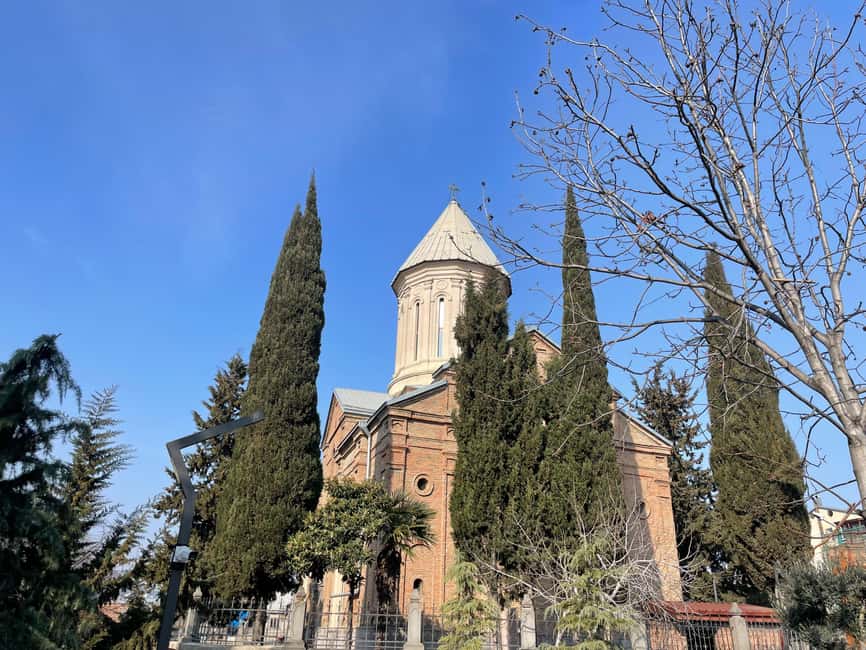
The Armenian Apostolic Church introduces another ancient Christian tradition. Armenian Christianity has its own customs, identity, and church structure, so this stop helps show that Christian history in the region is not one single story.
For you, the value is in the contrast. The Armenian Apostolic tradition shares important Christian beliefs with Georgian Orthodoxy and Catholicism, yet it has developed along its own path. A guide can explain those differences more clearly than a plaque or a quick internet search.
This is also a reminder that Tbilisi has long been shaped by communities with connections beyond Georgia’s modern borders. The city sits at a crossroads, and its religious buildings reflect that position.
Do not expect every stop to offer a long indoor visit. The exact amount of time spent inside each site can vary, and religious services or local conditions may affect access. The value comes from the guide’s interpretation as much as from the architecture.
A slower pace, same corner of the Caucasus:
- Tbilisi: Day Trip to Kazbegi, Gudauri, Gergeti, and Ananuri
★ 4.9 · 3,203 reviews - Day Trip to Kakheti Wine Region Including 9 Wine Tastings
★ 5.0 · 2,774 reviews - Highlights of Caucasus Mountains-Jinvali,Ananuri,Gudauri,Kazbegi(Group tour)
★ 5.0 · 2,682 reviews - From Tbilisi: Kakheti Wine Region Tour with 9 Wine Tastings
★ 4.9 · 2,541 reviews
Entering Tbilisi’s Jewish story at the synagogue
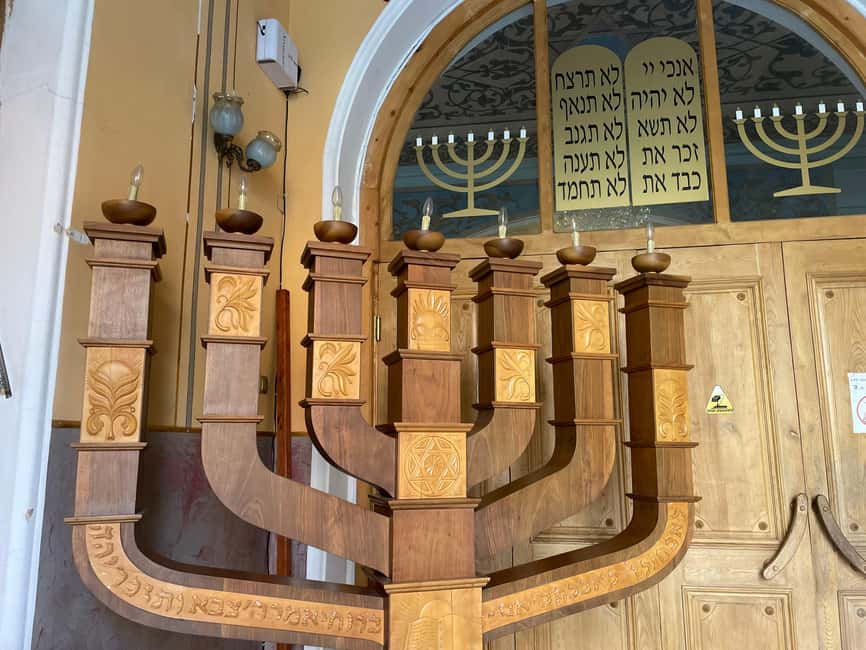
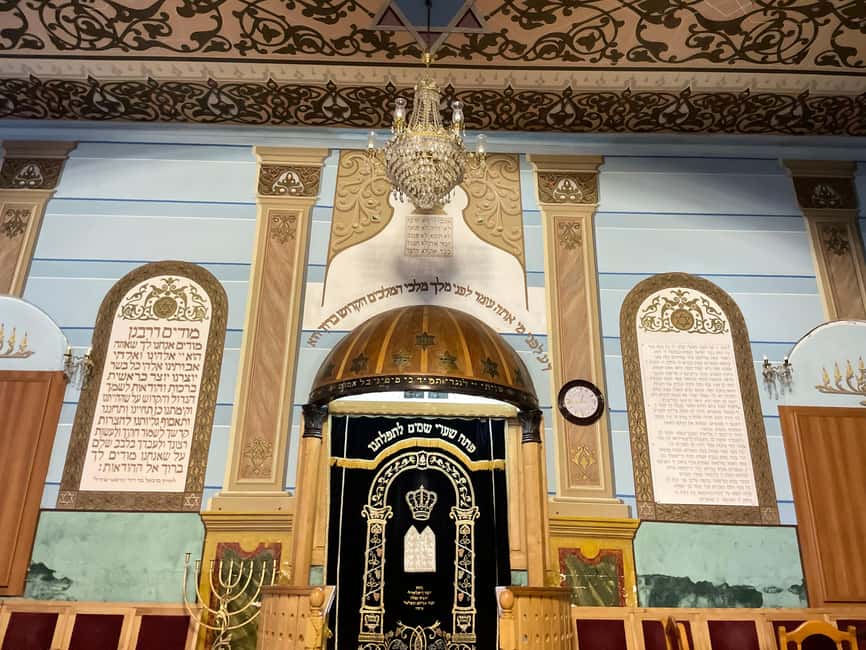
The synagogue is one of the most meaningful stops for anyone interested in the Jewish history of Tbilisi. Here, the tour shifts from Christian traditions to Judaism and gives you a chance to consider how Jewish community life fits into the city’s long record of cultural exchange.
The contrast is helpful. You are not simply looking at another old building. You are hearing how Jewish religious practice differs from Christian worship, while also learning about shared ideas such as scripture, community, and ethical tradition.
One of the strongest features of the tour is the chance to enter the synagogue. Access to a religious building can make the discussion feel more immediate, but you should remember that this remains an active sacred space. Follow the guide’s instructions, keep your voice low, and treat the setting with care.
The synagogue stop may be especially rewarding if you have already visited Georgia’s Orthodox churches and want to understand the city beyond its majority faith. It adds a perspective that is easy to miss on a standard sightseeing walk.
The mosque and its Sunni-Shia connection
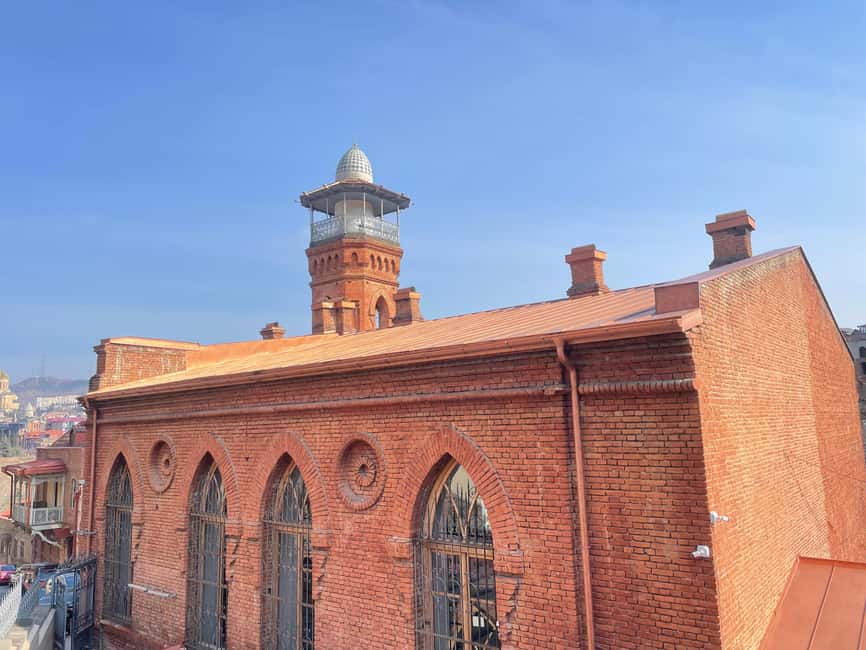
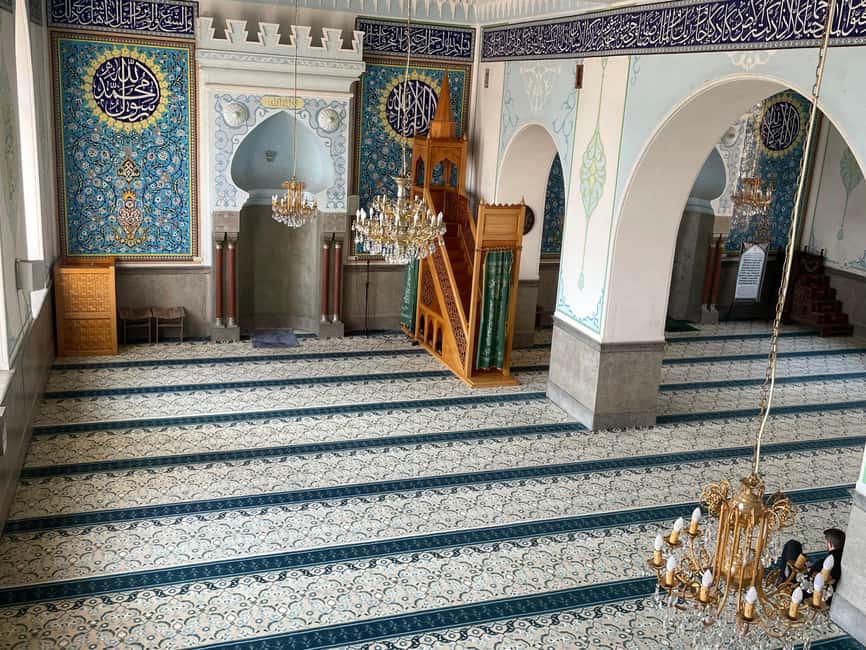
The mosque is a major highlight because of the detail about Sunni and Shia Muslims praying together there. The guide uses the site to explain Islam in Georgia and to discuss a form of cooperation that many people may not expect.
That detail gives the tour a practical human focus. Religious labels can sound abstract when they are explained only in books. Seeing a shared place of worship helps you think about how different groups can maintain distinct traditions while occupying the same civic space.
The mosque also lets the guide compare Islamic belief and practice with the Christian and Jewish traditions introduced earlier. You may learn about common themes such as prayer, charity, scripture, and moral responsibility, along with clear differences in worship and religious authority.
As with the synagogue and churches, respectful clothing matters. Pets are not allowed on the tour, and you should be prepared to follow the rules of the site. The route is best suited to people who are comfortable listening, walking, and behaving quietly in active places of worship.
The ancient Zoroastrian Fire Temple remains
The Zoroastrian stop is the most unusual part of the route. You visit the remains of an ancient Fire Temple, connecting present-day Tbilisi with one of the world’s oldest religious traditions.
Because the temple is described as remains, you should not expect a complete functioning sanctuary. This is more an archaeological and historical stop than a conventional church or mosque visit. That difference is part of its appeal.
The guide explains the role of fire in Zoroastrian thought and places the site alongside the other faiths on the walk. You can consider how sacred spaces survive even when their original communities or religious practices have changed.
For me, this is the sort of stop that justifies taking a guided tour rather than walking alone. Without explanation, ruins can be easy to overlook. With context, even partial remains can show how far back Tbilisi’s religious connections reach.
The Orthodox church and Georgia’s majority faith
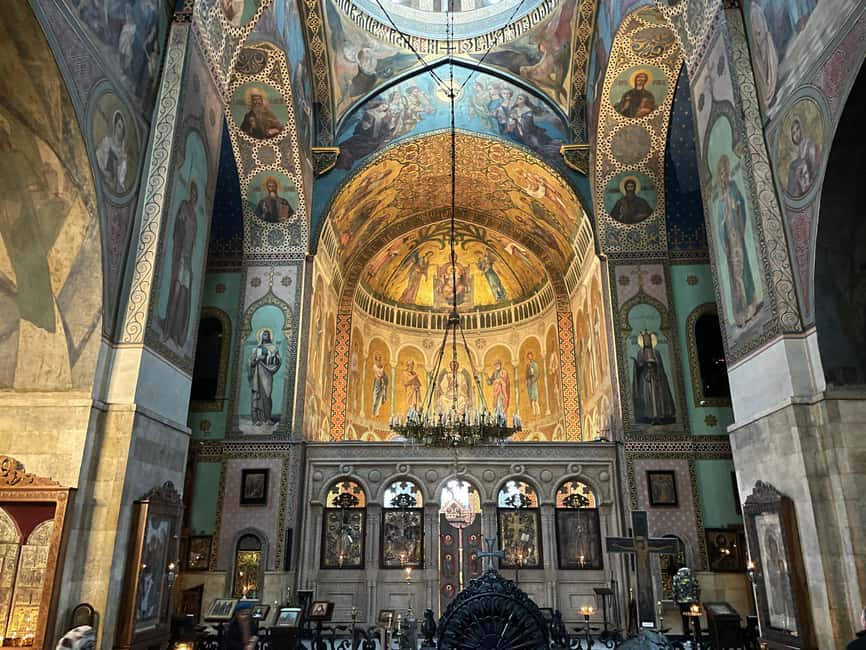
No tour of Tbilisi’s religious heritage would be complete without an Orthodox Christian church. Georgian Orthodoxy is the dominant faith in Georgia, and this stop gives the route its necessary center of gravity.
If you have already visited a major Georgian cathedral, this may feel familiar at first. Still, the guide’s comparisons make it worthwhile. You can place Orthodox Christianity beside Catholicism and the Armenian Apostolic tradition, noting shared Christian roots and different customs.
The Orthodox stop also helps explain why Georgia’s churches are so important to the country’s identity. The tour is not only about architecture. It is about how faith continues to shape public life, tradition, and the way people understand Georgia’s past.
As at the other religious sites, access and conduct can vary. The guide is there to help you understand what is appropriate. A calm pace and modest clothing will make the visit more comfortable for everyone.
What the two-hour format really means
Two hours is enough time to get a strong introduction, but not enough time for long visits at every site. You will cover several locations, so expect a steady walking pace and fairly brief explanations at some stops.
I see this as a strength if you have limited time in Tbilisi. The tour gives you a useful framework early in your stay, and you can return later to any site that captures your interest. It also works well as a way to break up a day of general sightseeing.
The short format has limits. If you want lengthy theological discussion, quiet reflection at each site, or detailed architectural study, you may find the schedule tight. The guide has to balance six traditions, walking time, and questions within a compact window.
English and Russian are available. The guide is live, which matters here because the subject depends on comparison and conversation. One five-star assessment praised the friendly, engaging approach, while another described the experience as enlightening. Those qualities are especially important on a subject that can become dry if presented as a list of dates and labels.
Is $25 a fair price?
At $25 per person, I consider this good value for a two-hour guided walk, particularly because the route covers several distinct religious sites rather than one monument. You are paying for structure and explanation, not just entry into a building.
The price makes the most sense for first-time visitors, people with a strong interest in world religions, and anyone who wants help reading Tbilisi’s history through its communities. A self-guided route might cost less, but it would be harder to compare the traditions in the same clear sequence.
The value depends on your expectations. This is not a luxury tour, a private deep study, or a long museum visit. It is a compact introduction led by a guide who can connect the sites and answer questions as you walk.
You can reserve now and pay later, which is useful when your schedule is still changing. Free cancellation is available up to 24 hours before the activity for a full refund. Check the available starting times before booking, since the tour lasts two hours and the exact departure time is not fixed here.
Who will enjoy this walk most?
I would recommend this experience to you if you enjoy history that is tied to real places and living communities. It suits curious first-time visitors, students of religion, culturally minded couples, and anyone who wants to understand why Tbilisi feels different from a city defined by one faith alone.
It is also a good choice if you have only a short stay. In one outing, you gain an introduction to Catholic, Armenian Apostolic, Jewish, Muslim, Orthodox Christian, and Zoroastrian traditions.
You may want to choose another activity if you cannot walk comfortably for two hours or if you need wheelchair access. The experience is specifically not suitable for wheelchair users. It also may not satisfy you if you want extensive time inside each building or a private guide focused only on your own interests.
Bring comfortable shoes. Wear clothing that is respectful for religious sites, and leave pets behind. Those simple preparations will help you focus on the history rather than on practical problems.
My verdict on Tbilisi’s religious heritage walk
I would book this tour if I wanted a thoughtful introduction to Tbilisi and had two hours available. Its best feature is the range of traditions packed into a manageable route, with the synagogue, mosque, and Zoroastrian remains adding especially strong variety.
The walk is not designed for deep study at every stop, and the pace may feel brisk. Still, the price is reasonable, the subject is unusual, and the guide’s comparisons give the experience real purpose.
Book it early in your stay if you want context for the rest of your time in Georgia. Skip it only if walking access is a concern or if your main goal is grand architecture rather than the way different faiths have shaped one city.
FAQ
How long does the religious heritage tour last?
The tour lasts two hours.
How much does the tour cost?
The price is $25 per person.
Which religious sites are included?
The route includes a Catholic Church, Armenian Apostolic Church, Jewish Synagogue, Mosque, Orthodox Christian Church, and the remains of an ancient Zoroastrian Fire Temple.
Does the tour visit Freedom Square?
Yes. Freedom Square is included in the walking route.
What languages are available?
The live tour guide provides the experience in English or Russian.
Are comfortable shoes recommended?
Yes. Comfortable shoes are recommended because the experience is a walking tour.
Is respectful clothing recommended?
Yes. Respectful attire is recommended when visiting the religious sites.
Is the tour suitable for wheelchair users?
No. The experience is not suitable for wheelchair users.
More History Tours in Tbilisi
- Tbilisi: Guided Walking Tour of Historic City
★ 4.9 · 156 reviews - Mtskheta, Jvari, gori, uflistsikhe, history and panorama (group tours)
★ 4.5 · 107 reviews - Tbilisi old town & soviet heritage – Private driver-guided Tour
★ 5.0 · 83 reviews - Private Wine tasting in Historic Karalashvili Wine Cellar
★ 5.0 · 60 reviews
Just added near Tbilisi
- Wine Tasting feel the Difference of Qvevri or Classical Wine★ 4.4 · 10 reviews
- Walking Tour in Old Tbilisi – Group Tour★ 4.5 · 8 reviews
- From Tbilisi: Kakheti and Kazbegi 2-Day 4X4 Jeep Tour pack★ 5.0 · 6 reviews
- Tbilisi: Vintage Fashion and Secondhand Thrifting Tour★ 5.0 · 11 reviews
- From Tbilisi: Uplistsikhe Caves and Mtskheta Town Day tour★ 5.0 · 2 reviews
- Uforgatable Kakheti Tour with wine tasting – in Georgia★ 4.9 · 5 reviews
- Tbilisi Airport to Gudauri, Bakuriani, Batumi, Tbilisi★ 5.0 · 3 reviews
- Private Adorable City Tour of Tbilisi★ 5.0 · 3 reviews
Historical Tours, compared.
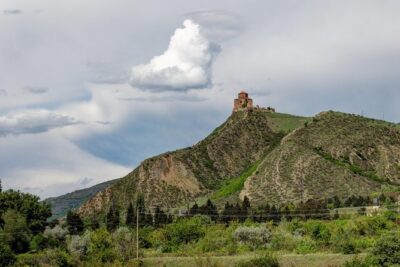
Mtskheta, Jvari, gori, uflistsikhe, history and panorama (group tours)
Read our review →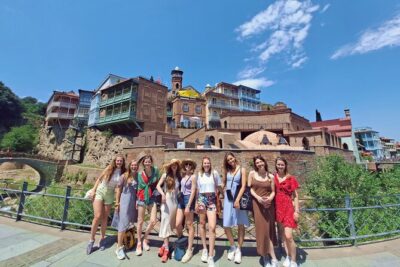
Tbilisi old town & soviet heritage – Private driver-guided Tour
Read our review →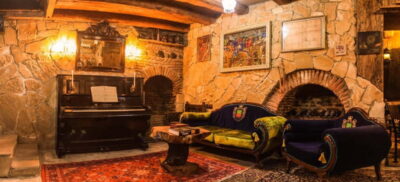
Private Wine tasting in Historic Karalashvili Wine Cellar
Read our review →
Browse the lists this tour appears in