
Reviewed · CAVE CITIES AND UPLISTSIKHE TOURS
Uplistsikhe, Mtskheta and Jvari – historical private day tour from Tbilisi
Three eras fit one day. This private tour from Tbilisi links pagan Uplistsikhe, Christian Mtskheta, cliff-top Jvari, and Soviet-era Gori in about seven to eight hours. I like the private air-conditioned transport and the chance to travel with a guide such as Zurab, Luka, or Temo, whose clear explanations help connect each stop. I also like that admission to Uplistsikhe and Gori Fortress is included.
The main drawback is the pace. You cover several major places in one day, and Uplistsikhe requires walking over uneven ground and climbing. The optional winery lunch or family meal in Mtskheta can add local flavor, but you should confirm exactly what is included before setting out.
In This Review
- Key points at a glance
- Four chapters of Georgian history from Tbilisi
- Uplistsikhe: climbing through Georgia’s ancient cave town
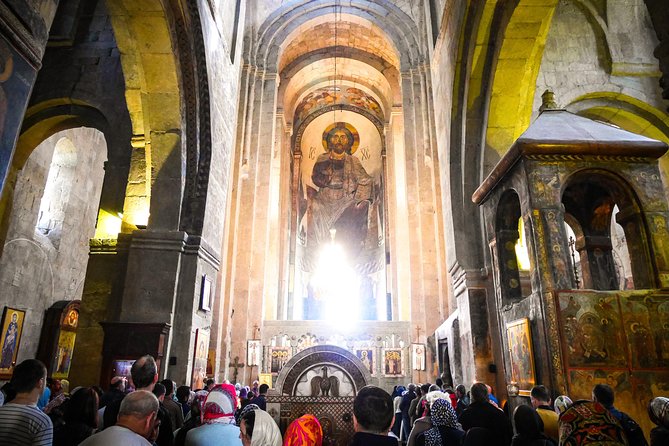
- Mtskheta and Svetitskhoveli: Georgia’s Christian heart
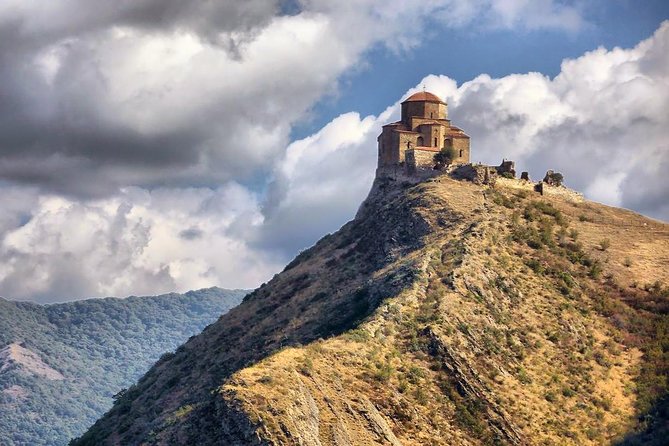
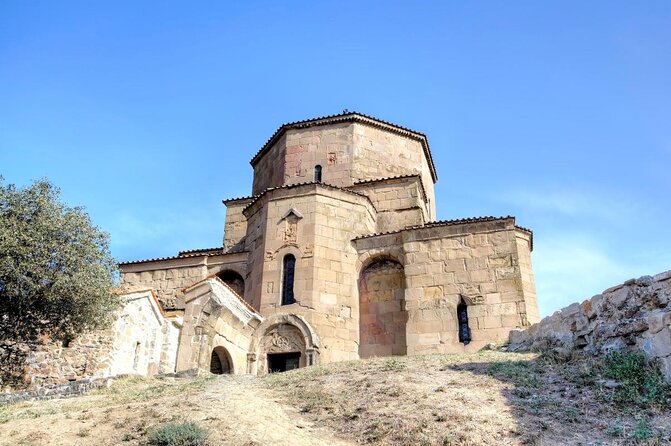
- Jvari Monastery and the view over Mtskheta
- Gori Fortress and the shadow of Stalin
- What the private car changes
- How the $149 price measures up
- Guides, comfort, and the human side
- Who should book this day tour
- Should you book the Uplistsikhe, Mtskheta and Jvari tour?
- FAQ
- How long does the tour last?
- Is hotel pickup available?
- Is this a private tour?
- What type of transport is provided?
- Is an English-speaking guide included?
- Are entrance fees included?
- Is the Stalin Museum ticket included?
- Is lunch included?
- What should I wear for Uplistsikhe?
Key points at a glance
- Uplistsikhe’s carved city: Walk through caves, halls, and rocky paths in a former pagan center that once held more than 20,000 people.
- Mtskheta’s Christian landmarks: See Svetitskhoveli Cathedral and the town connected with the beginning of Christianity in Georgia.
- Jvari’s famous viewpoint: Look down from the monastery toward Mtskheta and the meeting point of the Mtkvari and Aragvi rivers.
- Gori’s Soviet connection: Visit Gori Fortress and decide if you want to add the optional Stalin Museum.
- A genuinely private outing: Only your party takes part, with hotel pickup offered and a comfortable car with air-conditioning.
- A useful footwear warning: Uplistsikhe has uneven surfaces and elevation, so wear shoes with a secure, non-slippery sole.
Four chapters of Georgian history from Tbilisi
This is a strong choice if you want one day that explains how Georgia moved from pagan worship to Christianity and then into the Soviet period. The sites are not interchangeable. Each gives you a different setting, mood, and piece of the country’s past.
Uplistsikhe brings you into a rocky settlement carved into the earth. Mtskheta shows the spiritual center of early Georgia. Jvari adds one of the country’s most memorable views, while Gori brings the story into the twentieth century through its fortress and connection to Joseph Stalin.
I would choose this tour early in a Tbilisi stay if you want context for later visits around Georgia. It gives you a useful sense of how religion, royal power, local tradition, and Soviet rule shaped the country.
The private format matters. You are not tied to a large group, so you can ask questions and spend more time on a subject that catches your attention. The experience lasts about seven to eight hours, making it a full day rather than a quick half-day outing.
More cave cities you can walk through:
- Tbilisi: Mtskheta, Jvari, Gori and Uplistsikhe Day Tour
★ 4.9 · 2,396 reviews - Day Trip to Mtskheta Gori and Uplistsikhe
★ 5.0 · 1,801 reviews - Tbilisi: Borjomi, Rabati & Vardzia Adventure Guided Tour
★ 4.9 · 817 reviews
Uplistsikhe: climbing through Georgia’s ancient cave town
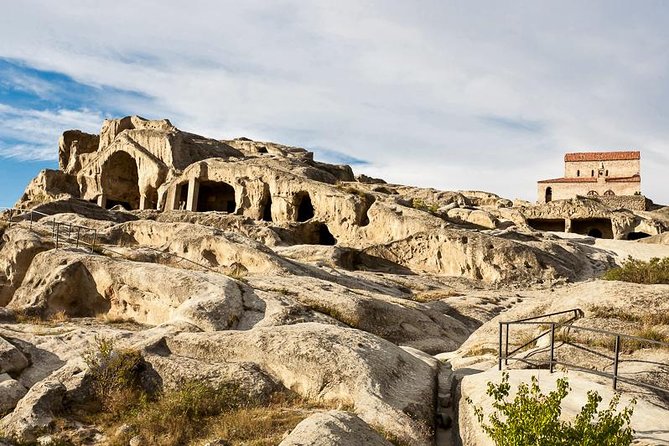
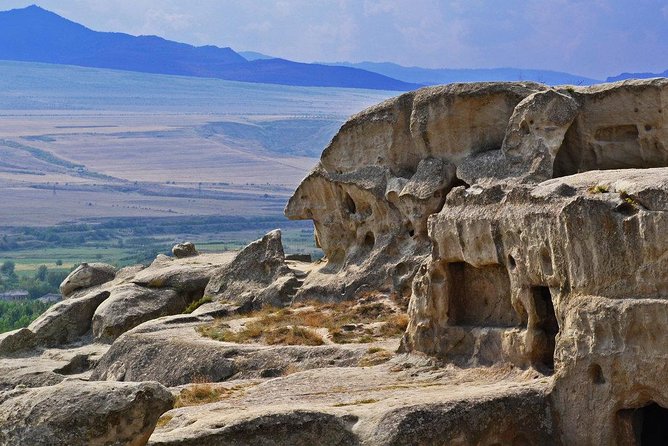
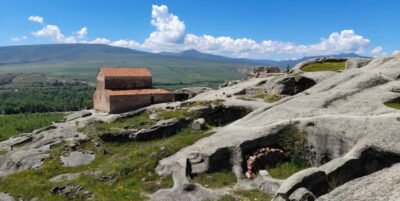
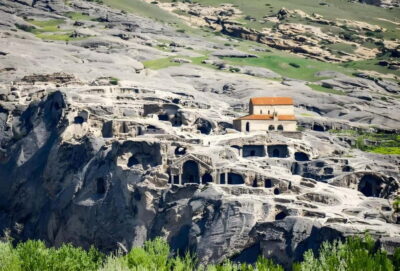
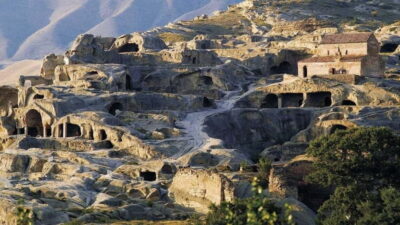
Uplistsikhe is the most physically demanding stop, but also the one with the most unusual setting. The town is cut into rock, with caves and open spaces spread across a high, uneven area. It once functioned as a major city and a center of pagan culture, with more than 20,000 people connected to the settlement at its height.
Allow roughly two hours here. That gives you time to move through the site without treating it like a photo stop. You can look at the carved rooms, imagine how the settlement worked, and pause for views across the surrounding countryside.
The appeal is visual as much as historical. Instead of entering a polished museum, you walk through exposed stone and open-air ruins. The paths rise and fall, and the rock can be awkward underfoot. I would not wear smooth-soled trainers, sandals with little support, or anything you would hesitate to get dusty.
You should also be ready for some climbing. The site includes elevation, and the tour description specifically warns about uneven surfaces. Most people can take part, but anyone with serious difficulty walking should consider this carefully before booking.
A good guide makes a major difference here. Without explanation, Uplistsikhe can look like a collection of caves. With context, it becomes a former urban center with religious, residential, and public spaces. Zurab was praised for bringing the places to life through careful explanations, while Luka was singled out for making the climb and the history enjoyable. Those details suggest that the guiding is a major part of the value, not just a ride between ruins.
Mtskheta and Svetitskhoveli: Georgia’s Christian heart
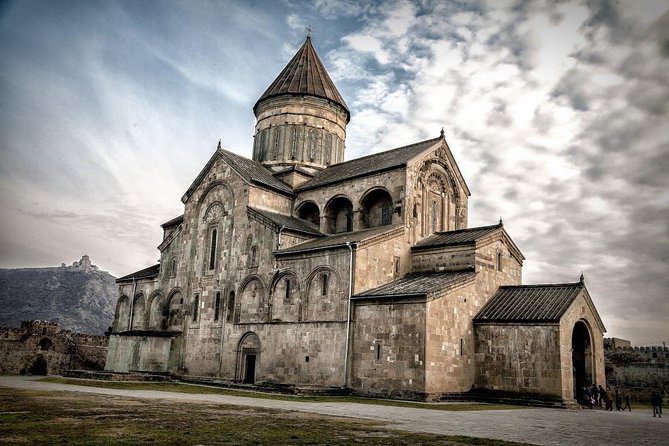
Mtskheta is a more settled and ceremonial stop after the rough stone paths of Uplistsikhe. The town was once the capital of the Eastern Georgian Kingdom and is closely linked with the Christianization of Georgia.
You have about two hours in this part of the visit. The main focus is Svetitskhoveli Cathedral, one of Georgia’s best-known religious buildings. The route also refers to the Church of the Holy Cross area and Samtavro, a convent connected with St. Nino, the figure associated with bringing Christianity to Georgia.
This is where the tour’s historical sequence becomes clear. Uplistsikhe represents the older pagan world. Mtskheta marks the shift to Christianity and the creation of a new religious center. The buildings are not simply scenic stops. They help explain why Mtskheta remains so important to Georgian identity.
The cathedral and surrounding town offer a different experience from Uplistsikhe. You are no longer climbing among exposed ruins. Instead, you are looking at active religious spaces and major Georgian architecture. Dress respectfully when entering churches, and follow any instructions given by your guide or local staff.
The tour may offer either an organic winery lunch or a meal with a local family in Mtskheta. The supplied details describe lunch at an organic winery as optional, while the general tour information also refers to a local-family meal. Since meals and drinks are otherwise listed as not included, ask for the current arrangement and price before the day begins.
That small check matters. A meal can turn Mtskheta from a sightseeing stop into a chance to taste local food and spend time in a more personal setting. But you should know if it is included, optional, or paid separately.
Jvari Monastery and the view over Mtskheta
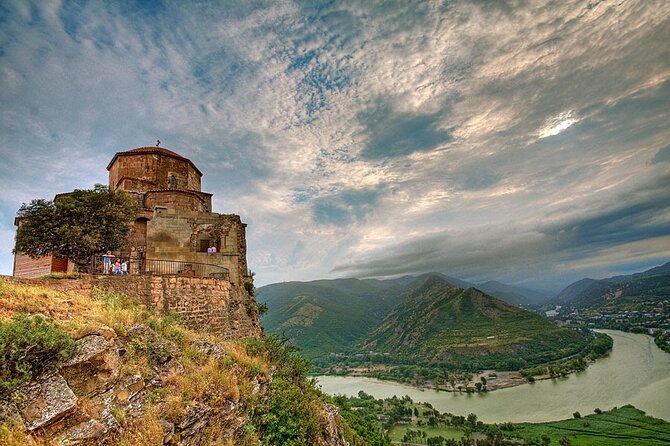
Jvari takes about 45 minutes, but the short visit is well chosen. The monastery sits on a cliff above Mtskheta, with views toward the town, the Mtkvari and Aragvi rivers, and the surrounding mountains.
This is the tour’s great viewpoint. You see Mtskheta from above rather than only from its streets, and the location explains why the site has inspired Georgian poems and novels. The church is also one of Georgia’s early Christian buildings and a UNESCO World Heritage Site.
You may find the stop especially rewarding after visiting Mtskheta below. From the hill, the town’s position becomes easier to understand. It was not just a religious center by accident. Its setting near two rivers helped make it an important place in eastern Georgia.
Give yourself time to look beyond the church itself. The view is the reason to linger. On a clear day, you can take in the river junction, the town, and the mountain setting in one sweep.
The visit is brief, so this is not the place for a long architectural study. If you care deeply about church design or religious history, use the drive and the other stops to ask questions. The guide can help fill out what a 45-minute visit cannot cover on its own.
More half-days at Mtskheta and Jvari:
- Tbilisi: Mtskheta Jvari Bazaar, Chronicles of Georgia & Wine
★ 5.0 · 1,088 reviews - Tbilisi:Mtskheta,Jvari,Bazaar,wine tasting,Chronicles of Georgia
★ 5.0 · 730 reviews - From Tbilisi : Mtskheta, Jvari, Gori & Uplistsikhe Day Trip
★ 4.8 · 432 reviews - From Tbilisi: Mtskheta, Jvari, Gori, Uplistsikhe Guided Tour
★ 4.7 · 354 reviews
Gori Fortress and the shadow of Stalin
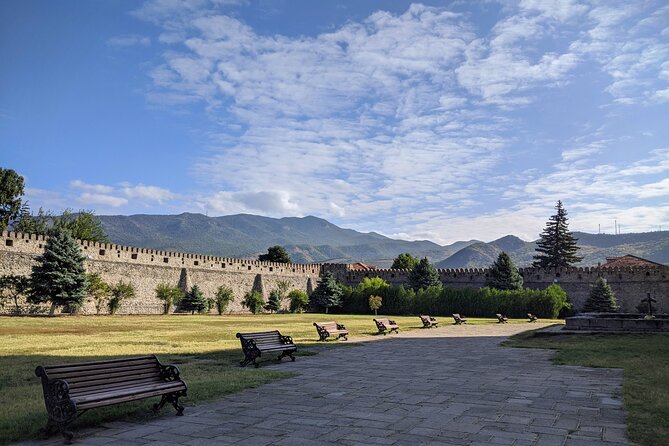
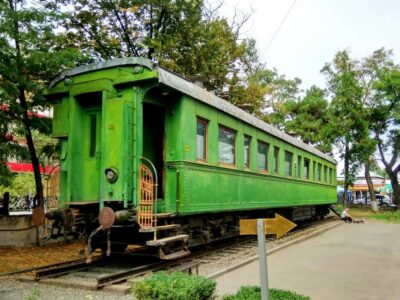
The final listed stop is Gori Fortress, with about 45 minutes set aside. This shifts the subject from ancient religion to the Soviet period, since Gori is known as the birthplace of Joseph Stalin.
The fortress gives you a physical link to Gori’s older past, while the town’s connection to Stalin adds a complicated modern layer. The tour includes admission to the fortress, but the Stalin Museum is optional and its ticket is not included.
That separation is useful because the museum will not suit everyone. Some people want a closer look at Stalin’s early life and the way his legacy is presented in Georgia. Others would rather keep the day focused on ancient sites and the fortress view. You can decide based on your interest, available time, and willingness to pay for the extra admission.
Do not expect Gori to feel like a simple final photo stop. The Stalin connection raises questions about memory, power, and how a birthplace handles a notorious political figure. If you add the museum, ask your guide to explain the local context rather than treating it as a celebrity museum alone.
The 45-minute fortress visit is fairly short. If the museum is important to you, confirm how the schedule will work before booking. The day already includes several substantial stops, so time may feel tight.
What the private car changes
The tour includes pickup and private transfers in a comfortable car with air-conditioning. That is a practical advantage in Georgia, where several separate historical sites can be awkward to link by public transport in one day.
You avoid arranging separate taxis, checking departure times, and negotiating several rides. You also travel only with your own party, which gives the day a more relaxed feel than a large coach excursion.
The car is not just a way to get from place to place. The guide can explain what you are passing, and one review specifically praised Temo for offering information even during the drive. That helps turn the transfers into part of the experience rather than dead time.
The private setup also gives you a better chance to ask for clarification. If a church, ruler, or period of Georgian history is unfamiliar, you can stop and ask without holding up a bus full of people.
Still, private does not mean unstructured. The listed timings total several hours at the sights, before accounting for driving and any meal. You should expect a full day with a clear route. If you want long, leisurely visits at every location, a tour focused on fewer sites may suit you better.
How the $149 price measures up
At $149 per person, this is not the cheapest way to see the area. The price includes a professional English-speaking guide, private transfers, air-conditioning, and entrance fees listed for Uplistsikhe and Gori Fortress. Those inclusions make the cost easier to justify, especially for a small party that would otherwise need to arrange a car and driver.
The value improves when you care about explanation, not just transport. Uplistsikhe and the churches can be visited independently, but the connection between pagan Georgia, Christian Georgia, and Soviet Georgia is easier to understand with a guide.
For one person or a couple, the price may feel substantial. Group discounts are offered, so the per-person cost may work better for families or friends traveling together. Because the tour is private, you are also paying for control over the group rather than joining strangers.
Meals and drinks are not generally included. The winery lunch is described as optional, and the Stalin Museum costs extra. Set aside money for those choices if they matter to you. I would ask about the lunch arrangement in advance so the value is clear.
The fact that the experience is commonly booked well in advance suggests you should not leave it until the last moment if your dates are fixed. Confirmation is provided at booking, and free cancellation is available up to 24 hours before the start time.
Guides, comfort, and the human side
The strongest praise centers on the guides. Zurab was appreciated for careful detail and for making each site easier to understand. Luka was associated with an enjoyable, informative day and the playful challenge of reaching the caves. Temo was thanked for clear explanations during the drives as well as at the monuments.
You should remember that a particular guide cannot always be guaranteed unless the company confirms it. Still, these names give you useful reference points when discussing your booking.
The English-speaking guide is especially valuable at Uplistsikhe and Mtskheta. Both places reward interpretation. The ruins need a sense of how people once used the rock, while the churches need religious and political context.
Comfort also gets proper attention here. The car has air-conditioning, and the private format means you do not have to share the vehicle with a large group. That matters during a long day with several stops, especially after walking over rough stone at Uplistsikhe.
The route is near public transportation, but that does not remove the benefit of pickup. You can start the day without arranging multiple connections, and the company confirms the booking at the time of reservation.
Who should book this day tour
I would recommend it to you if you want to cover several of eastern Georgia’s major historic sites in one organized day. It suits first-time visitors who want a clear introduction, couples and families who value a private vehicle, and small groups that want to spread the cost through a group discount.
It is also a good fit if you enjoy changing subjects. One day moves from ancient caves to active Christian sites, a dramatic viewpoint, and a fortress linked with Soviet history. That variety keeps the route from feeling repetitive.
You should think twice if you dislike uneven walking, climbing, or tightly scheduled days. Uplistsikhe is not a smooth, easy stroll. You may also prefer a slower private outing if your main interest is detailed church architecture or a long visit to the Stalin Museum.
The optional food experience makes the day more flexible. You can add a winery lunch or a local-family meal in Mtskheta, but verify the details because meals and drinks are otherwise excluded.
Should you book the Uplistsikhe, Mtskheta and Jvari tour?
Book this tour if you want history with strong variety, private transport, and a guide who explains what you are seeing rather than simply pointing at monuments. The combination of Uplistsikhe, Mtskheta, Jvari, and Gori covers a lot of ground in one day and offers good value when shared by a small group.
Before paying, confirm the pickup time, the guide assigned to your group, the optional lunch arrangement, and whether you want to add the Stalin Museum. Wear secure shoes, keep some time and money for optional extras, and expect a full day rather than a relaxed outing.
If those conditions suit you, this is one of the more useful ways to place Georgia’s ancient, Christian, and Soviet chapters side by side.
FAQ
How long does the tour last?
The tour lasts approximately seven to eight hours.
Is hotel pickup available?
Yes. Pickup is offered as part of the experience.
Is this a private tour?
Yes. Only your group participates in the activity.
What type of transport is provided?
Private transfers are provided in a comfortable car with air-conditioning.
Is an English-speaking guide included?
Yes. A professional English-speaking guide is included.
Are entrance fees included?
Entrance fees listed in the tour are included. This covers Uplistsikhe Cave Town and Gori Fortress.
Is the Stalin Museum ticket included?
No. Admission to the Stalin Museum is optional and is not included in the tour price.
Is lunch included?
Meals and drinks are not generally included. An optional lunch at an organic winery is offered, and a local-family meal in Mtskheta may also be available. Confirm the current arrangement before booking.
What should I wear for Uplistsikhe?
Wear comfortable shoes with a non-slippery sole. Uplistsikhe has uneven surfaces and elevation.
More History Tours in Tbilisi
- Tbilisi: Guided Walking Tour of Historic City
★ 4.9 · 156 reviews - Mtskheta, Jvari, gori, uflistsikhe, history and panorama (group tours)
★ 4.5 · 107 reviews - Tbilisi old town & soviet heritage – Private driver-guided Tour
★ 5.0 · 83 reviews - Private Wine tasting in Historic Karalashvili Wine Cellar
★ 5.0 · 60 reviews
Just added near Tbilisi
- Wine Tasting feel the Difference of Qvevri or Classical Wine★ 4.4 · 10 reviews
- Walking Tour in Old Tbilisi – Group Tour★ 4.5 · 8 reviews
- From Tbilisi: Kakheti and Kazbegi 2-Day 4X4 Jeep Tour pack★ 5.0 · 6 reviews
- Tbilisi: Vintage Fashion and Secondhand Thrifting Tour★ 5.0 · 11 reviews
- From Tbilisi: Uplistsikhe Caves and Mtskheta Town Day tour★ 5.0 · 2 reviews
- Uforgatable Kakheti Tour with wine tasting – in Georgia★ 4.9 · 5 reviews
- Tbilisi Airport to Gudauri, Bakuriani, Batumi, Tbilisi★ 5.0 · 3 reviews
- Private Adorable City Tour of Tbilisi★ 5.0 · 3 reviews
Cave Cities and Uplistsikhe Tours, compared.
Mtskheta, Jvari, Gori and Uplistsikhe Day Tour
Read our review →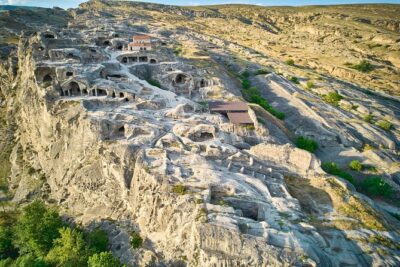
Borjomi, Rabati & Vardzia Adventure Guided Tour
Read our review →
Browse the lists this tour appears in