
Reviewed · CITY TOURS
Walking City Tour in Tbilisi
Tbilisi reveals itself on foot. I like this tour because it packs the sulfur baths, old lanes, Narikala Fortress, and 19th-century streets into about two hours. I also like the private format, which lets you walk at your group’s pace and ask questions without a crowd tagging along. The main drawback is that the schedule is tight, and the cable car costs extra if you choose it.
The route gives you two different Tbilisis in one outing: the medieval-feeling old city and the more formal district around Freedom Square. I especially value the cultural context, from Georgia’s conversion to Christianity to the long pull between Persian, Russian, European, and local influences. You should expect a fair amount of walking, some uphill movement, and only short stops at most sights.
In This Review
- Key points to know before you book
- Why this short Tbilisi walk works well
- Starting beside Tbilisi’s sulfur baths
- Old Town lanes, carved balconies, and photo stops
- Choosing the cable car or the uphill walk
- Narikala Fortress and the best city view
- Betlemi churches and Georgia’s Christian past
- Kartlis Deda, the Mother of Georgia
- Ateshgah and the Persian connection
- Freedom Square and the Russian Empire
- Rezo Gabriadze’s clock tower and puppet theater
- What the guide adds beyond the buildings
- Practical details, pace, and value
- Who should book this Tbilisi walk?
- Should you book this tour?
- FAQ
- How long does the Walking City Tour in Tbilisi last?
- Where does the tour start?
- Where does the tour end?
- Is the Tbilisi Cable Car included?
- Are admission tickets included?
- Is this a private tour?
Key points to know before you book
- Two sides of Tbilisi in two hours: See the old sulfur-bath quarter and the city’s 19th-century aristocratic district in one compact walk.
- Narikala provides the big payoff: The fortress is the highest point on the route and gives you broad views over Tbilisi.
- The tour is private: Only your own group takes part, making it easier to ask questions or request a different ending point.
- The cable car is optional: A ride costs 2 euros per person, but you can also walk to the fortress.
- Food advice adds local value: The guide can suggest Georgian dishes and help you order food that might otherwise sound unfamiliar.
- The route ends at Freedom Square: You can request another ending point if that works better for your plans.
Why this short Tbilisi walk works well

Tbilisi can feel confusing at first. Its old streets climb and twist, its religious buildings sit close to bathhouses and cafés, and its past reaches in several directions at once. A private walking tour gives you a quick framework before you explore on your own.
At $23.27 per person, the price is sensible for a private, roughly two-hour experience, especially if you are traveling with a small group. You are paying for a guide’s time and interpretation, not entrance tickets. Nearly all the stops are free, and the only listed extra is the cable car at 2 euros per person.
The private setup matters more than it may sound. You can ask why a place matters, pause for a photo, or decide to walk instead of taking the cable car. The tour can also end somewhere other than Freedom Square by arrangement, which is useful if you want to continue to a hotel, restaurant, or another central sight.
The pace is the tradeoff. Ten stops in two hours means this is an introduction, not a slow study of every building. I would choose it early in a Tbilisi visit, then return later to the places that catch your attention.
More Walking Tours in Tbilisi
- Tbilisi Walking Tour Including Cable Car and Traditional Bakery
★ 5.0 · 1,310 reviews - Tbilisi: City Highlights Guided Walking Tour
★ 4.9 · 1,114 reviews - Tbilisi:Evening Walking & Talking Tour with Wine & Boat Ride
★ 5.0 · 572 reviews
Starting beside Tbilisi’s sulfur baths
The meeting point is Orbeliani Baths at 31 Abano Street, in the Abanotubani area. This places you right in one of Tbilisi’s most distinctive quarters, where the city’s famous sulfur-bath tradition begins the story.
Orbeliani Baths is also called Pushkin or Dumas Bath. The names connect the site with well-known literary visitors, giving your guide an easy way to explain why these bathhouses have long attracted people passing through Tbilisi. The stop itself lasts about five minutes and has no admission charge.
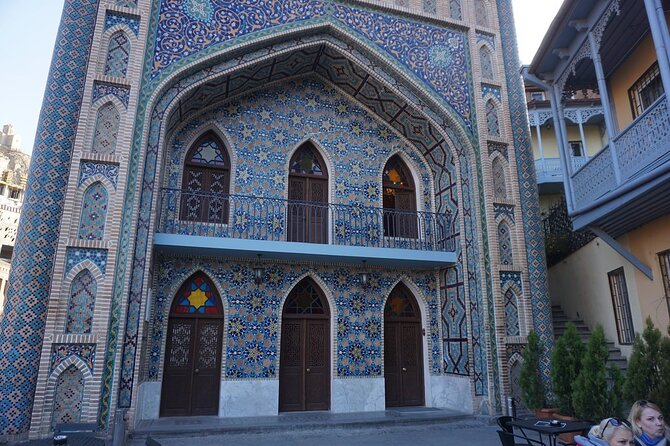
The nearby Abanotubani neighborhood is the more important setting. Its oriental-style bathhouses are still popular with local people, and the guide can recommend options if you want to return for a soak later. That practical advice is a real benefit. You do not have to book a bath as part of this walk, and the bath admission is not included, but you can leave with a clearer idea of where to go.
I like starting here because it makes Tbilisi feel physical right away. You are not beginning with a distant monument or a museum. You are beginning with warm water, bathhouse domes, and a custom that remains part of city life.
Old Town lanes, carved balconies, and photo stops
From Abanotubani, the route moves into Old Town Tbilisi. Allow about 20 minutes here, though the exact pace depends on your questions and how long you stop for photographs.
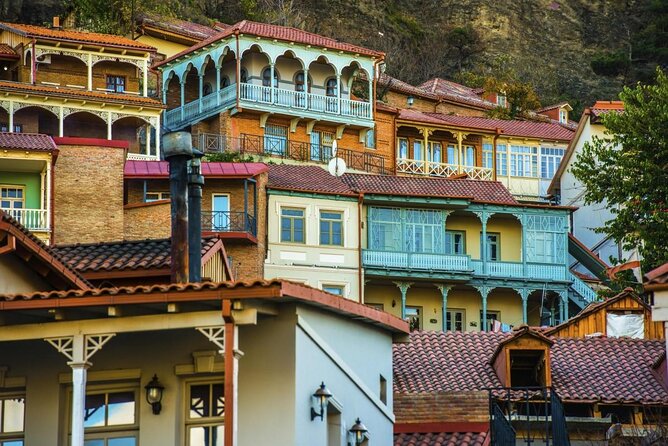
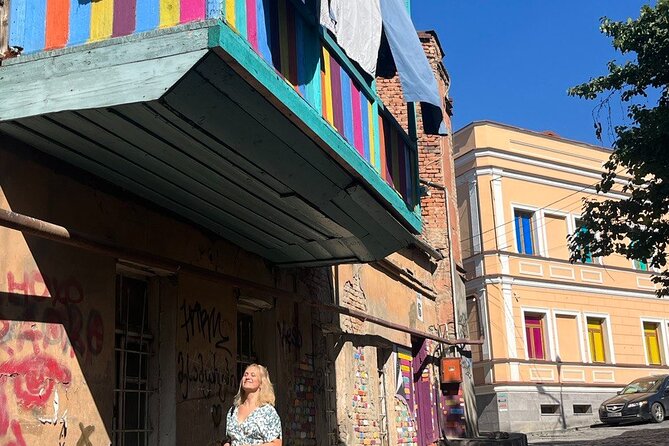
The old quarter is known for narrow streets and carved wooden balconies. Those details give the neighborhood its appeal, but the uneven lanes and uphill sections also explain why you need moderate physical fitness. Comfortable shoes are a wise choice.
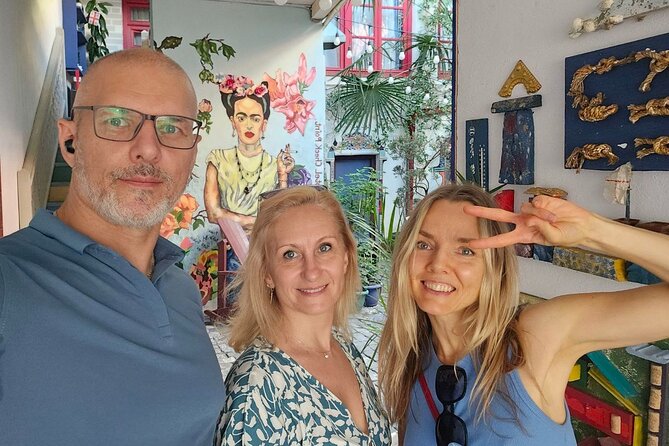
The guide points out Frida’s Café and other photo-friendly spots. That may sound like a small detail, yet it suits the way many people experience Tbilisi today. You get useful places for photographs without losing the larger story about the city’s traditions and culture.
I would not expect a full architectural survey in this short stop. Instead, use it to learn how the old quarter fits into Tbilisi’s position between Europe and Asia. The value is in connecting the streets, balconies, bathhouses, and religious buildings into one readable picture.
Choosing the cable car or the uphill walk
The Tbilisi Cable Car is the one paid element. It costs 2 euros per person, and the guide may use it to go up or down from Narikala Fortress. You can also continue on foot through the old streets.
This flexibility is helpful, but you should understand what it means for the experience. Taking the cable car saves effort and gives you a quick change in viewpoint. Walking keeps you closer to the old quarter and may suit you better if you want the route itself to be the main event.
The cable-car portion is listed at about 15 minutes. Since the ride is optional, the total feel of the tour can vary. If you have limited mobility, ask about the walking plan before you book, because the tour requires a moderate fitness level and includes uphill movement.
The extra cost is modest, but it is not included in the tour price. Bring a little flexibility in both your budget and your timing.
A slower pace, same corner of the Caucasus:
- Tbilisi: Day Trip to Kazbegi, Gudauri, Gergeti, and Ananuri
★ 4.9 · 3,203 reviews - Day Trip to Kakheti Wine Region Including 9 Wine Tastings
★ 5.0 · 2,774 reviews - Highlights of Caucasus Mountains-Jinvali,Ananuri,Gudauri,Kazbegi(Group tour)
★ 5.0 · 2,682 reviews - From Tbilisi: Kakheti Wine Region Tour with 9 Wine Tastings
★ 4.9 · 2,541 reviews
Narikala Fortress and the best city view
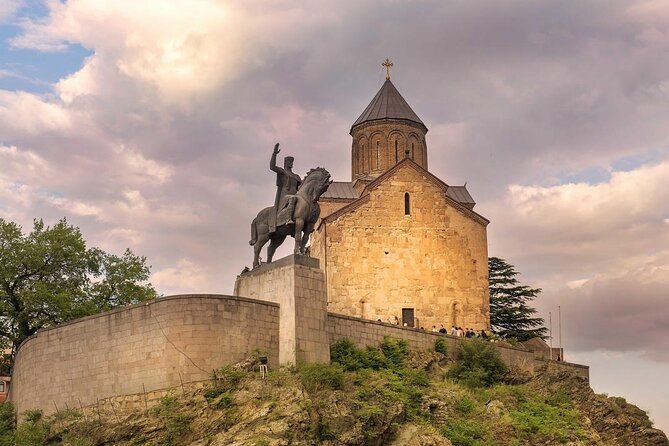
Narikala Fortress is the high point of the tour, in both elevation and drama. The stop lasts about ten minutes and is free to enter.
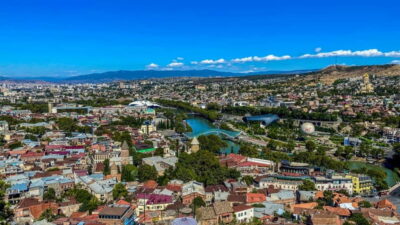
From here, you can enjoy a wide view across Tbilisi. The fortress gives the city a clear shape, helping you understand how the old center, the river, and the surrounding hills relate to one another. A guide can turn that view into a lesson about why Tbilisi developed where it did, rather than leaving you with only a pleasant photograph.
Ten minutes is enough for a first look, but not enough for a leisurely exploration. If the fortress becomes your favorite stop, plan to return with more time. I would also use this moment to ask the guide about the city’s changing rulers and the cultural influences that meet here.
The stop is especially useful early in your stay. Once you have seen Tbilisi from above, the streets below become easier to place. You can recognize the old quarter and make better sense of later walks.
Betlemi churches and Georgia’s Christian past
The Lower and Upper Betlemi Churches introduce the religious side of the city. These are old Orthodox cathedrals, and the planned stop takes about five minutes.
The key value here is the historical question: when did Georgia become a Christian country? That topic helps you read the churches as more than attractive old buildings. It also gives the walk a stronger cultural center, balancing the bathhouses and fortress with Georgia’s religious identity.
Five minutes is brief, so do not expect a detailed church visit. The guide’s explanation is likely to be the main point. If religious history interests you, ask for clarification and note the locations so you can come back later.
As with any church visit, dress and behavior should be respectful, even though the provided information does not specify a formal dress code. The tour includes the sights free of charge, but that does not mean every interior is guaranteed to be open at every moment.
Kartlis Deda, the Mother of Georgia
Kartlis Deda is the giant monument known as the Mother of Georgia. The stop lasts about five minutes and fits naturally with the fortress viewpoint.
The monument offers a simple way to discuss how Georgia presents itself: welcoming to friends, ready to defend itself when needed. The tour description identifies Kartlis Deda as a giant monument, so you should treat this as a brief viewing and explanation rather than a long monument visit.
Its position above the city also makes it a useful orientation point. After seeing the fortress and the monument, you have a better sense of Tbilisi’s hills and elevated old quarters. I like this stop because it connects a modern public symbol with the older city around it.
Ateshgah and the Persian connection
Ateshgah Zoroastrian Temple is one of the more unusual stops. It is described as a trace of the Persian Empire, and the visit takes about five minutes.
This is exactly the sort of short stop that can make a city walk worthwhile. Tbilisi’s story is not only Georgian, Orthodox, or Russian. The Ateshgah adds another layer and shows how different faiths and empires left marks in the city.
Do not expect a large temple complex or a long interior visit based on the information provided. The value is the context. Ask the guide to explain what the site represents and how it fits with the nearby Christian churches and bathhouses.
Freedom Square and the Russian Empire
The route continues toward Liberty Square, also called Freedom Square, with about ten minutes set aside for the stop. This is the end point at 2 Freedom Square, though you can request another ending place.
The square is presented as the best place on the walk to discuss the Russian Empire in Georgia. That makes it a useful final history lesson, since the tour has already introduced Persian influence, Georgian Christianity, and the city’s position between Europe and Asia.
I like ending here because it puts the old quarter into a larger political frame. You begin with local customs and narrow streets, then finish with the forces that shaped modern Georgia. The square is also a practical place to continue exploring, thanks to its central location and nearby public transportation.
Rezo Gabriadze’s clock tower and puppet theater
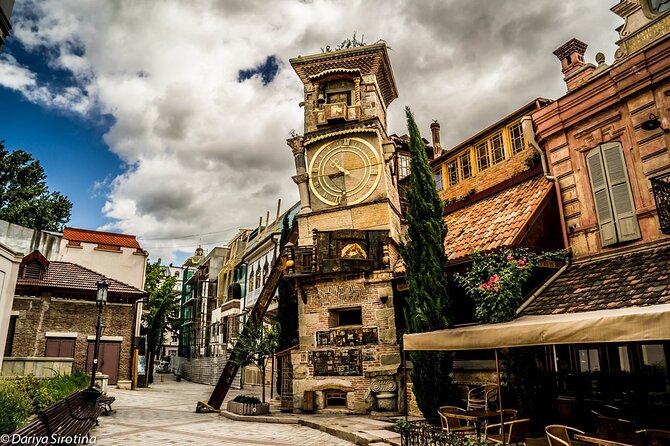
The Rezo Gabriadze Marionette Theater is another memorable stop near the end of the walk. The theater is famous for its puppet performances and clock tower, with a small performance every hour. The planned visit lasts about ten minutes.
The hourly performance gives the stop a clear timing detail. If the timing works, you may see the small show without paying an admission fee as part of this walking experience. The information does not promise a full theater performance, so think of it as a short public moment rather than a complete stage production.
This stop also changes the mood. After fortress views and imperial history, the puppet theater brings you back to contemporary Georgian creativity. I would check with the guide about the timing if this is high on your list, since a two-hour route has little room for waiting.
What the guide adds beyond the buildings
The strongest feature of this experience is not the number of stops. It is the guide’s ability to connect them.
The route covers Georgian traditions and culture at the meeting point of Europe and Asia. That broad frame helps explain why you see sulfur baths beside old churches, a Zoroastrian site near Orthodox buildings, and a fortress above cafés and narrow lanes.
The guide can also help with Georgian food. A German-language review of the experience praised the guide’s introduction to Georgian cuisine, especially because unfamiliar dish names can make ordering difficult. I find that particularly useful. Food is an important part of understanding Georgia, but a menu alone does not always tell you what to choose.
The provider is Alesia Aliakseichyk, and the experience includes a certificated guide. The private format means you can ask for food suggestions, historical detail, or a different balance between walking and transport.
Practical details, pace, and value
Confirmation arrives at booking, and the tour is near public transportation. It is booked, on average, eight days ahead, so I would not leave it until the last morning of a short visit if you want a particular date.
The tour costs $23.27 per person. Since the sights listed are free, the price is mainly for the guide, planning, private setting, and local interpretation. For a solo visitor, the cost may feel less attractive than for a couple or family sharing the experience. For a small private group, it is a fair way to get a fast introduction.
You should plan for moderate physical fitness. The route includes old streets, possible uphill walking, and the fortress area. The cable car can reduce some effort, but it adds 2 euros per person and does not remove the need to walk between stops.
Free cancellation is available if you cancel at least 24 hours before the local start time. Changes or cancellations inside that period are not accepted for a refund. That gives you useful flexibility, but the deadline is firm.
Who should book this Tbilisi walk?
I would choose this tour if you have only a short time in Tbilisi, want a private guide, or prefer history explained as you walk rather than in a museum. It also suits first-time visitors who want help finding the old quarter, the fortress, the baths, and Freedom Square without sorting out the city alone.
It is a good fit for people who enjoy questions and conversation. The private format lets you shape the experience more than a large group tour would. It is also useful if Georgian food seems unfamiliar and you want help making sensible choices later.
I would hesitate if you want long visits inside churches, a complete fortress exploration, or an unhurried photography walk. Ten stops in two hours is efficient, but it is not leisurely. You should also consider the hills and uneven streets before booking.
Should you book this tour?
Book it if you want a clear, compact introduction to Tbilisi with a private guide and a strong mix of old streets, city views, faith, food, and politics. The price is reasonable for a private experience, and the free sights keep extra costs low.
Choose the cable car only if convenience matters more than saving 2 euros or walking through the old lanes. Ask questions about Georgian cuisine, Christianity, Persian influence, and the Russian Empire, since those subjects are where the tour can offer its greatest value.
If you have several days in Tbilisi, take this walk near the start of your visit. Then return to Abanotubani, Narikala, or the old city with more time. That is the best use of a fast tour: let it give you the map, then explore the details yourself.
FAQ
How long does the Walking City Tour in Tbilisi last?
The tour lasts approximately two hours.
Where does the tour start?
It starts at Orbeliani Baths, 31 Abano Street, in Tbilisi, Georgia.
Where does the tour end?
The standard ending point is Freedom Square, 2 Freedom Square, Tbilisi. A different ending point can be requested.
Is the Tbilisi Cable Car included?
No. The cable car costs 2 euros per person. You can choose to walk to or from Narikala Fortress instead.
Are admission tickets included?
The listed sights are free to enter. Snacks are not included, and the cable car is an additional cost.
Is this a private tour?
Yes. Only your group participates, and the tour requires a moderate level of physical fitness.
Just added near Tbilisi
- Wine Tasting feel the Difference of Qvevri or Classical Wine★ 4.4 · 10 reviews
- Walking Tour in Old Tbilisi – Group Tour★ 4.5 · 8 reviews
- From Tbilisi: Kakheti and Kazbegi 2-Day 4X4 Jeep Tour pack★ 5.0 · 6 reviews
- Tbilisi: Vintage Fashion and Secondhand Thrifting Tour★ 5.0 · 11 reviews
- Uforgatable Kakheti Tour with wine tasting – in Georgia★ 4.9 · 5 reviews
- From Tbilisi: Uplistsikhe Caves and Mtskheta Town Day tour★ 5.0 · 2 reviews
- Tbilisi Airport to Gudauri, Bakuriani, Batumi, Tbilisi★ 5.0 · 3 reviews
- Private Adorable City Tour of Tbilisi★ 5.0 · 3 reviews
City Tours, compared.
Kakheti;City of Love Sighnaghi, Bodbe. KTW. Wine House Group tour
Read our review →
Old and New City Guided Tour with 2 Cable Car Rides
Read our review →

Old & New City Guided Tour with 15 Tastings & Wine
Read our review →
Mtskheta – Jvari. Full City Tour on Hop On Hop Off Bus
Read our review →
Day tour to Chronicles of Georgia, Gori city, Uplistsikhe cave
Read our review →Browse the lists this tour appears in