
Reviewed · KHACHAPURI AND KHINKALI CLASSES
Tbilisi: Khachapuri, Khinkali and Bread-Making Masterclass
Georgia tastes best when you make it yourself. This two-hour Tbilisi cooking class brings you into a friendly, homey setting to prepare three Georgian staples: cheese-filled khachapuri, soup-filled khinkali, and traditional shoti bread. You work with the dough, fillings, shaping, and baking methods rather than simply watching a demonstration.
I like the hands-on format, which suits beginners but still gives experienced cooks useful techniques. I also like the small group limit of 10, since it makes step-by-step help more realistic. The main consideration is that this is not suitable for anyone with gluten intolerance, and the $76 price is higher than a simple Georgian meal in Tbilisi.
In This Review
- Key points to know before booking
- Why this class is a good introduction to Georgian food
- Finding the café bakery meeting point
- Beginning with Georgian dough and khachapuri
- Shaping khinkali and protecting the soup inside
- Learning the traditional method for shoti bread
- What the two-hour format means for you
- The value of the $76 price
- The atmosphere and the role of Lia
- Who should take this cooking class
- Booking advice, timing, and cancellation
- Should you book this Tbilisi cooking class?
- FAQ
- How long does the cooking class last?
- What dishes will I learn to make?
- Is the cooking class suitable for beginners?
- What languages does the instructor speak?
- How many people can join the class?
- Are ingredients included?
- Is alcohol included?
- Can I cancel for a full refund?
Key points to know before booking
- Three Georgian classics in two hours: You learn khachapuri, khinkali, and shoti bread in one compact class.
- Small group setting: The class is limited to 10 people, giving you a better chance to receive personal help.
- English and Russian instruction: You can follow the class in either language.
- Real cooking practice: You make dough, prepare fillings, shape dumplings, and study traditional bread methods.
- A warm host-led atmosphere: Lia is specifically praised for creating a welcoming setting that feels much like cooking at home.
- Book at least two days ahead: Last-minute reservations may leave you with fewer time options.
Why this class is a good introduction to Georgian food
Georgian food can look simple at first glance: bread, cheese, dough, meat, and spices. The skill is in the details. Khachapuri needs a dough that can hold a generous filling without becoming heavy. Khinkali must be shaped tightly enough to keep its broth inside. Shoti bread depends on the right texture and baking method.
This class focuses on those practical details. I like that you are not only tasting finished dishes. You are learning the basic techniques that let you recognize and recreate Georgian flavors after you return home.
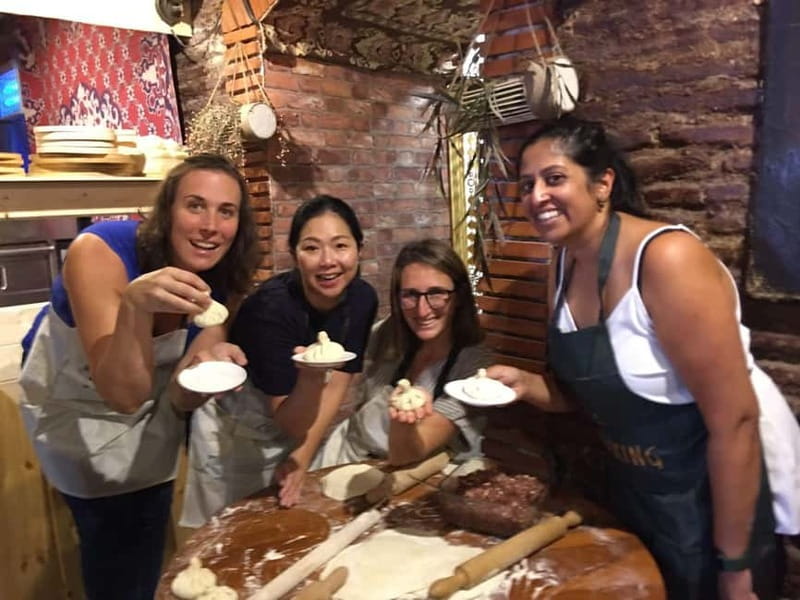
The setting is described as friendly and homey, and that matters here. Georgian cooking is closely tied to hospitality, shared meals, and generous portions. The experience aims to give you that feeling through an interactive class rather than a formal cooking-school setup.
The instructor speaks English and Russian. The group size is capped at 10, which is small enough to keep the class personal without making it a private lesson. If you are a nervous beginner, that should make the process less intimidating. If you already cook, you can focus on the shaping and baking methods that are harder to pick up from a recipe alone.
More khachapuri and khinkali classes in Tbilisi:
- Tbilisi: Georgian Cooking Class with Khinkali and Khachapuri
★ 4.7 · 1,146 reviews - Small-Group Khinkali and Khachapuri Cooking Class in Tbilisi
★ 4.5 · 224 reviews - Cook True Ajarian Khachapuri and Khinkali in Highlanders Style
★ 5.0 · 93 reviews
Finding the café bakery meeting point
The meeting point is marked by a café bakery banner on a brick wall. That is the detail you need to keep in mind before setting out, since the information provided does not name a hotel pickup point or include transportation.
I would allow extra time to locate the banner rather than arriving at the last moment. Once you find it, the class itself is designed as a two-hour activity, so prompt arrival matters. Starting on time gives you the full chance to work through all three dishes.
The experience is offered by Tour Space Georgia GMBH. You should check the available start times when booking, since the class does not list one fixed daily departure.
Beginning with Georgian dough and khachapuri
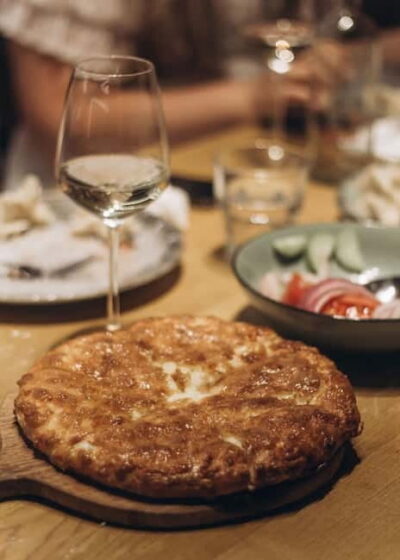
Khachapuri is the natural first lesson for many people visiting Georgia. It is a cheese-filled bread with a golden crust, a soft interior, and a filling that should remain pleasantly gooey without making the bread collapse.
You learn to make the dough from scratch. That is more useful than simply being handed a prepared ball, because dough is the base of several Georgian breads and dumplings. The instructor also covers the filling and the way to create a crisp edge.
The class gives you a chance to see how the dough changes as you work it. For a beginner, this is where the step-by-step format earns its keep. You do not need to arrive knowing how to judge dough by feel. You can follow the instructor’s method and ask for help as you go.
Khachapuri is also a good dish to make at home because it does not require specialist equipment in its basic form. The recipe will still depend on the ingredients available in your own kitchen, but the class gives you a clear starting point.
The practical drawback is that khachapuri is filling. Since the class also covers dumplings and bread, you may be preparing more food than you can comfortably eat in one sitting. That is part of the generous Georgian approach, but it is worth remembering if you have a small appetite.
Shaping khinkali and protecting the soup inside
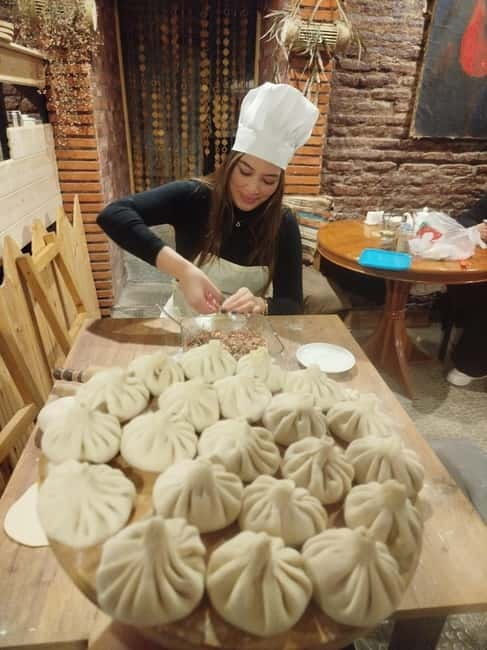
Khinkali is the trickiest item in the class. These Georgian dumplings are filled with savory meat and spices, but the defining feature is the broth trapped inside the dough.
You learn how to make the dough, prepare the filling, and shape the dumplings. The shaping is not just decoration. The folds need to close the dumpling securely so the liquid stays inside during cooking.
The important lesson comes at the eating stage. A proper khinkali contains a soup-filled bite, so you need to handle it carefully. The class teaches the technique for getting that broth-filled mouthful without losing the best part onto your plate.
For a home cook, this may be the most valuable section. Khinkali is the dish most likely to feel unfamiliar, and watching someone shape it is different from doing it yourself. The small group gives you a better chance to correct your folds before the dumplings are cooked.
The meat filling and spices also show how Georgian cooking builds flavor without relying on complicated equipment. You are learning a method that can be adapted later, although the exact result will depend on your ingredients and practice.
More Tbilisi days to weigh up
- Tbilisi: Day Trip to Kazbegi, Gudauri, Gergeti, and Ananuri
★ 4.9 · 3,203 reviews - Day Trip to Kakheti Wine Region Including 9 Wine Tastings
★ 5.0 · 2,774 reviews - Highlights of Caucasus Mountains-Jinvali,Ananuri,Gudauri,Kazbegi(Group tour)
★ 5.0 · 2,682 reviews - From Tbilisi: Kakheti Wine Region Tour with 9 Wine Tastings
★ 4.9 · 2,541 reviews
Learning the traditional method for shoti bread
Shoti is Georgia’s everyday bread, with a crisp golden crust and a soft, pillowy center. It is less famous outside Georgia than khachapuri, but it may give you a better sense of the country’s daily food culture.
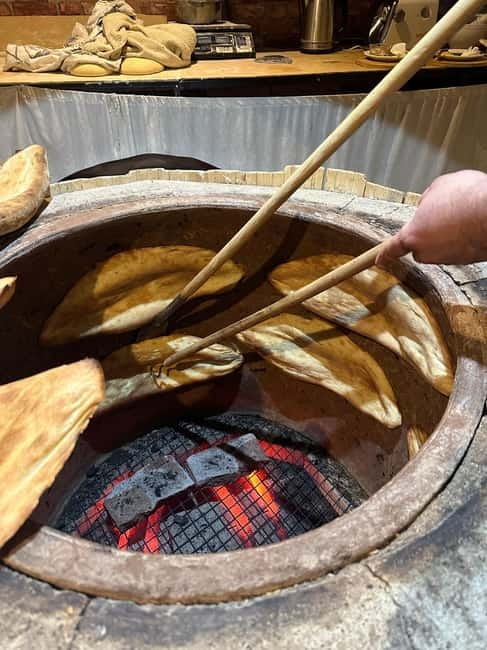
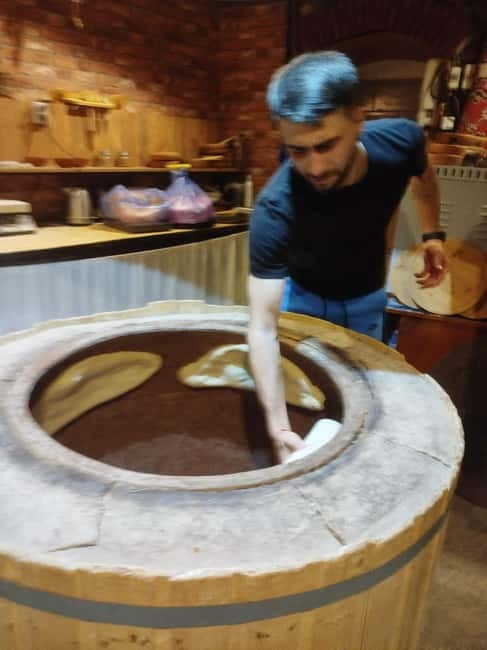
The class explains the traditional method used to bake it in a tandoor-like clay oven. It also covers how you can approach the bread in a home kitchen. That second point is especially helpful, since most home cooks do not have a Georgian clay oven waiting at home.
The information provided does not promise that every participant will personally operate a clay oven, so you should think of this part as instruction in the traditional technique and its home-kitchen adaptation. Even so, understanding the oven method helps explain why shoti develops its particular crust and interior.
I like the inclusion of shoti because it keeps the class from becoming only a lesson in famous dishes. You get the grand, cheese-filled khachapuri and the skillful khinkali, but you also learn about a staple bread that belongs to ordinary Georgian meals.
What the two-hour format means for you
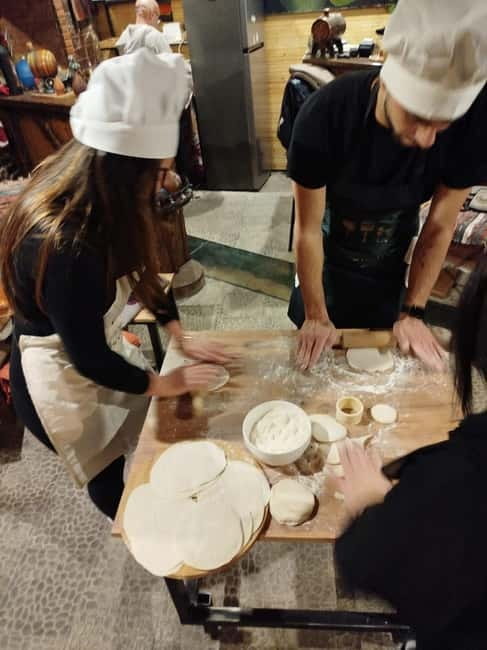
Two hours is long enough to cover the main techniques, but short enough to fit neatly into a day of sightseeing in Tbilisi. You will need to stay engaged, since the class includes three separate preparations in a limited time.
The compact schedule is a strength for most people. You can make food in the morning or afternoon, then continue with your plans. It is also a good choice if you want one focused food activity rather than a full-day culinary program.
The tradeoff is that you should not expect an extended discussion of every regional Georgian recipe. The class concentrates on three dishes and their core methods. If you want a broad survey of Georgian cuisine, you will need to add that through restaurants or other food experiences.
The small group helps balance the short duration. With no more than 10 participants, the instructor can demonstrate and then let you practice. The class is interactive, so you get more from it if you are willing to handle the dough, try the folds, and ask questions.
The value of the $76 price
At $76 per person, this is not the cheapest way to eat Georgian food. You can order khachapuri and khinkali in Tbilisi for far less than the class price, and a restaurant meal requires no work at all.
The value comes from the instruction and the range of dishes. In two hours, you learn three important Georgian preparations, use all the necessary ingredients, and receive guidance from an instructor. You are paying for the process, not just the food.
I would consider the price reasonable for someone who enjoys cooking or wants a practical cultural activity. It is also a stronger deal for two people who plan to recreate the dishes at home, since you can compare notes and practice together later.
The value is weaker if you only want to sample Georgian food. In that case, a local restaurant will cost less and give you a wider choice of dishes. This class makes the most sense when you want to understand how the food is made.
Food quantity also appears to be generous. One verified booking from the United States described receiving more food than could be finished. That is good news for anyone who enjoys a hearty meal, though it reinforces the point that this is not a light snack between museum visits.
The atmosphere and the role of Lia
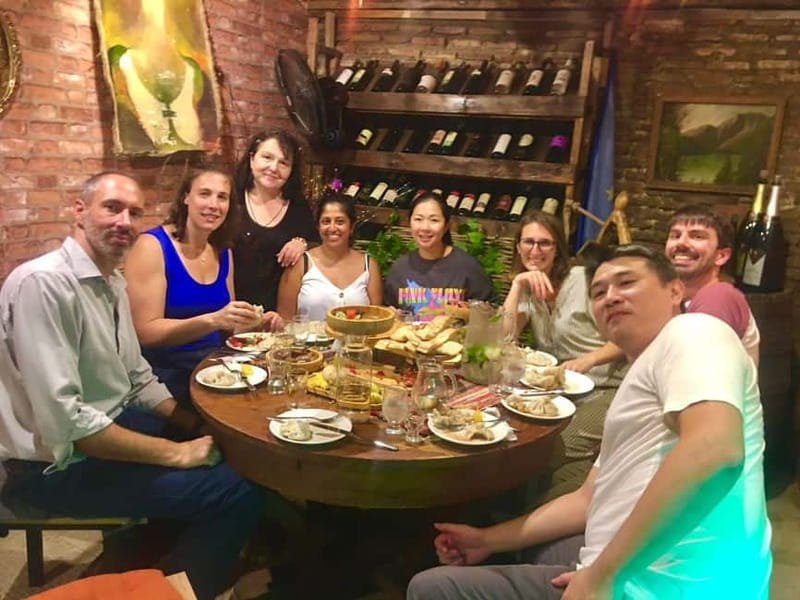
The strongest praise centers on the warmth of the welcome. Lia is specifically thanked for creating an experience where the setting felt like home, and that is an important part of the appeal.
A cooking class can feel stiff if the instructor rushes people through a recipe. Here, the available feedback points to a more personal atmosphere, with friendliness treated as part of the experience rather than an afterthought.
One verified booking called it the best experience of a Georgia trip, praised the food, and noted that a lot was learned. Another described the food as so memorable that similar dishes elsewhere did not compare. Those are strong reactions, though they come from a very small set of bookings, so I would treat them as encouraging rather than a guarantee of a perfect match for every person.
The current rating is 5 out of 5 from three verified bookings. That is an excellent early signal, but the small number means you should weigh the practical details too: the gluten restriction, the price, the two-hour schedule, and the need to book ahead.
Who should take this cooking class
I would recommend this class to:
- First-time visitors who want a hands-on introduction to Georgian food
- Home cooks who want to learn khinkali shaping
- Couples, friends, and small groups looking for a social activity
- People who enjoy generous portions and do not mind preparing several dough-based dishes
- Anyone who wants recipes and methods they can try again at home
It is less suitable for anyone with gluten intolerance. All three featured dishes rely heavily on wheat-based dough, so this is not an experience you can easily adapt around that restriction.
It may also be less appealing if you prefer to observe rather than participate. The class is built around making the food yourself. You should expect to work with dough and fillings rather than sit back for a cooking show.
Since the instructor speaks English and Russian, you should select this experience only if one of those languages works for you. No other instruction language is provided.
Booking advice, timing, and cancellation
Book at least two days before the date you want. Last-minute reservations can leave you with limited choices, and the activity advises keeping some flexibility in your schedule.
You can reserve now and pay later, which helps if your Tbilisi plans are still changing. The experience also allows free cancellation up to 24 hours in advance for a full refund.
Check the starting time before you commit your sightseeing plans. The class lasts two hours, but the available start time depends on the date you choose.
I would also avoid placing a major appointment immediately after the class. The exact finishing routine is not specified, and a cooking activity involving three dishes may take a little flexibility, even with a stated two-hour duration.
Should you book this Tbilisi cooking class?
Book it if you want to do more than order Georgian food. The combination of khachapuri, khinkali, and shoti gives you a useful introduction to both famous and everyday dishes, while the small group and friendly atmosphere make the lesson approachable.
The class is particularly good for anyone who wants to take Georgian cooking home. You learn dough from scratch, khinkali shaping, cheese filling, and traditional bread methods that can be adapted to a home kitchen.
Skip it if $76 feels too high for a meal, if you cannot eat gluten, or if you would rather spend your time in restaurants. For everyone else, this is a compact, personal way to connect with Georgian food, and the chance to make a proper soup-filled khinkali is reason enough to consider it.
FAQ
How long does the cooking class last?
The class lasts two hours.
What dishes will I learn to make?
You will learn to prepare khachapuri, khinkali, and traditional Georgian shoti bread.
Is the cooking class suitable for beginners?
Yes. The class guides participants step by step, and it is designed for both experienced cooks and beginners.
What languages does the instructor speak?
Instruction is available in English and Russian.
How many people can join the class?
The experience is a small-group class limited to 10 participants.
Are ingredients included?
Yes. All necessary ingredients are included, along with the cooking class and instructor.
Is alcohol included?
No. Alcoholic drinks are not included.
Can I cancel for a full refund?
Yes. You can cancel up to 24 hours in advance for a full refund.
Just added near Tbilisi
- Wine Tasting feel the Difference of Qvevri or Classical Wine★ 4.4 · 10 reviews
- Walking Tour in Old Tbilisi – Group Tour★ 4.5 · 8 reviews
- From Tbilisi: Kakheti and Kazbegi 2-Day 4X4 Jeep Tour pack★ 5.0 · 6 reviews
- Tbilisi: Vintage Fashion and Secondhand Thrifting Tour★ 5.0 · 11 reviews
- Uforgatable Kakheti Tour with wine tasting – in Georgia★ 4.9 · 5 reviews
- From Tbilisi: Uplistsikhe Caves and Mtskheta Town Day tour★ 5.0 · 2 reviews
- Tbilisi Airport to Gudauri, Bakuriani, Batumi, Tbilisi★ 5.0 · 3 reviews
- Private Adorable City Tour of Tbilisi★ 5.0 · 3 reviews
Khachapuri and Khinkali Classes, compared.
Georgian Cooking Class with Khinkali and Khachapuri
Read our review →
Small-Group Khinkali and Khachapuri Cooking Class in Tbilisi
Read our review →
Cook True Ajarian Khachapuri and Khinkali in Highlanders Style
Read our review →
Taste of Kakheti: Wine Tour Bread Baking & Churchkhela Workshop
Read our review →
One Day Kakheti Tour with Wine Tasting and Free Churchkhela
Read our review →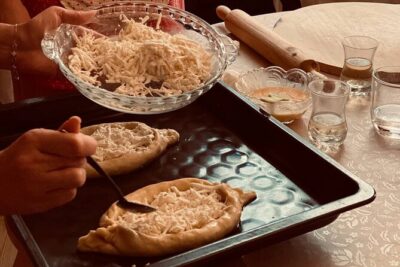
Taste of Georgia. Cooking-Class Khinkali, Khachapuri and more
Read our review →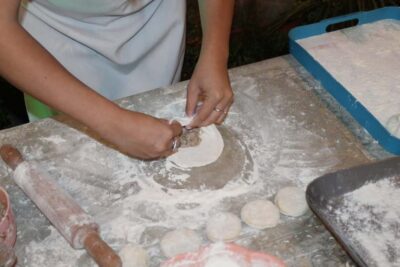
Batumi Khinkali: Hands-On Masterclass with a Local Master
Read our review →
Military Road Marvels: Ananuri, Kazbegi & Khinkali Masterclass
Read our review →Browse the lists this tour appears in