
Reviewed · KHACHAPURI AND KHINKALI CLASSES
Taste of Georgia. Cooking-Class Khinkali, Khachapuri and more
Come hungry, leave with new skills. This two-hour Tbilisi cooking class brings you into a Georgian family kitchen to prepare khinkali and Adjarian khachapuri, then sit down to eat what you made. I like the small maximum of eight people, which should give you more useful time at the worktable, and I like that wine and homemade food are included.
The main consideration is the price: at $98 per person, this is not a cheap lunch. You are paying for instruction, a social meal, drinks, and a local setting, so it makes the most sense if you want a hands-on cultural activity rather than a quick cooking demonstration.
You meet at Georgian Cooking Classes Chakandrila8 on Merab Kostava Street and return there when the class ends. English is offered, confirmation arrives at booking, and the activity is near public transportation. One especially useful tip is to request a dish in advance if you have a preference. A participant asked for Imeruli Khachapuri and had that request honored.
In This Review
- Key points at a glance
- Why this Tbilisi cooking class is worth considering
- Starting at Merab Kostava Street
- Making khinkali, Georgia’s soup-filled dumpling
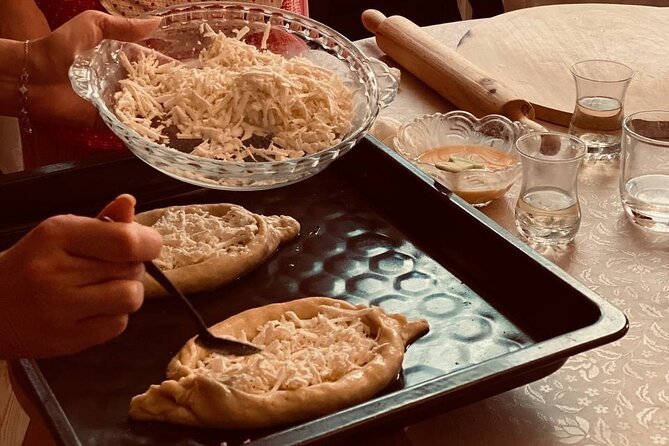
- Shaping Adjarian khachapuri
- Sitting down to eat what you prepared
- A family setting instead of a restaurant table
- Is $98 a fair price for two hours?
- Who should book this experience?
- Practical booking advice for your Tbilisi day
- Should you book Taste of Georgia?
- FAQ
- Where does the cooking class begin?
- Where does the activity end?
- How long does the cooking class last?
- What language is offered?
- How many people can join the class?
- What dishes will I prepare?
- What khinkali fillings are available?
- What is included in the price?
- Is private transportation included?
- Can I cancel for a full refund?
Key points at a glance
- Small class size: A maximum of eight people keeps the lesson more personal than a large group workshop.
- Two Georgian classics: You prepare khinkali and Adjarian khachapuri, two dishes with very different techniques.
- Family kitchen setting: The class takes place in a cozy home environment with experienced Georgian hosts.
- Practical dough lessons: You learn how to mix dough for both dishes, including how to make it soft, elastic, and tender.
- Wine with the meal: Alcoholic beverages are included, along with lunch and a tasting of homemade dishes.
- Easy cancellation terms: You can receive a full refund if you cancel at least 24 hours before the start time.
Why this Tbilisi cooking class is worth considering
Georgian food is built around generous flavors, shared plates, dough, cheese, herbs, and careful preparation. A class like this gives you more than a restaurant meal because you see how the food comes together and try the work yourself.
I particularly like the choice of dishes. Khinkali teaches you how to handle filled dough and preserve broth inside the dumpling. Adjarian khachapuri teaches a different skill: shaping a boat of dough, filling it with cheese, and finishing it with egg yolk. In two hours, you get a useful introduction to two of Georgia’s best-known foods without committing an entire day.
The family setting also changes the tone. You are not simply watching a chef behind a counter. You are working in a home-style kitchen and learning recipes intended to be possible at home. That makes the class a good fit for you if you want practical cooking ideas to take back from Georgia.
The small group limit matters. With no more than eight participants, you have a better chance to ask about dough texture, filling, shaping, and cooking technique. The class may still feel social, but it should not have the impersonal feel of a large demonstration.
More khachapuri and khinkali classes in Tbilisi:
- Tbilisi: Georgian Cooking Class with Khinkali and Khachapuri
★ 4.7 · 1,146 reviews - Small-Group Khinkali and Khachapuri Cooking Class in Tbilisi
★ 4.5 · 224 reviews - Cook True Ajarian Khachapuri and Khinkali in Highlanders Style
★ 5.0 · 93 reviews
Starting at Merab Kostava Street
The class begins at Georgian Cooking Classes Chakandrila8, at 8 Merab Kostava Street in Tbilisi. The meeting point is also the end point, so you do not need to arrange a separate return transfer after the meal.
The activity is near public transportation, but private transportation is not included. I would plan your route before the start time and allow a little extra time to reach the address. Since the booking provides a mobile ticket, you can keep the confirmation on your phone rather than printing anything.
This is a useful setup for an evening plan. The class lasts about two hours, and the return to the starting point makes it easier to continue elsewhere in Tbilisi afterward. The exact pace can depend on the group and the preparation work, so I would avoid scheduling anything that begins immediately after the stated end.
English is offered. That matters in a cooking class because the value comes from understanding small instructions: how firm the dough should feel, how to seal the dumplings, and when the cheese filling is ready.
Making khinkali, Georgia’s soup-filled dumpling
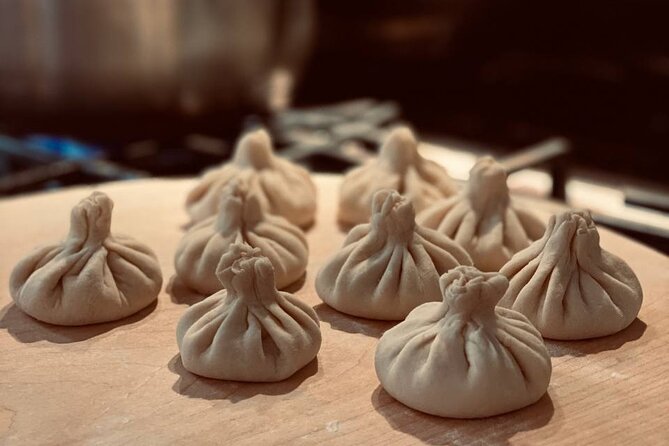
Khinkali is the first dish. It is often described as a Georgian dumpling, but that simple label misses the key trick. The filling produces broth inside the dough, and the dumpling must be shaped and cooked without leaking.
The lesson begins with the dough. You learn how to measure the ingredients and mix them until the dough becomes soft and elastic. This is the part you can use most easily at home, since dough texture affects everything that follows. Dough that is too dry can split, while dough that is too soft can be difficult to fill and seal.
Next comes the filling. The class covers meat, cheese, or mushroom options, along with the sauce and broth that give the dumplings their character. The important point is not simply adding a filling. You learn how to keep the broth inside the dumpling so it remains part of the eating experience.
The folding stage is where the class earns its keep. Khinkali needs to be turned and sealed correctly so it does not fall apart during cooking. This is a fiddly technique, and a demonstration alone may not be enough to make it feel natural. Having the chance to shape the dumplings yourself lets you see where the folds need to tighten.
At the table, you get a dish with a clear eating method. The broth is central, so you need to handle the dumpling carefully. I would pay close attention during the sealing lesson, because that is the step most likely to determine whether your homemade khinkali works later.
The available fillings also make the class more flexible. Meat is the classic option many people expect, but cheese and mushrooms are included in the description as alternatives. If you have a strong preference, ask when booking or before the class begins. Do not assume every filling will be prepared for every session.
Shaping Adjarian khachapuri
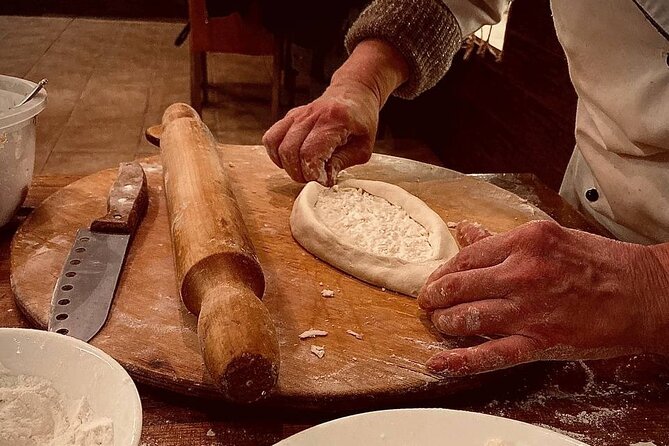
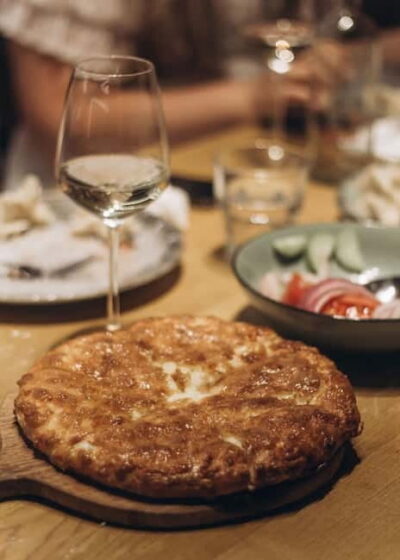
The second dish is Adjarian khachapuri, the boat-shaped version of Georgia’s famous cheese bread. The dough is formed around the filling, then finished with cheese and egg yolk.
Here the instructor focuses on making a tender dough and choosing cheese that melts well and stretches. That cheese lesson is valuable because the result depends on both texture and flavor. The wrong cheese can leave the bread heavy or greasy, while the right combination gives you a soft center and a satisfying pull.
You also learn different ways to arrange the dish. The shaping is not just decoration. The open center holds the cheese and egg, while the raised sides help form the characteristic boat. You need enough structure to contain the filling without making the crust too thick.
Adjarian khachapuri also gives you a nice contrast with khinkali. The dumplings call for careful sealing and broth control. The khachapuri calls for shaping, cheese selection, and timing. Cooking both in one session gives you a wider sample of Georgian technique than a class focused on only one recipe.
A request for Imeruli Khachapuri was accommodated for one participant, so you might ask about a different khachapuri style in advance. I would treat this as a request rather than a guaranteed menu change. The stated main dish remains Adjarian khachapuri.
More Georgian cooking classes in Tbilisi:
- Tbilisi: Cooking Class with a Local Family
★ 5.0 · 104 reviews - Nana’s Kitchen – traditional Georgian cooking class at real Georgian family home
★ 5.0 · 37 reviews - Join a Local for a Market Tour, Cooking Class and Meal in her Tbilisi Home
★ 5.0 · 15 reviews - 7-Day Georgian Wine and Culinary Private Tour with Cooking Class
★ 5.0 · 5 reviews
Sitting down to eat what you prepared
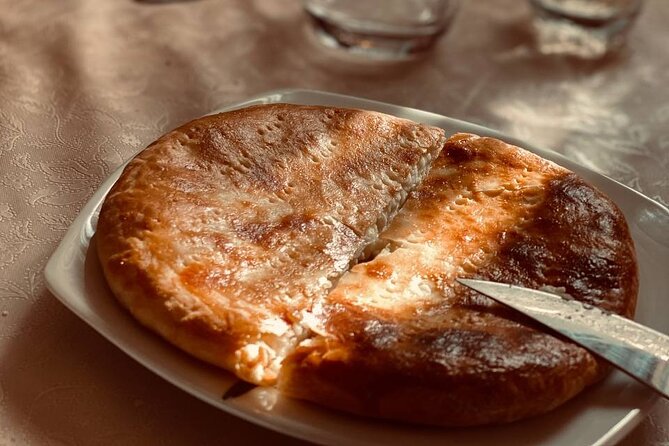
Lunch and tasting are included. After the cooking work, you eat the khinkali and khachapuri rather than leaving with an unfinished recipe or a small sample.
That meal is an important part of the experience. You can judge the dough, filling, cheese, and seasoning while the instructions are still fresh. If you are planning to recreate the food at home, pay attention to the texture of the finished dishes and ask questions before the class ends.
Alcoholic beverages are also included, with Georgian wine forming a natural match for the meal. One participant described the combination of cooking with friends, eating the finished food, and sharing a glass or two of Georgian wine as a highlight. I can see why this matters: the class is not only a lesson but also a relaxed social evening.
Still, the alcohol inclusion may not matter to everyone. If you do not drink, part of the stated value will be less useful to you. The core experience remains the cooking and lunch, but you should judge the $98 price based on the parts you will actually enjoy.
A family setting instead of a restaurant table
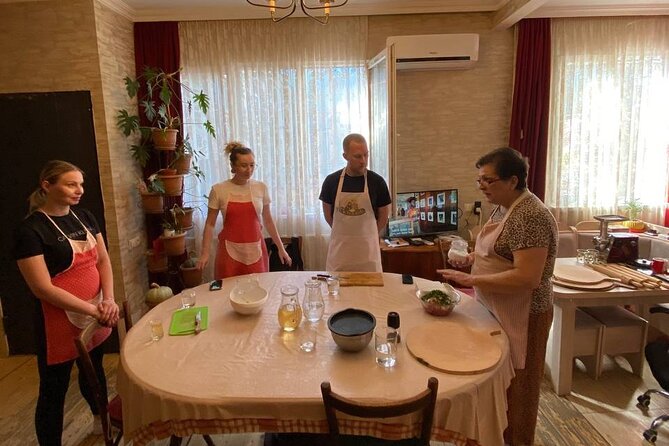
The class is hosted by an experienced Georgian culinary family in a cozy home environment. This gives the experience a more personal feel than ordering khinkali at a restaurant and guessing how it was made.
You can learn why certain quantities matter and how the recipes are arranged for home cooking. The stated goal is to make the methods simple enough to repeat in your own kitchen. That practical focus is a strong reason to choose this activity over a standard food tasting.
The setting may also suit you if you are traveling with friends. The class can become a shared project, with everyone shaping dough, preparing fillings, and comparing the final results. The maximum of eight keeps the group small enough for conversation without requiring a private booking.
The tradeoff is that a home-style class may be less formal than a professional culinary school. If you expect advanced technique, a long recipe booklet, or a full professional kitchen course, this may feel basic. It is better understood as a friendly introduction to Georgian cooking with hands-on practice.
Is $98 a fair price for two hours?
At $98 per person, the class costs more than a simple meal in Tbilisi. The value comes from the package: instruction, ingredients, lunch, homemade dishes, included alcohol, a family setting, and a group capped at eight.
I would compare it with the cost of a good dinner plus a separate activity. If you would already pay for a Georgian meal and want a cultural experience that gives you something to do, the price becomes easier to justify. If you mainly want to taste khinkali and khachapuri, a restaurant will be cheaper and more efficient.
The short duration is both a benefit and a limit. Two hours fits neatly into a city stay and does not take over your day. At the same time, you should not expect a long course covering many Georgian dishes. The focus stays on two recipes and the techniques behind them.
The strongest value is for people who enjoy participation. You are paying to mix, fill, fold, shape, and eat. If that sounds more appealing than watching a chef work, the cost is easier to defend.
Who should book this experience?
I would recommend it to first-time visitors who want a direct introduction to Georgian food. It also suits couples, friends, and small groups looking for an evening activity that combines cooking and conversation.
It is a good choice for home cooks who want to learn dough handling and filled-dough techniques. The khinkali lesson alone gives you a project to try after returning home, while the khachapuri lesson adds cheese selection and shaping.
Families may also like the hands-on format, though the supplied information does not specify a minimum age. If you are booking with children, ask the provider about age suitability before paying.
This may not be the best match if you need private transportation, want a large menu, or prefer a quick food tour with several restaurant stops. It is also less appealing if you do not eat meat, cheese, mushrooms, or egg, since those ingredients form the stated menu. Ask about dietary needs before booking because no specific substitutions are provided.
Practical booking advice for your Tbilisi day
Choose a time that leaves room around the two-hour activity. The class ends at the meeting point, which helps with planning, but cooking can be more enjoyable when you are not watching the clock.
Use the mobile ticket and keep your booking confirmation available. Since confirmation is provided at the time of booking, you should have the key details before the class.
If you want a particular khachapuri style, request it early. Imeruli Khachapuri was prepared after a participant asked for it, but the regular dish is Adjarian Khachapuri, so advance communication is the sensible approach.
The cancellation terms are straightforward. You can cancel for a full refund up to 24 hours before the local start time. Cancellations or changes made inside that 24-hour window are not refunded or accepted.
Should you book Taste of Georgia?
Book this class if you want to make two Georgian staples, eat the results, and spend time in a family kitchen rather than simply ordering a meal. The small group, English instruction, included wine, and practical dough lessons make it a strong choice for an approachable Tbilisi food experience.
Skip it if $98 feels too high for a two-hour activity or if your main goal is only to taste Georgian food. For everyone else, the appeal is clear: you leave with a full meal, a better sense of how khinkali holds its broth, and a recipe challenge waiting for you at home.
FAQ
Where does the cooking class begin?
It begins at Georgian Cooking Classes Chakandrila8, 8 Merab Kostava Street, Tbilisi, Georgia.
Where does the activity end?
The activity ends back at the meeting point on Merab Kostava Street.
How long does the cooking class last?
The experience lasts approximately two hours.
What language is offered?
The class is offered in English.
How many people can join the class?
The activity has a maximum of eight participants.
What dishes will I prepare?
You will prepare Georgian khinkali and Adjarian khachapuri.
What khinkali fillings are available?
The stated options include meat, cheese, or mushrooms in their sauce, wrapped in dough.
What is included in the price?
The price includes the cooking master class, lunch, tasting of homemade dishes, and alcoholic beverages.
Is private transportation included?
No. Private transportation is not included, though the meeting point is near public transportation.
Can I cancel for a full refund?
Yes. You can cancel at least 24 hours before the local start time for a full refund. Cancellations or changes made less than 24 hours before the start are not refunded or accepted.
Just added near Tbilisi
- Wine Tasting feel the Difference of Qvevri or Classical Wine★ 4.4 · 10 reviews
- Walking Tour in Old Tbilisi – Group Tour★ 4.5 · 8 reviews
- From Tbilisi: Kakheti and Kazbegi 2-Day 4X4 Jeep Tour pack★ 5.0 · 6 reviews
- Tbilisi: Vintage Fashion and Secondhand Thrifting Tour★ 5.0 · 11 reviews
- Uforgatable Kakheti Tour with wine tasting – in Georgia★ 4.9 · 5 reviews
- From Tbilisi: Uplistsikhe Caves and Mtskheta Town Day tour★ 5.0 · 2 reviews
- Tbilisi Airport to Gudauri, Bakuriani, Batumi, Tbilisi★ 5.0 · 3 reviews
- Private Adorable City Tour of Tbilisi★ 5.0 · 3 reviews
Khachapuri and Khinkali Classes, compared.
Georgian Cooking Class with Khinkali and Khachapuri
Read our review →
Small-Group Khinkali and Khachapuri Cooking Class in Tbilisi
Read our review →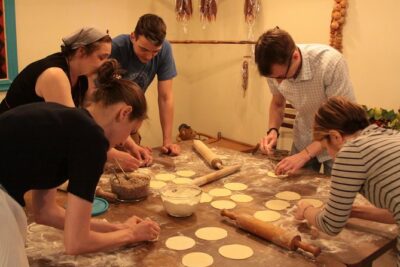
Cook True Ajarian Khachapuri and Khinkali in Highlanders Style
Read our review →
Taste of Kakheti: Wine Tour Bread Baking & Churchkhela Workshop
Read our review →
One Day Kakheti Tour with Wine Tasting and Free Churchkhela
Read our review →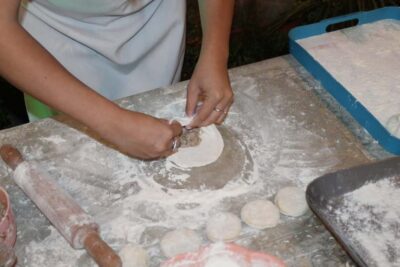
Batumi Khinkali: Hands-On Masterclass with a Local Master
Read our review →
Military Road Marvels: Ananuri, Kazbegi & Khinkali Masterclass
Read our review →
Kazbegi and Khinkali – the ultimate mountain experience tour
Read our review →Browse the lists this tour appears in