
Reviewed · KHACHAPURI AND KHINKALI CLASSES
Tbilisi: Georgian Cooking Class with Khinkali and Khachapuri
Come hungry, leave with recipes. This 2.5-hour class at St. Bunny gives you a friendly introduction to Georgian food through two famous dishes: khinkali dumplings and Imeretian khachapuri cheese bread. I like the clear, hands-on teaching, and I like that your cooking ends in a proper meal with local cheese, salad, and homemade wine.
The class also has a social side. You share a table with people from different countries, hear stories about Tbilisi, and cook in an attractive Georgian courtyard setting. One thing to keep in mind is that the event is held in the restaurant rather than its kitchen, and some sessions may feel partly like dinner service, with not every person handling every step at the same time.
In This Review
- The best parts of this Tbilisi food experience
- Why khinkali and khachapuri make a good first lesson
- Arriving at St. Bunny in the Merani shopping center
- Starting with cheese, salad, and Georgian wine
- Folding khinkali with help from the chef
- Preparing Imeretian khachapuri
- Sitting down to eat your own cooking
- The city stories and Georgian cultural context
- Group size, language, and accessibility
- Who will get the most from the $28 price
- Should you book the St. Bunny cooking class?
- FAQ
- How long does the Tbilisi cooking class last?
- Which dishes do you make?
- Is wine included?
- What food is served besides the dishes you cook?
- Where does the class meet?
- How do I enter the Merani shopping center?
- Is the class held in the restaurant kitchen?
- Which languages are available?
- Is the activity wheelchair accessible?
- Can I cancel for a refund?
The best parts of this Tbilisi food experience
- You make two Georgian classics: Learn the folding and filling techniques for khinkali, then prepare Imeretian khachapuri.
- The food is part of the lesson: Local cheeses, Georgian tomatoes, cucumbers, Kakheti aromatic oil, and homemade wine arrive before your main dishes.
- The teaching is patient and practical: Chefs such as Artem, Nino, Nina, Seva, and George have been praised for clear instructions and friendly help.
- You eat what you cook: The final meal is generous, and several people found the portions large enough to take some food home.
- The setting adds character: St. Bunny occupies the third floor of the Merani shopping center, with access from Rustaveli Avenue or Alexander Griboyedov Street.
- It is a good solo activity: Small groups, shared food, and easy conversation make this a natural way to meet people in Tbilisi.
Why khinkali and khachapuri make a good first lesson
Georgian cooking can look simple until you try it. The ingredients are familiar, but the shapes and techniques take practice. That makes these two dishes a useful pair for a short class.
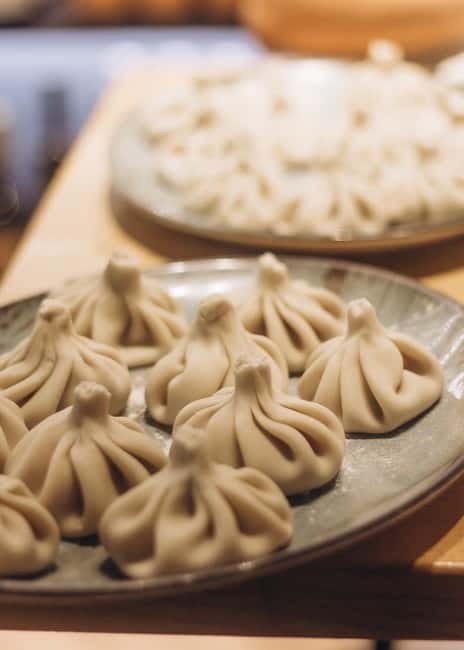
Khinkali are soup-filled dumplings, usually shaped by folding dough around a seasoned filling. The pleats are the tricky part. You need enough folds to seal the dumpling, but not so many that the dough becomes heavy. Making the dumplings by hand also gives you a better sense of why Georgians treat them as more than ordinary pasta.
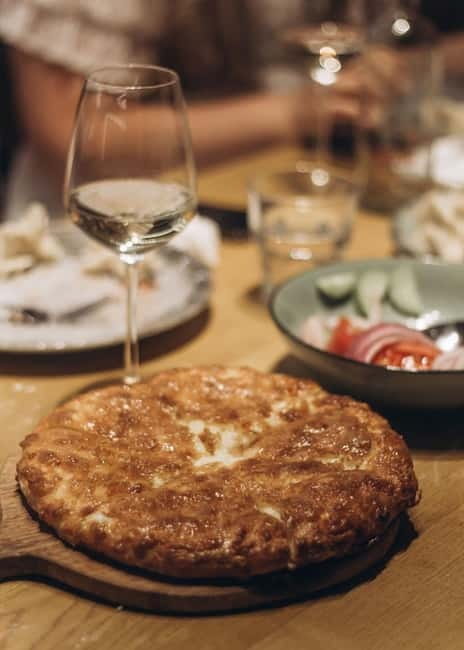
Khachapuri is Georgia’s famous cheese bread. This class focuses on the Imeretian version, a round bread with cheese inside the dough rather than the boat-shaped Adjarian style topped with butter and egg. If you have arrived expecting the dramatic boat shape seen in many photographs, note this difference before booking.
I like the pairing because khinkali teaches patience and shaping, while khachapuri feels more forgiving. Even if your dumplings look a little uneven, the result can still be delicious. That is good news for beginners, teenagers, and anyone whose kitchen skills stop at boiling water.
More khachapuri and khinkali classes in Tbilisi:
- Small-Group Khinkali and Khachapuri Cooking Class in Tbilisi
★ 4.5 · 224 reviews - Cook True Ajarian Khachapuri and Khinkali in Highlanders Style
★ 5.0 · 93 reviews - Taste of Kakheti: Wine Tour Bread Baking & Churchkhela Workshop
★ 4.5 · 46 reviews
Arriving at St. Bunny in the Merani shopping center
The meeting point is Restaurant St. Bunny, on the third floor of the Merani shopping center. You can enter from central Rustaveli Avenue or from parallel Alexander Griboyedov Street.
This is a central location, but allow a little time to find the restaurant inside the shopping center. The class does not take place in the restaurant kitchen. Instead, you cook in the restaurant’s own event setting, described as a cozy Georgian courtyard atmosphere. That gives the session a more relaxed, social feel, though it is worth knowing if you imagined a behind-the-scenes kitchen lesson.
The room and building are part of the experience. Several people have liked the artistic appearance and historical architecture of the venue. I would treat the setting as a pleasant bonus rather than the main reason to book. The real value comes from the teacher, the food, and the chance to sit down together afterward.
The class is offered in English or Russian. The guide or chef leads the group through the process and answers questions as you work. The strongest part of the teaching is its personal nature. In a group of four, every person may receive close attention. Larger groups can still be fun, but you may share some preparation work rather than doing every single step yourself.
Starting with cheese, salad, and Georgian wine
The food begins before the cooking. You receive an assortment of Georgian cheeses, a salad of ripe tomatoes and cucumbers, Kakheti aromatic oil, and a taste of homemade Georgian wine.
This opening course matters for two reasons. First, it keeps you from trying to make dumplings while hungry enough to eat the raw ingredients. Second, it gives you a quick introduction to Georgian table culture, where food is meant to be shared and conversation is part of the meal.
The salad sounds modest, but good tomatoes, cucumbers, and fragrant oil do not need much help. The cheeses give you a chance to sample local flavors before handling the dough. The supplied food is generous, and the salad is described as large enough to leave with some for later.
Wine is included, but additional wine or food ordered from the menu costs extra. I like that the included tasting is enough to make the class feel festive without forcing you into a larger drinks package. If you do not want more wine, you can simply stick with what is provided.
Folding khinkali with help from the chef

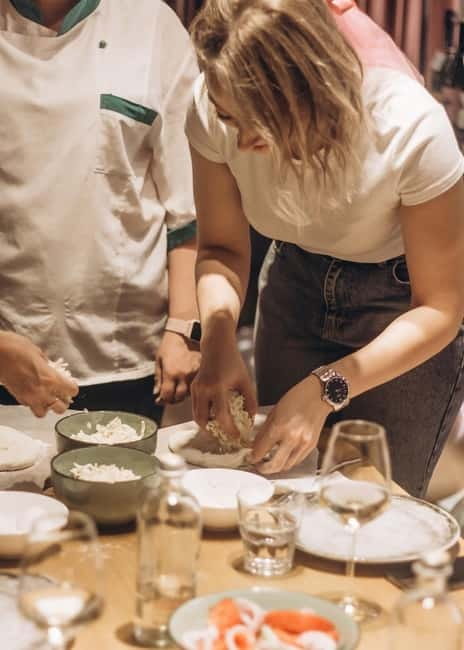
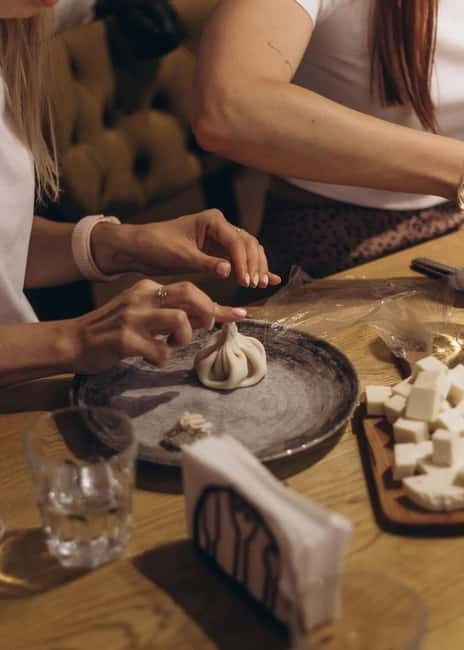
The khinkali lesson is usually the most memorable part. You work with dough and filling, then learn to fold the dumpling into its familiar gathered shape. This is where a patient instructor makes a real difference.
Artem has been praised for explaining the process clearly and sharing recipes at the end. Other sessions have featured chefs including Nina, Nino, Seva, and George. The names may vary by date, but the teaching style described across the sessions is consistent: step-by-step guidance, humor, and close supervision.
Do not worry if your first dumpling looks more like a small purse than a perfect Georgian knot. The class is designed for people who are learning, not for restaurant professionals. One useful feature is the close attention from the chef. George, for example, was described as supervising each movement in a small group, which helped everyone understand the technique rather than simply watch a demonstration.
There is one practical limitation. In some groups, participants may take turns with particular parts of the preparation. If you want every person in your party to make every dumpling from start to finish, ask the instructor at the beginning how the work will be divided.
The portions can also be very large. That is good value if you arrive hungry, but it may lead to leftovers. One sensible approach is to pace yourself during the cheese, salad, and wine course. The dumplings and bread are the main event, and they arrive quickly once the cooking is underway.
More Georgian cooking classes in Tbilisi:
- Tbilisi: Cooking Class with a Local Family
★ 5.0 · 104 reviews - Nana’s Kitchen – traditional Georgian cooking class at real Georgian family home
★ 5.0 · 37 reviews - Join a Local for a Market Tour, Cooking Class and Meal in her Tbilisi Home
★ 5.0 · 15 reviews - Taste of Georgia. Cooking-Class Khinkali, Khachapuri and more
★ 5.0 · 7 reviews
Preparing Imeretian khachapuri
The second lesson covers Imeretian khachapuri. You prepare the dough, add the cheese, shape the bread, and follow the chef’s instructions through the cooking process.
Khachapuri is an ideal group dish because it is easy to share at the table. It also gives you a useful recipe to recreate at home. Several people appreciated receiving recipe instructions afterward, either directly or through a link. That turns the class into something more lasting than a meal you remember only through photographs.
The lesson can also clarify the differences between Georgian khachapuri styles. If you have eaten Adjarian khachapuri in Batumi or seen it in Tbilisi, the Imeretian version may look less dramatic. Its cheese is enclosed in a round bread, making it closer to a filled pie than the open boat shape many people expect.
That difference is not a flaw, but it is worth knowing. One cook hoped to make another style and felt slightly disappointed when the class used Imeretian khachapuri instead. If you have a particular version in mind, check the description carefully before reserving.
Sitting down to eat your own cooking
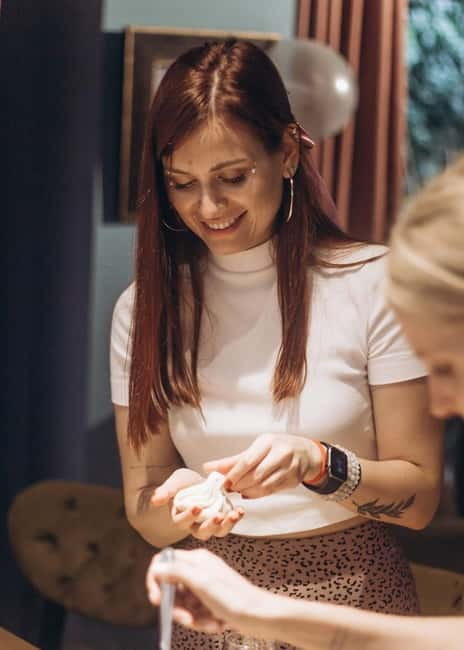
After the preparation, you sit down and eat the khinkali and khachapuri you made. The included cheese, salad, and wine stay part of the meal, so this is not a quick sample followed by an early exit.
This final stage is where the class earns much of its $28 price. You are paying for instruction, ingredients, a full meal, drinks, and a social evening in central Tbilisi. A comparable restaurant meal might cost less or more depending on what you order, but it would not teach you how the food is made or provide the same shared activity.
Some people found the class almost too generous, with a large amount of food and a fairly quick transition from cooking to eating. If you want a serious culinary workshop with long technical demonstrations, this may feel light. If you want to learn a few useful techniques and enjoy dinner afterward, the format works well.
The meal also gives you time to talk. Solo participants have made friends here, and groups from different countries often continue chatting after the formal session ends. I see this as a strong choice for your first or second night in Tbilisi, when you want an easy social activity and an introduction to local food.
The city stories and Georgian cultural context
The chef or host adds stories about Tbilisi and the background of the dishes during the session. The history is not presented as a formal lecture. It comes through conversation, food explanations, and comments about Georgian customs.
That informal approach suits the class. You are shaping dough with your hands, so a long speech would slow things down. Instead, the cultural details arrive in small pieces while you cook. The result is more memorable because you connect the information to something you are making.
For a fuller cultural lesson, you would need a separate walking tour or museum visit. This class gives you a compact food-focused introduction. It explains why these dishes matter and lets you take part in the ritual of preparing and sharing them.
The warm atmosphere is one of the class’s most praised qualities. Staff members have been described as welcoming, and managers such as Jana have offered suggestions for the rest of a stay in Tbilisi. Those personal touches can make the experience feel less like a scheduled activity and more like an evening hosted by friendly locals.
Group size, language, and accessibility
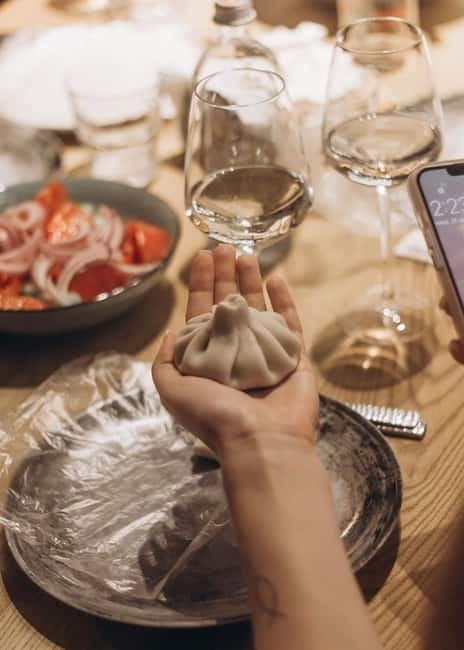
The group size can vary. Some sessions have been very small, including private bookings for couples or individuals, while others have included around ten people or a larger work group. A small group gives you more time with the chef and more control over the food preparation. A larger group brings more conversation but may mean taking turns.
English and Russian are the available teaching languages. If you book for a mixed-language group, confirm the preferred language when you arrive so the instructions remain easy to follow.
The activity is wheelchair accessible. The meeting point is inside the Merani shopping center on the third floor, and access is available from the shopping center entrances listed above. Since the cooking event is held in the restaurant’s event space rather than the kitchen, the layout may feel more comfortable for some people, though you should still confirm any specific mobility needs before booking.
The duration is about 2.5 hours. That is long enough for two dishes and a meal, but short enough to fit around sightseeing. I would avoid scheduling a major attraction immediately afterward. The food is filling, and the closing conversation can run at an unhurried pace.
Who will get the most from the $28 price

At $28 per person, this is strong value for a central Tbilisi activity. You receive instruction for two dishes, local cheese, salad, Kakheti oil, homemade wine, and the meal you prepare. You also leave with recipes, according to several sessions.
I would especially recommend it for:
- Solo visitors: The shared table makes it easier to meet people without forcing conversation.
- Couples and friends: You can work together, compare your dumpling folds, and eat a meal you made as a team.
- Families with teens: The tasks are practical and social, and the activity has been enjoyed by teenagers.
- Food-focused people: You learn techniques you can try at home rather than simply tasting finished dishes.
- First-time visitors to Georgia: Khinkali and khachapuri are a useful introduction to the country’s food culture.
I would hesitate only if you need a professional-level cooking workshop, dislike group dining, or have your heart set on Adjarian khachapuri. The class is friendly and hands-on, but it is also designed as a relaxed food experience. At points, it may feel like a guided dinner with cooking included.
You can cancel up to 24 hours before the activity for a full refund, and reserve now while paying later. Starting times vary, so check availability for your date. These policies are useful if your Tbilisi schedule is still moving around.
Should you book the St. Bunny cooking class?
Yes, if you want a sociable, good-value introduction to Georgian food. The strongest reasons are the patient chefs, the generous meal, the recipe follow-up, and the chance to make khinkali and Imeretian khachapuri with your own hands.
Go with realistic expectations. This is not a professional kitchen apprenticeship, and not every person may handle every stage in a larger group. The portions may be excessive, and the khachapuri style may differ from the one you pictured.
For most people, those are small tradeoffs. You get a pleasant setting, local wine and cheese, a full dinner, and enough practical instruction to keep making Georgian food after you leave Tbilisi. At $28, that is an easy activity to recommend, especially for solo visitors, couples, and anyone who wants more than another restaurant meal.
FAQ
How long does the Tbilisi cooking class last?
The class lasts approximately 2.5 hours, including the cooking session and the meal afterward.
Which dishes do you make?
You prepare khinkali and Imeretian khachapuri, two well-known Georgian dishes.
Is wine included?
Yes. The package includes a tasting of Georgian homemade wine. Any additional wine or food ordered separately costs extra.
What food is served besides the dishes you cook?
You receive an assortment of local Georgian cheeses and a salad made with Georgian tomatoes and cucumbers, served with Kakheti aromatic oil.
Where does the class meet?
The meeting point is Restaurant St. Bunny on the third floor of the Merani shopping center in Tbilisi.
How do I enter the Merani shopping center?
You can enter from central Rustaveli Avenue or from the parallel Alexander Griboyedov Street.
Is the class held in the restaurant kitchen?
No. The event takes place in the restaurant’s separate event setting rather than in the kitchen.
Which languages are available?
Instruction is available in English and Russian.
Is the activity wheelchair accessible?
Yes, the activity is listed as wheelchair accessible.
Can I cancel for a refund?
Yes. You can cancel up to 24 hours in advance for a full refund. You can also reserve now and pay later.
Just added near Tbilisi
- Wine Tasting feel the Difference of Qvevri or Classical Wine★ 4.4 · 10 reviews
- Walking Tour in Old Tbilisi – Group Tour★ 4.5 · 8 reviews
- From Tbilisi: Kakheti and Kazbegi 2-Day 4X4 Jeep Tour pack★ 5.0 · 6 reviews
- Tbilisi: Vintage Fashion and Secondhand Thrifting Tour★ 5.0 · 11 reviews
- Uforgatable Kakheti Tour with wine tasting – in Georgia★ 4.9 · 5 reviews
- From Tbilisi: Uplistsikhe Caves and Mtskheta Town Day tour★ 5.0 · 2 reviews
- Tbilisi Airport to Gudauri, Bakuriani, Batumi, Tbilisi★ 5.0 · 3 reviews
- Private Adorable City Tour of Tbilisi★ 5.0 · 3 reviews
Khachapuri and Khinkali Classes, compared.

Small-Group Khinkali and Khachapuri Cooking Class in Tbilisi
Read our review →
Cook True Ajarian Khachapuri and Khinkali in Highlanders Style
Read our review →
Taste of Kakheti: Wine Tour Bread Baking & Churchkhela Workshop
Read our review →
One Day Kakheti Tour with Wine Tasting and Free Churchkhela
Read our review →
Taste of Georgia. Cooking-Class Khinkali, Khachapuri and more
Read our review →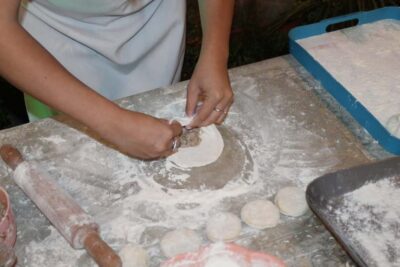
Batumi Khinkali: Hands-On Masterclass with a Local Master
Read our review →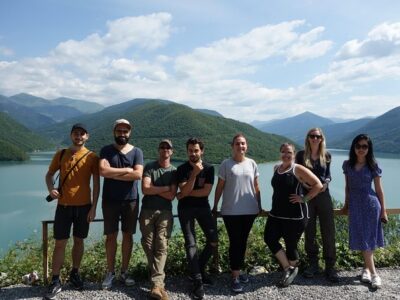
Military Road Marvels: Ananuri, Kazbegi & Khinkali Masterclass
Read our review →
Kazbegi and Khinkali – the ultimate mountain experience tour
Read our review →Browse the lists this tour appears in