
Reviewed · COOKING CLASSES
7-Day Georgian Wine and Culinary Private Tour with Cooking Class
Georgia puts wine at the dinner table. This seven-day private tour combines family wine cellars and major wineries with monasteries, cave towns, mountain roads, and Georgian cooking classes. I like the small group size, capped at six, and the way the route moves beyond Tbilisi into Kakheti, Imereti, and Racha.
I also like that accommodation, transport, breakfasts, dinners, and many tastings are included, which makes a multi-stop trip easier to manage. The main drawback is the pace: you cover a lot of Georgia by minivan, and some days combine long drives with several major sights.
In This Review
- Key points at a glance
- Why this Georgian tour feels different
- Day one: Tbilisi brandy, Chateau Mukhrani, and a cooking class
- Day two: Kakheti’s estates, monasteries, and underground wine
- Day three: churchkhela, Shumi Winery, and Signaghi
- Day four: Uplistsikhe, Stalin’s museum, and Gelati
- Day five: Racha wines and mountain roads
- Day six: Shaori Lake, Nikortsminda, and Prometheus Caves
- Day seven: Katshki Pillar, Mtskheta, and a final celebration
- What the $784.62 price includes
- Who should book this tour?
- Should you book it?
- FAQ
- How long is the Georgian wine and culinary tour?
- Where does the tour begin and end?
- How many people can join the private tour?
- What kind of transportation is provided?
- Are hotel stays included?
- Are meals and wine tastings included?
- Does the tour include cooking classes?
Key points at a glance
- Private group of up to six: You travel in an air-conditioned minivan with hotel pickup and drop-off.
- Two hands-on cooking classes: The program gives Georgian food more attention than a simple restaurant tour.
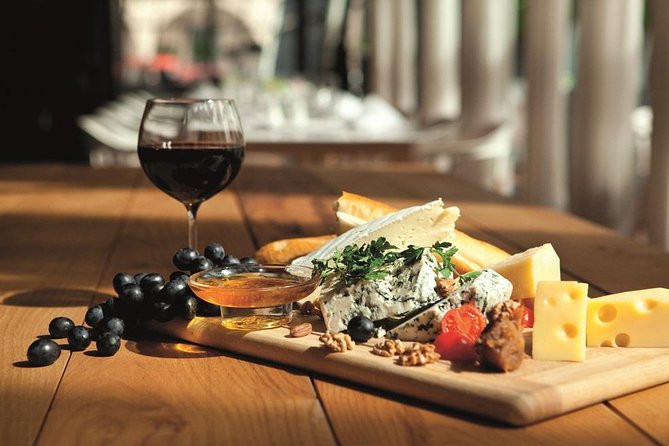
- Wine in many forms: Expect estate wineries, rustic museums, underground tunnels, and family cellars.
- A broad route: The trip links Tbilisi, Kakheti, Kutaisi, Racha, Mtskheta, and several major monuments.
- Food is part of the schedule: Breakfast and dinner are included, along with food and wine tastings listed in the program.
- Strong value for a week: At $784.62 per person, the price covers six nights, private transport, a guide, and a substantial set of meals and activities.
Why this Georgian tour feels different
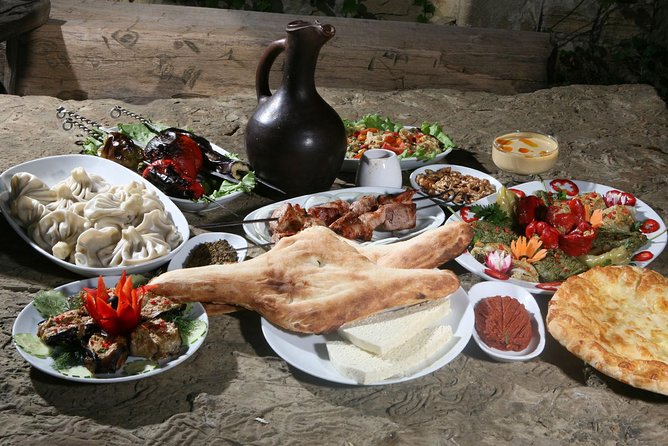
Many Georgia trips focus on churches, mountains, and old towns, with food added almost as an afterthought. This one gives the table equal billing. You visit vineyards, taste wines in different settings, learn about churchkhela, sample bread and cheese, and take cooking lessons designed to connect dishes with local traditions.
The private format matters. With no more than six people, you should have more room in the minivan and a better chance to ask questions during tastings or cooking sessions. You also avoid being folded into a large bus group at every winery.
The guide is described as both a local and culinary expert. That combination is useful here because Georgian food and wine are tied to family customs, religious traditions, farming, and regional identity. You are not simply moving from one tasting room to the next. The guide can help explain why the same grape or dish may appear differently from one part of the country to another.
Still, this is an ambitious route. You spend several nights on the road and change regions often. If you prefer slow mornings, long stays in one town, or plenty of free time, the schedule may feel full. If you want one trip that covers food, wine, history, and scenery, the range is its greatest strength.
More Wine Tours in Tbilisi
- Day Trip to Kakheti Wine Region Including 9 Wine Tastings
★ 5.0 · 2,774 reviews - From Tbilisi: Kakheti Wine Region Tour with 9 Wine Tastings
★ 4.9 · 2,541 reviews - Tbilisi: Kakheti Wine Region Tour with 10 Wine Tastings
★ 5.0 · 2,160 reviews
Day one: Tbilisi brandy, Chateau Mukhrani, and a cooking class
The tour begins in Tbilisi, Georgia’s capital, where the first day introduces the country through its food and drink. The visit to the Sarajishvili brandy factory adds a different note to a wine-focused itinerary. Brandy has an important place in Georgia’s beverage culture, and this stop gives you a look beyond grape wine.
Lunch at Chateau Mukhrani combines a meal, vineyard setting, and wine tasting. The estate has its own vineyard and restaurant, so you get the pleasant pairing of place and plate rather than a tasting detached from local food.
The cooking masterclass is the day’s most practical feature. You do not just eat Georgian dishes and then move on. You take part in preparing them, which can make the recipes easier to remember when you return home. The exact dishes are not specified, so you should not book this expecting one particular menu.
Tbilisi itself deserves attention, but the schedule puts the emphasis on the culinary program. If you arrive early, extra time in the capital would be useful. The tour includes hotel pickup and drop-off, but the published meeting time is listed as 9:00 p.m., which does not obviously match a morning sightseeing schedule. Confirm the exact first-day pickup time before setting your plans.
Day two: Kakheti’s estates, monasteries, and underground wine
Kakheti is Georgia’s best-known wine region, and the second day gives you a concentrated introduction. The stop in Telavi adds a regional town to the route, while the Alexander Chavchavadze Estate Museum brings together Georgian culture, aristocratic history, gardens, and wine.
Alaverdi Monastery and Gremi Monastery show why this is not simply a winery circuit. Religious sites are woven into the countryside, and their stone buildings provide a change of pace after tastings. Gremi in particular is one of the region’s memorable historic stops, with a strong sense of place in the eastern Georgian hills.
The Twins Wine Cellar in Napareuli offers wine in a rustic setting that also functions as a museum. This type of stop is valuable because it helps you compare commercial estate production with older family and village traditions.
Lunch and another tasting follow at Ikano Winery. Then the route shifts from open vineyards to the unusual Khareba Winery, located in a former bomb shelter. A tasting inside an underground tunnel is one of the trip’s more distinctive experiences.
This is also one of the busiest days. You have several historic sites, multiple tastings, and a meal packed into one schedule. Wine sampling can make a full day feel even longer, so take advantage of the bottled water provided and pace yourself. The tour is designed for people who want variety, not for those who want to sit beside one vineyard all afternoon.
Day three: churchkhela, Shumi Winery, and Signaghi
The third day stays close to Kakheti’s food traditions. Churchkhela is a Georgian sweet made by coating strings of nuts in thickened grape juice. Seeing and tasting it gives you a direct connection between the vineyard and the pantry.
Teliani Valley Winery adds another formal tasting, while the cooking class at Shumi Winery brings the focus back to food. The program describes this as a chance to improve your regional cooking skills, so the class should appeal to anyone who prefers an active lesson to a demonstration from a distance.
Signaghi, with its red roofs and hilltop setting, is one of the most photogenic towns on the route. It offers a clear change from the larger city feel of Tbilisi and the spread-out winery estates. Keep in mind that the schedule allows for a visit rather than a long stay, so you may not have time to explore every lane at leisure.
Pheasant’s Tears Winery presents a more modern interpretation of Georgian food alongside a broad wine selection. That contrast matters. Georgian cuisine is not frozen in the past, and this stop lets you see how traditional ingredients can be used in a contemporary restaurant setting.
Bread and cheese provide a simple regional tasting before the return to Tbilisi. The evening ends at Barbarestan, a home-style restaurant in a stylish city district, with seasonal ingredients and a traditional Georgian feast. It is a fitting finish to a day that moves from grape sweets and rural cooking to polished urban dining.
More Georgian wine tasting near Tbilisi:
- Tbilisi: Mtskheta Jvari Bazaar, Chronicles of Georgia & Wine
★ 5.0 · 1,088 reviews - Kakheti Wine Region: Signagi and Bodbe Tour with 10 Wine Tastings
★ 5.0 · 1,019 reviews - Tbilisi:Mtskheta,Jvari,Bazaar,wine tasting,Chronicles of Georgia
★ 5.0 · 730 reviews - Tbilisi:Evening Walking & Talking Tour with Wine & Boat Ride
★ 5.0 · 572 reviews
Day four: Uplistsikhe, Stalin’s museum, and Gelati
The route turns west toward Kutaisi, and the fourth day brings some of the tour’s strongest historical contrasts. A tasting in a family wine cellar keeps the wine theme alive, but the main sights are Uplistsikhe and Stalin’s museum.
Uplistsikhe is an ancient cave town carved into rock. Its rooms, paths, and openings make it a very different kind of historic site from the monasteries in Kakheti. You will want comfortable footwear here because the attraction involves uneven surfaces and walking through exposed stone spaces.
The Stalin museum adds a complicated chapter to Georgia’s modern history. It is not a light sightseeing stop, but it gives the day a more serious historical edge. The schedule also includes an afternoon wine tasting, helping maintain the tour’s food and drink focus after the museum visit.
Gelati Monastery is another major cultural stop. Its medieval setting and religious art make it one of the most important sights near Kutaisi. You stay overnight in Kutaisi, which breaks up the westward journey and avoids returning to Tbilisi after a full day.
Day five: Racha wines and mountain roads
Racha brings a new regional character to the trip. The first tasting is at Bugeuli Winery, followed by a family wine cellar near Ambrolauri. That pairing is especially useful because it lets you compare a winery with a smaller household operation.
The stop at Barakoni Monastery comes between the tastings. It is set among wild green mountains, so this day gives you more open scenery and fewer urban sights. The road itself is part of the experience, but winding mountain travel can be tiring if you are sensitive to motion.
You spend the night in Oni, a historic town in Racha. This overnight stay is practical as well as atmospheric. Rather than rushing back to Kutaisi, the schedule lets you remain in the region after its wine visits.
Racha is one of the reasons this tour offers more than a standard Tbilisi and Kakheti wine break. You get a sense of how Georgian wine culture changes with geography. The experience may be less polished than a large estate visit, but the family cellar is likely to feel more personal and grounded in everyday life.
Day six: Shaori Lake, Nikortsminda, and Prometheus Caves
The sixth day continues through western Georgia with a visit to Shaori Lake. The clear mountain water provides a quiet scenic pause after the previous day’s winery stops and road travel.
Nikortsminda Cathedral, dating to the 11th century, adds another important religious monument. Georgian churches can look modest from outside but reveal striking detail in their stonework and interiors. Your guide’s explanations will be helpful here, particularly if you want to understand how the country’s religious sites fit into its broader culture.
Prometheus Caves change the setting once again. Underground formations and cavern spaces provide a welcome contrast to monasteries, vineyards, and open mountain views. The program does not specify the length of the cave visit, so expect the day to be organized around the scheduled route rather than your own pace.
You return to Kutaisi for a city tour. Because this is your second night in or near Kutaisi, the route avoids needless backtracking. The tradeoff is that the day remains full, with a lake, cathedral, caves, and city sightseeing all on the agenda.
Day seven: Katshki Pillar, Mtskheta, and a final celebration
The final drive returns to Tbilisi along the upper Imereti Road. This scenic route makes the journey back part of the itinerary rather than dead time in the minivan.
Katshki Pillar is a natural limestone formation with a church perched on top. It is one of Georgia’s most unusual sights, though the program says to discover the pillar rather than climb it. Treat it as a viewing and photo stop unless your guide provides different instructions.
Mtskheta, the ancient capital of Georgia, supplies the final major history lesson. Svetitskhoveli Cathedral is the country’s second-largest church, while Jvari Monastery sits on a cliff edge above the town. Together, these stops make a strong closing pair, combining a monumental cathedral with a high viewpoint and older religious setting.
Back in Tbilisi, the tour ends with a gala dinner and national folk show. This is more theatrical than the family cellar visits, but it gives the final evening a clear sense of occasion. After a week of regional food, wine, and historic sites, a shared dinner and music provide an appropriate send-off.
What the $784.62 price includes
At $784.62 per person, the price is easiest to judge as a package rather than as a food tour alone. It includes six nights in three-star hotels or guesthouses, private round-trip transport, fuel charges, bottled water, a local or professional guide, breakfasts, dinners, food tastings, wine tastings, and the activities specified in the program.
That is meaningful value for a seven-day route across several regions. Hiring private transport for this distance, arranging multiple winery visits, booking accommodation, and coordinating cooking classes would take time and could cost more when purchased separately.
The package is not all-inclusive. Food and drinks not specifically listed are extra, and the wording does not promise lunch every day. You should budget for additional meals, drinks, and personal spending.
The three-star hotels and guesthouses are best viewed as practical bases, not luxury properties. The benefit is that you spend your money on the route and activities. If a polished resort or five-star accommodation is important to you, this is probably not the right product.
Who should book this tour?
I would recommend it to you if food and wine are central to how you travel, but you also want churches, museums, caves, old towns, and mountain scenery. The private group limit makes it a good fit for families, couples, or a small group of friends who want a guide without joining a large coach tour.
It also suits first-time visitors to Georgia who want the main regions organized for them. The guide, minivan, hotel transfers, and planned meals remove much of the logistical work.
You may want a shorter or slower trip if you dislike long drives, repeated tastings, or frequent changes of location. The itinerary is packed, and the word private does not mean leisurely. It means a small, flexible-feeling group, not a relaxed schedule with no fixed structure.
Free cancellation is available if you cancel at least 24 hours before the local start time. Changes or cancellations inside that window are not accepted for a refund. Most people can participate, and service animals are allowed.
Should you book it?
Book this tour if you want Georgia in broad strokes, with wine and cooking at the center rather than added as side activities. The combination of Kakheti wineries, Racha family cellars, two cooking classes, historic monuments, and a final folk show gives you a substantial introduction to the country.
Skip it if your ideal holiday means staying in one town, choosing meals spontaneously, or spending long afternoons at a single winery. For an active week with plenty of regional food, wine, and culture, the $784.62 price looks fair, especially with transport, accommodation, and many meals included.
FAQ
How long is the Georgian wine and culinary tour?
The tour lasts approximately seven days and includes six nights of accommodation.
Where does the tour begin and end?
It begins in Tbilisi, Georgia, and returns to Tbilisi at the end of the route.
How many people can join the private tour?
A maximum of six people can be included in one booking and on the tour.
What kind of transportation is provided?
Round-trip private transportation is provided in an air-conditioned minivan, with hotel pickup and drop-off.
Are hotel stays included?
Yes. Six nights in three-star hotels or guesthouses are included.
Are meals and wine tastings included?
Breakfast, dinner, food tastings, and wine tastings are included as specified in the program. Food and drinks not listed are not included.
Does the tour include cooking classes?
Yes. The schedule includes a culinary masterclass in the Tbilisi area and another cooking class at Shumi Winery.
More Georgian Cooking Classes in Tbilisi
- Tbilisi: Georgian Cooking Class with Khinkali and Khachapuri
★ 4.7 · 1,146 reviews - Small-Group Khinkali and Khachapuri Cooking Class in Tbilisi
★ 4.5 · 224 reviews - Tbilisi: Cooking Class with a Local Family
★ 5.0 · 104 reviews - Nana’s Kitchen – traditional Georgian cooking class at real Georgian family home
★ 5.0 · 37 reviews
Just added near Tbilisi
- Wine Tasting feel the Difference of Qvevri or Classical Wine★ 4.4 · 10 reviews
- Walking Tour in Old Tbilisi – Group Tour★ 4.5 · 8 reviews
- From Tbilisi: Kakheti and Kazbegi 2-Day 4X4 Jeep Tour pack★ 5.0 · 6 reviews
- Tbilisi: Vintage Fashion and Secondhand Thrifting Tour★ 5.0 · 11 reviews
- Uforgatable Kakheti Tour with wine tasting – in Georgia★ 4.9 · 5 reviews
- From Tbilisi: Uplistsikhe Caves and Mtskheta Town Day tour★ 5.0 · 2 reviews
- Tbilisi Airport to Gudauri, Bakuriani, Batumi, Tbilisi★ 5.0 · 3 reviews
- Private Adorable City Tour of Tbilisi★ 5.0 · 3 reviews
Cooking Classes, compared.
Georgian Cooking Class with Khinkali and Khachapuri
Read our review →
Small-Group Khinkali and Khachapuri Cooking Class in Tbilisi
Read our review →

Nana’s Kitchen – traditional Georgian cooking class at real Georgian family home
Read our review →
Join a Local for a Market Tour, Cooking Class and Meal in her Tbilisi Home
Read our review →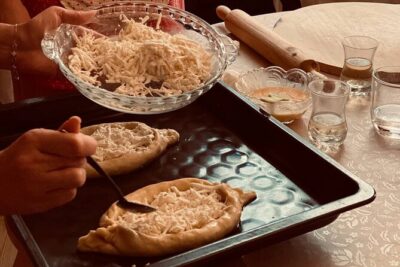
Taste of Georgia. Cooking-Class Khinkali, Khachapuri and more
Read our review →
Exploring Heritage and Cuisine through Cooking Classes
Read our review →
Private Cooking Class with a Tbilisi Food and City Expert Dinara
Read our review →Browse the lists this tour appears in